A 1st Corinthians Smorgasbord

Tomorrow we begin the end of our 1st Corinthians series.  We’ll be spending two Sundays finishing it up by looking at chapter 16 verses 5-24.  In these verses Paul talks about his itinerary, updates them about a bunch of people the Corinthian church knew well, and then gives them a bit of a smorgasbord of teaching.

In this final section, tomorrow we’ll look at the smorgasbord of teaching.  Then next week we’ll see what he has to say about his itinerary and the people he mentions.  SmorgBanner

So let’s get ready for the smorgasbord!  At least that’s what we call them in Lancaster County.  If you’re not familiar with that term, you may know them as a buffet.  At a buffet you don’t order off a menu, you get the chance to go up to the buffet tables and select from a variety of choices, and you can go back as often as you like, trying them all if you like.  Paul gives us a buffet of teaching this week.  It could seem random, but perhaps he has a method to his madness.  When you’ve just spent a lot of time and energy writing what is a very long letter, how do you conclude?  Paul chooses to review much of what he already taught, giving them little tidbits in areas he thinks they need just a little reminder.

As you look back over the last year, what parts of the 1st Corinthians series impacted you the most?

Oh Geez…Not another sermon about giving…

offering plate A few years ago my family attended my son’s middle school soccer team’s end-of-year pizza party in the school cafeteria.  We were brand new to the school district, and in fact had not even moved there yet.  But we had a sales agreement on our new house, enough to meet school board requirements to let kids start the year with their class rather than having to change schools a month after the new school year begins.  What that meant is we barely knew anyone.  You know that feeling of being alone in a crowd?  That was us.

We got our seats, and soon enough I began overhearing a conversation from a couple other dads at the end of our table.  It went something like this:

“What did you think of the sermon this past Sunday?” (That piqued my interest!)

“I hate sermons about giving.” (Uh-oh, I thought…I bet I see where this is going.)

“Yeah, give, give and give some more.  Doesn’t he know that life is tough for us?”

On and on the discussion went from there.  I remember thinking, if only those guys realized what it was like from the other side of the pulpit.

Maybe there are some pastors who love to talk about giving, but my guess is that most feel just as awkward about it as the people listening feel hearing it.  When a pastor preaches about giving, the pastor knows how self-serving the sermon can seem: “Give…because I need my salary checks to keep coming!”  At least that is what we can imagine you are thinking as you listen.  We know that in reality you are hearing this sermon wrestling with the tension between wanting to be faithful to the Lord, to be generous, and knowing how expensive life is.  We know that many of you are wondering how you’re going to pay off debt or how you’re going to pay the bills.  We know some of you are living paycheck to paycheck. We know that because some of us are wondering those same things, as we live paycheck to paycheck.

I guess it is one big awkward mess.

Why do we keep preaching about giving then?  Do we really need to talk about it?  Do pastors fear that people will stop giving if they, the pastors, stop preaching sermons about giving which leave people feeling guilty?  Is it possible to talk about giving without guilting people into giving? As we continue in the 1st Corinthians series, Phil Bartlet will be preaching on 1st Corinthians 16:1-4.  There you’ll notice that Paul talks about giving, and he does so pretty specifically.  I wonder if he felt awkward about it? Something tells me he didn’t.  He talked about giving a lot, actually.  If Paul talked about it, then we need to talk about it.  Perhaps there is something inherently beneficial about giving that we don’t realize?

So…yes, we’re having another sermon about giving on Sunday.  But don’t stay away.  Maybe even come with an expectant heart and mind!  Join us at Faith Church on Sunday!

How to grow as a disciple of Jesus in an already busy world – 1st Corinthians 15:58

WaldoJesusLast week I introduced Sunday’s sermon on 1st Corinthians 15:58 by asking what we do if we want to serve God more, but our lives are so busy.  Out of that question comes another one: isn’t okay to just believe in Jesus, or do we need to be radicals?

1st Corinthians 15:58 closes out a long discussion Paul is having about the resurrection.  Because the resurrection is true, he says, it is a world-changing event that begs us to give our lives in response. The problem is that we haven’t often heard what it means to be a disciple. Instead we have bought in to the idea of levels of commitment to God, as I mentioned before.

An article was published recently that describes in more detail how Christians in our country have looked at commitment to Jesus, and it is scary. The author, Ed Stetzer, says that Christians in our country can be divided nearly evenly into three groups, each making up about 25% of our nation’s population. As you hear me describe Stetzer’s three groups, I want you to think about which one you are in.

First, he says there are “Cultural Christians, [who] are simply those who, when asked, say they are a Christian rather than say they are an atheist or Jewish. They are “Christian” for no other reason than they are from America and don’t consider themselves something else.” Does that describe you? Not sure? Here’s the next group.

He calls them “Congregational Christian[s]. This person generally does not really have a deep commitment, but they will consider themselves as Christians because they have some loose connection to a church—through a family member, maybe an infant baptism, or some holiday attendance.” How about that group? Does describe you? Maybe you are in the…

The final group he calls “Convictional Christians, [and they] are those people who self-identify as Christian who orient their life around their faith in Christ. This includes a wide range of what Christian is—not just evangelicals, for example. It means someone says they are a Christian and it is meaningful to them.”

If we apply these three designations to what Paul has just taught us in 1st Corinthians, Paul is saying that we need to be last group, Convictional Christians.  Stetzer goes on to explain that the first two groups are what he calls nominal Christians, meaning they are Christians in name only. As we have been talking about for the last few weeks, people in those first two groups, the Cultural or Congregational Christians might have a semblance of belief in the content of the Gospel, but they do not have the commitment.

Stetzer predicts that “The nominals will increasingly become nones…They’re simply calling themselves Christians because that’s who they consider themselves to be, not because of any life change or ongoing commitment. Those types of Christians, about half of the population now, will become a minority in a few decades.”

So what we do about this? We do exactly what Paul says. If you feel you are in Group 1 or 2, Paul is saying that we need to be in Group 3, the group that stands firm, lets nothing move you, in your belief and commitment to the resurrection and mission of Jesus. He says that we should always give ourselves fully to the work of the Lord.

So what will that look like this afternoon, tomorrow at work, in the cafeteria of your school, or as you rake your leaves or watch TV?

Here are some practical steps that another writer suggests.

In a busy, busy world, it is possible to “always give yourself fully to the work of the Lord.”  So what does that mean for you?

Breaking the 80/20 Rule (or Is Radical Christianity really necessary?)

80-20-rule-buttonAt Faith Church I’m convinced we have broken the 80-20 rule.

You know the adage that “20% of the people do 80% of the work”?  It is a complaint that usually a small group of people take on the lion’s share of the responsibility in an organization, while the majority of people slack off.  Often the 80-20 rule comes up in volunteer organizations like the church.  It can leave the 20% in a frustrated fuming place because they’re tired of “doing it all”, while the 80% free-load into relaxation.

Not at Faith Church.  We break that rule.  And it is an awesome thing to see.  I think we have 80% of the people serving very actively.  Maybe it could be said that we follow the 80-90 rule.  80% of the people doing 90% of the work.  Sure there are some people that work more than others, but I am so impressed at how many people are giving of themselves on committees, volunteering for ministry, and serving others in personal ways.  There is also the hidden service that happens that I know nothing about, because people want to serve the Lord and want no recognition for themselves.

So I’m really encouraged by Faith Church!  And yet, in our next passage in 1st Corinthians, we could potentially hear Paul asking us to serve even more.  This week’s sermon is on one verse, and not a very long one at that.  After breaking down his teaching on the resurrection in four sections, this week we look at the final verse of that resurrection chapter, 1 Corinthians 15, verse 58:

Therefore, my dear brothers and sisters, stand firm. Let nothing move you. Always give yourselves fully to the work of the Lord, because you know that your labor in the Lord is not in vain.

It seems like Paul is saying we should use the 100-100 rule.  100% of the people do 100% of the work.  Everyone always giving themselves fully!

Sound impossible to anyone?  Sound unrealistic?

How many of you see all the stuff going on at church and think that you would love to help out, but your life is so busy there’s no time?  How many of you think 100% is ridiculous, and you just move on, maybe feeling guilty, maybe feeling pressure, and having conversations with yourself about why not serving more is okay?  How many of you think that when the kids grow up, then you’ll give more time to the Lord?

Why is Paul so fired up anyway?  It’s these kinds of verses that make Paul seem a bit too radical for our tastes, right?

So what do we do with radical teaching?  We normally call it “radical” and throw it away.  We’re looking for “balanced” teaching.  Teaching that fits with an already busy life.

But should we dismiss Paul?  Is it possible that he was right and we are wrong to caricature him as radical?  What could it possibly mean to “always give yourself fully to the work of the Lord”?  Didn’t the Corinthian Christians have jobs and families too?  They couldn’t all be hanging around teaching Sunday School all the time, right?  Or were they always on the street corner preaching the Gospel?  How did they keep food on the table?  What do we do with this one single, little, but intense verse???

Join us at Faith Church on Sunday as we take a look at this further.  We’ll look at what it means to serve God in the midst of crazy busy lives.

standfirm

Following Jesus is supposed to be hard? – 1st Corinthians 15:51-57

hardtofollowAfter the sermon this past Sunday, our sermon discussion group had a lively conversation about how hard it is to experience Victory in Jesus.  Some even suggested that it is supposed to be hard!  What do you think about that?

Have you ever felt that it is difficult to be a follower of Jesus?  Why is that?

Jesus said “my yoke is easy, and my burden in light” but it can feel super hard to follow him, to do what he did, to have self-control, to fight temptation, to restrain our lusts, our anger, our indulgent hungers.  When we’re cursed, we want to lash back.  When we feel empty inside, we want to bully others.  We see friends succeed, and our eyes turn green with false injustice.

There are times when it doesn’t seem following Jesus is possible.  When Paul talks about victory in Jesus maybe he was just talking about life after death?

When we feel like this, we need to take into account what Paul has said in all of 1st Corinthians so far.   To do that, we must go back to the first verses of the chapter where he said that receiving the Good News of Jesus is to believe the content and make a lifelong commitment to the Gospel.  When we do that we have been saved, we are being saved, and we will be saved. Our bodies will die, yes, but the Lord will raise them again to new life.  That is victory! Jesus won that victory, and now we have hope of eternal life victory with new bodies in heaven! Praise the Lord.

But remember what we talked about last week? That victory isn’t just for heaven. We can experience victory in Jesus now. He wants us to experience what he called his abundant life now! We can experience God’s resurrection power in our lives now.

The question is, are you experiencing the victory of Jesus in your life now? Are you experiencing the life-changing power of God now, such that you are seeing him transform you, seeing him give you victory over sin?

I did a Google image search on the world victory, and what do you think came up the most? People on a mountaintop with their hands raised, Victory motorcycles, victory in sports, victory in war, victory in politics, and of course victory in Jesus.

Not a single picture of Nike shoes, or the Nike swoosh.

Nike? Yes, Nike. The Greek word for “Victory” as well as the name of the Greek goddess of victory. Nee-kay.

But here is victory: https://www.youtube.com/watch?v=0Ejh_hb15Fc

That boy experienced victory because some other caring guys on his team wanted him to experience victory. And you know what? By giving him the chance to experience victory, they experienced it too.

You might be feeling like life is less than victorious for you lately. Perhaps you need to help some others experience a bit of that victorious life.

Or maybe you are struggling so deeply with the stuff of life, you feel like you just can’t overcome it.

I would encourage you to bring it up. Don’t hold it in. Get together with a trusted friend and talk about it.

Definitely pray about it. Tell God everything. And read through the Psalms. When is the last time you read in the Psalms? They are loaded with people who are struggling with life. King David (the guy who once had victory over Goliath) had lots of victory in his life. But he also struggled quite a bit, and in many of his Psalms, he puts his anguish out there. At times he takes me aback with how blunt he is with God. But, yes, you can be blunt with God. God can handle our pain. Learn from David in the Psalms how to talk with God, how to let it all out, how to hope for victory in the midst of suffering.

Maybe there is a sin in your life that is so difficult you don’t know what to do. Then go to professional counseling. When Michelle and I came home after only a year of church-planting in Jamaica (we planned on a lifetime in missions), feeling less than victorious, actually feeling like failures, we needed help. Admittedly skeptical, we went to professional counseling, which I thought up to that time was never something that I would need. I was wrong. It changed my life.  Through counseling I found victory in Jesus.

If you live near Lancaster or Lebanon Counties in south-central Pennsylvania, and you need professional counseling, even if you are unsure about it, I urge you to check out The Marriage and Family Centers.  They are incredible people who have many others experience victory.

Even at your lowest point, there is hope! Because Jesus won the victory over sin and death and he wants you to experience that victory with him!

Are you feeling defeated? There is hope!

how are you

It’s a simple question, “How are you?” with many forms:

“How’s it going?”

“How ya doin’?”

“How are things?”

These questions have become a pleasant formality, a nicety, rather than a serious question.

And the polite response is “Fine.”

Or “Good”.

The pleasantries complete, we move along having just completed our relational duty.

But we’re not fine.  Things are not good.  Behind the “fine” is another world.  Sure, some parts of our life are fine and good, but there are other parts also.  Do any of the words up there behind the “Fine.” describe your life?

How have you been feeling lately?  Defeated?  Maybe depressed?

Our current global situation doesn’t help matters much, does it?

  • Ebola
  • ISIS
  • Ukraine
  • Global Warming
  • Debt
  • Race Riots

The world doesn’t seem like a very welcoming place sometimes.  Where is the love, y’all?

But maybe your concerns are closer to home.  A broken relationship, mountains of bills, a struggle with a vice.

Do you feel defeated? Maybe not 100% all the time. But do you have moments where you feel somewhat defeated? Do those moments happen more often than you’d like?

Do you sense that something is not right?

In 1st Corinthians 15, Paul has walked the Corinthians through a methodical teaching about resurrection. There were some people who were teaching that resurrection was not possible. As we have seen over the last three weeks, if resurrection is not possible, then Christian faith is meaningless.   But Paul affirms in many ways that resurrection is not only vital, but also that Jesus’ resurrection really did happen. Furthermore, he says that one day we too will be resurrected to new life.

Paul says the resurrection matters. But does it matter just after death?

Or might it also matter now? Maybe it should matter now?  How could it matter to us, people who sometimes struggle in this life, people who long for that new resurrection life now?

This week we look at 1st Corinthians 15:51-57 as we hear what Paul has to say about this.  We hope you’ll considering joining us at Faith Church on Sunday!  There is hope for those of who are not feeling fine!

90 days to a new you! – 1st Corinthians 15:35-50

90 days

Wish you could change your life? Get a new body?  Fix a relationship?  Stabilize your finances?  Quit smoking?  I found the banner above claiming that it takes 30 days to change a habit, and 60 more to change your life.  I also saw lots of pictures for workout programs, classes, diets, and the like.  A number of friends have tried P90X, and I hear it is very good.  I would actually like to try it sometime!  I am convinced a lot can happen in 90 days.  This banner raises a question I had as I studied for the sermon this past week.  As I have been preaching through the book of 1st Corinthians, we came to chapter 15:35-50, which is all about new bodies.

If we want to be in the eternal Kingdom of God, Paul says, we have to have a new body!  I agree with the author of the article I mentioned last week, that this one earthly body is all we get…here! But to experience the eternal Kingdom of God, Paul says we absolutely need a new spiritual body: “flesh and blood (natural body) cannot inherit kingdom of God, the perishable cannot inherit imperishable.” (1 Cor. 15:50)

That’s great, but it led to the question I had: What does that mean for our current bodies?

Do we just hang on trying to stave off aging, watching our bodies slowly deteriorate for 80-90 years, dealing with the aches and pains and sickness and sagging?  Then we die and get the new body?

Is Paul basically saying that heaven is when it gets good?

NO, we have hope, and that hope begins now, because the Lord tells us that he is making all things new.

When we start a relationship with Jesus, there is a real sense in which eternity starts now. We can experience a taste, and definitely a growing taste, of the new life of Christ now.

I’m not saying that we will get those new spiritual bodies now. As Paul said, that only comes after death to those who are in Christ. What I am saying is that Jesus does want to change us now. With our new bodies we will experience eternal life, but right now we can experience what he called abundant life.

The problem is that many of us have actually become pretty comfortable with our junk, not just the physical aches and pains, but also the emotional, relational junk.  What we fear is that actually dealing with it, opening up about it, putting it out there, or maybe even going to counseling might not feel like abundant life. In fact dealing with our junk make life more uncomfortable, not less.

You may be wondering how this kind of life is more abundant.  Isn’t it easier to just avoid it?  Act like everything is fine?  Hope the pain will go away?  I would argue, no.  Though it may be initially difficult, receiving the abundant life of Christ now, is the best way to live.

One of the major roadblocks, though, is that people have to want to be changed. They have to desire the abundant life, or they likely aren’t going to choose it. If you are scared or hesitant to step toward the abundant life of Christ, pray for God to open your eyes to see the hope and power of his abundant life. It is a prayer that could be something like: “Lord, I don’t know if I even want to be changed, so help me want to be changed”.

Flowing from that prayer, get ready for the Lord to answer it!  And as he works in you, also embrace the part you have to do as well. We should be choosing and experiencing the abundant life of Christ now.

I think Paul describes it best in Ephesians 1:17ff “I keep asking that the God of our Lord Jesus Christ, the glorious Father, may give you the Spirit of wisdom and revelation, so that you may know him better. I pray also that the eyes of your heart may be enlightened in order that you may know the hope to which he has called you, the riches of his glorious inheritance in the saints, and his incomparably great power for us who believe. That power is like the working of his mighty strength, which he exerted in Christ when he raised him from the dead.”

Do you realize that God wants to change you? Yes you can have a new powerful body that will not age or hurt or get sick or die when he rises you to new life after death.

But he also wants to change you now, so that more and more of his life is flowing through yours. Would you make it a matter of serious prayer: “Lord, change me!”

Would you consider professional counseling if you know there is an area of persistent struggle you are not overcoming? Habits, vices, bad priorities, unhealthy relationships, etc. I don’t want you to tune out thinking “Well, yeah, I’m sure I need to change something but I don’t even know where to begin…”

Where it begins is talking about it with people. Admitting it. We call that confession. Four simple words can open a door to new life, and those four simple words are “I have a problem.” But so many of us rarely open up enough to talk about our problems.

Would you consider having people hold you accountable?

God wants more of the fruit of the Spirit to flow out of you, and it could be that the people has placed in your life are a means grace to help the fruit of the Spirit grow in you.

Start with prayer. Then enter into a total life audit. Many of you are already doing this in an ongoing way, as you have a teachable humble approach to life. But some of you are not doing this. You need to sit down perhaps with a spiritual advisor and say “I have a problem. I don’t believe I am experiencing the abundant life of Jesus, I need help. What do you want me to do?” Be willing to do things that feel like they are out of your comfort zone.

Too often we get stuck in a rut, never experiencing the new life of Christ, because we don’t ever live in such a way that we need his new life! But when we step out of our comfort zone, perhaps going on a mission trip, perhaps serving in a new way in the church, perhaps turning off our devices and inviting a neighbor over for a cookout, perhaps talking to a friend about what Jesus is doing in your life, you’ll see how you need to depend on him for strength, for the words to say, and you will be amazed at how he gives you his new life flowing through you.

As we hope for the new life of resurrected bodies after death, let us live the new abundant life of Christ now!

What would you do to get a new body?

new bodyWhat would you do to get a new body?

Think about how much money, time and effort people go through to get new bodies. I love a good weight-loss story because I lost a bunch myself, and it feels great. But some other new body stories scare me. Endless plastic surgeries, injections, pills, etc.

What have you tried to get a new body?

Our culture oftentimes gives us a very distorted perception of the body. Take a look at this lady, and how she got her new body:

But did she really get a new body? This week as I was studying a bit about what Americans do to try to get new bodies, I came across a very interesting article in which the author says it is not possible to get a new body.  Check it out here and see what you think.

Here is the author’s conclusion:

Because even though it will change in various ways over time, nothing and no one is with us more than our one, never new body. It shows up more for us than anyone or anything ever will, even when we’re not happy with it, even when we wish it was different, even when we talk poorly about it and to it.

You’re never getting a new body (and neither am I). And that’s the good news.

When it comes to learning to be satisfied with our bodies, when it comes to focusing on being healthy rather than achieving a false standard of beauty, I agree with her. But this week we’re going to see that Paul, in his letter to the Corinthians, on another level, has a serious disagreement with her. Can we get a new body?  You can find out for yourself by preparing for Sunday and reading 1 Corinthians 15:35-50.  And please feel welcome to join us at Faith Church on Sunday to hear more.

How the most obscure verse in the Bible can change your life – 1st Corinthians 15:12-34

ChangeOne commentator said 1 Corinthians 15:29 has been called the most difficult and obscure verse in the entire Bible. Here’s a Bible trivia question for you: how many verses in the Bible? There are 31102 verses in the Bible, and this is most obscure of all?  Really?  If so, why?  Keep reading, you’ll learn why and it just might change your life!

Scholars don’t know for certain what this verse is referring to, and none of the options I reviewed are totally satisfying. The reason is that in the verse Paul talks about baptism for the dead.  It is the only place in the NT that something like this is mentioned, and church historians tell us that whatever baptism for the dead was in Corinth, it didn’t continue beyond them, except in one cult-like expression called Marcionism, and 1800 years later in Mormonism. It could simply be that the Corinthians believed that living people could get baptized additional times for people who were already dead, thus hoping the dead people could be saved after death.

Here’s why it matters, and here is why I bring it up: Paul’s point is that whatever baptism for the dead was going on in the church at Corinth, it is futile if there is no resurrection of the dead.

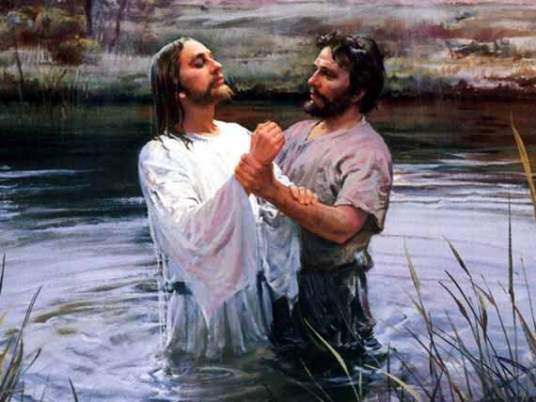
Basically he is saying, “You Corinthians practice baptism. Do you realize that baptism is based totally on faith in the belief that resurrection is true?” Look at the symbolism in baptism, and you see it. You go under the water to symbolize Jesus’ death. Baptism would be pretty terrible if all it did was symbolize Christ’s death. (How long can you hold your breath?) What makes baptism so meaningful is that after you go under, you also come back up, symbolizing new life in Christ because of his resurrection!

As Paul continues to show the Corinthians why resurrection is so vital, in verses 30-32 he gives an example from his own life. Because he believes resurrection is true, he gives himself fully to cause of Christ. Look at how intense he is in verse 31. When he says “just as surely as a I glory over you in Christ” he is basically giving to them, as commentator Alan Johnson notes, “an affirmation based on something of ultimate importance to them: ‘I swear by all that I hold dear’ that this is true.”

Because Jesus has been raised, for Paul it is a game changer. We often talk about how, because of 9/11, the world changed. Paul is saying something like that. Jesus’ resurrection was so momentous an event that it not only changed the world but it should change our lives as well. Paul shows how it changed his. He now knew the meaning of life, that Jesus was God, that Jesus won the victory and thus we should give ourselves fully to him and his kingdom because we, and the hopefully many, many more who will follow him because of us, will experience both the abundant life of Jesus now and eternal life in heaven. Resurrection motivates us to mission!

Last week (verses 3-8) Paul said Jesus really did die, but he rose again. The miracle happened! There were plenty of people who had a strong interest in stopping this new Christian movement. Primarily the Jewish religious leaders in Jerusalem. All they had to do to stop the movement was produce Jesus’ body. The movement was entirely dependent on that one claim, resurrection. And Paul is right, as he says in verses 13-16, if Jesus didn’t rise, our faith falls apart. So if you want to destroy Christianity, like those religious leaders did, then produce the body. They never did. And in fact there were many people Paul says who Jesus appeared to who were still alive and could affirm that he really did rise again.  That’s world-changing!

Because he did rise again, then we have a mission! A mission to holiness and a mission for God’s Kingdom to make disciples.

Because resurrection as a concept is true, it is vital that we believe that Jesus rose again, and because he did, our response should be a vigorous pursuit of holiness and discipleship.

If resurrection as a concept is not possible, then truly we should close up shop. Sell the church, disband, and go on a crusade to tell people to stop believing a lie.

But if the resurrection is true, well, that truly changes everything, and we should put aside everything for the cause of Christ.

So is the resurrection truly true?

If you want a scientific answer, with insurmountable proof, I’m sorry but I’m not able to give that. Having said that, Paul gives us some strong evidence for the truth of Jesus’ resurrection. People who had very, very good reason to kill the Christian movement only had to produce a body, and they didn’t. People who said there were eyewitness accounts gave their lives to die for it.

But scientific proof? No. Instead we must place our faith in the resurrection. As Paul said in Romans 10:9,10, “believe in your heart that God raised him from the dead.” If God is all-powerful, it’s not hard to envision the possibility that God could do this. But it is still a matter of faith.

I urge you to place your faith in Christ, that he died and rose again, and that in him we can all be made new. Because of his death and resurrection for our sins, we can experience his abundant life now and eternal life in heaven.

Will you answer the call the discipleship? I’m not talking about just showing up for church, I’m talking about fully embracing the resurrection life that Jesus has to offer. If you want to follow the pathway to discipleship, let’s talk about it!

Do you believe in the walking dead?

The_Walking_Dead_title_cardIt returns in about a month.  The Walking Dead.  A very compelling show for many reasons, The Walking Dead is the story of a group of survivors trying to eke out life in the middle of a zombie apocalypse.

Zombies have become quite a fascination in our culture of late.  Much of the attraction is just simply thinking “What if it were true?”, what if a zombie apocalypse could really happen?  Then, after envisioning a world where dead people come to life as zombies that want to eat you, the next question asks “What would it actually be like to live in that kind of world?”  The creators and writers of The Walking Dead do an amazing job trying to answer that second question.  The movie World War Z, a book adaptation, sought to do the same thing.  Another way some have tried to answer that second question is to apply it backwards, such as Pride and Prejudice and Zombies tries to do.  I have never read Pride and Prejudice, but when I saw Pride and Prejudice and Zombies, the audio version, in our local library, I knew I had to check it out.  It was hilarious.  I felt the adaptation was convincing enough that I imagined the actual novel must have been set in the middle of a plague-like context.  It’s not.  Just this morning, here’s a report that it, too, is being turned into a feature film.  It seems we can’t speculate enough about what the world would be like in a zombie apocalypse.

But what about the first question.  What if were true?  People coming back to life.  What if people could actually come back to life?

By asking that, I’m not thinking of zombies, I’m thinking of resurrection.  The dead rising to new life. There are many examples of how the undead could be a real possibility, but the central idea about zombies is that they are still dead.  Or undead.  Resurrection is different than an idea of walking dead because in resurrection, a living human dies, and then rises to new life.  Admittedly, it is a wildly odd idea.  That which is inanimate is not able, by definition, to become animate.

Ironically enough, as fascination with the undead or the walking dead seems to be growing, belief in a real bodily resurrection to new life seems to be declining.  Mike Regnerus in First Things recently said that while “a general resurrection of the dead is something orthodox Christians across the centuries have long anticipated…many of the faithful aren’t so sure.”  Regnerus bases his findings on new research, showing that in many churches, 1 in 4 parishioners no longer believe in the resurrection.  Want to know that group that has the highest affirmation of belief in the resurrection?  See this chart:

resurrection beliefs 2014Shouldn’t evangelicals be at the top?  Second place isn’t bad, though we drop to third when considering active attenders (3+ times per month). Again, look at the total percentage.  One in four evangelicals does not believe in a bodily resurrection of the dead.  What could be the reason for this?

The church in Corinth seemed to have a skeptical group as well.  Paul starts this section by saying “How can some of you say there is no resurrection of the dead?”

And yet in the Christian faith, we hold resurrection to be lynch pin of our entire system.  You pull Easter out from the story, and our faith falls apart.  As Paul will say in the next section of 1st Corinthians that we are studying on Sunday, if there is no such thing as resurrection, we have nothing.  A dead savior is no savior, Paul says.  As you prepare for worship on Sunday, take a look at 1st Corinthians 15:12-34 and you’ll see what I mean.