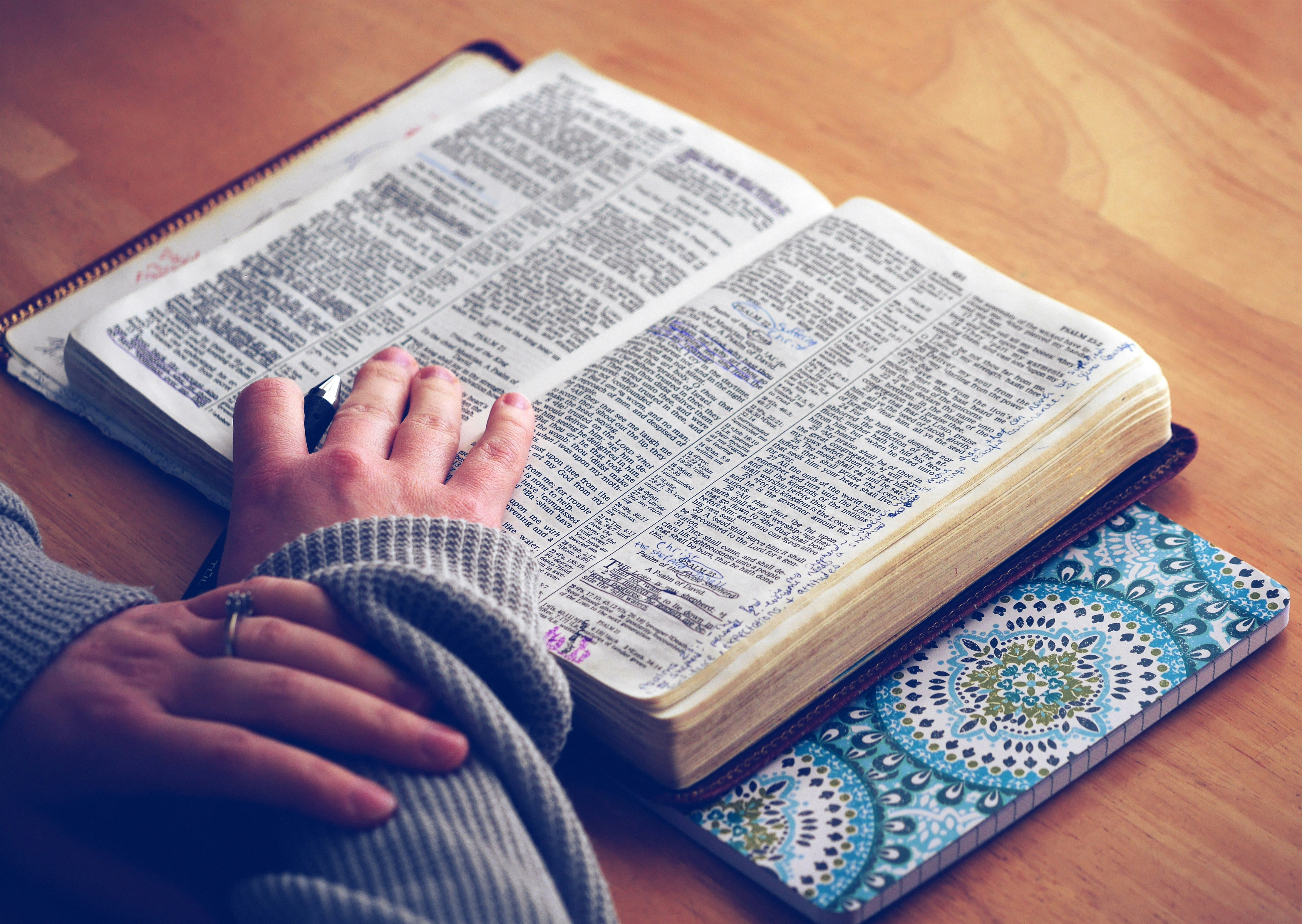
Three reasons why David was not the one to build the temple – 2 Samuel 7, Part 2

In 2 Samuel 7, David wants to build God a temple, but God says, “No.” Why not? For three reasons.

This first we read about in the previous post, where God says to David, “I never asked for a temple. I was fine living in a simple tent.”

But the story of God’s tent has a twist, which we studied a couple months ago near the beginning of this Life of David series.  Starting from when the people of Israel first made the Tabernacle, we fast-forward 40 years and the people of Israel finally make it to the Promised Land, under the leadership of Moses.  Then under the next leader, Joshua, they conquer the Promised, mostly.  Next a series of Judges leads, the final one being Samuel.  When Samuel was a young man, he served under the priest Eli at God’s Tabernacle.  Through the wandering, conquest and judges, God’s Ark and presence resided in the two-car garage tent. 

That is, until Eli’s wicked sons get the big idea to use the Ark as a secret weapon against the Philistines.  As if they could control God’s power and make him smite the Philistines.  They were sorely wrong.  Eli’s sons died in battle, the Philistines destroyed the army of Israel, and they captured the Ark.  For months the Ark was in Philistine possession, but God’s power afflicted the Philistines.  They got so sick of the affliction, they sent the Ark back to Israel. 

People in an Israelite town on the Philistine-Israelite border one day see a horse-drawn cart with no human guide pulling the Ark into town.  They rejoice, and they put the Ark in a local man’s home for safe keeping.  There it stayed for at least twenty years.  So I guess God was renting a room in some guy’s Airbnb for a long time.  Why the priests never came and brought the Ark back to the Tabernacle, we don’t know.  But there it stayed for 20 years in a house.

During those 20 years, David became king of all Israel, and conquered Jerusalem. Remember that story from a few weeks ago?  David led the people in bringing the Ark into Jerusalem, dancing with all his might.  Where did David bring the Ark?  Did he set up the Tabernacle in Jerusalem?  Did he bring the Ark, the throne of God, back to God’s tent?  Nope. 

David made a new tent, just for the Ark.  The Tabernacle remained in a separate location where the priests would offer the sacrifices prescribed by God.  Again, why they didn’t just set up the tabernacle in Jerusalem?  We don’t know.  What that means, though, is that God’s throne is now in another tent.  We have no idea of the specifications of this second tent.  There God’s throne remained for decades. 

That’s the first reason David is not going to build God a temple.  God is humble, and he was totally content to be in a simple tent. 

But there is second reason David is not going to build God a temple. In 2 Samuel verses 8–17, the second reason, God says, is that David’s son will build the temple.  If that was all God said, “Nope, you’re not going to build my temple, David.  Your son will though,” that might be difficult for David to take.  “Why, Lord?  Why not me?  I have been faithful, right?  I don’t get this.” 

There is actually a third reason it seems God didn’t want David to build the temple.  For some clarity on that, we have to jump ahead to a conversation David has with his son Solomon, when David was about to die. 

In 1 Chronicles 22:7–8, “David said to Solomon: “My son, I had it in my heart to build a house for the Name of the Lord my God. But this word of the Lord came to me: ‘You have shed much blood and have fought many wars. You are not to build a house for my Name, because you have shed much blood on the earth in my sight.”

It does not seem that in saying this God is punishing David.  It just seems to be a reality.  God wants a king who is not a warrior king to build his temple.  As we continue reading in 1 Chronicles 22, verses 9–10, David tells Solomon that God also said,

“But you, David, will have a son who will be a man of peace and rest, and I will give him rest from all his enemies on every side. His name will be Solomon, and I will grant Israel peace and quiet during his reign. He is the one who will build a house for my Name.”

Back in 2 Samuel 7, though, God said quite a bit more than that, didn’t he? In the next post, we’ll continue examining the important words God shared with David via the prophet Nathan.

Photo by Objective Calvary on Unsplash

Why God was okay living in a tent the size of a two-car garage – 2 Samuel 7, Part 1

After years of waiting, running, hiding, and battling, David is king of all Israel. He has conquered Jerusalem, built a palace there, and brought the Ark of the Covenant into the city.

And yet, in the middle of all that blessing from God, David is unsettled.

Maybe you’ve had that feeling after a very busy season of life.  For weeks, months, or years, you work hard to accomplish a goal.  Long hours, waking up early, staying up late.  It’s grueling, but finally you are done. You take time to rest, and much to your surprise, you can’t rest.  You’re used to hard work, and you feel weird or even guilty for taking life at a much slower pace.  You are unsettled, and you wonder if you should just go back to work.  You’re antsy. 

I know people who are excited about retirement.  I know some people who cannot retire.  Not because they need finances; they don’t need more income.  They’re just antsy. They want to do something.  I’ve definitely heard some people say that they retired and got busier than ever.  Others retire and find out that they are bored.  They want to do something.  And they should.  Retirement is a golden age for serving the Lord and the mission of his Kingdom.

It seems that David is feeling some of that.  Here’s how 2 Samuel chapter 7 begins:

“After the king was settled in his palace and the Lord had given him rest from all his enemies around him, he said to Nathan the prophet, ‘Here I am, living in a house of cedar, while the ark of God remains in a tent.’ Nathan replied to the king, ‘Whatever you have in mind, go ahead and do it, for the Lord is with you.’”

We got a preview of the prophet Nathan last week when Emily Marks blogged through the story of David and Bathsheba (read her first post here).  As she mentioned, we know very little about the prophet Nathan.  In 1 & 2 Chronicles there are two references to Nathan that tell us he was central to the highest levels of Israelite society.  He had access to David, and as we saw last week, he confronted David.  So when we read in 2 Samuel 7 that David is talking with Nathan, David sees Nathan as a trusted, godly advisor.  David sees Nathan as someone who will give him God’s perspective. 

What does David need advice about?  It’s pretty much a no-brainer.  David wants to build God a temple.  He doesn’t say those words, of course, but that is exactly what he means.  David is living in a nice new palace, while the Ark of God is in a tent.  No, David thinks to himself, this will not do. 

David’s heart is to give God glory and honor.  Nathan, whether he knew precisely what David was hinting at or not, says, “Go for it.”  Actually, Nathan says more than that.  Nathan says, “God is with you in this idea.”  That comment gives us a sense of Nathan’s stature.  He is a prophet who speaks for God.  Nathan is very confident “You know it, buddy.  Yes.  You do that thing.”  And why not?  David wants to glorify and honor God with by getting that Ark out of a lowly tent, and into a temple that is fit for his dwelling.  Of course! 

Except that Nathan is wrong.  God comes to Nathan with a different message.  Look at verses 4–7,

“But that night the word of the Lord came to Nathan, saying: ‘Go and tell my servant David, “This is what the Lord says: ‘Are you the one to build me a house to dwell in? I have not dwelt in a house from the day I brought the Israelites up out of Egypt to this day. I have been moving from place to place with a tent as my dwelling. Wherever I have moved with all the Israelites, did I ever say to any of their rulers whom I commanded to shepherd my people Israel, “Why have you not built me a house of cedar?”

I don’t believe Nathan was wrong to answer David as he did in verse 3, “Go for it, God is with you.”  David’s desire to build a temple for God is truly a wonderful idea.  So why does God disagree?  There are many reasons.  In verses 5-7, we hear the first reason why God does not want David to build the temple, and it is a shocker.

God is okay with a tent.  He never once told anyone to build him a permanent dwelling.  Think about a minute.  God is okay living in a tent.  When I say God lives in a tent, I do not mean that God has a body.  Instead, I’m referring to the Ark of the Covenant and the presence of God.  The Ark, that small gold-covered chest with angel statues on top, was like the throne of God, and God’s presence would rest on the Ark.  In the tent. 

What tent are we talking about?  Way back in Exodus, just a couple months after God freed the people of Israel from 400+ years of slavery in Egypt, the whole nation was living in tents.  They were on their way through the wilderness to the Promised Land of Canaan, and they stopped at Mount Sinai, where God renewed his ancient covenant with them, giving them the Ten Commandments and the Law, including detailed instructions for his tent. 

God’s tent is called the Tabernacle.  In Lancaster, Pennsylvania, where I live, there is a reproduction of the tabernacle. It is very interesting to visit, but the reproduction doesn’t do it justice because that Tabernacle is inside a building.  Here’s a photo:

The actual Tabernacle was a tent made of animal skins.  It was about the size of a two-car garage.  You would not be blown away by the Tabernacle if you were passing by on your camel.  In fact, you would probably have no idea that it was all that different from the tents of the families and tribes encircling it.  You would see something like this:

Tiny, right? If it wasn’t for the fencing and altar outside, you’d likely not give it a second glance. But inside that tent was the Ark, and God’s presence resided there.  That made the Tabernacle incredibly different from all the other tents.  It was God who made the tent special, not the tent itself.

Think about this again: God was content to live in a two-car garage tent.  The God of the Universe is okay with an animal skin tent.  When the people were on the move, they folded up the tent like any other tent and they carried it to the next stop.  What does that tell you about God?  It tells you that our amazing God, the Almighty, is humble and he wants to be with his people.  That’s mind-boggling. 

Photo by Alexander Vilinskyy on Unsplash

One important way to describe a relationship with God…a way that is in danger of being lost – 2 Samuel 7, Preview

When you think of your relationship with God, how would you describe it?  

That is, admittedly, a broad question that we could answer in many ways.  A relationship with God can be hot or cold, it can be close or distant.  Some people prefer to emphasize one person of the Trinity.  For example, you might see yourself as praying to the Father, being a sibling or friend of Jesus, or walking in step with the Holy Spirit, especially given that our bodies are temples of the Holy Spirit.  

The Scriptures describe a relationship with God using numerous analogies or metaphors.  We are adopted into the family of God.  We are citizens of the Kingdom of Heaven.  We are disciples of Jesus.  We are the body of Christ. There are so many more images in Scripture, all depicting our relationship with God. 

Each of those images—adoption, citizenship, and body—depict for us a nuance of what it means for us to be the people of God.  There is no one metaphor that could ever capture all the meaning of God’s desire and effort to be in relationship with people.  But this coming week we’re going to talk about another very important one that appears frequently in both the Old and New Testaments.  God used this relational method with Israel and the church numerous times, which indicates for us that it is vital.

I’m referring to the concept of covenant. Do you think of yourself as in covenant with God?  My guess is that few Christians think about their relationship with God that way.  If someone asked you about God, would you say, “I am in a covenant relationship with God?”  Perhaps in bygone eras or in other contemporary cultures, Christians might be more inclined to see themselves in covenant with God.  My hunch is that we American Christians rarely think that way about God.  

If I am right that we don’t think about our relationship with God in terms of a covenant, I wonder if it is because covenant is an uncommon way to describe any relationships in our culture.  When is the last time you heard the word “covenant” used in economics/business, arts, education, government/politics, medicine, science, or athletics, to name a few of our culture’s spheres of influence?  Aside from religion, we almost never talk about covenant.  Even in religion, as I suggested earlier, we don’t often think about ourselves as in covenant with God.  Wedding ceremonies might refer to marriage as a covenant.  Is “covenant” in danger of becoming a lost concept?  If so, we Christians should be concerned.

In our continuing blog series through the Life of David, this week we will be studying 2 Samuel chapter seven, which emphasizes covenant.  I encourage you to read 2 Samuel chapter seven ahead of time.  Get ready, you will not see the word “covenant”.  But the concept of covenant is all over this passage.  We’ll talk about that why covenant is vital to understanding 2 Samuel 7, and why it is so important for Christians in America in 2024 and beyond.

Photo by Marc-Olivier Jodoin on Unsplash

Are you trying to hide something from God? – 2 Samuel 11—12, Part 5

Editor’s Note: This week we welcome guest blogger, Emily Marks. Emily is an adult and community educator. She and her husband Sean live in Lancaster, PA, with their dog Corvus. I learned so much from her sermon on 2 Samuel 11-12! I’m excited for you to read these blog posts.

In the dramatic story of 2 Samuel chapters eleven and twelve, David has committed monumental sins: Adultery, Lying, Murder. David scrambles to cover it up, using the power of his throne every step of the way. Just when it seemed that David had gotten away with it, God sent the prophet Nathan to confront David.

As we learned in the previous post, Nathan tells David a parable of a rich man who takes a poor man’s only lamb. David, not realizing that Nathan’s story is a parable, immediately becomes incensed, wanting to find the rich man and punish him. Nathan responds, “You are that man.” Then Nathan describes in detail all of David’s sins.

As further evidence of my earlier point, in his rebuke of David, God has only painted Bathsheba and Uriah as victims, not part of the problem.

But let’s continue reading: “This is what the Lord says: ‘Out of your own household I am going to bring calamity on you. Before your very eyes I will take your wives and give them to one who is close to you, and he will sleep with your wives in broad daylight. You did it in secret, but I will do this thing in broad daylight before all Israel.’”

Then David said to Nathan, “I have sinned against the Lord.”

Nathan replied, “The Lord has taken away your sin. You are not going to die. But because by doing this you have shown utter contempt for the Lord, the son born to you will die.”

Indeed, at the conclusion of chapter 12, that is what happens. King David and Bathsheba’s child is born but does not survive. Later in chapter 12, Bathsheba will conceive again, and King David and Bathsheba will have a son named Solomon who the Lord finds favor with, but at this point in the story, they don’t know that that is going to happen.

I’m not going to pretend that I have everything figured out when it comes to God. It does not align with the general character of God that he would cause an innocent baby to suffer because of the sins of the child’s parents. So I have to be humble in this moment and admit that I don’t understand what God is doing here. I just don’t.

Here is what I do understand and what I think we as Christians would be wise to recognize from this story: when we sin, we surrender control of the outcome of a situation, and walking away from God’s plan is harmful.

David thought he had control, didn’t he? He thought he could cover one of his sins with another sin, and when that didn’t work, he committed the sin of murder. He smugly thought he got away with this when he invited Bathsheba into his home as his wife.

Sometimes we do the same thing: we think we can cover one lie or one sin with another and that we’ll get away with it. Maybe in the eyes of humans we will get away with it. But God knows. God knew what David did. And David and Bathsheba are going to enter one of the deepest hurts and points of mourning that a person can experience: the death of a child.

Again, I don’t understand what God is doing here, but I do understand that David lost control of this wagon the moment he decided to step outside of God’s plan. The moment he chose to pursue his temptation, he surrendered to the natural consequences of his choices.

This makes sense: we know that sometimes even when we do the right thing, the consequences can be nasty. And we also know that stepping outside of what the law or culture might say is right is not always the wrong thing to do: think of the civil rights movement, for example.

But stepping outside of God’s plan and the things God requests of us is never a good idea. While we don’t find a God pulling levers in heaven controlling our lives and spiting us for wrongdoing, there can be horrible consequences for our sins. Again, we don’t really see God being a god of strict rule-following and legalism, but a God who loves us, so we would do well to think of his commands and rules more as safeguards for us out of love. So then it shouldn’t surprise us that when we step outside some of the safeguards that God has put in place for us, there may be some unpleasant or dangerous consequences.

We should follow what God asks of us, not out of fear, but out of a recognition that this is what’s best for us. But David thought he knew better. And now we see him suffering the consequences.

I would encourage you to search deep.

Where do you need to repent because you think you know better than God? Where in your life do you think you’re hiding something from God? Because you aren’t. Where are we using authority in a way that doesn’t please God? What sinful actions have we taken and pacified or excused ourselves because we think we can blame someone else for tempting us? Where are you acting like the version of King David from this story and need to stop and turn so that you are once again a person after God’s own heart?

Photo by Ben Maguire on Unsplash

Are you a typical human who doesn’t see the truth about yourself? – 2 Samuel 11—12, Part 4

Editor’s Note: This week we welcome guest blogger, Emily Marks. Emily is an adult and community educator. She and her husband Sean live in Lancaster, PA, with their dog Corvus. I learned so much from her sermon on 2 Samuel 11-12! I’m excited for you to read these blog posts.

David has a big responsibility as king, and he continues to abuse it.

In the story of 2 Samuel 11, David has forcibly committed adultery with a married woman, Bathsheba. Now she is pregnant. What about her husband, Uriah? David David recalls Uriah from the front lines to see if he would sleep with his wife to cover up the fact that Bathsheba is pregnant with David’s baby.

It turns out that Uriah didn’t go home; he slept at the palace, and David finds him the next morning, and asks him, “What are you doing? Why didn’t you go home?” This is not working out like David planned.

Uriah’s answer is so honorable. He tells David that while his brothers are out fighting a battle that he should also be fighting, it doesn’t feel right to go to the comforts of home and his wife because his friends on the front line would also like to be home. Uriah doesn’t feel like he deserves these comforts while his fellow soldiers are serving on the front lines.

David then proceeds to get Uriah drunk, thinking a tipsy Uriah just might give in to his desires to be with his wife. But again, Uriah chooses not to go home! David can’t believe it.

So David ends up conceding, sort of. He realizes he’s lost the opportunity to get Uriah and Bathsheba together, and there’s only one more course of action he can take: he sends Uriah back to war with a note for Joab the general, and that note instructs that Uriah be put on the front line and abandoned and left to die. Which is exactly what happens.

David commits murder by proxy.

So a further consequence of David abusing his power is that Bathsheba is a widow. Uriah is killed by the very man that he showed intense loyalty to, and Bathsheba loses her husband at the hand of the man who sexually exploited her. Two lives are arguably in ruin because of one’s man’s selfish decisions. The reason I say selfish is because it appears as though David has gotten away with it, doesn’t it? Bathsheba is pregnant with his child, but no one will know about the infidelity because after Bathsheba goes through a standard period of mourning, David takes her as his wife.

He’s off scot-free and this baby will be born as royalty. Or is he? 2 Samuel 11 closes with a phrase about something going on behind the scenes, “The thing David had done displeased the Lord.”

In chapter 12, Nathan the prophet shows up and tells David the parable of a rich man stealing another man’s only sheep and slaughtering it. David becomes enraged and yells that this man must pay for his wrong doing. In a dramatic turn of events, Nathan turns to David and says one of the most dramatic lines in the Bible,

“YOU ARE THAT MAN!”

The fact that David did not immediately see the parallel to his own life shocks me a bit, but then again, isn’t it so classically human to not be able to see the truth about ourselves when it’s presented to us?

How will David respond to finally being confronted about his sin? What will David do when he realizes that he hasn’t covered up his wickedness? We find out in the next post.

For now, consider the question above: “isn’t it so classically human to not be able to see the truth about ourselves when it’s presented to us?” Do you see the truth about yourself? Do you have a Nathan in your life who speaks truth to you?

Photo by Ante Hamersmit on Unsplash

Women are not responsible for the way people view women’s bodies – 2 Samuel 11, Part 3

Editor’s Note: This week we welcome guest blogger, Emily Marks. Emily is an adult and community educator. She and her husband Sean live in Lancaster, PA, with their dog Corvus. I learned so much from her sermon on 2 Samuel 11-12! I’m excited for you to read these blog posts.

David is smart. As we learned in the previous post on 2 Samuel 11, David just found out that the woman he committed adultery with, Bathsheba, is pregnant. But David doesn’t panic, at least not that we see in the Scriptures; he does some quick math.

He figures out that if he can bring Bathsheba’s husband, Uriah back from the front lines where Uriah has been fighting with the military, and send him home to his wife who hasn’t seen in a while and hasn’t been sexual with because of the Jewish purity laws, it’s a pretty good bet that they’ll be intimate. Then when Bathsheba’s pregnancy becomes evident, it very well could be Uriah’s baby, and no one will be the wiser.

I’m not happy with David right now, but you got to give it to the man; he’s resourceful. But in this decision David further represents an underlying issue that has been a problem for this entire story: David is abusing his power.

Now don’t get me wrong: we see leaders, rulers, and politicians abuse their power all the time, and sometimes the tiniest abuses aren’t that big of a deal. Like the CEO can be late to work, but none of us can. That’s annoying and a little elitist, but it’s not the end of the world, right?

What’s going on with David in this case is very different, and it’s different for two reasons.

The first reason is that David is not just a little late for work: David is making decisions that affect people’s entire lives, marriages, and careers. He calls Uriah back from the front lines: not just anyone can do that! Uriah is a soldier in the middle of war. It’s not like Uriah requested a day off for a little R&R, right? Soldiers don’t just get to come back from war. David takes Uriah away from his career and responsibility to king and country because of David’s selfishness and personal problems.

But here’s the other reason this isn’t working: this isn’t power that David earned on his own accord or by conquering a nation or by being born into a royal line. Let’s go back many weeks ago: God handpicked David. David was “declared” king when he couldn’t even technically be the king because Saul was in power. The power that David has been gifted to him by God. God who is perfect and has the best plans for us. And with that gifting comes responsibility: responsibility to live a godly life as an example, responsibility to lead God’s people in a way that would keep them safe and following God’s commands.

God definitely did not entrust this leadership role to David to give in to his sexual desires in a sinful way and then cover it up by using his leadership over the army for his benefit.

But the first time David abused his power in this story was not when he called Uriah back from war; no, it was earlier than that. It all starts with Bathsheba.

Let’s talk about her: I want to talk about Bathsheba because I want to honor her. Bathsheba has gotten a tough rap from Biblical scholars and pastors through the years. And here’s why:

Have you ever heard  a sermon about this passage that asks questions like this:

“Well what about Bathsheba’s responsibility?”

“Bathsheba knew the king was watching her when she was bathing and she led King David into lust.”

“Why was Bathsheba visible when she was bathing?”

“It takes two to tango: Bathsheba should never have agreed to sleep with a man who was not her husband.”

You’ve probably heard some of those questions and comments before.

Let me start by saying I don’t think it’s wrong to ask questions and I don’t even think all of those questions I just posed are invalid.

But remember earlier when I said I had some unlearning to do with regards to this passage? It starts here.

This passage has historically been used in the church to shame Bathsheba for her body and use of sexual power over David. Every so often teachers have admitted that David was lusting and that was inappropriate, but all too frequently they are quick to defend David’s actions, pointing out that if Bathsheba hadn’t been naked in front of him, he wouldn’t have sinned.

Let me give you an example, and this is a direct quote from a modern pastor who I recently heard speak about this passage. He said, “What business did Bathsheba have being naked on that roof? She lives close to the palace, so she knew the king would see her. Bathsheba used her body to tempt the king, the man who was after God’s own heart, and she got what she wanted: she led him astray from God.”

Let’s think about the consequences that teachings like that have: telling women that their bodies are weapons that can be used to turn men “after God’s own heart” away from God’s calling on their life. That places immense responsibility on the shoulders of all women—but particularly our young women—to ensure that they do not “lead men” away from the calling that God has on their lives, as though these women are inherently responsible for the feelings of someone else.

What about the responsibility of others for their own thoughts and own temptations? What about the calling placed on women’s lives? Who’s looking out for them?

Again I’m inviting you to consider the consequences of teachings like this. I’ll tell you one of the consequences. I’m not saying this is what will always happen, but I think it’s important. I internalized some of these—and other—negative lessons about my body that were supposedly “taught from Scripture.”

It has taken me about three and a half years of working with my therapist to unlearn some of the core lessons that I have been taught in the church about myself and my body as a woman, one of the biggest being that while I have a body and I do have a responsibility towards my body and what I do with it, I am not responsible for the way other people perceive my body.

And this lesson directly applies back to Bathsheba. Let’s do a little unlearning, shall we?

Many teachers and pastors have taught this passage and questioned why Bathsheba was on a roof bathing close to the palace where she “knew” the king would see her, but when we re-read the Biblical passage, we actually see that the roof is referring to the king’s vantage point, not Bathsheba’s location. David was on the roof and saw Bathsheba bathing. For all we know, Bathsheba could have been hidden or within the privacy of her home, but David saw her from his higher point of view.

Furthermore, the Scripture points out that David got up in the middle of the night and went to the roof. It was dark outside. So the fact that David saw Bathsheba was probably a coincidence. If anything, Bathsheba could have been trying to use the dark of the night to hide her body while she bathed. There is nothing in the biblical text to suggest that Bathsheba was attempting to get the king’s sexual attention or luring him in any way. The biblical passage doesn’t actually tell us where Bathsheba was located, so it is reasonable to conclude that the biblical writers aren’t concerned with Bathsheba’s location but instead are more concerned with the fact that David saw her. David saw a woman bathing, so he had the responsibility to look away. Just like I am not responsible for the way that other people perceive my body, Bathsheba is not responsible for David seeing her body and choosing to continue to stare at it.

David had the responsibility to recognize the temptation in his own life and walk the other way. But instead, David chooses to walk in the direction of his temptation: arguably he runs towards it because he sends messengers to find out about Bathsheba’s situation. He pursues his temptation, which ultimately leads to sin. And it is not Bathsheba’s fault that David actively chose to continue to pursue her even though he knew it was sinful.

Even further than that, if we read this story in isolation, it wouldn’t be hard to come to these conclusions about Bathsheba “fault” in this story, but Scripture itself disproves the theory that Bathsheba was being sexually inappropriate with King David.

What I’m getting at requires me to jump ahead in the story a little bit, but that’s because context matters. In chapter 12, a prophet Nathan, sent by God, speaks to David about his sin. Nathan tells a parable, a story, to demonstrate to David his wrong doing. In the story, Bathsheba’s character is a lamb.

We’ve heard this imagery before.

Lambs are universally understood to be a theological symbol for innocence, sacrifice, and sometimes a lack of power.

God had Nathan assign this label to Bathsheba. God doesn’t make mistakes. He doesn’t mince words. God is clearly communicating to David through Nathan that Bathsheba is innocent. In fact, at the end of the parable, the lamb is slaughtered. Now Bathsheba doesn’t die in the real story, but the symbolism of the dead lamb must not be overlooked: Bathsheba has lost all of her rights and autonomy at the hands of someone else. And that someone is the king, David.

And this is where David’s continued abuse of power comes into play.

Yes, it does take “two to tango” to use my earlier phrase. Affairs happen between two people. But affairs happen between two consenting persons.

Now hear me clearly, I am in no way claiming that David raped Bathsheba. Some pastors and teachers have claimed that, but we don’t see that language in Scripture. I don’t think that’s what’s happening here.

But here is what’s happening: even if Bathsheba was a 100% willing participant in this sexual encounter, there is an imbalance of power in this sexual relationship.

And we don’t even need to leave the confines of our own culture to know this is true.

There is a reason that bosses can’t sleep with their subordinates.

There is a reason that teachers can’t sleep with their students, even if those students are adults.

There is a reason that pastors and therapists shouldn’t be entering sexual relationships with their patients or congregation members.

We recognize as a culture that when someone has more power over someone in a relationship, there can be negative consequences.

Bathsheba’s story is no different: again, even if she wanted to enter a sexual relationship with the king, she wouldn’t be safe in that relationship.

What if he was sexually violent and hurt her? Who could she complain to? He’s the king. Who’s going to believe her?

She finds herself pregnant. David could have had her killed when she told him, then his secret would never get out. Now David didn’t do that, thank goodness, but he could have.

And even worse, what if she really didn’t want to enter this sexual relationship: how could she say no?

He’s the king, and specifically the king that God put in power. Can you say no to the king that God put in power? Would you be disobeying God?

Her husband’s fate as a soldier is decided by this man.

Her life is governed by this man; he could have her killed if she refused.

Whatever form of the situation Bathsheba finds herself in, she was lacking power in this sexual situation, which makes this sexual abuse, sexual exploitation on King David’s part because he is holding all of the power and has the possibility of lording it over and using it to his advantage.

It is clear both from the power implications and God’s choice of imagery through Nathan of Bathsheba as the lamb, Bathsheba is blameless in this situation. So much blame and shame has been shouldered by Bathsheba through decades of church history, and she doesn’t deserve it. She is a victim.

Yet we’ve used this passage in the church to teach young people that bodies are dangerous and that women use their bodies as weapons.

Yet we’ve used this passage to teach our children that certain groups of them don’t have responsibilities because of temptation and that other groups of them have full responsibility, even for other people’s actions and sins.

Let’s stop using the Bible to shame specifically women but also men about their bodies.

God has no problem with bodies in this story.

As revealed to David (and to us) by his messenger Nathan, God is upset with sin and abuses of power, not people’s bodies and the natural functions that they have.

If you remember nothing else about this post, I want you to remember this: we as the church have the responsibility to stop teaching the Bible in ways that it was not intended to be taught. Teaching these lessons that do not actually align with the biblical text, do not reflect God’s heart for his children and creation, and do not promote human flourishing. We have the power to stop misinformation, to end toxic purity culture. We have the opportunity and responsibility to stop using biblical texts to give power to some groups and shame and restriction to others.

Photo by Dingzeyu Li on Unsplash

How women’s health is vital to understanding David & Bathsheba – 2 Samuel 11—12, Part 2

Editor’s Note: This week we welcome guest blogger, Emily Marks. Emily is an adult and community educator. She and her husband Sean live in Lancaster, PA, with their dog Corvus. I learned so much from her sermon on 2 Samuel 11-12! I’m excited for you to read these blog posts.

In my opinion, we have done a terrible job as a society teaching women about their bodies. And if women haven’t been well-educated about their own bodies, it stands to reason that men have even less knowledge about the subject.

So I’m going to educate you a little bit about women’s health – not solely because I think it’s important – but so that we can better understand what is happening in this story. Remember what we read in the previous post, the end of 2 Samuel 11, verse 4, “She came to him, and he slept with her. (She had purified herself from her uncleanness.)”

We need to get into Jewish law a little bit to fully understand what is going on here. When the Old Testament writer takes time to mention “uncleanness”, they are letting us know that Bathsheba just had her period. Under Jewish law, women were considered “unclean” during this time, and after their period was over, they went through a cleansing or a purifying ritual, which lasted seven days, or as one Jewish scholar put it very clearly, “a woman needed to experience seven ‘clean’ days following menstruation before she was considered clean and was able to participate in sexual activity again.”

Seven to ten days after a woman’s period ends, she begins the process of ovulation, meaning that her body is fertile, and if Bathsheba is young and healthy and not experiencing any chronic illness or stress, her body will actively try to get pregnant. This is a biological drive inside of women when they’re ovulating and at childbearing age.

Bathsheba had gone through the purification process during that 7-10 days, so when she entered King David’s chambers that night, she was ovulating. If you followed my quick health lesson, you already know what is going to happen next.

To understand women’s health is to understand the ramifications of David’s actions. And these are not just actions. These are sins. To understand women’s health is to understand the potential consequences of David’s sin.

The author writes in verse 5: “The woman conceived and sent word to David, saying, ‘I am pregnant.’”

David’s got himself in a little bit of a pickle, doesn’t he?

Now that we know the consequence of their sexual encounter, I want to point out two other reasons as to why the Old Testament writer mentions women’s health. Paternity and Natural “natural” consequences (we lose control of where the sin is going). It doesn’t get much more natural than our bodies.

Contrary to some cultural beliefs, God is not sitting up there in the sky pulling levers and playing our lives like an arcade game. God did not look down on David and say, “Oh, c’mon, man! You should know better than that! You’re the guy after my own heart. What are you doing? You know what, I’ll show you! I’ll mess up your life for making such a bad decision.” God didn’t use immaculate conception to impregnate Bathsheba to get back at David for sinning.

This pregnancy is not a punishment: this is a natural consequence of choices that were made. God created an intricate monthly cyclical system inside of women, and David decided to sleep with Bathsheba in the fertile part of this cycle. There should be no surprise that Bathsheba is pregnant and that they find themselves in a sticky situation: pregnancy is always a possibility of sexual activity.

Sometimes we do things, we make choices, and then we’re shocked by the consequences. For example, if I’m in a mood one day (which happens a lot), and I decide to pick a fight with my incredibly kind and patient husband, I shouldn’t be surprised when he responds in frustration to the ridiculous thing I did. And I certainly shouldn’t be going to God asking, “God, why am I in such a difficult season in my marriage?” Because God’s going to respond, “Emily, you’re not in a difficult season in your marriage; you’re being dramatic. And second, you started this.”

If we’re all really honest with ourselves, we will be able to think of times that we’ve done things like this: maybe you kept a small secret and you ruined a friendship. Maybe you told a white lie and it blew up in your face. Sometimes when we do that, our reaction is to cry out to God in anger or questions towards Him.

David doesn’t cry out to God in anger or blame God in this section, so I’m not trying to add anything to Scripture that is not there or imply anything about David

But we as Christians would do well to remember that not everything that happens to us is divine punishment that is unfair or out of the blue. Not everything that happens to us is persecution. Not everything that happens to us is spiritual warfare. Sometimes the things that happen to us are because of us. Our actions, our choices, natural consequences.

So going back to our story,  the writers of the Old Testament bring up Bathsheba’s cycle and women’s health because they want us to see that this pregnancy is not a punishment inflicted on the two by God: this is a natural – literally the most natural – consequence of David’s actions.

So this is where we find ourselves: David has committed a sin, and they’re not going to get away with it: the sin can’t be hidden for long because Bathsheba is pregnant, which means there will be a visual cue in a few months, and it can’t be her husband’s child because the timeline doesn’t match up with her cycle. This would be a social scandal if it ever got out.

We’re going to come back to Bathsheba’s pregnancy, but how does David respond to the news? His choice and the sin of that choice is directly related to his relationship with Bathsheba. We’ll find out how David responds in the next post.

Photo by Natracare on Unsplash

Have you ever heard a woman’s perspective of the story of David & Bathsheba? – 2 Samuel 11—12, Part 1

Editor’s Note: This week we welcome guest blogger, Emily Marks. Emily is an adult and community educator. She and her husband Sean live in Lancaster, PA, with their dog Corvus. I learned so much from her sermon on 2 Samuel 11-12! I’m excited for you to read these blog posts.

We will be continuing in the life of David today, but I’m going to give the Type A blog readers a heads up right now: it’s not where we left off! The choice to move out of order is intentional this week. When Joel and I began discussing what passage I would preach and blog, he mentioned he thought new insights could be gleaned from this passage if it was taught by a woman.

So we’re going to jump ahead to 2 Samuel 11—12, talking about David and Bathsheba.

This study is going to serve two purposes: obviously we’re in a series about David so we first need to continue in his story, but the second focus is that we are going to be learning what happens when we misunderstand a passage of the Bible.

I am excited to talk with you about this story, but I must admit that my initial excitement turned to nerves pretty quick. The story of David and Bathsheba is a classic that many people even outside of the church know. The risk you run when discussing a well-known story is that no one is listening because “we already know this one,” or it would be easy for me to slip into the “way this is always taught.”

But as I studied this passage and read about what scholars said about it, and as I looked back at the way this passage was taught to me, I learned some new things. I also discovered some ideas that were probably taught incorrectly to me.

I’ve been going through this process of unlearning and listening to different voices and re-learning, and I’m hoping you’ll take that journey with me this week. I would challenge you to take a moment and sort of wipe out mentally what you already know about this passage. I would encourage you to ask the Lord to open your heart and give you eyes to look at this passage in a new way, almost like you’ve never heard the story before. Even if it gets uncomfortable.

This story begins in 2 Samuel chapter 11. We initially read the context of this story in verse one: “In the spring, at the time when kings go off to war, David sent Joab out with the king’s men and the whole Israelite army. They destroyed the Ammonites and besieged Rabbah. But David remained in Jerusalem. One evening David got up from his bed and walked around on the roof of the palace. From the roof he saw a woman bathing. The woman was very beautiful, and David sent someone to find out about her. The man said, “She is Bathsheba, the daughter of Eliam and the wife of Uriah the Hittite.” Then David sent messengers to get her. She came to him, and he slept with her. (Now she had purified herself from her monthly uncleanness.)”

There a couple of issues in this passage that we are going to come back to in a future post, but I want to acknowledge them now: David slept with a woman that is not his wife. He has more than one wife already, for heaven’s sake. But on top of that, David knew that this new woman was married because he inquired and the person who reported back told him so! Not only has David been unfaithful to the women he has covenant relationships with, but he has also inserted himself into another marriage.

These are not okay, but we’re going to come back to these in a bit.

First, let’s talk about Bathsheba. The Old Testament writers took great care to point something out about Bathsheba that is incredibly consequential to the rest of the story, but that has been breezed over as a random fact in every sermon that I’ve heard about this passage that I can remember.

But it’s only consequential if we understand women’s health.

And this is where things might begin to get uncomfortable for some of you. How so? We’ll find out in the next post.

Photo by Ran Berkovich on Unsplash

What does it mean to be “undignified” in worship? – 2 Samuel 6, Bonus Post

In 2 Samuel 6, David’s wife, Michal, confronts him, accusing him of “undignified” worship. David responds saying, “I will be even more undignified than this.” What is “undignified” worship?

My opinion is that David is not suggesting that wild dancing is the only way to worship God when a group of Christians comes together for worship.  He seems to be referring to freedom in worship. We should freely worship God.

But freedom in worship also means that we are not binding each other to one particular kind of worship, as if that one kind of worship is the best way.  Those who prefer to worship with expression should not look down on those who prefer to worship in a more reserved way.  What matters is not the outward appearance but the heart.  A person could easily be very expressive in worship, but doing so to draw attention to themselves, and thus they could be stealing glory from God.  This is why Jesus teaches in Matthew 6 that when we give, fast, and pray, we do so in such a way that we are not drawing attention to our good deeds, but we want God to be the focus.

We need to be careful here, because a person who prefers a reserved practice of worship could easily start to hold a grudge or a disdain in their hearts for people who are expressive.  That disdain is exactly what David confronts Michal about in 2 Samuel 6. 

It seems to me that the best position to take is the freedom of grace.  Those who prefer to be dignified in worship, be lavish in your grace toward those who prefer to be undignified.  Likewise those who prefer to be undignified, be lavish in your grace toward those who prefer to be dignified. 

All people should have a healthy self-awareness. Those who prefer to be dignified should seriously consider the words of David to Michal, “I will be even more undignified than this.”  Is it possible that those who are not expressive in worship could be more expressive?  Is it possible that those who are not expressive in worship are expressive in other venues?  Do you jump and cheer for joy when your sports team makes a big play?  Why do we not do this in worshiping God who is infinitely more important than a sports play?  What is holding you back?

Also, those who prefer to be undignified should be self-reflective.  Is there even a small part of you that wants the attention?  Is there even a small part of you that wants people to think that you are spiritual? Is it possible that you need a heart motivation check too?

Therefore when it comes to people who worship differently from you, bless one another with grace. Even if you think to yourself, “That person is making a fool of themselves,” or “Why is that person so stuck up?” have grace to them.

Photo by William White on Unsplash

What cleaning roadkill during Adopt-a-Highway taught me about worship – 2 Samuel 6, Part 5

My church cleans a two mile stretch of our road in our state’s Adopt-A-Highway program.  A number of years ago while cleaning, I came across three different roadkill animals on the same day.  It was nasty.  It was undignified.  This week we have been studying David’s wild dancing during a worship procession, about which he commented “I will be even more undignified than this.”

Perhaps you need to be more expressive in your worship.  Perhaps you’ve been held captive to praising God because of fear of what people around you might think.  Not all personalities are the same, and so I’m not saying that unless we all worship just like David did, we’re somehow bad worshipers.  But deep within you, have you desired to worship more expressively, but you’ve been holding out?  I’m with you.  I struggle with that. 

But let’s not contain this just to worship on Sunday morning.  A New Testament understanding of worship says clearly that every act in our lives should be an act of worship.  And we need to be more undignified with our lives, willing to give ourselves completely to God, out of thankfulness, out of praise, out of complete surrender to him, just like David.

Therefore, 2 Samuel 6 applies to worship in all of life.  The principle that emanates from David is that because God keeps his promises to us, we should be willing to lose our inhibitions for him.  We are so grateful that God would love us and keep his promises to us that we would literally do anything for him.  That deep thankfulness should cause us to live boldly with ecstatic joy. Just as Paul wrote in Romans 12:1 “In view of God’s mercy, present your bodies as living sacrifices.” 

Consider how the different generations can be undignified to each other.  Many churches have five different generations in their church family.  Busters, Boomers, Gen X, Millenials, Gen Z.  We are all people, but our age and cultural differences can make us seem so different.  We can feel unnatural about having close relationships with other generations.  Normally we think about the other generations like Michal, in judgment, or with sarcasm, “They are wrong to act like they do.”  How about practicing some undignified worship and reach out and become friends with the people in another generation?  It will take some work, but it is so, so needed!

My guess is that your church leaders would love to include more volunteers in your worship gatherings.  Can you help?  Would you be willing to feel undignified to serve the Lord?

Maybe join a prison worship team.  Maybe help a refugee resettlement agency so you can interact with people from different cultures.  Or visit your church’s homebound members, letting them know they are not forgotten.  Maybe you’re older and you can reach out in love to the youth in your church.  Maybe there is someone in the church that drives you crazy and you need to get to know them better.  It means you need to be undignified.

How about you?  How do you need to worship the Lord?  How do you need to become undignified to the world, but worshiping Jesus?

So I encourage you to practice! 

There is a particular jubilant song called “Dignified.”  The song includes the words, “I will dance, I will sing to be mad for my king/Nothing, Lord, is hindering the passion in my soul./And I’ll become/Even more undignified than this./Some would say it’s foolishness/But I’ll become/Even more undignified than this.”[1] 

Think about how you might be holding out on God, and how you might need to become more undignified.  What do you need to do?


[1] Redman, Matt. 1995. “Undignified.” http://www.worshiptogether.com/songs/songdetail.aspx?iid=577310.

Photo by Denisse Leon on Unsplash