What to do when there is a power imbalance in your relationships – 1st Samuel 18 & 19, Part 2

Who is the most powerful or wealthy or famous person you know?

I know a state senator, and he’s often in the news.  We worked together for three years right after college, we were in a Bible study together, spent a lot of time together. But it’s been a while since we hung out or talked. 

What about you? Imagine you have a friend who is wealthy. They know they have way more money than you, and they know you know it too.  Because of that, they likely pay when you go out for meals.  You kinda feel like they should pay because they got the money. 

But over time, that power imbalance can develop into a weird dynamic between you.  Power dynamics studies refer to this as the “Up” position versus the “Down” position. It can feel like the person in the Down position (you) is dependent on the Up position person (your wealthy friend).  How can you have equality and genuine friendship when there is an imbalance of power in the relationship?  It can work, but it can be awkward and difficult. Often, a relationship with a power imbalance does not work.

Can it work for a crown prince to be best friends with a peasant shepherd?  In 1st Samuel chapter 18, that is Prince Jonathan and Shepherd boy David. Yet, we read in the previous post that they are becoming friends. Is this possible. Do you see the power differential between them?  One person is clearly in the Up position, and one is in the Down position.  Jonathan holds all the power in this relationship.  David has none.  While it might be thrilling to be in relationship with a powerful, wealthy or famous friend, it might also be difficult.

Look at what Jonathan does in verse 4 to make his relationship with David start off on the right foot.  He gives his robe, his tunic, sword, bow, and belt to David.  Jonathan who has all the power divests himself of the symbols of his power.  Of course David does not slide into the Up position just because he changes into Jonathan’s princely clothing.  Yet in this selfless act of friendship we see Jonathan’s heart and desire for equality with David.  In a relationship where there is a power imbalance, for that relationship to thrive, we are wise to do what Jonathan did, and take action to bring equality. 

Another aspect of Jonathan’s action is its prophetic symbolism.  Jonathan, without even knowing he’s doing it, is depicting the truth. David is already the anointed king to be.  David is the one who will be in the Up position in the future, by God’s decree.  That’s far off in the future, but we get the symbolism. 

All told, this is an interesting encounter between these two men, Jonathan and David, as they forge a unique best friendship in a very short time.  Through their friendship, we can learn about how to have healthy friendships. We’re going to study their friendship more next week.  For now, though, Jonathan’s sacrificial act of reaching out to David, of including David, of seeking to be on equal, level ground with David, is an example for us to evaluate our friendships. 

Are we seeking that kind of mutuality and equality and self-sacrifice in our friendships?  Think about your top 5 closest friendships.  Write down their names right now.  Evaluate how you are doing in being a friend to them.  Ask the Spirit to help you evaluate your heart and mind when it comes to those relationships.  Consider what steps of selflessness you might need to take, just like Jonathan did.

Photo by Priscilla Du Preez 🇨🇦 on Unsplash

My struggle with my basement – 1st Samuel 18 & 19, Part 1

I don’t like the basement in my house. 

First of all, just getting into the basement is odd.  The current placement of the basement steps is not original to the house.  The previous owner did a near total rehab on the living areas of the house, and that necessitated moving the location of the basement steps.  But there must not have been many options for where to put the basement steps.  So they were left with a location that does not allow for a normal amount of landing space at the bottom of the steps.  It’s a tight squeeze. 

Also, the ceiling is really low.  I cannot stand in my basement.  Whenever I’m down there, I have to duck. 

It’s also not a finished basement.  The walls are bare, and the floor is part concrete, part dirt. The walls are over 100 years old, and they let some moisture in.  The section under our living room is a dirt crawl space.  I could go on and on. I don’t like our basement. 

Do you have something like that in your life?  Maybe it’s your house, your yard, a vehicle, your job.  There are all sorts of situations in our lives that we don’t like.  As a result, we can feel an unsettled feeling inside us.  Discontent. 

Discontentedness can lead us down a very dark road.

That discontent can linger and grow. Especially in our culture, when we are regularly fed images, mostly through advertising, of how we can make our lives better.  The thoughts capture our imaginations.  “If I just had ___ (fill in the blank), I would be happy.”   We dream of it.  We see others who have it, and we get jealous.  We can fixate on it.  In today’s sermon, we watch as discontent decimates one person.

In our study of the Life of David, King Saul is on a downward spiral, while David is on the rise.  And that brings us to 1st Samuel chapter 18.  Let’s read the first few verses:

“After David had finished talking with Saul, Jonathan became one in spirit with David, and he loved him as himself. From that day Saul kept David with him and did not let him return home to his family. And Jonathan made a covenant with David because he loved him as himself. Jonathan took off the robe he was wearing and gave it to David, along with his tunic, and even his sword, his bow and his belt.”

David’s life has just changed completely.  Prior to defeating Goliath, even though David was anointed to be the next king, David was a no-name shepherd who sometimes played music for the current king Saul.  Now after defeating Goliath, David becomes best friends with King Saul’s son Jonathan, and Saul brings David to his residence permanently. 

This is the stuff of movie scripts.  One day you’re working for the weekend, and the next day through a wild series of events, you’re a fixture in the White House.  We dream about that kind of fortune.  We dream about posting something on social media that goes viral.  We dream about hitting the lottery.  We dream about a promotion.  About starting our own business.  We dream about making it big.  For David, it’s happening. 

Particularly, notice how it happens in David’s relationship with Jonathan, the crown prince.  Remember how Jonathan was a courageous warrior who trusted in God?  That was here in chapter 14.  In many ways, David and Jonathan are similar.  It makes sense that they would become close friends.  They both have hearts for God.  They both are fierce warriors.   In these verses we just read that Jonathan makes a covenant with David, and that covenant will factor into this story many times over in the future. 

What is fascinating about this covenant is how much Jonathan is taking the initiative to make it happen.  Consider the relationship’s starting point.  David and Jonathan’s relationship have an imbalance in its starting point.  Jonathan is the crown prince.  David is a no-name peasant shepherd boy. 

Yes, David has already been anointed to be the next king, but that was in a secret ceremony.  Jonathan would not have known about that secret anointing when David and Jonathan first meet.  

And if I was David, I would not tell Jonathan that Samuel anointed me to be the next king.   At least not yet.  That’s not the kind of info you blurt out on first meeting someone, especially someone who might be your rival.  David is wise to not talk about his secret anointing until he has assurance that he can trust Jonathan. 

But wouldn’t it be normal to be the other way around? Shouldn’t David be trying to become friends with Jonathan?  Why is Jonathan so eager to be friends with David? We’ll talk about it further in the next post!

Photo by Random Thinking on Unsplash

Can you figure out this modern parable? – 1 Samuel 18 & 19, Preview

See if you can figure out the meaning of this modern parable:

A missionary comes upon a Samoan, who is lying around on the beach.

MISSIONARY: Look at you! You’re just wasting your life away lying around like that!

SAMOAN: Why? What do you think I should be doing?

MISSIONARY: Well, there are plenty of coconuts all around here. Why not dry some copra and sell it?

SAMOAN: And why would I want to do that?

MISSIONARY: Well, you could make a lot of money, and with the money you make, you could get a drying machine, and dry copra faster and make even more money!

SAMOAN: OK. And why would I want to do that?

MISSIONARY: Well, you’d be rich! You could buy land, plant more trees, expand operations. At that point, you wouldn’t even have to do the physical work anymore, you could just hire a bunch of other people to do it for you!

SAMOAN: OK. And why would I want to do that?

MISSIONARY: Well, eventually, with all that copra, land, machines, employees, and all that money, you could retire a rich man. You wouldn’t have to do anything! You could just lie on the beach all day!

This parable is from David Graeber’s book Debt: The First 5000 Years As we continue our Life of David series next week, we will be studying 1 Samuel chapters 18 & 19.  Read the story in those chapters ahead of time, and see if you can determine how this parable relates. This is one that I think you’ll find applies to our lives in 2024!

Photo by Vidi Drone on Unsplash

Three practices to overcome fear – 1st Samuel 17, Part 5

In 2018 I blogged a series titled “Characters” where I featured a number of famous Bible stories. One of those was David & Goliath from 1st Samuel chapter 17. Now in 2024, I am blogging through 1st and 2nd Samuel, and we’ve reached chapter 17. This week, I’m reblogging the “Characters” posts about David & Goliath. Here’s part 5:

Why David & Goliath is not an underdog story – 1st Samuel 17, Part 4

In 2018 I blogged a series titled “Characters” where I featured a number of famous Bible stories. One of those was David & Goliath from 1st Samuel chapter 17. Now in 2024, I am blogging through 1st and 2nd Samuel, and we’ve reached chapter 17. This week, I’m reblogging the “Characters” posts about David & Goliath. Here’s part 4:

Is your view of life upside-down? – 1st Samuel 17, Part 3

Photo by Trevin Rudy on Unsplash

In 2018 I blogged a series titled “Characters” where I featured a number of famous Bible stories. One of those was David & Goliath from 1st Samuel chapter 17. Now in 2024, I am blogging through 1st and 2nd Samuel, and we’ve reached chapter 17. This week, I’m reblogging the “Characters” posts about David & Goliath. Here’s part 3:

Distraction from the main thing – 1st Samuel 17, Part 2

In 2018 I blogged a series titled “Characters” where I featured a number of famous Bible stories. One of those was David & Goliath from 1st Samuel chapter 17. Now in 2024, I am blogging through 1st and 2nd Samuel, and we’ve reached chapter 17. This week, I’ll reblog the “Characters” posts about David & Goliath. Here’s part 2:

Do you have crippling fear? – 1st Samuel 17, Part 1

In 2018 I blogged a series titled “Characters” where I featured a number of famous Bible stories. One of those was David & Goliath from 1st Samuel chapter 17. Now in 2024, I am blogging through 1st and 2nd Samuel, and we’ve reached chapter 17. This week, I’ll reblog the “Characters” posts about David & Goliath. Here’s part 1:

When our fears come out to haunt us – 1st Samuel 17, Preview

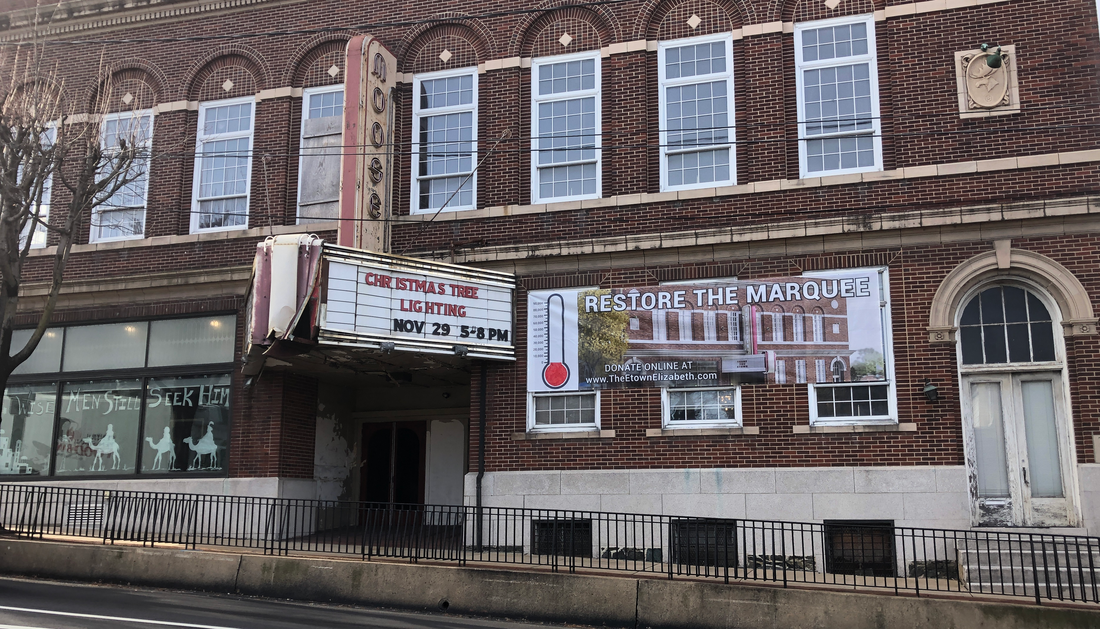
Perhaps you’re like me and you have strange dreams while you’re sleeping.  I find that my most bizarre dreams happen in the early morning, just before I wake up.  This past week while on vacation, I had one of those early morning dreams, and in the dream Faith Church had one of those old-style marquee outdoor signs with the chunky red letters, the kind of signs that theaters often used.  But in the dream Faith Church’s property was along Route 222 here in Lancaster, Pennsylvania, where Lancaster Bible College is located.  Somehow in my dream, three geographical places merged into one.  Faith Church, LBC, and the marquee, which is from my brother’s place of employment, The Marriage Hub in E-town (in fact, they have a webpage dedicated to the sign!).  

The dream gets crazier.  Two people from one of the churches that rents from Faith Church were working on placing a message on the marquee.  And the red chunky letters were really chunky.  Each letter was the thickness of toaster oven.  I’ve seen the letters that go on The Marriage Hub’s marquee, and while they are bigger than I expected, they aren’t the size of toaster ovens.  In the dream as the rental people were pulling a letter off the shelf, it was so heavy, they dropped it and it shattered on the ground.  

In my dream, I felt fear.  Fear?  Why?  Because I thought, “What would people at Faith Church say when they found out that one of our renters did something to damage our property?”  

There you have it.  A window into my psychosis. In other words, that’s the kind of thing I think and feel on a regular basis because it is a part of my real world.  And out it comes in my dreams.  Fear often comes out in our dreams.  So, what do you fear?  Have you had any dreams lately that exposed your inner fears?  

This coming week on the blog we continue our series on the Life of David, and we’re going to be talking about dealing with fear.  We’ve barely met David, and in fact we haven’t heard him utter a single word.  All we know is that Samuel anointed David to be the next king of Israel, and after that momentous event, David went right back to tending sheep.  That is, until the current king, Saul, needed a musical therapist, and his attendants learned that David was not only a good shepherd, but he was also quite the budding musician.  So, from time to time, David would visit Saul and soothe his troubled spirit with music.  

Everything is about to change for David, as we will learn this coming week on the blog when we study 1st Samuel 17.  I urge you to read this famous chapter ahead of time.  See if you can notice the theme of fear. In our posts next week, we learn how to address our fears.

Photo by mali desha on Unsplash

Seeing the heart like God sees it – 1st Samuel 16, Part 5

Is it possible for humans to see the heart like God sees it?  We can open up our bodies and view the physical human heart, repair it, and even replace it with a different heart, even an artificial heart. But what about the metaphorical heart? Our motivation, will, desires, emotions, fears, beliefs? God knows all about that heart. Do we see our hearts like God does?

No, not exactly like God sees the heart, but we can try. We can and should have a focus on the heart.  Other’s hearts, and our own.

But how do we give proper attention to our hearts?

Consider David. In this Life of David blog series, we’ve finally met David.  David is one of many Scriptural examples of God’s unlikely choices.  David is the youngest in the family.  Throughout Scripture, God so frequently chooses the unlikely, that we come to expect it to be likely that God will choose the unlikely.  If you read a story in the Bible, the likely choice will be the person on the margins, the oppressed, the poor.  That’s another reason why we do not look at the outward appearance. 

You are loved by God, valuable to God, and he sees in you what the world doesn’t see.  When you have a heart for God, and you are filled by the Spirit, you are the perfect candidate.  It’s not about your degree, your ethnicity, your lineage, your stature, your money, your body.  When it comes to the mission of God’s Kingdom, it’s about your heart and the empowerment of the Spirit. 

So give attention to your heart.  Nurture a heart that beats for God.   

One of the most important attitudes for a disciple of Jesus is a healthy, honest self-awareness.  We disciples are eager to learn our weak spots, desiring to learn how to grow more like Jesus.  Jesus completely overcame what some people call the PLM syndrome. 

Have you heard of PLM?  It’s the “People Like Me” syndrome, in which we tend to gravitate toward people like us.  We feel people like us are normal, and others who are not like us seem to be  abnormal.  Over time, our friend groups tend to resemble us, think like us, and live like us. 

But read through the Gospels and notice how often Jesus intentionally reaches out to people not like him.  Tax collectors, women, Pharisees, the sick, the poor.  Not to mention the fact that the theology of the incarnation is God taking on human flesh. Jesus is God who became something totally different, he became like us! 

Let me tale you a cautionary tale of people who had a debilitating case of PLM.  In the 1960s my church’s mother church, Grace Evangelical Congregational Church on Shippen and Locust Streets in the city of Lancaster, was booming.  Over 1000 people.  They had people coming downtown for worship from East Lampeter, so in 1968 they planted my congregation, Faith Church, in East Lampeter.  They had a wonderful vision for reaching a different community.

But over the next few decades, their community started changing.  People of color moved into the neighbor and whites moved out.  But those whites still drove into the city for worship at their building on Shippen and Locust.  Soon they started putting No Tresspassing signs on the property.  Grace EC slowly experienced a dwindling.  They had PLM, People Like Me syndrome, looking at outward appearance, and not reaching out in love with the Good News of Jesus, to people who looked different from them.  About 10 years ago, Grace EC Church ceased to exist. 

Now East Lampeter is changing.  Will we look at the outward appearance?  Will we succumb to PLM?  Or will we look at the heart?  To see others’ hearts, we will need to first examine our own.

Photo by DESIGNECOLOGIST on Unsplash

Note: I will be on vacation for a week. Blog posts will resume when I return!