I recently heard the story of a pastor who got in a predicament. The story goes like this: “A minister parked his car in a no-parking zone in a large city because he was short on time and couldn’t find a space with a meter. Then he put a note under his windshield wiper that read: ‘I have circled the block 10 times. If I don’t park here, I’ll miss my appointment. ‘Forgive us our trespasses’.’ When he returned, he found a citation from a police officer along with this note: ‘I’ve circled this block for 10 years. If I don’t give you a ticket I’ll lose my job. ‘Lead us not into temptation’.”
Maybe you know the feeling. It is a human condition to be tempted and fall into it. Yet we followers of Jesus are called to live differently. Therefore in this series of posts on Titus 1:5-9, we’re going to try to answer the question: Is it possible to be blameless?
In this blog series we are reading other people’s mail. Ancient mail, yes, but it’s still mail! Last we looked at the beginning of a letter from one of the earliest Christians, a guy named Paul, who was writing to his friend Titus. Today we continue studying that letter. If you’d like, you can read Titus 1:5-9, which will be our focus this week.
Let me review a bit of the background to this letter that we studied last week. We need to remember that Paul invested in Titus, discipling him, helping Titus become a leader in the fledgling Christian movement. Titus had even traveled with Paul to the Island of Crete, which is right in the middle of the Mediterranean Sea. There they spent time talking with people about Jesus and starting churches in towns across the island. When I refer to “churches,” don’t think of buildings. Instead they were groups of people who believed the message of the good news about Jesus, and gathered together. Think of house churches. Paul knows there is still much work to be done among these new Christians on Crete, and he has a plan. Paul’s plan is a mission to send Titus back to Crete with a very specific goal. I encourage you to pause reading this post, and read Titus 1:5-9 to see if you can discern the mission that Paul has for Titus.
Think about these brand new Christians on Crete. They have no Christian history like most Christians do around the globe in 2019. In America, for example, we are used to centuries and upon centuries of Christianity being the major religion in our nation. But for the Cretans Paul is writing to, Christianity was totally new. They had no Bibles to read. They had no leaders to guide them. All they had was maybe a few weeks or months with Paul and Titus. They were far from established.
And what’s more, they were in Crete.
The Cretans were, well, Cretans. Peek ahead to verse 12 and we get a taste of why the word “Cretan” is still used today to describe people that are out-of-control. Their own poet, Epimenedes, said that they were liars, evil brutes and lazy gluttons. We get the idea that Crete is Mardi Gras all the time. OK, maybe that is an exaggeration, but life in Crete was wild. Contrast that to the fact that when Paul and Titus were on Crete, they had preached a whole new way of living life. That new way of living was the way of Jesus. Paul knows that these very new Christians are in the middle of a Cretan society filled with opportunity for them to turn away from the way of Jesus. Cretan Christians were going to be faced with difficult life choices. How could Cretans live the new way of Jesus? Would they be able to live a new way? Would they be tempted to live the old Cretan way? Sure they would. Paul is very concerned about this.
To make matters worse, there were Christians who were causing lots of trouble in the churches already. We’re going to talk about them further next week. For now, look at verse 10, where Paul calls them the “circumcision group”. Scan through verses 10-12 and you can see how destructive these people were to the church, and Paul is not reserved in his feelings about them.
Suffice it to say, society and culture in Crete could be tough for the new Christians there, and Paul is rightly concerned. There is some serious work to be done, or this young church could fall apart.
What is Paul’s response to this very tricky situation? He sends in Titus. Look at verse 5. He writes that is he is sending Titus to deal with what was left unfinished. Paul and Titus had started the churches together, got them off the ground, and then had to move on. So these young churches are in a precarious position, and Paul wants to strengthen them by sending Titus back to them. Now Paul has a very specific mission for Titus.
See how he describes Titus’ mission in verse 5? Titus’ main objective is to appoint leaders in every town. This tells us that church leadership is very important to Paul. He talks about godly leaders in many places in his various letters. In this week’s posts, then, we are going to study Paul’s teaching about Titus’ mission to appoint leaders in the churches in Crete.
First of all, Paul uses the word “appoint.” It is not a vote. Titus is to do the choosing. Titus is making the picks. It is not up to the Christians in Crete. This is not a democratic process. At this juncture it is important to note that this letter was to be read in public to the churches. Paul wants all the Christians in Crete to know that they don’t get a say in who their leaders will be. Titus is choosing.
That means that we don’t need to elect our leaders in our church. Many American Christians think that we should always vote for leaders in the church, that somehow God works through elections. I think, though, that we have very good reason to doubt that idea. Yet we Americans especially are accustomed to elections in our society, so we figure we’ll hold elections in the church. You won’t, however, find elections and voting in the Bible. You also don’t find elections and voting condemned in the Bible. So I think we would do well to approach this with caution and wisdom. At Faith Church, this teaching from Paul is the foundation for why our Leadership Team selection is not just a vote, but a process where we try hard to only have candidates on the ballot whom we are okay with being on the Leadership Team. Therefore, when we vote, we’re okay with any result.
We also need to see that the public reading of this letter to Titus is some accountability for Titus. Why? Because Titus doesn’t get to choose whomever he wants. Paul goes on to give Titus some very specific guidelines he can use in the choosing process. And the people listening to the letter will hear these guidelines too. They will know if Titus is following Paul’s instructions or not based on how Titus makes the selections. So what kind of people should Titus be looking for to become leaders of the church? Take a look at the next post, as we begin to look at what Paul has to say about who should be selected to be leaders in the church.
What do you need? A million bucks? I often daydream about how a million dollars would free up my life. But that’s not really what I need. What do we need? We conclude this week’s blog posts on Titus 1:1-4 today looking at what Christians need.
If you haven’t read the previous four posts, I encourage you to pause reading this one, and jump back to part 1 and start there. The previous posts will set the stage for this one.
Then turn to Titus chapter 1, verse 4, and you’ll see that the author of this letter, Paul, mentions a name: Titus. Who is Titus? Titus is the guy that PUal is writing to, and in the previous posts we saw that Titus was one of Paul’s most trusted associates in ministry. Paul dispatched Titus to go to the Island of Crete in the middle of the Mediterranean Sea, where previously they had traveled and helped establish churches. Titus has a mission to help those churches, a mission that we will learn about much more next week when we study Titus 1:5-9. For now Paul greets Titus in this letter, calling him, “My true son in our common faith.”
Titus was not Paul’s biological son, but instead Paul led him to faith in faith in Jesus. Paul was his spiritual father. Fascinating, isn’t it, that we can have sons and daughters in the faith? Paul had reached out to Titus to help him understand that there is hope in Jesus.
Who is your Paul? Who is your Titus?
Church attendance across the country
is declining. People are less and less
interested in Christ.
What do we do?
Some stats say that 80% of people who
are invited to church will say yes, especially if you commit to be there with
them, pick them, go out for breakfast, and then go to the worship service together. But a vibrant relationship with Jesus is about
much more than one hour per week at a worship service. Paul calls Titus a son. That’s a deep family word that means Paul was
deeply invested in Timothy’s life.
Faith Church recently had an excellent Discipleship Training session, and our trainer, Clint led us to conclude that discipleship involves the following: Meet weekly with a few other people to study and apply the Scriptures with the aim of multiplication. Here is what each part of that description looks like.
Meeting weekly – needs at least this
frequency to build momentum and relationship
With a few other people – beyond 3-5
people is too large. Also team up and have two leaders. Recommend same gendered
groups.
Study & applying the Scriptures –
the Bible is essential to disciple-making.
With the aim of multiplication – keep
growing and splitting the group. Initial
group can be to study one book of the Bible, and then re-eval. But have heart to grow.
And what does Paul say to Timothy? He starts with “Grace and Peace,” a very typical Pauline greeting. What does Paul mean? Why does he share this? Is it just perfunctory?
Grace is defined as “a favorable attitude toward someone or something—‘favor, good will.’ (Louw & Nida). Paul is saying to Titus, “may you have favor, may you have good will.”
And may you have peace, which is defined as “a set of favorable circumstances involving peace and tranquility.” (Louw & Nida) Sounds very good, right?
Grace and Peace. We need that.
Notice that these are not grace and peace from Paul. Instead Paul says that the grace and peace are from God our Father and Christ Jesus our Savior.
Though Paul calls Titus his son, he properly refers to God as their Father. Paul is not truly father to Titus. God is father of them both.
And from God, from Jesus, there is
grace and peace.
Let those words settle on your heart
and mind today. In one sense it was just
a customary greeting. In another sense,
there is something deep and important grace and peace. We need grace and peace from God.
I’m reading the story of Brian Johnson of Bethel Music, and his struggle with anxiety. He said that it was a struggle for him as a child, but for 15 years he experienced grace and peace, until adult life and ministry got intense, especially as Bethel Music started growing. The anxiety returned. Maybe you’ve felt that with work, with raising a family, with finances, with school, with friendships. There are many pressures in the world. Do you need grace and peace?
Paul reminds Titus that grace and peace are rooted in God our Father and Christ Jesus our Savior. Brian Johnson says that for him, in the moment of panic and anxiety, that is when God became real. I sense Paul would say the same thing. Jesus is the truth, and in Christ alone we have the source of grace and peace. Turn to him in prayer, in his Word, not alone, with others (with your Titus!). Turn to Jesus, the source of grace and peace.
How many of you watched the royal wedding of Prince Harry and Meghan Markle just about a year ago? Do you remember the preacher? It was an American, Bishop Michael Curry of the Episcopal Church. I remember listening to that sermon thinking to myself, “Wow, that guy just brought an astounding message.” But in the days that followed, people accused him of “watering down the message.”
With this post, I conclude this series with the topic of church and ministry, and the first one is “we should never water down the message.”
What is watering down? When you water down something, it is usually a drink like coffee or juice, and you are diluting it, not allowing it to have full strength.
Sometimes people say a similar phrase: “We should never sugar-coat the message.” Sugar-coating is when you take something that maybe doesn’t taste so good and you add sugar to it. Like Mary Poppins sang, “Just a spoonful of sugar helps the medicine go down.”
So how do these figures of speech relate to the Bible? We preachers and teachers can water down or sugar coat passages in the Bible.
Was Bishop Michael Curry’s sermon at the royal wedding an instance of watering down the message? Think about the audience he was preaching to. First of all, the audience in attendance at the wedding itself was filled with royals, celebrities, politicians and nobles from across the globe. Then there was the world-wide broadcast audience that one report said numbered 1.9 billion. Let me ask you, if you were responsible to give that sermon at that wedding, to that audience, what in the world would you preach? Curry’s sermon was 13 minutes, and riveting. His topic, very appropriately for a wedding was…can you guess? Love.
He said phrases like: “Imagine governments and nations where love is the way. Imagine this tired old world when love is the way — when love is the way, unselfish, sacrificial, redemptive! … When love is the way, poverty will become history.”
He quoted 1st John talking about God as the source of love. He mentioned Jesus’ teaching that the greatest commands are to love God and love others.
He read an old black spiritual: “There is a balm in Gilead to make the wounded whole. There is a balm in Gilead to heal the sin-sick soul.” One of the stanzas actually says: “If you cannot preach like Peter and you cannot pray like Paul, you just tell the love of Jesus how he died to save us all.” Curry explained, “Oh that’s the balm in Gilead. This way of love is the way of life. Jesus died to save us all. He didn’t die for anything he could get out of it. Jesus did not get an honorary doctorate for dying. He wasn’t getting anything out of it. He gave up his life, he sacrificed his life for the good of the others, for the good of the other, for the well-being of the world. For us, that’s what love is.”
He said all that at the royal
wedding! I was cheering, weeping,
thinking to myself, “I bet there are a whole lot of people who just heard about
Jesus in a way they hadn’t ever heard before.
I bet there are a whole lot of people in that massive audience who could
be thinking, “That’s different from the Christianity I hear about, I want to
give this Jesus guy another look.”
Well, Curry’s sermon at the royal
wedding stole the show, if that is possible at a royal wedding, and the
commentators later that day and in the days to follow were talking about it
nonstop, amazed. When is the last time a
sermon about Jesus made the news and was the talk of the talk shows?
Yet at the same time, some Christians accused Curry of watering down the Gospel. When I heard that, I had to do a double-take. There’s no way. Watering it down? I thought, if I have a chance to preach a royal wedding to almost two billion people, I hope I would preach the exact sermon Curry did.
So how could someone say that Curry
watered down the Gospel?
One word: repent. He didn’t use the word “repent.” And he didn’t. I verified it. I downloaded the sermon transcript, and I even
used Control-F to check the document, so I didn’t miss the word “repent”. No mention of repentance.
We Christians definitely believe that repentance is fundamental to the content of the message of the Good News of Jesus. Jesus himself said it many times. In Mark 1:15, what might be the earliest record of Jesus’ first teaching, we read, “The time has come,” he said. “The kingdom of God is near. Repent and believe the good news!” Paul also included the idea of repentance in his preaching of the good news. Read Paul’s sermon to the people in Athens in Acts 17, and in verse 30 Paul preached that “God declares that all people everywhere should repent.” So was Curry watering down the Gospel by not including repentance?
In our day and age there is a trend of preaching that focuses on affirmation, and those kinds of preachers can be accused of watering down the message. People love encouraging messages. We live in a difficult and anxiety-ridden world, and people want hope and a reminder that God is faithful and that in him we can find strength for living. I get that. There are loads of place where the Bible does teach that. But the Bible also teaches a whole lot more.
What is not right is when a preacher teaches a section of the Bible that is confrontational or has some accountability, and by what they say in their sermon you’d never know it. Over the years, I have come to the conclusion that the Word of God is so good, so creative, so important, that as a preacher I need to do my best to get out of the way and let it speak. I don’t think I can get out of the way 100%. We all bring ourselves to the text, meaning that we cannot fully divorce ourselves from our personalities, viewpoints, life experiences and cultural assumptions when we are interpreting the text.
But I hope that while I have preached through my unique filter, I have not gotten in the way of the Word of God. My goal is to avoid sugar-coating or watering down. Instead, in every sermon I preach, I want to let the Word of God speak.
Likewise, take a look at the following passages and see if you can discern the theme:
Romans 16:17-18: “I urge you,
brothers, to watch out for those who cause divisions and put obstacles in your
way that are contrary to the teaching you have learned. Keep away from them. For such people are not serving our Lord
Christ, but their own appetites. By smooth talk and flattery they deceive the
minds of naive people.”
1 Thessalonians 2:3-6: “For the appeal we make does not spring from error or impure motives, nor are we trying to trick you. On the contrary, we speak as men approved by God to be entrusted with the gospel. We are not trying to please men but God, who tests our hearts. You know we never used flattery, nor did we put on a mask to cover up greed—God is our witness. We were not looking for praise from men, not from you or anyone else.”
2 Timothy 4:2-4: “Preach the Word; be prepared in season and out of season; correct, rebuke and encourage—with great patience and careful instruction. For the time will come when men will not put up with sound doctrine. Instead, to suit their own desires, they will gather around them a great number of teachers to say what their itching ears want to hear.They will turn their ears away from the truth and turn aside to myths.”
Paul is clearly saying, “Don’t water it down. Say what it says.” If it is an encouraging passage, I want you to hear the encouragement. If it is a confrontational passage, I want you to be confronted. If it is a passage about the Gospel, I want you to know the Gospel of Jesus. If it is poetry, I should be talking about how to interpret poetry. If it is theology, we should be talking about the ideas the author conveys. And on and on it goes. Let the Word speak.
To that end, I invite and welcome you to be like the Bereans. In Acts 17:10, Paul was on one of his missionary journeys, preaching and trying to start new churches in the Roman Empire, and here is what we read:
“As soon as it was night, the brothers sent Paul and Silas away to Berea. On arriving there, they went to the Jewish synagogue. Now the Bereans were of more noble character than the Thessalonians, for they received the message with great eagerness and examined the Scriptures every day to see if what Paul said was true. Many of the Jews believed, as did also a number of prominent Greek women and many Greek men.”
We need to know the real thing, we need to study the Word, like the Bereans. Do not check your brain at the door, do not just wholesale buy into what I am saying. Fact check me! And if you find I was wrong, please talk with me about it. I welcome those conversations. There have been times when I got it wrong. There will likely be more. So I need to hear from you. I need to be teachable too.
I say all this to emphasize the idea that we should not water down the message, which is exactly what the idea of fact-checking is all about. Could it be said, then, that this phrase “we shouldn’t water down the message” is a good one? I think it is a good one. But as with all these phrases we have been fact-checking in this series, there might be an exception to the rule, or another way to look it.
Let me ask you this: What are times when it might be right or helpful to water down the message? I would say in the sense I’ve already described, “never,” but I would like to suggest at least two occasions when it might seem like we’re watering down the message, but we’re actually not.
First, there are times when we update the method, staying faithful to the message.
Sometimes we have used one particular method to convey one particular message for so long, that we tend to equate the message with the method. For example, when Faith Church was considering stopping Vacation Bible School a few years ago, there was concern about this. We had done VBS for so long that it seemed wrong to stop VBS. Why? Well, VBS was a method of sharing the message. But it needed to be considered: are there other ways to share the message? Do we have to use VBS? Of course there are other ways. And thus we have Good News Club at Smoketown Elementary, which is actually more than double the amount of days that we have VBS. 14 per year, versus 6 during VBS. And then we have Summer Lunch Club, which is 27 days in the summer, which is 5x more than VBS. By canceling VBS and adding Summer Lunch, we changed the method, but we kept the message, and in fact, increased the amount of time we were interacting with the community. I would submit to you that we made the right choice.
The second occasion when it might seem like we’re watering down the message, but we’re actually not, is when we consider the audience. The royal wedding is a great illustration of this. Jesus certainly interacted differently with different audiences, and he didn’t preach repentance in every occasion. So what was Bishop Curry’s occasion? A wedding! Thus he talked about love, as is very appropriate at a wedding.
But does the fact that he didn’t mention repentance mean he watered down the Gospel? I can’t answer that question for you. It’s an opinion. I remain in agreement with what I said before, that given the same chance, I would hope I would preach the same sermon, and that means not mentioning repentance. In so doing, I don’t think I would be watering down the message one bit. Again, the audience matters, how we talk to a close friend, a stranger, a family member at Christmas dinner means we should check our audience before we talk about the Jesus who loves them.
My conclusion is that there are definitely preachers who water down the message, and we should be like the Bereans and search the word to see if preachers are staying true to the teaching of Jesus and his followers. But do so with humility and grace. We Christians can be so harsh, so accusatory. Let us instead be known for our gentleness, our kindness, our love. There is definitely a need to preach repentance, but when we do, let’s do so with love.
And when we live like that, perhaps we will be seen as a healthy church. And that goes to our next phrase:
We are growing because two
families from across the road just joined our church.
There is a lot of talk among Christians about what is a growing church. We Americans love to talk about organizations growing. In our culture, to be seen as successful, you have to grow, and growth is almost always defined about more people involved and more money coming in.
So is church just about numbers? Or is there more to it? Can a church be growing numerically, but at the same time be growing less healthy?
Let me say that a large church can be a very healthy church, and a small church can be a very unhealthy church.
But the opposite could also be true. A church that is increasing in numbers could be getting less healthy. Just as a church that is decreasing in numbers could be getting more healthy.
So how should we evaluate the health of a church? Let me recommend some ways:
First, look at how a church spends its money. Our budget. What should our budget include?
The people who approve the budget should be giving to support the budget.
The budget should be very outreach oriented.
The church should be paying its bills in a timely fashion.
The church should be good to our employees, generous to our community, supporting mercy and justice locally and around the world, as well as supporting church-planting, missionaries.
At Faith Church over the last three years, we’ve been having a huge financial focus on our building. There is a time for that. It is a healthy thing to care for the building so it can be used for God’s Kingdom. We don’t want to let it crumble, and we praise God for how he provided for our capital campaign.
But let’s not ever get building-focused. A healthy church is focused outwardly, and we should be able to see that clearly in our budget, by how we spend God’s money.
Next, a healthy church will follow Jesus’ teaching in John 13:33, “By this all men will know that you are my disciples, that you love one another.” How do we evaluate that? Love is subjective. But it definitely means reaching out to one another for deep, healthy accountable relationships.
This means will we demonstrate unity, not uniformity. A healthy church will be varied. Think different. Look different. And even believe different. But still love one another.
Faith Church is quite a varied bunch. Except in one way. We are so different in our ages, politics, interests, genders, but we are not yet very diverse in our ethnicity. I would love for us to become more healthy, and that means becoming more diverse.
Next a healthy church cannot be a pastor-centered church, but needs to be a 1 Corinthians 12, “all are part of the body” approach. If the EC Church would yank me out the church, Faith Church should be fine. The church should not be fully dependent on one person.
That means we need healthy spiritually mature leaders like we read about in places like Acts 6 and Ephesians 4, leaders who are fulfilling their biblical role. At Faith Church we strive hard to follow God’s Word, as our Leadership Team fills the role the New Testament writers call “elders,” and our Serve Teams fill the role described as “deacons.”
Next, a healthy church is a Praying church. I love how we pray together on Sunday mornings. Faith Church family, I would encourage you to make Wednesday evening prayer meeting a priority. Can I give you a loving push in that area? I am always amazed at how many people come out on Wednesday evenings when we hold Family Night meals and programs, but not nearly that many come to prayer meeting.
Also, a healthy church is a church that reaches out, sharing the good news of Jesus in both word and deed. Jesus and his followers taught us that the message of the good news has content and we should share that content. Jesus and his followers also taught and demonstrated for us that good news is communicated through deeds as well. In other words we need to have a balanced approach to sharing the good news in both word and deed. And we share Jesus both individually and corporately. We as individuals should be passionately concerned about reaching our family and friends in both word and deed. We also work together as a church family in projects like Summer Lunch Club and Good News Club, to name a few. I’m excited that Faith Church is leading the Summer Lunch Club location at Forney Park, as that will get us outside the building!
Also a healthy church should be concerned about our community, with both a focus on mercy and justice, as we read in Micah 6:8 “He has showed you, O man, what is good. And what does the Lord require of you? To act justly and to love mercy and to walk humbly with your God.” Do you remember the difference between mercy and justice? Remember the babies in the water story? Imagine having a picnic in a park next to a river, and someone starts yelling “There’s a baby floating in the water!” Like the story of Moses in the Bible. Someone would jump in and rescue that baby, right? That’s mercy. To jump in and help alleviate an immediate need. But what if they spotted another baby, and another and another, and the babies just kept coming? We would stop what we are doing and immediately help rescue babies! We would be merciful. What if the babies just kept coming, though? We would set up a baby rescue station, and staff it 24/7, which would take donations, volunteers, and coordination. We’d have to set up a baby rescue organization. That’s CVCCS in our community, when it comes to the issue of people struggling with poverty. CVCCS has become a rather large organization, sharing God’s love and mercy to those in need through its food bank, clothing bank and many programs. It is wonderful, and we need to support it, and we do, which I am so thankful for.
But there is another very important
question here: Why are there babies in the water? How are they getting there? And so we start going upstream to find the
source of the problem, and we work to stop it.
That’s justice. Justice is harder
work, I think, than mercy. Justice is more
difficult to see, more difficult to address. But a healthy church does both
mercy and justice. So think about those
in our community in need. We need to be asking
the question, “Why are they hungry?” Or
for those struggling with homelessness, why?
Or for those struggling with finances, why? What is the root? Those struggling with drugs and alcohol,
why? What is causing this? Now we’re entering the territory of justice
and it is much harder to address these difficulties. But we need to do that work
too.
Next we also have a global concern for mercy and justice. We should be learning about and supporting our missionaries, our sister churches in places like India, Nepal, Japan, Mexico and Liberia. We should be learning about injustice around the world and participating in bringing God’s justice to a broken world, just as our missionaries and sister churches proclaim good news in Jesus and start new churches and fight injustice around them.
Finally, a healthy church is a Disciple-making church. There is often confusion about discipleship and outreach, where people equate the two. We need to be disciples who make disciples.
As we conclude this series, we’ve
talked about so many phrases or ideas that we shouldn’t say. So what should we say? The magazine Sojourners, which we have in the church lobby, has an article
called “10 Things Christians Should Say,” and I think it is quite important
that finish this series on that positive note!
Take a look at Titus 1:2. There is a repeated word in the original Greek in which Paul wrote, but for some reason the English translations I looked at don’t repeat it. Here is how verse two would look if that word were repeated:
“in hope of life eternal, which was promised by God, who does not lie, before time eternal.”
See that repetition? And also see the emphasis on God as telling the truth? I mentioned that in the previous post, as Paul is very concerned that Titus and the Christians on the Island of Crete focus on truth. Why does Paul need to say that God doesn’t lie, though? Isn’t that obvious?
Actually, no. In fact, the concept of God as truthful, contrasts to the Greek and Roman gods, who the people in Crete were raised on. One author I read said that “there was never a greater lying trickster than Olympian Zeus, who always seemed to wrap himself in a fog in order to ravish some maiden out of sight of his wife, Hera, and then to lie about the deed.” (Baugh, Titus)
Paul knows his audience. He knows what the Cretans believed, because they were taught it from the days of their childhood, and Paul see how they act. He wants to assure Titus and the church in Crete that the hope they have in Jesus is based on the fact that he is the truth.
What’s more, the truth God promised was from eternity to eternity, that there is hope of life in him! What a wonderful way to start a letter, isn’t it? There is hope in God, hope for life, and God doesn’t lie about this. It is true!
Continue to verse 3. There Paul explains that, “At God’s appointed season, He brought his word to light.” What is God’s Word? His word is the truth that Paul mentioned in verse 1, the truth of Jesus. “He brought it to light” is the idea of revealing it. Paul says that through the preaching, the proclamation, that was entrusted to him, then, he is helping people see the truth of Jesus, shining a light on it so people can see it.
Now this is Paul speaking…he was an apostle…so maybe this is just something that he does? Maybe we don’t have to? Maybe it is just for the evangelists? The missionaries? The pastors?
No, this is for us all! We all can shine a light on who Jesus really is. We recently had a discipleship training event at Faith Church that made this very clear. The mission of God’s Kingdom to make disciples is for all Christians. How do we know this? Think back to Matthew 28:20. There Jesus says that a disciple is someone that is learning to obey everything Jesus commanded the original disciples. One of those commands is “go make disciples”! So it is every disciple’s call to make disciples.
Paul goes on to say that the preaching entrusted to him was by the command of God our savior. Paul repeats this in verse 4 when he refers to Christ Jesus our savior. That repetition means it is an important concept.
How is Jesus our savior?
Savior from what? What do we need saving from?
Savior for what? What do we need saving for?
Paul doesn’t explain these things. He will later in the letter. We’ll get to that. For now, Paul is saying that we have a savior in Jesus, that Jesus is the truth that leads to godliness. In other words, while there are many people and organizations trying to get us to believe that they have truth, Paul is saying that truth is found in Jesus. True hope for life eternal is in Jesus. Throughout the letter we’re going to hear him talk about this more. In this greeting, he just introduces it. So if you are struggling, wondering if there is hope, wondering what is the truth, keep reading Titus. Feel free to read ahead! Comment below. I would be glad to talk further.
Many in our world do not have hope. Paul clearly wanted Titus and the people in his church to know the source of truth that leads to godliness.
Now that Paul has described his role as a servant apostle to proclaim the hope we have in Jesus, he next refers to the recipient of the letter. Check back tomorrow as we learn about Titus.
Today, as we continue our series on False Ideas that Christians believe, we are fact-checking statements about money and generosity.
You can’t out-give God.
Give and you will receive.
It’s my money; I worked hard for it.
Money is the root of all evil.
Let’s start with…
On the surface, this one is true. God is infinitely generous.
The primary example of God’s generosity, perhaps, is Jesus. I love how the Apostle Paul puts it in Romans 8:31-32. There he reminds us that God even gave his son! And if he gave his son, how will he not also graciously give us all things? Think about it. If he already gave us his son, anything else in life that God could possibly give us would be far less valuable. Infinitely less valuable. So in that sense, you can’t out-give God because he already gave us Jesus.
Imagine with me a giving contest, in which it is us versus God, to see who could give the most. He could just make more money appear, and he could give and give and give, even more than all the wealthiest people in the history of the world combined. It’s a no-contest. But that’s a made-up situation.
How does God give? Primarily, God gives through his people!
Let me explain. The phrase “You can’t outgive God” could potentially be used as an excuse for not giving to the church because we could think in our minds, “I don’t need to worry about giving much to the church, because God will provide for the church, even if I don’t give.” But that excuse is incorrect because God’s primary method of providing for the church is through the generosity of his people.
Over the last two and a half years since Faith Church started our Capital Campaign, we have seen this in action. God has provided amazingly, through his people. We like to think of God’s provision as miraculous, like the contest I envisioned above, that God will make money drop out of the sky, out of thin air. He can do that. But know this: it is no less miraculous and astounding to say that God works through his people. It has been incredible to see this through the Capital Campaign. First of all, many individuals in our church family gave generously. That was God providing through them. Then we also received some surprise gifts from Christians who are friends of Faith Church. First was a $40,000 matching gift, and then two gifts from another church, one for $20,000 and then one for $65,000! Just because those unexpected gifts are large amounts, that doesn’t mean they were more miraculous or better than what we all from Faith Church gave together. It all was part of how God provided through his people. You can’t out-give God.
Why, then, are we fact-checking this statement, if it is clear that God is so giving?
Because sometimes there is another
side to the story.
I recently came across a true story written by a man who described a situation in his life that happened ten years before he wrote the story. Ten years before, he was a student in seminary. Finances were really tight. Going to school full-time meant that he didn’t have the benefit of a regular income. He and his wife also had children, so she wasn’t bringing in a ton of money either. In other words, their expenses were greater than their income. At one point they were facing $5000 in overdue bills, and they were at their wits end, with no means to pay. Amazingly a $5000 check from one person came in the mail, for them! Fantastic, right?
Well…here’s how the author continues
the story.
“Take a detour with me for a moment. I have heard many evangelical sermons on giving. I have listened to testimony after testimony from those who had prioritized the Lord in the tightest financial circumstances. I had read the passage about the ‘widow’s mite.’ You know, the one where the lady was commended by Christ for giving her last two dollars to the Lord. I knew all the clichés: ‘I just keep shoveling out, but God has a bigger shovel!’ Or, my favorite, ‘You can’t out-give God.’ And, yes, how about our evangelical go-to passage in Malachi 3:10: ‘Bring the whole tithe into the storehouse, so that there may be food in My house, and test Me now in this,’ says the Lord of hosts, ‘to see if I will not open for you the windows of heaven and pour out for you a blessing until it overflows.’ Test the Lord and see if he does not bless you.
“Now, back to my story. I tested the Lord that day. I gave to him of my first fruits. I gave to him before the late electric bill, the car payment, and the bread box. I prioritized Him above my children, wife, financial integrity and all else. I had just enough to catch up on my bills so long as I put his claim on hold. But I gave to him part of what I needed. Why? Because he is faithful. Why? Because you can’t out-give God. Why? Because he called on me to test him.
“However . . . Two weeks later, threats of collection, electricity cut-off, and growling stomachs of my family made me wonder: Did he just fail the test? Did I just out-give God?”
How about that? Here is a man studying in seminary so that his family can enter ministry. They believe “you can’t out-give God”, and so it is the right thing to do to give money to the Lord, and watch God provide. They give to the Lord, perhaps through an offering at their church, and thus they no longer had the money to pay their bills. Then their electric got cut off. The bill collectors start calling. And the man can’t provide enough food for his family. What do you think? Did he out-give God?
I appreciated the author’s conclusion:
He says, “I do believe what I heard a pastor say the other day: ‘There is no greater indication of your spiritual life then your giving habits.’ He went on to say, ‘It is impossible to be a good Christian if you are not giving.’ The old saying, ‘If you want to know where someone’s priorities lie, thumb through their checkbook,’ is true. However, I do not believe that we are to give with some idea that the bank account of heaven is obligated to wire transfer directly to our earthly bank accounts when we give sacrificially. God may or he may not.”
So we Christians should be known for
our generous giving to the Kingdom of God.
In many places in the New Testament we read about how disciples of Jesus
should be living simply so that we can give generously. But when we give, know that God is not
obligated to shovel even more financial blessings right back into your life.
Another way to look at this is to ask the question, are there any instances in which people give more than what God has asked? If he asks for 10%, are their people who give 20%? Sure are! This relates to the confusion about tithing. In the Old Covenant that God had with the people of Israel, he did command them to tithe. A tithe is technically a giving of 10%. But in that Old Covenant, there were actually three tithes for the nation of Israel: two annual tithes, and one every three years, amounting to 23% annually. But again, that was God’s agreement with Israel. We are not under that agreement, and we have no covenant binding us to give a certain percentage of our income. Instead we are taught to live simply, so that we can give consistently and generously. Each person needs to decide before the Lord what that will look like for their family. For some people that will be well below 10%. For others it could be way above 10%.
I’ve written about this before, and I think it is so helpful I will repeat it: our evangelical forefather John Wesley had a phrase that we would do well to follow: “Earn all you can, save all you can, give all you can.” Here’s what he meant.
Earn all you can. Work hard. Be diligent in your employment. Use the gifts and abilities God has given you to earn an income. And for some of you, you will find that you are really good at making money.
Next Wesley said, Save all you can. He was not necessarily talking about starting a savings account or an investment portfolio. Those might be good things, though. What Wesley was talking about was living simply. Don’t spend money on yourself beyond your needs. Reign in your wants and your desires. Don’t believe the American consumer system. Don’t spend your money. Why?
So that you can do the third thing Wesley taught: Give all you can.
There are times to celebrate and spend on yourself and your family. But we American Christians need to allow God’s Word and Jesus’ pattern of life and his teaching to guide us, not the spending practices of our culture around us. Is it possible that we American Christians have been co-opted by our society? Who would be willing to take a hard look at it? Rather that make money in order to spend it on ourselves, we should make money to give to the Kingdom of God. How do we give to the Kingdom of God? Give to those groups in line with growing the Kingdom of God, give to your local church, give to a family in need. Remember what I mentioned above, about how God uses individuals to care for those in need. Remember the story of the Good Samaritan, who gave his time and financially to the stranger/the enemy along the side of the road.
And that brings us to our next phrase:
This is a picture of the World’s Largest Shovel. The Garden-Ville shovel, which is made from all recycled materials diverted from the landfill including scrap metal and telephone poles, has some amazing dimensions. Total Length – 40 Feet 8 Inches, Spade Width – 7 Feet 4 Inches, Weight – 5,000 Pounds!
There is a companion phrase to “You can’t out-give God,” which we just fact-checked, and the phrase “Give and you will be blessed,” and that is the idea that “God’s shovel is bigger.” Even bigger than the one in the picture. But that phrase “God’s shovel is bigger” is using figurative language. Some famous Christians like JG LeTourneau used this phrase to describe a situation where he gave 90% of his income and lived on 10%. And the more he gave, the more God blessed him, and so LeTourneau was able to give more and more.
Does God work like that? Does he promise that? There are a couple passages of Scripture we
can turn to that seem to say this.
Luke 6:38 – Give, and it will be given
to you. A good measure, pressed down, shaken together and running over, will be
poured into your lap. For with the measure you use, it will be measured to you.
2 Cor 9:6 – Sow generously and you
will reap generously.
But what does these phrases mean? Are they guarantees that if we give, we will
get? Do we just need to shovel out money
and generosity back to God, and since his shovel is bigger, he will give us
even more blessing?
Remember the seminary student who
miraculously received $5000 to pay his bills, but gave some back to his church
and then had his electricity shut off?
Here is what he concludes:
“Won’t we experience ‘blessing’ when we give, even if it is not financial? I suppose. But it really depends on how you look at it. When we give sacrificially to the Lord without expectations, we are acting out the blessing that we already have been given: a perspective that is in alignment with reality. The widow gave because she knew that this was not her home. She gave all she had because she was already sold out to God. She knew that the treasures of this earth are nothing to be compared to the glory that is to follow. If you believe this—if you truly believe this—you are already blessed. The belief itself is the blessing. Maybe God’s shovel becomes bigger than yours and maybe it does not. Our blessing is our ability to trust God. Our giving is an expression of that trust. We should expect to suffer in this life. Sometimes that suffering will come in the form of financial suffering. Sometimes it will be other things. But to think and preach that there is some guaranteed way to avoid the cross of financial suffering is not a message that we carry.”
So we disciples of Jesus are people who should be known for a kind of generosity that is so different from the culture around us. The reason why we live that way is because we have a different view of money.
If you have bills, one of the most faithful things you can as a Christian is to pay those bills. If you have loans, pay them off. That is faithful spiritual discipleship work. What was so hard for this seminary student, and what is difficult for many of us is when our income is not enough to pay the bills and give money to God. What do you do? Pay the bills or give money to God? I can’t tell you how to make that choice. The seminary student is right. Just because you give, God is not obligated to pay you back more.
One way that Christians deal with this quandary is the next phrase:
We do work hard and earn money. But the Bible teaches the principle of stewardship, meaning that we are God’s stewards. It is his money and he owns it. Every cent of the salary we earn, every cent of the hourly job, every cent of the money we receive from the government, it’s all God’s money.
Yes, you work hard, and as we already heard John Wesley say, we should work hard to make money. But we are still stewards of God’s money. God gave us the ability to work, whether that is brain power or physical ability. God provided all of our ability, and he provided our jobs. How many of you got jobs because you knew someone? Or you knew someone who knew someone? How many of you got your job because you have connections Not one of us got where we are at solely by ourselves. We have all been helped along the way in some way. Therefore we need to remember that the money those jobs provide is not our money. We live in community and we are stewards of God’s earth and the abilities he gives us to make money.
Sure, hard work, living simply and wise spending and investing will almost always result in financial blessing. But, not always. And when it does, it doesn’t mean it is your money. It is all God’s, and we are simply his stewards. We should use his money, therefore, like he wants it to be used.
Where this gets confusing is in evaluating how we should use his money, especially when most everyone in the culture, even Christians, use their money as if it is their money! As if they worked hard so they can spend hard. Yeah, they give a bit here and there, but they spend quite a bit on themselves.
What will it look like when people see themselves as stewards of God’s money? Turn to Acts 2:42-47. We need to see how the earliest Christians handled their money, and we will see that they saw themselves as stewards of God’s money. Go ahead and read that before continuing this post.
Did you see how the people generously shared their resources with one another?
Where did they get this idea? From Jesus!
He taught it to them. For
example, he told the Rich Young Ruler to sell everything he had and give it to
the poor. Jesus taught many parables
about money, clearly showing the people that they were God’s stewards, and they
should use God’s resources like God wants it to be used.
A few months or maybe years later, after what you just read in Acts 2:42-47, but when the church was still really, really new, we read more about this selfless generosity. Turn to Acts 4:32-5:11, and read that story. Clearly what Ananias and Sapphira did went against the teaching of God. It seems that they sold a property and then gave money to the church saying that it was the full amount of the sale of the property. But they actually held some of the money back. Their sin was selfishness and lying about it. Have we done this? Have we selfishly held back the Lord’s money so we can use it on ourselves? When we already have enough?
This relates to the final phrase we
are fact-checking today:
1 Timothy 6:10 is where this phrase comes from, and it is close, but no cigar. The phrase is actually, “The love of money is the root of all evil.” In other words, money is not the issue. The issue is our heart.
And this is where it gets real. Let me illustrate.
On the podcast I recently created, one person, Kevin Ressler had the idea that we Christians should consider opening up our books to one another. He was referring to our checkbooks. Submit your financial choices to the church community! Assault the idea that our finances and expenditures are personal. They should all be laid bare before God. So in our new Faith Church pictorial directory we are going to list everyone’s previous year gross income. Just kidding! But what about you? Would you be willing to have others hold you accountable on your use of your money?
I think the assumption is that opening the books would be harder, or more confrontational, for those of means. I would suggest that this assumption is not true. As much as we would confront the person who dropped $25K on a big vacation, we could also confront the person who can’t pay their bills but buys drinks and snacks at the convenience story every day. After worship at Faith Church we have a sermon discussion class, and the day I preached this sermon, one person noted that for many people, the convenience store is basically their only option. They would love to be able to purchase in bulk, or organics, or other healthy options but their life situation simply doesn’t allow it. We do need to be sensitive to that. That said, I would submit that the larger point remains. We would do well to be people who have healthy, loving, gracious, but truthful and firm accountability for our financial decisions.
Selfish spending and lack of generosity is in all of us. Rich and poor. And everyone in-between. Young people, older people. Teenagers who just got their first job, all the way up to older adults in retirement. We are all swimming in the waters of American capitalism and consumerism, and we have been sold a bill of goods by our culture that lies to us when it says we will feel better if we buy, buy, buy and treat ourselves. It does feel good for a while. But there is within all of us the empty self and it is insatiable, hungering for more and more stuff and experiences and clothing and vacations and coffee and it cannot be filled. You cannot buy happiness. We need to tend to our heart. Out of our heart flows greed. Money is not the issue. Greed is.
This is why Jesus taught, “Where your treasure is, there your heart will be also.” Matthew 6:21. Therefore, he says, store up treasure in heaven. Because our hearts follow our treasure. Invest in God’s Kingdom, Jesus says, or seek first his Kingdom, and our hearts will more and more align with God’s heart
In conclusion, God does not promise you to be wealthy. Some who follow him are wealthy and some who follow him are not. Wealth is not a way to measure if you are loved by him and being obedient to him. He does not promise to give us more wealth when we obey him. He does call us to give generously and to be loving and caring for other brothers and sisters, to our neighbors, and he reminds us that we are simply stewards of what we have. This is not our home. So let us not live lavishly here, but instead store up treasure in heaven, as Jesus taught.
Truth does not seem to be in good standing in our culture. Facebook recently reported that they deleted over 3 billion fake accounts. This means there are a lot of people who want to influence others around the world with untruth. Fake news! Our previous sermon series was all about false ideas that Christians believe, and throughout that series we found many untruths. As we continue looking at Titus 1:1-4, Paul is going to talk about truth. It seems truth (or the lack thereof) was a major issue on the Island of Crete, where Titus was serving.
After describing himself as a servant/slave of God and apostle of Jesus, Paul says he holds these roles, “For the faith of the elect.” Who are God’s elect? This is the idea of God choosing people to be part of his family. There are two main beliefs about God choosing people: corporate election and individual election. In my denomination we do not believe that God chooses individual people to be a part of his family and that he condemns others. Instead we believe that God does choose all corporately in Christ, and yet we individuals need to choose him back. God chose the entire nation of Israel, in the Old Covenant, the Old Testament, to be his special chosen nation, and yet that didn’t guarantee that each individual Israelite was saved; they still had to choose him. Many didn’t. In the same way, in the New Covenant, the New Testament, we believe that God chose all in Christ, but that doesn’t guarantee that each person will be saved, they still have to choose God.
That is why Paul uses the word “faith” in Titus 1:1 He wants more and more people to place their faith in God. Therefore he mentions the next phrase about why he is a servant and apostle. He wants all people to have “the knowledge of the truth that leads to godliness.”
What is the truth that Paul wants
people to know?
Paul knows he needs to talk with Titus and the other Christians in Crete about truth. Why? Look at verses 10 through 12. We’re going to dig into that much more fully in the coming weeks, but I want you to at least see it here. In verse 10 he talks about some Cretans as “mere talkers, deceivers,” in verse 11 he refers to their “dishonest gain,” and in verse 12 he quotes one of their own poets, Epimenedes, who said, “Cretan are always liars.” Just as it is in our day, in Titus’ day, in Crete in particular, it seems that lying and deception were rampant. You can see why Paul really wants them to know the truth.
So what is the truth that leads to godliness? In verse 2 Paul says, “God does not lie.” Truth, Paul says, is found in God and as we keep looking at the passage, we’ll see how Paul describes it.
Looking at the phrase, “truth that leads godliness,” what Paul is talking about is straightforward. The word he uses for “truth” is defined as “what actually happened.” And the word he uses for “godliness” is defined as “appropriate beliefs and devout practice of obligations relating to supernatural persons and powers—‘religion, piety.” (Louw & Nida)
So Paul sees himself as a servant of God, an apostle of Jesus, with the mission of helping all people come to know the truth that will lead to right beliefs, right practice and thus, right relationship with God. I appreciate that so much. It goes back to the two main purposes of this letter: sound doctrine, and good works. Paul wants everyone everywhere to know the truth (sound doctrine), which is the truth about Jesus, so they will live rightly (do good works).
Do you know God’s will for your life? How do you find out? A lot people wonder. In this post we are fact-checking Christian ideas about God’s will. There are a lot of thoughts out there about God’s will. And unfortunately there is much confusion too. Here are the ideas that we are going to be looking at:
God doesn’t
choose the equipped, he equips the chosen.
You’re never
safer than when you are in God’s will.
When God closes a
door, he opens a window.
All in God’s
timing.
Have you heard any of these? Have you found yourself thinking them or maybe saying them? Let’s take a deeper look at them. We’re starting with:
As I read that one a couple times
while preparing for this sermon, even though it was a phrase that I have heard
many times before, I thought to myself, “That is a confusing phrase.” I love these kinds of phrases, where you
move words around in a sentence and it gives you a different meaning. They’re super creative and fun, and often
times they can be very helpful.
Like John F. Kennedy’s famous line: “Ask not what your country can do for you…” how does it finish? I bet you know.
“…Ask what you can do for your
country.”
I did not know this, but there is a term for this kind of literary device.
Antimetabole! It is from the Greek meaning “turning about”
and it is defined as “repeating a phrase in reverse order.”
But sometimes antimetabole is just plain old confusing or illogical. So let’s fact check this phrase we Christians so often say: “God doesn’t choose the equipped, he equips the chosen.” It is a fun phrase to say, but we have to break it down into pieces and see how its ideas and assumptions compare or contrast with biblical teaching.
This phrase has a couple features that
we need to look at:
The idea of God choosing people. Does God choose some people and not others? And choose them for what? To be saved and go to heaven? Or to just serve him? Does God choose some people for certain roles, like becoming a pastor or missionary, but not other roles? There are lots of questions about the idea of God’s choosing.
The idea of people being equipped. Are certain people equipped, but not others? Does God look around the earth, surveying people and concluding, “Aha! You are equipped to be a pastor, so I choose you.” Does he do that? Or does he randomly choose some people, and say, “I choose you, and now I am going to equip you to be a missionary.” And what about the other roles and responsibilities in his Kingdom beyond just being pastors and missionaries?
There are so many questions! Let’s see if we can answer some.
First of all, does God choose people?
In the Old Testament we saw in our Deuteronomy series that God chose the nation of Israel to be his people. He chose a whole family that became a nation. So he did choose, but each Israelite had to respond by also choosing him back, a choice they showed they made by keeping the terms of the covenant that they had with God. In other words, they had to obey him, and to be faithful to him. Sadly, many did not choose to do this throughout their history, and they broke their covenant with God. In fact, the whole nation many hundreds of years later was so rebellious that God allowed them to be invaded and exiled. God choose them corporately, but his choosing did not guarantee that they would be saved no matter what. They had to choose him back. Additionally, when he chose them, he gave them a mission to be a blessing to the whole world, as he told them that he wanted them to reach the world. There is a sense in which God chose not only Israel, but through Israel’s mission, God also chose the whole world. Yet Israel didn’t do so well with this mission.
God through Jesus, then, entered into a new covenant, choosing corporately again, that anyone who would respond in faith as Jesus’ disciples would be part of his new family, as we saw in the previous post. We saw that God desires all to be saved. Again, God chose not individual people, but he choose corporately all who are in Christ. That means each individual, just like the individual Israelite in the Old Testament, has to choose God back to be part of this new covenant, this new corporate choosing.
My conclusion is that we should not
see God as choosing some people to be saved, for whatever random reason, and
not choosing others. God wants all to be
saved. Not all will be saved, of course,
because some will not choose God back.
What I have been talking about so far
is God’s choice for us to be a part of his family.
There is also another way of looking
at God’s choosing, and this, I think, is what the phrase we are fact-checking,
is talking about. Does God choose people
for special roles or tasks in his Kingdom mission?
In the Bible, we can read about times when he definitely did this. The most amazing example, I think, is that of the Apostle Paul in Acts 9. Paul was a Pharisee who was bent on eliminating the brand new fledgling Christian church. He thought the early church and its apostles were a cult. God supernaturally broke into Paul’s life and said “Stop it, Paul! I, Jesus, am the real deal, and I want you to start serving me now.” How many of us have thought in our lives, “Lord, I want you to speak audibly and unmistakably to me like you did to Paul!”??? Well, it changed Paul’s life, as you can imagine it would. Paul went from persecuting Christians to being the most ardent Christian missionary.
For the rest of Christian history, up until the present day, we have a Christian idea that God still supernaturally chooses some people to be his ministers. I believe God does still do this choosing. We have a term for it. “Calling.” Are you called, we say? Many people have felt that God has called them into ministry.
In many churches, this calling is a requirement for ministry. Some people talk about their work as a calling, and many believe that God has called them to do it. My point is that God absolutely can call us supernaturally, and I believe he does. But as we will see, that is not the only way Christians can make decisions about how to live their lives. Imagine if everything we did, every choice we made, we first had to wait until God told us what to do!
On one hand it sounds very spiritual. “God I am depending on you, guide me, and tell me your will, and I will only do what you want me to do.” On the other hand, it would lock down our lives. What outfit should we wear? What should we have for breakfast? Maybe these are all important details!
Well, that is ridiculous, and so some people respond by saying, “Well God allows us freedom to make decisions about the mundane aspects of life, and he only has a special individual will for us in the big areas.” What, then are the big areas? Usually people respond that the big decisions are, “Who to marry, what career to have, whether or not a person should be in ministry, and maybe where to live and anytime they are considering a big purchase.
Here’s the question, though…does the Bible affirm any of this decision-making and will of God logic? No. My conclusion about God choosing is that while he can and does break into our world and guide us, that supernatural act is the exceedingly rare exception to the rule, and thus we can make decisions, even big ones, without having to wait for God to direct us. Because he, in his word, has given us teaching and principles saying that we can make wise decisions on our own, we can have confidence in decision-making based on biblical principles of wisdom.
So, let’s take all of that and apply
it to the phrase we’re fact-checking. In
so doing, it seems to me that we can affirm the first side of the phrase: God
doesn’t choose only certain people who would qualify as “equipped” as if there are
special people who God will use.
Consider the analogy of new car purchase. When you buy a car, you learn about all the features that come standard, and the features that are extra. We Christians can wrongly believe the idea that there are standard people and that there are non-standard people, like there are standard cars and cars that come loaded. We can believe there are regular Christians and then there are super-spiritual Christians who are called. Is that how God has created us?
Not at all. Yet, we sometimes think that don’t we?
Here’s the truth, though: God can and does use all of us, even in our weakness. God has created us with unique personality and aptitude, and can use anyone. We all have a role to play. No matter who you are, you have a role to play! I want you to hear that very clearly. You are gifted by God and he wants to use you.
So with that in mind, we can now examine the second half of the phrase.
Does God equip the chosen? Again, that makes it seem like God chooses some and not others. I would reiterate that every Christian is chosen, and there is not some special group of super-spiritual Christians who have a special calling from God. Pastors are not special. Missionaries are not special. We are all important, we are all chosen, and we all have gifts and abilities.
We read about the vitality of every part of a church family in 1 Corinthians 12:4-7,
“There are different kinds of gifts, but the same Spirit. There are different kinds of service, but the same Lord. There are different kinds of working, but the same God works all of them in all men. Now to each one the manifestation of the Spirit is given for the common good.”
The writer of this passage, the apostle Paul, goes on to use the illustration of a body. He says in verse 18: “God has arranged the parts in the body, every one of them, just as he wanted them to be.” Further in verses 20-22 Paul writes, “The eye cannot say to the hand, “I don’t need you!” And the head cannot say to the feet, “I don’t need you!” On the contrary, those parts of the body that seem to be weaker are indispensable.” So he concludes in verses 25-27, “so that there should be no division in the body, but that its parts should have equal concern for each other. If one part suffers, every part suffers with it; if one part is honored, every part rejoices with it. Now you are the body of Christ, and each one of you is a part of it.”
Just as all parts of a body are important and needed and must work together, all the people in a church are gifted and have a role to play. Therefore we can say that the second half of the phrase is true, but only in the sense that all are called by God, and all are equipped by God to serve him and the mission of his Kingdom!
Hear that, Christian. You are all called by God to serve his Kingdom using the unique gifts and abilities and bodies and minds that he has given you. Whether you are young or old, male or female, you are vitally important. God gives his Spirit to all Christians.
And that brings us to our next phrase.
We’ve seen that we are all gifted by God, but clearly Israel was not always following God’s will. Just because you are a Christian who is chosen corporately in Christ and who is gifted to serve him, that doesn’t mean that you will always choose God. That means we need to talk about following God’s will. And this phrase comes up: “You’re never safer than when you are in God’s will.”
It gives the idea that there is some
particular will of God, and if you just choose to do that special will of God,
your life will be great! We need to fact
check that idea.
What does this mean when it says
“safe”? Bodily safety? Physical safety? Emotional?
Financial?
In The Lion, The Witch and The Wardrobe, from The Chronicles of Narnia, CS Lewis writes about Aslan, which is the lion who is a figure for God in the story. Lewis says that Aslan or God is not safe, but he is good.
There are plenty of times when people in the biblical stories were totally in line with God’s will, but they were far from safe. There are plenty of times when you, too, are following God and you are not safe. In some places around the world, being faithful to God means that you will be persecuted.
In Matthew 10:28 Jesus taught: “don’t worry about the body, be concerned about the soul.” There is no guarantee that following Jesus means you will have a guarantee of physical safety.
But look at the phrase more closely. It talks about God’s will. What does this mean by God’s will? We’ve been discussing it throughout this post, but now I want to consider it more closely.
There is a long-held point of view
that in the many areas of life for which we have questions, that God has a very
specific will that he wants to us to discover.
This is the bull’s eye view. That
if you want an awesome safe life, you can discover and follow God’s will.
It seems like Paul in Romans 12:1-2 talks about this:
“Therefore, I urge you, brothers, in view of God’s mercy, to offer your bodies as living sacrifices, holy and pleasing to God—this is your spiritual act of worship. Do not conform any longer to the pattern of this world, but be transformed by the renewing of your mind. Then you will be able to test and approve what God’s will is—his good, pleasing and perfect will.”
But Paul is not talking about a bull’s eye approach. He is talking about being obedient to God. He talks about it in the sense of offering our bodies as sacrifices to God. This is not a comfortable, easy life, but a death to self, just as Jesus said his disciples would do: “deny yourself, take up your cross and follow me.” That means you give everything in your life to him, and when you do that, Paul says, in Romans 12:1-2, you will not be conforming to the pattern of the world, and you will be transformed through the renewal of your mind, and you’ll be able to see clearly what it means to obey God. We should not understand Paul as talking here about specific bull’s eye decisions God has for each person, whether the big decisions I mentioned above, or the multitude of small decisions we face every day.
Instead, Paul is talking about living a life of commitment to the way of God’s Kingdom, the way of Jesus, to live like he did, which was first and foremost sacrificial, a giving away of one’s own life, like Jesus did.
So in life we will find that there are plenty of excellent options that we can choose. Who to marry? There is not one soul mate. What career to follow? God might not call you to a specific job. He might not give you specific instructions about where to live. Instead, God wants us to use our wisdom when we make choices. Base your decisions on biblical teaching, base them on wise godly input, and definitely pray. Ask God for wisdom, as James teaches us in James 1. But don’t expect God to guide you supernaturally. He might. He can! But he never promises to do so every time. In fact, it would be the rare exception. That means you don’t have to wait in agony over which choice to make. If you’re choosing between a number of excellent options, you can choose, and know that God supports you.
But sometimes our choices end up
falling through. And that leads us to
our next phrase.
Is this true? Maybe? What is this phrase talking about? It is a situation in life where we are going down a road that we think is the right way. Could be a major life decision like who to marry, what career path to follow, where to go to college, or a major purchase like a house or car. Could be ways to serve in the church or community. But the pathway closes. We realize that the direction that we are going becomes an impossibility. And we are shocked and confused. At that moment, this phrase suggests, God opens a new option for us to follow. We say, “Oh, I see why he closed the door, because he wanted me to go in this other direction.”
God sometimes does this. We already talked about how God broke into the Apostle Paul’s life and changed his direction radically. But what about the many times this doesn’t happen? What about the times when we have five choices and all seem equally good? How do we choose?
Wait for God to direct supernaturally? No.
As we have seen already, God’s supernatural direction is best seen as the exception. Not the rule. There may be times, perhaps even most times, when a door will close, and there will seem to be no other options, where it seems that God has not opened another option. Or there may be five options and it seems impossible to choose between them.
Let me reiterate. In those moments, God wants us to make a choice based on biblical principles and wisdom. Here are some principles:
Ask for wisdom from the Spirit – James 1
Discern between sin and not sin
Seek first the Kingdom – Matthew 6:33
Evaluate how God made you uniquely you and how you could best fit in serving him.
Ask the people around you who know you best and love you to give you advice.
Then choose! And know that God supports the decision because you have used his principles for making a wise decision.
Finally, the last phrase that we are fact-checking relates to why we so often have to wait in life. Or when we are trying to resolve difficulties. Or find direction. And what do we hear from people?
It seems like it can be a good phrase
to encourage patience. We live in a
society of urgency and getting what we want now…or yesterday.
This phrase can also have a really good aspect of learning contentment. In Philippians 4, Paul remarks, “I have learned the secret of being content,” and that is quite important for us to learn too. Patience is hard. It is a very human tendency to think about the future, and to want the next thing, rather than be content with where we are.
But I have some concerns with this phrase, “All in God’s timing.” How will we know when it is God’s timing? This one is very much related to the previous phrase.
We can totally misinterpret God’s timing. Or maybe assume that God has timing, but he actually doesn’t. The phrase “all in God’s timing” makes it seems like we are puppets on a string, and God is just not ready to pull a string and make us move. He is just letting us hang there. But is that how life works? Is it how God works? Where God is actually making all the choices for us? And our free will is actually a mirage?
No.
We believe that the Bible teaches we have true freedom.
The result of true freedom is that we can make a choice, and it can turn out quite different from what we thought. We can feel awful about that. It can be hard to be patient and content when life isn’t turning out how we thought it would. But we need patience. We also need grace, God is gracious and we need to be gracious to one another in the difficulty of waiting.
Let us be a people of patience and grace as week seek to grow contentment.
Have you ever called yourself a slave to your boss? A slave to your job? Maybe you have slaved over a project in school. Or perhaps you worked slavishly doing yard work. We use the word “slave” in many ways, even though that word has a horrid connotation because it describes the very awful and very real world of many people today, and throughout history. Slavery is terrible. Would it surprise you to learn that in his letter to Titus, Paul calls himself a slave of God? Is Paul off his rocker? Does God have slaves? What is going on here?
In Part 1 of this series of posts on Titus 1:1-4, I said that we are reading other people’s mail. Today we begin to do just that. In verse 1 Paul starts off in two ways that were very common in ancient letter writing, but might seem strange to our modern eyes. First, he begins the letter by identifying himself, “Paul”. We always start our letters by addressing who we are writing to.
Second, Paul writes in a fairly formal fashion. We’re not used to that. Our letters are so often very informal: “Hey man, how are you doing?” or just a simple, “What’s up?” But how does Paul start? “Paul, a servant of God, and an apostle of Jesus Christ for the faith of God’s elect and the knowledge of the truth that leads to godliness…” Here is Paul writing to a close friend. And he starts like that? To our modern sensibilities, this seems odd. I want to say, “Geesh, Paul, just talk normal to the guy.”
But that is our culture talking, and I think there is another point that could help explain further why Paul is so formal here. Look at the end of the letter, chapter 3 verses 12 to the end. There Paul is more personal in his comments to Titus. Also in verse 15, the very last phrase, he says, “Grace be with you all.” Paul doesn’t say “Grace be with you, Titus.” He says, “Grace be with you all.” That is a clue, I suspect, that Paul intends the content of the letter to be read to all. Yes, he is teaching Titus. But he is also teaching all the house churches in the various towns on the island of Crete. And thus it makes sense that he would be more formal back in 1:1-4. Let’s continue reading verses 1:1-4.
First of all, he establishes his
authority and credentials. Look at verse
1.
“Servant,” in the Greek language that Paul originally wrote in, is also translated as “slave”. Slavery in the ancient near east is not the same as slavery that we Americans are familiar with from our history. In Paul’s day, slaves might actually have opportunity for advancement and position. If you were a servant of the king, for example, you were in a positive position. Some slaves could purchase their freedom. Slavery was also rarely based on race. But slavery could also be brutal in the Greco-Roman Empire. Please don’t read me as saying that it was okay. It was still one human owning another human, and often mistreating them. That means Paul’s frequent use of this word to describe his relationship with God is curious. Paul is not saying that slavery is good. He is saying that he belongs to God. God owns him. And that is not a bad thing. That’s why most English translations use the word “servant” for this Greek word. I tend to think that “servant” takes an unnecessary edge off the concept that Paul is trying to convey. “Slave” is the better word, as harsh as that might sound, because of the connotation that Paul has given up his freedom and submitted it to the will of God.
Second, Paul says he is an apostle of Jesus Christ. The word, “apostle” can be defined as a special messenger. There were the 12 disciples of Jesus who became the 12 Apostles, and Paul was added to their number by God’s choice in Acts 9. The apostolic gift and task is one of seeing where new works for the Kingdom can be started. Sometimes that is missionary work, church planting, or starting other new ministry. It is very entrepreneurial and very important. Paul lived this apostolic life traveling many times across the Roman Empire, starting new churches for God everywhere he went, including the Island of Crete where Paul is now sending this letter to his friend Titus.
So Paul’s primary descriptors of himself are servant and apostle. In nearly all of his letters, he starts like that. In other words, he saw his life as defined by God’s mission. Paul could have talked about his lineage or about his income-earning work, which was tent-making, or about his ministry successes, or his education, or his previous life as an important Jewish leader. He doesn’t do any of that. Instead he talks about his role in the mission of God’s Kingdom. He is a servant and apostle. I find that very instructive. So can we identify at all with Paul? Or was he too special, too different?
I think we can identify in many ways
with Paul.
First, that word “servant.” Put your name in place of Paul. “(Your Name), servant of God.” How does that sound to you? How does that feel?
That is what you are! But we so rarely identify ourselves as a servant or slave of God. It is important to ask, “What kind of servant am I? What should I be doing to serve the Lord?” For Paul, this was his central identity. That is something that we can emulate too! Serving God should be our central identity.
But what about the “apostle” part? Can we put our name in there? We are not all apostles are we? Are there apostles now? Every now and then, depending on where you travel, you might see a church sign that has the name of the pastor as, “Apostle so and so.” Some people clearly still use that title. Are they wrong? Let’s talk about that.
In my theological tradition, we believe that there were the original 12 Apostles, the 12 that were specifically chosen by Jesus. One betrayed him, Judas, and then in Acts 1, we read that the remaining 11 replaced Judas with Matthias because he, too, was with Jesus.
But Paul wasn’t a part of that group. So how did he become an apostle? Paul used to be a persecutor of Christians, and you can read the story of God’s miraculous intervention in his life in Acts 9, when Jesus called Paul to be a special 13th Apostle of sorts. Paul, like the other 12, is included in the group of Apostles because he was personally called by Jesus.
While we believe there are no longer specially called apostles on the level of the 12 or 13, we do believe there is an apostolic gift which Paul went on to teach about in his letter to the church at Ephesus in chapter 4 of Ephesians when he says that God called some to be “apostles, some to be prophets, some to be evangelists, and shepherds and teachers.” Using the first letter of each of these gifts, APEST, some of given that name to the five-fold gifting of Christians. And these gifts are given by God to all true followers of Jesus.
What gift do you have? What is your role? Just like Paul we are all servants, but we also have a gifting from God. Paul’s gifting was to be an apostle. What is yours? There are many gifts assessments that you can take to get a starting point. Those assessments are not the word of God for you, but they can help you think about how God might have gifted you. I recommend the APEST test found here. After you take it, I encourage you to discuss it with those people who know you best. Maybe people in your church small group, or your close family and friends. Then start serving in a ministry in your church that could help you practice your gift. See the test as a discussion starter, or a launch pad. Maybe the test was accurate, but maybe in time you’ll see that it needs to be adjusted.
In conclusion what we have seen in the first half of verse 1 is Paul establishing his identity as a servant and an apostle of God, but why? Check back in tomorrow as we continue the study.
What happens when we die? Is there a way to know? In this post we are fact-checking phrases about salvation and the afterlife:
We’re all God’s children.
We need people to pray the Sinners’ Prayer.
Jesus wants to live in your heart.
I’m so sorry for your loss. Heaven must have needed another angel.
First, let’s consider the phrase: We’re
all God’s children.
When I am writing these posts I have typed the phrase into a Google Image search just to see what results I get. Sometimes I get a background picture that is useful. I also often get surprising results. When I typed the phrase, “We are all God’s Children” into the search bar, I discovered that a lot of people have been quoted as saying it. Dolly Parton. Supreme Court Justice Brett Cavanaugh. Politician JC Watts. I wonder what they mean?
When we say, “We are all God’s children,” who is “we”? All Christians? Or all people everywhere? And what do we mean by “children”? Are we simply talking about the theological principle that God is the creator, and in that sense he is the father of all?
It could be that the person making this statement is not talking at all about salvation and eternal family, but simply about the biblical teaching that all humans are created in the image of God. That is found Genesis 1:26, when God says, “Let us make man in our image and in our likeness.”
In that sense all humans everywhere are created by God, made in his image, and therefore have equal value. So there is a real way, and this is not just symbolic, in which we Christians can say that all humans are God’s children. In God’s eyes we are all equally precious and valuable. Even ISIS fighters, even child rapists, even your jerk neighbor, arrogant coworker, difficult family member or bully classmate. Even the person sitting on the other side of your church’s worship space that you have a hard time with. All are equals in God’s view.
But there is a Christian understanding
of the family of God that is unique to Christian theology. Jesus and his followers taught that there is
a family of God that not everyone is a part of.
In the Old Testament the Israelites were called the Children of God, which we saw in the Deuteronomy series. Deuteronomy 14:1, for example, says that Israel were “the children of the Lord their God.” But that was not a label that applied to all people at that time. Israel had a special relationship with God. They were in a covenant relationship.
In the New Testament we read that God has entered into a new covenant with the church, and thus God created a new family identity that people can be a part of. But again, not all humans are automatically a part of this new family.
In John 1:1-14, John uses symbolic language to describe Jesus. First he calls Jesus “The Word” and then he calls Jesus “The Light.” Notice what John says in verse 7. He says that John, and here he is talking about another John, John the Baptist, came to testify concerning this Light, so that through the Light, “all men might believe.” As he describes the new family, John is making an important point here: clearly God wants all humanity to be a part of his family.
Continuing the discussion, John says that the Light gives light to every man. There again, God’s intent is to reach all humanity. Every man means “every person.” Then in verses 10-11, John tells us that Jesus came into the world, to his own. Who were his own? They are the people of Israel, the people with whom God had a covenant, which we learned in Deuteronomy. But there is a problem: those people, his family, the Jews, did not receive him, John tells us. Thus God decided to create a new family, and a new way to become part of the family.
Look at verses 12-13. John says that though the Jews did not receive Jesus, it is still possible to receive him and believe in him, and become part of his family. We can become children of God. Clearly John says that this new family is not about human genetics, or natural childbirth. The Old Covenant was like that. You were a part of the Old Covenant as a Jew because you were genetically Jewish. In the New Covenant, anyone can be part of God’s family, anyone can become a child of God, by receiving and believing in Jesus.
One biblical metaphor for this is adoption. We can be adopted into God’s family. I’ve been at three adoption ceremonies over the last few years, and they are amazing. There is incredible joy when a child becomes part of a family! I sat in the courtroom three times just weeping with gratefulness. Much in the same, that is what God has done for us!
Let me reiterate. God loves all. Consider John 3:16: “For God so loved the world, that he gave his only son, that whoever believes in him will not perish but have eternal life.” Also consider what Paul taught in 1 Timothy 2:4, that God wants all to be saved. That 1 Timothy passage is so interesting because of its larger context. In verse 1 he urges Christians to pray for and give thanksgiving for all people, even for kings and all those in authority. Who was the king in authority when Paul wrote this? The emperor Nero, who savagely persecuted Christians. If you ever think that you can’t stand leaders in our country or other countries, imagine living in a country where the leader butchers Christians. Pray for him? Yup, Paul, says, because God desires that all would be saved! Even those we hate.
But will all be saved? We hold to the traditional teaching (as found in the EC Articles of Faith) of eternal destiny, that says not all will be saved. But God has loved us enough to make a way to be adopted into his family. He has made a choice available. The way to be saved came at the great cost of Jesus’ becoming one of us, giving his life for us. So in Jesus’ life, death and resurrection, God shows us that he is willing to go to extraordinary lengths to reach out to us because he desperately wants us to be a part of his family.
I recently heard a story about a man who grew up Muslim in Europe. He said that he had a dream where Jesus came to him and called him to follow Jesus. The man decided to follow Jesus. You need to know the ramifications of that man’s decision. This man’s choice to follow Jesus meant that while he was becoming part of God’s family, he faced being shunned and threatened by his own earthly family. But he received Jesus, believed in him, and followed Jesus. He went on to start something like a hundred Christian churches in his nation, so that more people could be part of God’s family.
But not all will choose to be adopted
into God’s family.
Therefore, my conclusion about this phrase it that it needs some explaining: We are all God’s children, as he is creator of all, but all humans are not a part of the family of God that is the church.
We’ve talked about receiving Jesus and
believing in him, and that leads us to our next phrase.
What is “The Sinner’s Prayer”? Some Christians have said that we need people to pray this prayer so that they can become part of God’s family.
I’ve heard it called the ABC prayer: A – Admit that you are a sinner. B – Believe that Jesus died and rose again to pay the penalty of our sin. And C – Confess your faith in Jesus. This is also sometimes connected to verses in Scripture, particularly in the letter to the Romans, called The Roman Road. The letter A is supported by Romans 3:23, “For all have sinned and fallen short of the glory of God.” The letter B is supported by Romans 5:8, “While we were yet sinners Christ died for us.” And the letter C is supported by Romans 10:9-10, “If you confess with your mouth, ‘Jesus is Lord’ and believe in your heart that God raised him from the dead, you will be saved.”
So it sounds good, but is the Sinner’s
Prayer in the Bible? No.
Wait. No? How can you say, No, Joel? You just read all those verses from Romans that show it is in the Bible?
Let me explain. The ABC Prayer is not in the Bible; it was created as a way to give people a method for starting a relationship with Jesus. Because it is easy to grasp, some have said that it is good for kids. That very well may be true. We should not, however, give kids or anyone, a false idea that all God wants them to do is say a prayer. The Sinner’s Prayer might actually give them the wrong idea, as if God wants us to say certain words.
So what does God want? Is there one specific way that people come to follow and believe in Jesus? No. People through the ages have come to Christ in so many ways. We need to see that as okay. In the Bible there are many different ways that people come to believe in and follow God. There is no one way.
I recently read the story of James Bryan Smith who, after reading a book by CS Lewis, came to believe in the resurrection of Jesus, and decided to follow Jesus. He and his friends started reading the Gospels, and as a result their lives were changing. Several of their friends also became Christians.
Then Smith met a guy in a college campus ministry who asked Smith if he ever prayed the Sinner’s Prayer. Smith had to admit that he never heard of it. The campus minister was aghast, and responded, “Well, then, you are not saved and doomed to hell.” Smith explained how he had been reading the Gospels, how his life was changing and how he was interacting with Jesus every day. The campus minister said, “Nice story, but if you die tonight, you would go to hell.”
Smith believed the campus minister, and prayed the prayer. As the weeks and months went by, it seemed to him that this version of the Jesus story was all over the place. He describes is as a story of “rotten sinners, an angry God, a sacrificial Son, and the constant battle to make it to heaven in the end.” One day, he writes, he came to the realization that he hated being a Christian. The Sinner’s Prayer was detrimental to Smith. I would suggest that it has been likewise for many others, misleading them about what it means to be in relationship with Jesus.
So if it is not a Sinner’s Prayer, where can we go in the Bible to guide into understanding what it means to begin a relationship with Jesus?
I would recommend that we look at Jesus, and his approach to the disciples. Remember how he started his relationship with them? He said two words: “Follow me.” That was it. The concept of “believe in me” was a part of his teaching to the disciples, which is especially noticeable in the Gospel of John. The disciples’ true belief in Jesus, however, only came after the resurrection. Three years of ministry later!
Think about it. Through the three years they followed Jesus, during which time they were doing all the work of ministry like healing, exorcism, and preaching, they still didn’t fully believe. How do we know this? Because when the end came, at his arrest in the Garden, what do we see? Judas betrayed Jesus; Peter, the leader who boldly proclaimed belief just a few hours before, ended up denying him three times; and all the rest ran away in fear. It was after Jesus’ resurrection when their belief was solidified, and they never turned back, even giving their lives sacrificially to follow him. What that means is that for the disciples, following Jesus came first, believing in him came second.
We so often have it the other way around. Smith writes: “The central question of the gospel is not how can I be saved, but who is Jesus? Your relationship to Jesus unleashes redemptive power. I hear people say, ‘We need to get people to make a commitment to Jesus.’ My response always is, ‘We need to get people to know Jesus.’ If they come to know Jesus, in his beauty, goodness and truth, they will naturally make a commitment to him.”
We don’t need people to pray the Sinner’s Prayer, we need to get them to learn who Jesus truly is. Smith again summarizes Jesus’ mission in a way that I find so compelling: “The Christian story is not primarily about how God in Jesus came to rescue sinners from some impending disaster. It is about God’s work of initiating us into a fellowship and making us true conversation partners with the Father and the Son through the Spirit, and hence with each other.”
In other words, there are many ways to come to Jesus, and one way is not better than the other. It could be a Sinner’s Prayer moment in Sunday School. But it could also be through dreams. For some it is a slow life-long process of parents and churches investing in their kids.
Do we need a specific date that we prayed a prayer? No. Do we need specific words of prayer? No.
We can place too much emphasis on a prayer, date, or event. But maybe you’re wondering, what about the needed emphasis on evidence of a real relationship? Jesus once taught, “By your fruit you will know them.” What he meant was that a real relationship with Jesus will be evidenced by what comes out of our lives. You know it is an apple tree because it has apples growing out of it. As Paul said in Galatians 5, walk in the Spirit, and the fruit of the Spirit will come out of your life.
What does that mean? Walk in the Spirit? Well, it relates to the next phrase we are fact-checking.
Turn to Ephesians 3:16-17 and you’ll read Paul say, “I pray that out of his glorious riches he may strengthen you with power through his Spirit in your inner being, so that Christ may dwell in your hearts through faith.”
There it is. This phrase is right out of the Bible. But what is this talking about? Our actual heart? Our blood pumper?
No. The heart is a common symbol for the center of our will and emotion.
What this means is that Jesus with us. This idea pops up in many places in Scripture:
John 14:23 – If anyone loves me, he
will obey my teaching. My Father will love him, and we will come to him and
make our home with him.
Romans 5:5 – And hope does not disappoint us, because God has poured out his love into our hearts by the Holy Spirit, whom he has given us.
Galatians 2:20 – I have been crucified with Christ and I no longer live, but Christ lives in me. The life I live in the body, I live by faith in the Son of God, who loved me and gave himself for me.
But what does this mean? In what way does Jesus live in us? It is a strange concept to think about Jesus
being in our hearts, so this phrase needs some explaining.
Paul taught in 1 Corinthians 6 that our body is the Temple of Spirit. In the Old Covenant, the presence of God resided in a physical building, the tabernacle, and then eventually the temple in Jerusalem. But in the New Covenant, God’s Spirit resides in us.
God no longer resides in a
building!
Think about that. God, through his Spirit, wants to live with you! Amazing, isn’t it? God created us to have fellowship with him and wants to be so close to us. He loves us, and went to such great lengths to be with us. “God with us” means that he wants to make his home with us for the purpose of human flourishing.
It is vital for us, then, to learn to walk in step with the Holy Spirit who lives with us. How often do you think about the Holy Spirit throughout the day? What could it look like for you to talk with him, listen to him, allowing him to shape you more and more to look like Jesus when Jesus lived on earth? It means we must give attention to our lives, our choices, our thoughts. We must give time to practice developing our relationship with God.
There are habits and practices that we can add to our lives to grow our relationship with God. I would encourage to search this blog for posts like this one that talk about spiritual practices.
Now we have come to the final phrase
we’re fact-checking, and it relates to our relationship with God after
death.
This is expressed so often in the context of grief, such as loss of a loved one. It sounds like a sweet statement. But at deeper glance, this one has some concerns.
First of all, it can make God the bad guy for taking a life. “Heaven needed?” That phrase insinuates that the person who passed away is now serving a higher purpose. But does God take people out of their earthly existence because they are needed in heaven? Does heaven have needs? There is no biblical teaching to support this idea, and it is dangerous to depict God that way.
But what about the rest of the
phrase? Do humans turn into angels when
we die? What is the biblical teaching on
angels?
Angels are super popular in our culture. Hebrews 1:14 gives maybe the best description: “they are ministering spirits sent to serve those (us) who inherit salvation.” Throughout the Bible, angels are messengers. Psalm 91:11 is where we get the idea of angels protecting humans. Psalm 34:7 is another similar reference. But I would strongly caution us to avoid the idea of individual guardian angels, as if we have an angel assigned specifically to us. The psalms are poetic, and that means they use symbolic or figurative language that should not be interpreted as teaching scientific fact.
In my opinion, this is not a major
point of theology, and as a result, it is one that I do not hold with a tight
grip. The angelic realm is just too mysterious in biblical teaching, I
think, for us to be certain of much. So please know I don’t mean to come
across as dogmatic.
Back to the phrase we are fact-checking. Do people become angels when we die? To answer that question, we first need to answer a related question: what happens to our bodies when we die?
Paul teaches in 1 Corinthians 15 that Christians who die will be given new bodies. But those new spiritual bodies are not the same as angelic being. Quite frankly we don’t precisely how a human spiritual body might differ from an angelic body. What we do know is that angels and humans are different creations.
Humans who die and are given new
spiritual bodies, however, are still humans.
My conclusion is that the phrase
“heaven must have needed another angel” is not true, if the person saying the
phrase means that humans transform into angels. If the person saying the
phrase means “angel” in the symbolic sense, though, referring to humans who are
in heaven, then that is totally in keeping with biblical teaching.
I think that a better question to
consider is: What should we say when people are experiencing grief?
The reality is that in moments of grief, when we don’t know what to say, but we think we have to say something, what comes out can be word vomit. In those moments we can utter bad theology. What we should do is say nothing and just hug the grieving person and express our love and concerns.
I recently heard an interview of the man who has handled settlements for many of our national tragedies. After 9/11, he was responsible to divvy out money to families that had lost loved ones. As he met with families, one time he tried to express empathy, and said “I know what you are going through.” The family looked back at him across the desk, and said, “You have no idea what we’re going through.” He never said “I know what you are going through” again, because he had to admit they were right. He didn’t know. His heart was in the right place, wanting to comfort the family, but what he spoke was untrue, and thus unhelpful.
Similarly, our hearts are in the right place when we are counseling people in their time of grief, and we so desperately want to make it better. But we need to use self-control and not just let words out. Also when you are the one grieving, and people say ridiculous stuff to you, I know it is hard in that moment of pain, but we can be gracious to them, and remember that they are just trying to help.
Healing through grief takes time, and the process is unique to each situation. So when it comes to salvation and the afterlife, we can praise God that he has made a way for us to be in his family. Let us be a people that warmly, graciously invite people to get to know Jesus.
Have you ever accidentally received
mail for your neighbor?
It happens to all of us from time to time. The question is, what do you do with it? Usually just walk it over to their house, right?
Do you ever just throw it away? Please don’t! It’s illegal!
Most often misdelivered mail happens when you move to a new house, and you get mail for the people who lived there before you. Here at Faith Church, we get mail for previous pastors or for churches that rented from us. It is almost always junk mail from organizations not aware of the pastoral change or that the church no longer rents space here. So I tend to open the mail and read it, or more frequently just throw it away. You can tell 99% of all junk mail by the outside of the envelope! But if it is real mail we make sure it gets in the proper hands. The USPS says all you have to do is write “Return to Sender” or “Not At This Address” on the envelope and place it back in the mail.
But have you ever read someone else’s real mail?
That’s a bit more personal, isn’t
it? There are ethical concerns and
legalities, right? It’s illegal to open
other people’s mail. But in our
technological age, it happens.
Have you ever been sitting next to someone with their phone or laptop out, and you glance over and their email is open for all to see? I’ve heard stories about how that has happened and friends have learned shocking things about one another, and it has led to hurt.
You might think, “Well, you should have averted your eyes.” That is easier said than done. Maybe it was one of those situations where it was unavoidable. Maybe you’ve been there before. You aren’t looking for it, and boom there it is right in front of you, and there’s nothing you can do about it. You’ve seen it.
Starting with this post, that is exactly what we’re going to do. Actually, for the rest of the summer, we’re going to read other people’s mail. Letters, to be specific. Ancient letters.
In the Bible, in the New Testament, there are a bunch of them. Letters written from one person to another. We call them books of the Bible, but they are not even close to what we normally think of when we think of books. They’re letters. Many are quite short, more like emails in our culture. Notes, you might even call them. This summer we are going to study the short letters of the New Testament. Formally they are in the genre called Epistles. Often when we use the word, “epistle,” our minds conjure up really long letters. In fact many New Testament epistles are long letters: Romans, 1st Corinthians, 2nd Corinthians, and Hebrews, to name a few. In our modern Bibles they are all divided into multiple chapters with intricate argumentation, and they frequently get the lion’s share of attention. Since I have been pastor, I have taught through Philippians, 1st Corinthians, 1st Timothy and 1st Peter. Maybe someday we’ll get to the 2nds of those epistles!
There are also a group of short epistles in the New Testament, and they rarely get mentioned. This summer we’re going to study all of them. We’re going to read other people’s mail such as Paul’s letter to Titus. His note to Philemon. John’s two short notes called 2nd and 3rd John. And finally the short note written by Jesus’ brother, Jude. Some are so short, we’ll cover then in one sermon. Today we start with Titus, which is the longest of the short letters.
Let’s begin with a quick overview of Titus. There are many theories about when, where and why Paul wrote this letter, and for our sermon series I am going to take the position that Paul is writing later in life, most likely after the events described in the book of the Acts. By this time, Paul is deeply established in the early church as a missionary statesman who has traveled on numerous long mission trips throughout the Roman Empire, preaching about good news in Jesus, starting new churches, and raising up other leaders. He regularly brought people with him, and trained them to be new leaders. One of those guys was Titus. Peek down at Titus chapter 1, verse 5 and you’ll see that Paul has dispatched Titus to lead the network of house churches on Crete, where Paul had previously ministered and started the churches. Crete is an island right smack in the middle of the Mediterranean Sea. You can read in Acts 27 when Paul visited there as a prisoner, and based on what we read in Titus 1:5, he visited there again with Titus. Titus was a close associate of Paul. Though Titus is never mentioned in the stories in the book of Acts he is mentioned in numerous other letters, where we learn that Paul trusted Titus to deal with difficult situations. And that is exactly what was happening in Crete.
Paul has two main concerns for Titus. Good works. Sound Doctrine.
One is prophylactic. The other is evangelistic.
Wait, prophylactic? Isn’t that birth control? While it relates to that, prophylactic has a broader meaning. A prophylactic is something that prevents disease. In his letter to Titus, Paul is writing a prophylactic letter. He wants to prevent disease in the church. And so he will talk about sound doctrine.
Paul also wants the church to reach
out, and so he will talk about doing good, which Paul sees as foundational to
all outreach.
What we will see in our series through this letter is how much we need to hear this message today.
Check back in tomorrow as we begin reading someone else’s mail.





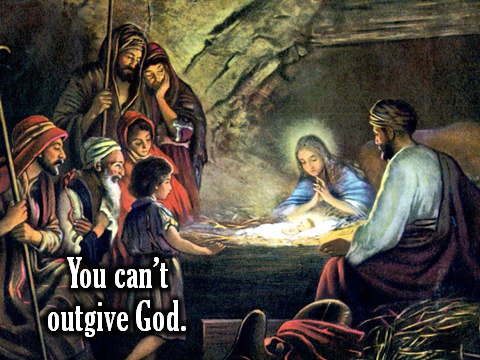









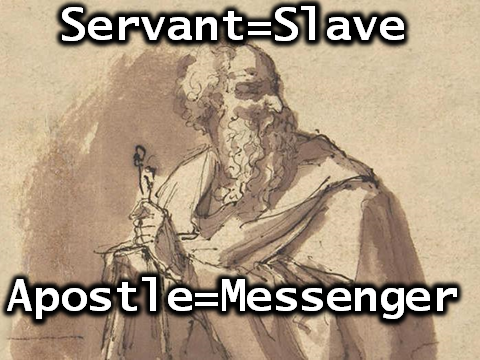





 Engaging Scripture