How God’s similarity to the Winter Soldier is of vital importance – Advent Psalm of Celebration

What mental image comes to your mind when you think of God? I suspect most people have images of God, and those images are almost certainly incorrect or inadequate.  We view God as “the big man upstairs.”  Or God is a Santa Claus kind of figure, or a white man with gray/white hair and a flowing beard, or wearing a toga.  Or maybe God looks like Morgan Freeman in the movie Evan Almighty, with his deep sonorous voice. 

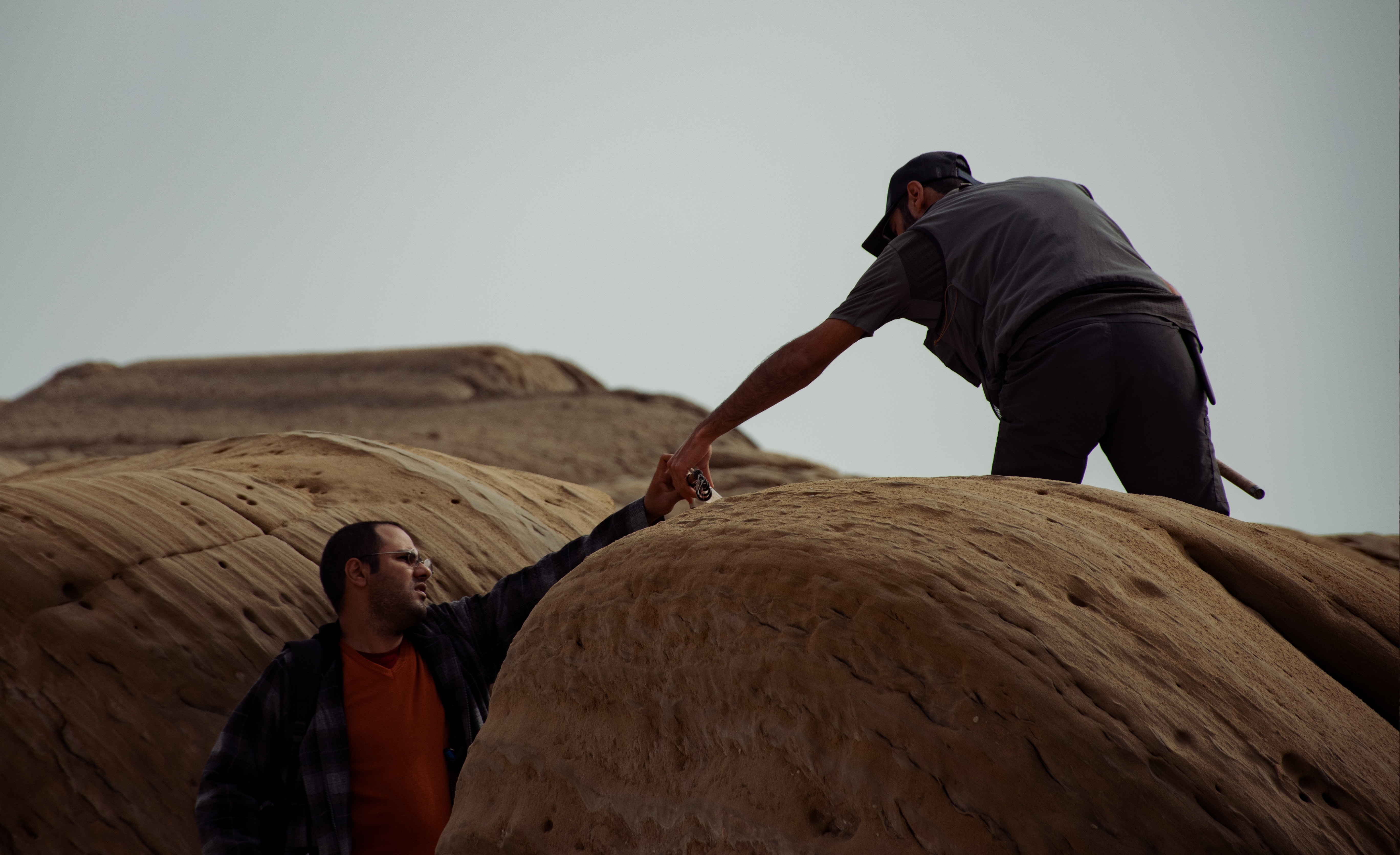
As the Psalm 98 continues describing salvation in the rest of verse one, the psalmist uses an interesting image: “[God’s] right hand and his holy arm have worked salvation for him.”  Does God have arms and a hand? 

We don’t know what God looks like, because God is a spirit. He is neither male nor female.  I am using male pronouns for God because the Bible does so, but God has no gender, no body.  No arms, no hands.  So what could the psalmist mean? 

The author is using anthropomorphism, a figure of speech in which a writer gives human characteristics to things that are not human.  Anthropomorphism helps us make connections to subjects that are sometimes difficult to understand.  Like God.

One way to teach what God is like is to teach his characteristics.  God is love, God is merciful, God is gracious, etc.  But the first characteristic we should teach about God is his incomprehensibility.  God is incomprehensible.  That means we cannot fully understand God.  His ways are higher than our ways.  There is a mysteriousness about God that we humans cannot fully comprehend.

That might sound frustrating, because we like to think of ourselves in relationship with God. And if God is mysterious, then how can we be in relationship with him?

I suggest to you that God’s mysteriousness is a good thing.  I want God’s ways to be higher than mine.  I want there to be some mystery, even a lot of mystery surrounding God.  

As I mentioned in this post, Psalm 98 helps put our lives in proper perspective. God’s mystery is one way Psalm 98 helps put our lives in perspective. When we question how God, a Spirit, could have arms and hands, we are forced to dwell on the incomprehensibility, the mystery of God. And when we dwell on the mystery of God, that mystery reminds us that God is so amazing, and that brings us to a place of proper perspective, of humility and awe and reverence to God. 

But know this, God has revealed himself.  While we cannot know everything about God, there is plenty we can know about him.  We can know enough about God to be in close, meaningful relationship with him.  Though God doesn’t have arms and hands or any body that we can see or touch him, God has revealed himself, and one way he has revealed himself, Psalm 98 reminds us, is that he has made his salvation accessible to us. 

God wants us to be saved. Saved from what?  Saved for what?  We talked about that a few weeks ago in the Armor of God sermon series, when we studied the Helmet of Salvation.  So hold that thought, because for now the psalmist hasn’t yet described salvation. The psalmist will describe God’s salvation soon, and we’ll talk about that in the coming posts.

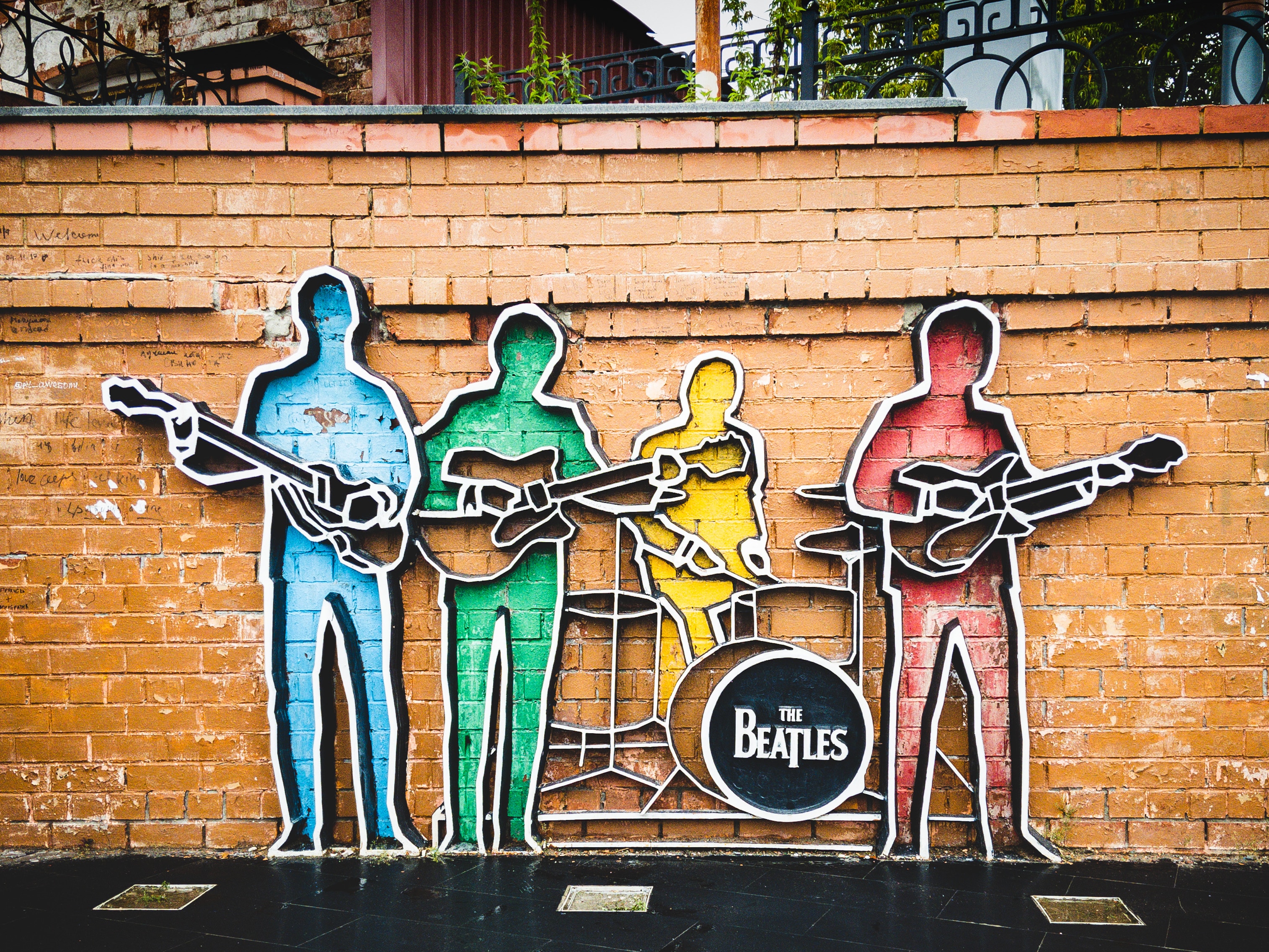
For now, the Psalmist has only used human characteristics (arms and hands) to help us understand how God, as spirit, miraculously works salvation in the world.  His saving work in the world is kind of like arms and hands that are very strong.  Think of a powerful arm wrestler. Or if you are into Marvel movie superheroes, think of Bucky, the Winter Soldier, who has a super-strong prosthetic arm. 

The psalmist’s point is that God is the one who is responsible for salvation. Not Israel.  Not the people.  It is God who did it.  God’s arm, God’s hand.  That should put us and our abilities in proper perspective.  We can do things, many things, for sure.  But we cannot save ourselves. Salvation is the work of God alone. In these images, we see strength, capability and power. God’s power. Praise God!

But God doesn’t actually have arms, or a body.  Interestingly, though, God will take on a body.  That is what is powerfully portrayed in Christmas.  God takes on flesh in the form of the baby Jesus, Yeshua, God who saves.  That idea of God as a baby might be even more bizarre than God being a bit mysterious. 

How does God the baby usher in God’s salvation?  A baby is so helpless.  So dependent.  So frail.  A baby does not have a strong arm and hands.  There are other words in these first three verses that will help us understand how a baby, God in the flesh, ushers salvation into the world. We’ll learn those words in the next post.

Our traditional worship songs/hymns and Christmas Carols are not enough – Advent Psalm of Celebration, Part 2

Right around the end of November, the discussion in our church worship planning session gets around to the question of “When should we start singing Christmas carols?” People love singing Christmas carols. But is it too early to sing only Christmas carols on the first Sunday of Advent? Maybe we should go with 50/50 at least until week 2 of Advent. Let’s at least get into mid-December. 

Then there is the question of Christmas Eve. Should our musical selections on Christmas Eve be limited to the old traditional carols? Should we attempt to introduce a new carol? People come to our Christmas Eve worship service specifically because it is traditional. 

As we continue our study of Psalm 98 this week, the psalmist, in verse 1, describes God’s salvation as something we sing should new songs about.  That’s a great idea, to sing new songs, except when you actually try it. 

Last weekend our family went away for the weekend, something we’ve been doing five years in a row now.  My wife left early with our third son and his girlfriend, so they could get the cabin ready for the rest of the family. Our oldest son and his family arrived next. Our second son and his wife around dinner time. My daughter and I traveled in the afternoon once school was out.  My daughter and I have traveled together many times, and when we’re driving she loves to introduce me to her music.  I know almost none of it.  She’ll ask me after almost every song, “Do you like it?”  And I’ll say, “Uh…it’s okay…”  Some of it I like, but some of it I don’t like. It’s new to me.  I’m not used to it.

I sometimes ask her to play my music.  My songs.  I grew up in 80s and 90s, so most of the music I like is from that era.  But there’s a funny thing that happens to me, even with my favorite band.  As I have told you many times over the years, I love the band U2.  But what I really love is their old songs.  Those old songs I know best, and they move me. 

Don’t get me wrong, I get very excited when I hear U2 are coming out with a new album.  Right now at the end of 2023, it’s getting to be about the time when they release a new album, because they haven’t created a new album since 2017.  I’ve heard that they’re working on a new album, and I’m hopeful for some great new songs.  But what usually happens when they come out with a new album is that I start listening, and I am almost immediately disappointed because the new songs don’t sound as good as the old songs.

We all have songs that we like because we’ve been singing them all our lives.  Maybe they have special meaning.  Maybe their lyrics move us.  Maybe we enjoy them musically.  But new songs rarely speak to us like that.  I recently listened to a podcast episode about a church plant where they purposefully played new songs as often as possible.  That meant most Sundays most people in the worship service didn’t know any of the songs.  Imagine how uncomfortable that would be. Is the psalmist is wrong here in verse one?  Maybe singing new songs to God is a bad choice? 

Except that singing new songs to God is actually a good thing.  Why?  Because there is no end to the praise and worship and glory that we can sing to God.  His salvation is so marvelous, we need new songs, and then we need more new songs.  If your church’s worship leader teaches you a new song, and you are struggling to learn it, and you feel those awkward feelings we all feel when we’re experiencing something new, you should contact them and thank them for doing exactly what the Bible says we should do! Sing a new song.

God’s salvation is so amazing we should regularly be singing new songs to him.  The old songs are great too.  We should sing them as well.  But we should be dwelling on God’s amazing salvation in Jesus, that there should be new praise songs, new hymns, new Christmas carols.  They old carols cannot possibly cover all the richness of the salvation we have in Jesus. 

This means we need to make time in our lives for Jesus. To sit with him, dwell on who he is and his salvation.  We need to think about him.  Think new thoughts.  Write new songs.  New prayers.  New conversations with him.  Maybe this new year you can consider adding a short period of reflection in your time alone with God. 

Photo by David Beale on Unsplash

Two names for salvation – Advent Psalm of Celebration, Part 1

I recently saw an interview in which a former coach and player talked about the impact playing professional football had on his family around the holidays. He would either have to be completely away from his family, or they would all be together in a hotel because he would have a game on Christmas Day in a faraway city.  He said that it was difficult because on holidays, and especially on Christmas, you want be home with your family. 

But there was a man on his team who would gather the team and their families together on Christmas Eve, and this would read…rather than me telling you, let me ask you, “What do you think the man would read?” 

I thought for sure the man read the story of the birth of Jesus.  That’s what my grandfather did every Christmas when our family got together.  But no, the man would read ‘Twas The Night Before Christmas, that famous story about the arrival of Santa Claus. 

The former coach and player was reflecting on how it was meaningful to him to have the little slice of tradition in what was a very nontraditional Christmas setting, a hotel.  He said, “it really put things into proper perspective.” 

I found that interesting. He talked about it almost religiously, spiritually. 

On the one hand, I agree that it is good to get people together, especially when all those people are far from home and family.  But though the former coach was speaking spiritually, what he said had almost nothing to do with religion.  

I get it.  As I wrote in the preview post here, there are many ways that God and Santa Claus are similar.  But there are some really important ways they are different.  At Christmas the most obvious way that God and Santa are different is that at Christmas, we celebrate God the baby. 

Here is where I would differ from what the coach said.  God the baby puts things into proper perspective.  This Advent we have been studying a variety of genres of psalms, and this week we study a psalm of celebration, Psalm 98, to help us learn how God the baby puts life into proper perspective.

We begin with Psalm 98, verses 1-3,

“Sing to the Lord a new song, for he has done marvelous things; his right hand and his holy arm have worked salvation for him.  The Lord has made his salvation known and revealed his righteousness to the nations.  He has remembered his love and his faithfulness to Israel; all the ends of the earth have seen the salvation of our God.”

Did you notice the psalmist uses the word “salvation” three times in these verses.  The Hebrew Bible uses two words here, but they are from the same root word.  Both words are associated with names.  Verse 1 is the word or name “Hosea,” which refers to God’s assistance of his people that saves them. 

In verses 2 and 3 the Hebrew word for “salvation” is the word or name “Yeshua.”  Does that sound familiar?   If you watch The Chosen, it is the name they call Jesus.  “Jesus” is the Greek version of the Hebrew “Yeshua,” and that is the same as our English name “Joshua.”  Jesus, Yeshua, Joshua, Hosea.  No matter which one you go with, these words in Psalm 98 all have the same meaning:  God saves. 

But God’s salvation is so much more than a name. In the next post, we’ll see why the psalmist celebrates God’s salvation.   

Photo by Alex Shute on Unsplash

Is Santa Claus…God? – Advent Psalm of Celebration, Preview

Is Santa Claus…God

Of course not, but they sure do share some characteristics, don’t they?  When we think of God, while we Christians do not believe Santa Claus is real, the typical cultural conception of God is very similar to the typical cultural conception of Santa Claus.  Both are all-seeing benevolent givers of gifts who live in faraway places.  Both are grandfatherly white men with white hair and a beard. They are also both somewhat mysterious.  Both have a supernatural ability to live forever.  Both are able to seemingly be everywhere at once. 

What we do not typically think of when we think of God, however, is a tiny newborn baby, frail, helpless, and totally dependent on its parents.  Yet that image, a baby, is precisely the true image of God who we celebrate at Christmas.  That true God, that baby, is what caused the angels to burst forth in praise. Just outside the town where the baby was born, an angelic choir totally shocked a group of shepherds.  Those angels singing about God the baby, said the shepherds should head into town right away and see the child for themselves.  God had come.

Just like the angels, we praise God every Christmas because of that baby.  We praise God because that baby is God.  Santa isn’t God, but that baby is God.  And what’s more, God the baby has come, bringing salvation.

As we continue our Advent series looking at a variety of genres of psalms, we’ve studied psalms of lament, confession, thanksgiving, ascent, and this coming week, as we celebrate Christmas, we study Psalm 98, a psalm of celebration that points us to the salvation we can experience because of God the baby.

Photo by krakenimages on Unsplash

Advent and…the Psalms of Ascent, Part 5

This week I welcome guest blogger, David Hundert. David and his wife Terri are members of Faith Church. David is currently studying for his Master of Divinity at Evangelical Seminary of Kairos University.

How do the Songs of Ascent help us understand Advent? As I mentioned in the beginning of this series here, the Songs of Ascent were sung by ancient Israelites on the trip to and at the temple mount. The temple mount was where all Israel was commanded to go in order to plea for repentance and receive forgiveness.

If not for this Season of Advent, we would still be traveling to Jerusalem, looking for forgiveness. Sacrifices performed at the temple were never meant to be the final solution for our relationship with the Lord to be restored. The first advent is simply this:

For God so loved the world that he gave his one and only Son, that whoever believes in him shall not perish but have eternal life.

God loved. We gather this time of year to remember that God loved. At the same time, we gather to remember the words of Jesus in John 14, verses 1 through 3 which reads,

“Do not let your hearts be troubled. You believe in God; believe also in me. My Father’s house has many rooms; if that were not so, would I have told you that I am going there to prepare a place for you? And if I go and prepare a place for you, I will come back and take you to be with me that you also may be where I am.

The need for temple sacrifices are no longer necessary. We have an advocate to whom we can go that knows what we go through. This time of year we celebrate the day that started it all. Our sins were born by Him on the cross for our sake, however, I leave you with this final thought from Hebrews 9:28,

Christ was sacrificed once to take away the sins of many; and he will appear a second time, not to bear sin, but to bring salvation to those who are waiting for him.

The first advent of Jesus, therefore, points to the second advent. Jesus is coming again!

Photo by Walter Chávez on Unsplash

The third leg of the journey into…The Psalms of Ascent, Part 4

This week I welcome guest blogger, David Hundert. David and his wife Terri are members of Faith Church. David is currently studying for his Master of Divinity at Evangelical Seminary of Kairos University.

The Third Antiphon (Chant) 130-134

At this point, this journey is on it’s last leg. The kids have fallen asleep. They’ve gotten cheerios all over the camel saddle and spilled their falafel all over the place. We’re getting close.

The closer they get, the further back their enemies seem to be left behind. It’s difficult sometimes for us as believers, to understand the critical importance the journey to the temple would have been for the Jews; for it’s purpose and means for making appeals to the Lord.

We Christians have a mediator that we can call out to at any time and know that according to His word, we are heard. This idea wasn’t foreign to ancient Israelites either. People could cry out anywhere. The Israelites prayed and had festivals in local and regional locations. In fact, local temples became a considerable problem as they were prone to foreign forms of worship and ritual.

Certainly, the exiles with their emerging forms of synagogue worship, based on lamentation in far off Babylon understood that prayers could be lifted up anywhere. There are two things, however, that local sanctuaries and private prayers couldn’t do.

First, places of worship unite the community. But when it is local, it can’t unite the local community to a greater unity, a greater community, a kingdom. Second, when there is internal conflict, and there always is, a local community may not be able to resolve its internal strife without an appeal to a greater community.

At this point in the journey, we don’t expect for them to start dwelling on their own state of sinfulness. Yet this final antiphon returns to the same cry to the Lord that launched their journey to begin with. We read in Psalms 130, 131 and 132,

Out of the depths I cry to you, Lord; Lord, hear my voice. Let your ears be attentive to my cry for mercy. If you, Lord, kept a record of sins, Lord, who could stand? But with you there is forgiveness, so that we can, with reverence, serve you. I wait for the Lord, my whole being waits, and in his word I put my hope. I wait for the Lord more than watchmen wait for the morning, more than watchmen wait for the morning. Israel, put your hope in the Lord, for with the Lord is unfailing love and with him is full redemption. He himself will redeem Israel from all their sins.

My heart is not proud, Lord, my eyes are not haughty; I do not concern myself with great matters or things too wonderful for me. But I have calmed and quieted myself, I am like a weaned child with its mother; like a weaned child I am content. Israel, put your hope in the Lord both now and forevermore.

Lord, remember David and all his self-denial. He swore an oath to the Lord, he made a vow to the Mighty One of Jacob: “I will not enter my house or go to my bed, I will allow no sleep to my eyes or slumber to my eyelids, till I find a place for the Lord, a dwelling for the Mighty One of Jacob.” We heard it in Ephrathah, we came upon it in the fields of Jaar: “Let us go to his dwelling place, let us worship at his footstool, saying, ‘Arise, Lord, and come to your resting place, you and the ark of your might. May your priests be clothed with your righteousness; may your faithful people sing for joy.’ ” For the sake of your servant David, do not reject your anointed one. The Lord swore an oath to David, a sure oath he will not revoke: “One of your own descendants I will place on your throne. If your sons keep my covenant and the statutes I teach them, then their sons will sit on your throne for ever and ever.” For the Lord has chosen Zion, he has desired it for his dwelling, saying, “This is my resting place for ever and ever; here I will sit enthroned, for I have desired it. I will bless her with abundant provisions; her poor I will satisfy with food. I will clothe her priests with salvation, and her faithful people will ever sing for joy. “Here I will make a horn grow for David and set up a lamp for my anointed one. I will clothe his enemies with shame, but his head will be adorned with a radiant crown.”

Beyond a doubt, this psalm has caught a glimpse of the summit peaking through clouds. It envisions a perfect situation. The temple is full of the “loyal ones,” led out by priests clothed in righteousness. The king triumphantly enters the city with “the Ark of Thy might” heralding victory over a threatening enemy. Most importantly, this triumph will signal a great turnaround.

Going forward, to finish up our journey, we look into Psalms 133-34 which read,

How good and pleasant it is when God’s people live together in unity! It is like precious oil poured on the head, running down on the beard, running down on Aaron’s beard, down on the collar of his robe. It is as if the dew of Hermon were falling on Mount Zion. For there the Lord bestows his blessing, even life forevermore.

Praise the Lord, all you servants of the Lord who minister by night in the house of the Lord. Lift up your hands in the sanctuary and praise the Lord. May the Lord bless you from Zion, he who is the Maker of heaven and earth.

Ascending a great height or embarking on a long journey is a dominant theme of the Songs of Ascents and this book. Thank you for going along on this journey with me. However I want to ask, what does this have to do with Advent, and what does it have to do with me?

In the next and final post on this series on the Psalms of Ascent, we’ll talk about that.

Photo by Tommy Kwak on Unsplash

The second leg of the journey into the…Psalms of Ascent, Part 3

This week I welcome guest blogger, David Hundert. David and his wife Terri are members of Faith Church. David is currently studying for his Master of Divinity at Evangelical Seminary of Kairos University.

The Second Antiphon (Chant) 125-129

In this next section, the next antiphon or chant of the Psalms of Ascent, our journey continues and we see the hills of Jerusalem peaking up on the horizon.

We read starting in Psalm 125, that upon arrival to the city, a whole new set of trials arose, for the travelers found the city in shambles and occupied by a hostile host. A sinking feeling overcame them, as their inner strength dissolved. Even as all self-confidence faded, the group reminded each other not of their ever present opposition, but of a powerful and extraordinary truth about the God of Israel.

To put it in the words often repeated in Orthodox prayer: “The Lord is merciful and the lover of mankind.” The singers somehow mustered the faith of Abraham who believed that a peculiar God had reached out to him with unmerited favor and asked only one amazing thing of him in response: trust God. the first verse of Psalm 125 is the centerpiece and pivotal point of the whole series. The key word is trust. We read in Psalm 125 and 126,

Those who trust in the Lord are like Mount Zion, which cannot be shaken but endures forever. As the mountains surround Jerusalem, so the Lord surrounds his people both now and forevermore. The scepter of the wicked will not remain over the land allotted to the righteous, for then the righteous might use their hands to do evil. Lord, do good to those who are good, to those who are upright in heart. But those who turn to crooked ways the Lord will banish with the evildoers. Peace be on Israel.

When the Lord restored the fortunes of Zion, we were like those who dreamed. Our mouths were filled with laughter, our tongues with songs of joy. Then it was said among the nations, “The Lord has done great things for them.” The Lord has done great things for us, and we are filled with joy. Restore our fortunes, Lord, like streams in the Negev. Those who sow with tears will reap with songs of joy. Those who go out weeping, carrying seed to sow, will return with songs of joy, carrying sheaves with them.

There is a sense at this point, that the expedition is cresting its long sought after objective. The climbers have breached through a daunting hurdle and have made a final push to the summit. They have arrived at the threshold of the temple itself. When they reached the top, they find themselves gasping for air. Imagine then, their bewilderment when they realize that the tip of ground they’re standing on is not the top.

It was a false summit.

As we go along on this journey, we come to the sober realization that we must once more gather our wits and adjust our goals. All is not in vain, however. We have come too far to turn back, and now we see what the false summit had blocked from our view. Psalm 126 ends with the pilgrims that have struggled with the disappointment of thinking that they have made it, and realized that they weren’t quite there yet.

However, it ends with a prophetic hope. Psalm 125, shows them that trust in the Lord is their strength. Psalm 126 shows them that joy is their breath. Now, in Psalm 127, we have a little surprise in store for them. This psalm indicates that they’re about to have a guest speaker from their past. The title of Psalm 127, indicates that it’s a Song of Ascents of Solomon and calls their attention back to the building of the first temple. In the context of the Songs of Ascent, it’s as if we arrived back in Jerusalem, to find that the work on the temple building is rather lackluster, the city is in shambles, however we remember the call to trust in the Lord! We read in Psalm 127 and 128,

Unless the Lord builds the house, the builders labor in vain. Unless the Lord watches over the city, the guards stand watch in vain. In vain you rise early and stay up late, toiling for food to eat— for he grants sleep to those he loves. Children are a heritage from the Lord, offspring a reward from him. Like arrows in the hands of a warrior are children born in one’s youth. Blessed is the man whose quiver is full of them. They will not be put to shame when they contend with their opponents in court.

Blessed are all who fear the Lord, who walk in obedience to him. You will eat the fruit of your labor; blessings and prosperity will be yours. Your wife will be like a fruitful vine within your house; your children will be like olive shoots around your table. Yes, this will be the blessing for the man who fears the Lord. May the Lord bless you from Zion; may you see the prosperity of Jerusalem all the days of your life. May you live to see your children’s children— peace be on Israel.

We read that unless the Lord is the center of all of our efforts, then we labor in vain. Everything that we do, needs to be with the Lord at the center of it. We read in Colossians 3:17,

And whatever you do, whether in word or deed, do it all in the name of the Lord Jesus, giving thanks to God the Father through him.

Going back to our climbing and hiking metaphor, have you ever noticed that when climbers or hikers prepare for a trip, they only take what gear would be absolutely essential and shed what they don’t need? On this little expedition, the travelers need to leave their fears and frustrations on the side of the trail, and keep only their hope, trust, and joy. The only fear that they need to be giving way to is fear of the Lord, which is simply another way of saying that we need to give deference to the Lord’s desires above our own. Fearing the Lord is not the same thing of being scared, but rather standing in awe.

The last psalm of this chant, or antiphon, is important. From the very start of our expedition in Psalm 120 until the blessing of Psalm 128, we have been climbing to the very edge of the temple. More properly speaking, the second antiphon is more about almost reaching the destination.

We have heard the sermons as if Ezra, Nehemiah, and even Solomon delivered them, exhorting us to rejoice and acknowledge God’s great work of returning that which was lost. They have admonished us not to lose heart, to walk as God walks, to live in His ways, and to trust in a kingdom building project where God Himself is the builder, guardian, and investor. We have been injected with a firm affirmation that God wants us to be happy, blessed, joyous, and rewarded.

Suddenly, however, the tone turns back to the torment of the journey. Abruptly, “they” are back on our minds, those “plowmen” who scourge the back like plowing a field. Also, the tone of the Psalm has changed to “Israel” as if they are calling out in one voice; past and present Israel, calling for courage and inner strength. We read in Psalm 129,

“They have greatly oppressed me from my youth,” let Israel say; “they have greatly oppressed me from my youth, but they have not gained the victory over me. Plowmen have plowed my back and made their furrows long. But the Lord is righteous; he has cut me free from the cords of the wicked.” May all who hate Zion be turned back in shame. May they be like grass on the roof, which withers before it can grow; a reaper cannot fill his hands with it, nor one who gathers fill his arms. May those who pass by not say to them, “The blessing of the Lord be on you; we bless you in the name of the Lord.”

This second antiphon ends with a benediction of sorts. Unlike the previous psalm where the writer ends calls out the blessing, here it’s as if the travelers are exchanging blessings to one another.

What we have seen in this second leg of the journey in Psalms 125–29, the upward pace quickens. This section quickly marches us first to the hills of Jerusalem in Psalm 125, then through the hostile city in Psalm 125, verses 4 and 5, and then on to the Temple precinct where a great sigh of exuberant relief bursts forth in Psalm 126, verses 1–3.

Yet even in the midst of celebratory hugs, feelings of doubt make their way into the celebration. This is not the final summit. Even so, the excursion now pauses and takes inventory. They listen to speeches by master climbers encouraging the faint-hearted to keep going. There is promise of great rewards and images of the good life through Psalm 128. They have made it this far. They have overcome their enemies and defeated their doubts. They have conquered each new challenge and tamed every obstacle. In Psalm 129 we see, they must press on!

Photo by Jonathan Bell on Unsplash

The first leg of the journey into the…Psalms of Ascent, Part 2

This week I welcome guest blogger, David Hundert. David and his wife Terri are members of Faith Church. David is currently studying for his Master of Divinity at Evangelical Seminary of Kairos University.

The First Antiphon (Chant) – Psalms of Ascent 120-124

The first section of the Psalms of Ascent is referred to by some scholars as an “antiphon” which is just a fancy way to say “chant.” The first one starts out on a down note so to speak. Keep in mind the time frame we discussed in the previous post, and imagine with me that you are leaving the town of your exile, on your way to the Temple in Jerusalem. You’re leaving your land of oppression, and you’re on your way to worship at the temple. The gates of Jerusalem is your destiny.

But the expedition is off to a bad start and encounters seemingly insurmountable obstacles. Cries of desperation start the Songs of Ascent in Psalm 120. Then the traveler catches a brief glimpse of his goal as he realizes that the Lord is watching over the expedition in Psalm 121. In fact, the Lord is on expedition with the pilgrim. Psalms 120 and 121 read,

I call on the Lord in my distress, and he answers me. Save me, Lord, from lying lips and from deceitful tongues. What will he do to you, and what more besides, you deceitful tongue? He will punish you with a warrior’s sharp arrows, with burning coals of the broom bush. Woe to me that I dwell in Meshek, that I live among the tents of Kedar! Too long have I lived among those who hate peace. I am for peace; but when I speak, they are for war.

I lift up my eyes to the mountains—where does my help come from? My help comes from the Lord, the Maker of heaven and earth. He will not let your foot slip—he who watches over you will not slumber; indeed, he who watches over Israel will neither slumber nor sleep. The Lord watches over you—the Lord is your shade at your right hand; the sun will not harm you by day, nor the moon by night. The Lord will keep you from all harm—he will watch over your life; the Lord will watch over your coming and going both now and forevermore.

Here we have the image of a frustrated pilgrim. “Get me out of here, Lord! I can’t deal with these people anymore!” Have you ever started a vacation like that? Have you ever started out so needing a vacation that you’re about to burst? “I can’t take it any more!”

Yet even with all of the difficulties associated with my traveling, know that God will cause it all to work out. Now, while on the road, the traveler thinks back on the good ole’ days when Israel gathered at Jerusalem with its king and celebrated their covenant with the Lord. He allows the nostalgia to push him forward in Psalms 122:1–123:3. This reads,

I rejoiced with those who said to me, “Let us go to the house of the Lord.” Our feet are standing in your gates, Jerusalem. Jerusalem is built like a city that is closely compacted together. That is where the tribes go up—the tribes of the Lord—to praise the name of the Lord according to the statute given to Israel. There stand the thrones for judgment, the thrones of the house of David. Pray for the peace of Jerusalem: “May those who love you be secure. May there be peace within your walls and security within your citadels.” For the sake of my family and friends, I will say, “Peace be within you.” For the sake of the house of the Lord our God, I will seek your prosperity.

I lift up my eyes to you, to you who sit enthroned in heaven. As the eyes of slaves look to the hand of their master, as the eyes of a female slave look to the hand of her mistress, so our eyes look to the Lord our God, till he shows us his mercy. Have mercy on us, Lord, have mercy on us, for we have endured no end of contempt.

Abruptly, and once again, “they” stand by on the sides of the road, mocking the caravan. From their lounge chairs they laugh and mock at the stupidity of a trip like this. Psalm 123 ends with this,

We have endured no end of ridicule from the arrogant, of contempt from the proud.

At this point, there is a recollection of purpose and inner strength, and then the journey continues. They haven’t gotten to their destination yet. Psalm 124 continues with,

If the Lord had not been on our side— let Israel say— if the Lord had not been on our side when people attacked us, they would have swallowed us alive when their anger flared against us; the flood would have engulfed us, the torrent would have swept over us, the raging waters would have swept us away. Praise be to the Lord, who has not let us be torn by their teeth. We have escaped like a bird from the fowler’s snare; the snare has been broken, and we have escaped. Our help is in the name of the Lord, the Maker of heaven and earth.

They are remembering how, regardless of how often things went bad; how often they were attacked; regardless of the circumstances that threatened to overwhelm them, the Lord has been at their side! They are on their way to the house of the Lord to celebrate Him! Psalm 124 closes the first chant. It started with a cry for help and God’s answer coming in the call to begin the journey.

Through Psalms 120–24, kind of like a  roller-coaster, we descended and ascended through scary and inhospitable territory trying to get a glimpse of our destination. Every obstacle that threatened to undermine our energy and determination was countered with historical rehearsals of the Lord’s mighty, but not always readily apparent, Presence. Israel’s goal (as is ours), is reunion with God on the Holy Mountain, but by surprise we also encountered Him unexpectedly on the way. Our writer began the expedition in the land of his captors, far away from Jerusalem and surrounded by hostile opposition, yet as he continued to appeal to God, he found fellow travelers both past and present willing to join them.

The thing is, the kids are on the back of the caravan asking, “Are we there yet?” “We’re hungry!” “I have to go to the bathroom!” Dad is yelling at them, “Don’t make me turn this camel around!” The thing is, we’re only a third of the way there! We continue the journey in the next post.

Photo by Luba Ertel on Unsplash

Taking a journey into the…Psalms of Ascent, Part 1

This week I welcome guest blogger, David Hundert. David and his wife Terri are members of Faith Church. David is currently studying for his Master of Divinity at Evangelical Seminary of Kairos University.

Does you like vacations? I have to admit, I don’t travel well. I get so stressed out about the travel process that, until I get to my destination, I’m not pleasant to be with. My wife can testify to that fact.

What about you? Is there any music that you have to have on when you’re traveling? For me, I have my worship music on my phone, and a set of noise cancelling headphones that I listen to when I fly. I find it calming and relaxing.

Then again, worshiping God can have that affect too. When I praise God during my travels, it tends to put my mind in perspective. God is in control of the process. Some people like to pray for travel mercies, I just like to praise God.

Where am I going with all of this? During Advent, we’ve been learning from various genres of psalms. This week we will study a new genre of psalms. However before we get to that, I want to take you on a journey; a little road trip of our own if you would, but I want to set up some historical context for you.

The Book of Psalms was written by various authors, at various points in the history of the Jewish people and their leaders, and because of that, it can be difficult to pin down a time frame that each psalm fits in. The psalms that we are going to discuss this week, and I do mean “psalms” plural, because there are 15 of them, are no different. So let’s take a look at some historical context.

Various scholars point to a time period somewhere after the destruction of the city of Jerusalem in 587BC by the Babylonians and the rebuilding of the temple under Persian rule around 515 BC. At this time period, Jews were returning to the land and trying hard to rebuild a national identity, a “land of Judea” as it were, while rebuilding the temple, all under the watchful eye of Persia. During the first exile, ten years before the destruction of Jerusalem, the armies of Babylon seized Jerusalem, deported most of the nobility, temple personnel, and the royal house, and set up a king from David’s house who would cooperate with Babylonian rule. At this time, there was a large group of Judeans who lost their property, their place in society, and their primary point of reference, which was the temple in Jerusalem.

Conditions for these first exiles were no doubt devastating and harsh, but the biblical books such as Daniel, Esther, 2 Kings, Nehemiah and Ezra indicate that a good number of them found places of importance and influence within Babylon. They weren’t without resources, and they poured a good deal of them in two different directions: they collected, edited, and wrote scrolls of prophets, prayers, histories, and commandments and combined them into an larger-than-life remembrance of Israel that would serve as a foundational document for its reconstitution. What we know of today as “the Scriptures” took on its foundational shape at this point.

Second, they never lost sight of their home, Jerusalem, and devoted time and resources into networks of communication and involvement in the goings on there. This fact alone speaks of a profound sense of resurrection ingrained in the soul of this people. When Cyrus, the king of Persia, conquered Babylon and issued a decree that deported peoples could return to their lands and rebuild their cities and temples, the Jews in Babylon were ready to act.

After the temple dedication (515 BC) and up until the time of Nehemiah (444 BC), control of the land was divided into three groups: the first was a group of priests inspired by Ezekiel that had been formulating a temple and religious reform that would correct the abuses of the past. They placed a larger emphasis on the people being a “holy people,” a nation of priests and envisioned how the temple could become the center of unity and leadership in the land, taking over many functions once under royal administration.

The second was more like a coalition of many groups, and it pressed harder than ever for the people to unite under the covenant that God had made with the people at Sinai. They believed Israel could reconstitute itself in a confederation of “tribes,” similar to the time before Israel had kings, and they understood the binding force for Israel to be the Torah. They organized a “council of Elders” to help lead the newly forming province.

Last were the Persian administrators—Jews, Persians, and non-Jewish regional leaders who assured that the interests of the empire were not undermined.

The two Jewish groups (the first two groups above) had differing visions of how best to reconstitute Israel. As you can imagine, the differences did cause their share of grief, but they did agree on some critical points. First, they both agreed that a Torah of Moses would be the binding law of the land and to which all Israelites must be subordinate to as a mark of citizenship. They strongly pushed for all Israelites, not just the leadership, to be responsible for covenant obedience.

Out of this partnership of leading Jewish groups, a daring innovation was launched. No longer would Israel define itself by a king and his royal system, but by faith.

I want to take you on a bit of a journey. We are going to look at what is called the “Song of Ascents” or the “Psalms of Ascent.” You can find them, starting at Psalm 120 all the way through Psalm 134.

According to Jewish tradition, the songs are associated with Sukkot or the Feast of Tabernacles. They were sung when going to God’s house, the Temple. They involved going upward in space and in thought. Beyond the women’s court to the west, there were 15 steps, on which the Levites would stand when they sang each of the Songs. However, the most likely view of a Jew singing the Psalms of Ascents would be when they were sung by pilgrim groups on their way to one of the three great festivals of the Jewish year. These types of journeys were called “going up” regardless of their geographical location of origin. The Talmud contains teachings which interpret and expand Torah law to make it relevant to Jewish daily life. The Talmud records the Sukkot temple ceremony:

“The pious men and wonder-workers would dance before them, with flaming torches in their hand, and they would sing before them songs and praises. And the Levites played on harps, lyres, cymbals, trumpets, and [other] musical instruments beyond counting,[standing, as they played] on the fifteen steps which go down from the Israelites’ court to the women’s court, corresponding to the fifteen Songs of Ascents which are in the Book of Psalms — on these the Levites stand with their instrument and sing their song. And two priests stood at the upper gate which goes down from the Israelites’ court to the women’s court, with two trumpets in their hands. [When] the cock crowed, they sounded a sustained, a quavering, and a sustained blast on the shofar.

[When] they got to the tenth step, they sounded a sustained, a quavering, and a sustained blast on the shofar. [When] they reached the courtyard, they sounded a sustained, a quavering, and a sustained blast on the shofar. They went on sounding the shofar in a sustained blast until they reached the gate which leads out to the east. [When] they reached the gate which goes out toward the east, they turned around toward the west, and they said, “Our fathers who were in this place turned with their backs toward the Temple of the Lord and their faces toward the east, and they worshiped the sun toward the east. “But as to us, our eyes are toward the Lord.” Rabbi Judah records, “They said it a second time, ‘We belong to the Lord, our eyes are toward the Lord.’”

Can you see it? Everything that they did on their journey to the temple was a joyous, act of worship. Everything they did, once the temple was reached, was a joyous act of worship.

Photo by Mantas Hesthaven on Unsplash

Confidence in the middle of pain – Advent Psalm of Thanksgiving, Part 5

This week we’ve studied the parallel structure of Psalm 30. We’ve found matching points here, here, and here, and now we are left with verse 6, for which there is no match.  It is the center of the structure.  Because it doesn’t have a match, that means it is David’s most important point.  What does he say in verse 6?

“When I felt secure, I said, ‘I will never be shaken.’” 

David is expressing a wonderful confidence in God.

But might there be some bravado in that statement? I read verse 6 and wonder, “Really…never shaken?  Even a little bit?  Not once?”  I say that because we humans know the experience of being shaken.  In modern slang, we use the word “shook.”  When we’re shook, we feeling an experience that rocks our world.

But David is reflecting on the confidence that we can have in God in the midst of our troubles.  As we’ve already learned, our experience of sadness and The Depths feel like they are not just staying with us for a short one-night stay, that they are with us for weeks.  Overstaying their welcome.  In the middle of that frustration, confusion, and desperation, when we are on death’s door, we can know that God is with us and we can have confidence along with our shaky feelings. 

It seems to me that it is best to view ourselves as complex, most often living with a mixture of emotions.  For some of us the twinges of struggle and pain and depression might be with us for the rest of our lives, but we can still have confidence in God.  We can still choose to praise him, be joyful in him, and dance.  I see this in David’s “I will” statements.  Those are statements of choice.  David is declaring that he will choose to praise God.  Yes, God has delivered him.  And that has bolstered David’s heart and mind.  He will choose to praise no matter what.   He will choose to give thanks.     

We can be confident, David reminds us in Psalm 30, that God hasn’t left us. He sees us.  He is available for us.  We can choose to remember his promises to us, and how he provided for us in the past.  David is not talking about a confidence that the painful situation will be removed.  While we can ask for that removal, like Jesus did, we also pray like Jesus prayed, “Not my will but yours be done.”  We place our confidence in God, and we move forward by following his way of life, even in the middle of the pain.

If you are questioning and struggling, look to his provision in the past and praise him now in the present.  Look to his people being his hands and feet supporting you in the past and present, and praise him.  Praising him helps to center our confidence in God in the middle of our pain.

We can choose to praise him, be joyful in him, and dance.  David isn’t saying that you can’t and won’t feel the pain.  What he is saying is that in the midst of the pain, there is light. I see this in David’s “I will” statements.  Those are statements of choice.  David is declaring that he will choose to praise God.  Yes, God has delivered him, which has bolstered David’s heart and mind.  He will choose to praise no matter what.  He will choose to give thanks.    

I conclude this week of posts with a song that mixes a couple genres of psalms.  40 by U2 is mostly from Psalm 40, remembering God’s provision in the past, thanking him.  But it also includes the classic line of the psalms of lament, “How long?” as we cry out to God in the middle of our pain. 

Photo by Jordan Donaldson | @jordi.d on Unsplash