How some churches are actually two companies that Jesus never asked us to form

Vertical & Horizontal Morality and the mission of the church, Part 3

My church expresses vertical and horizontal faith in a public statement we post on every email we send to our church family: “We are a congregation developing a deeper relationship with God and extending his love to our community.”  

Notice the two emphases in that statement: loving God and loving people.  That’s vertical and horizontal. We need both a vertical and horizontal faith. 

Yet, do we actually live that out in practice, in the real world?

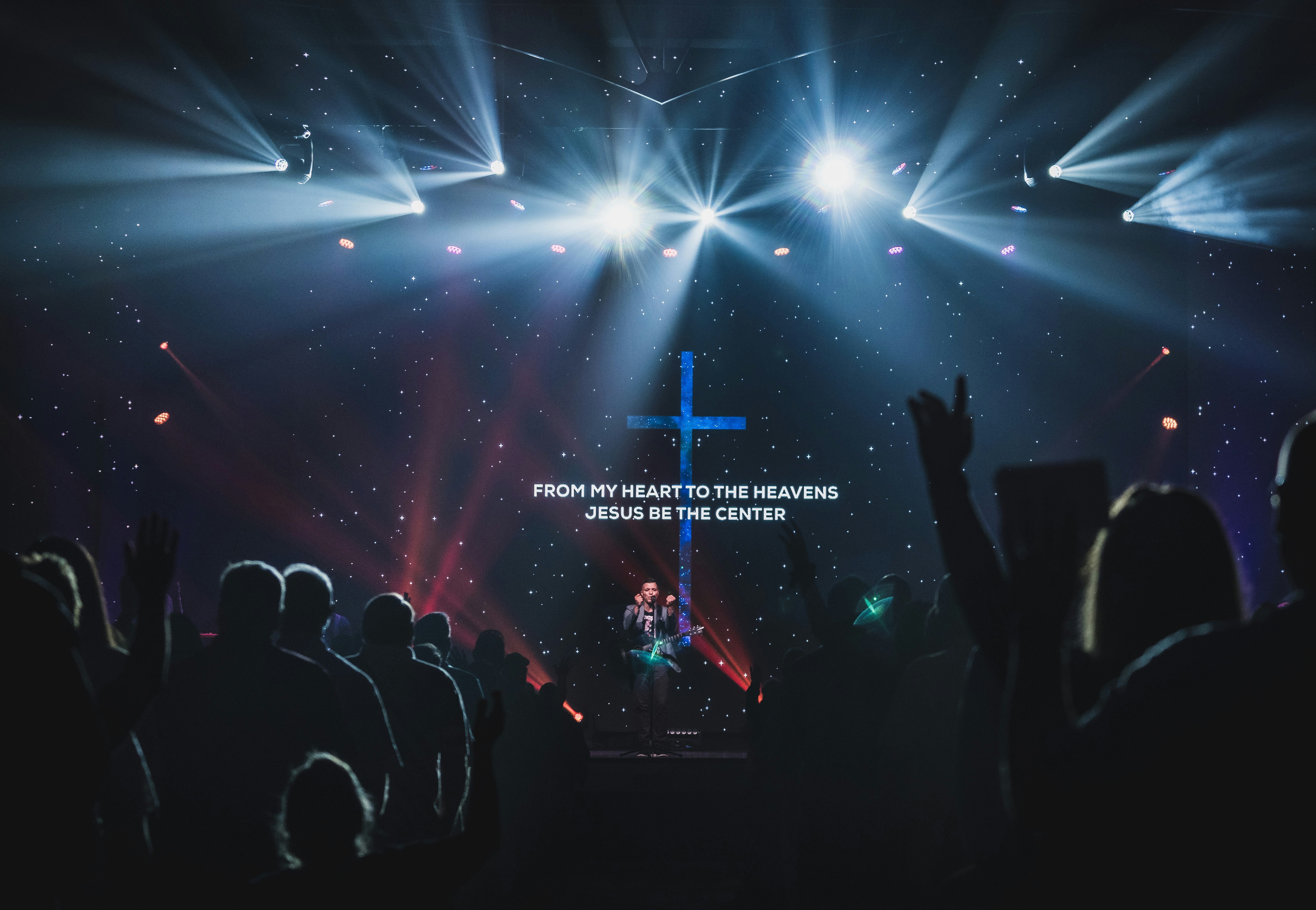
Christians for centuries have emphasized holding worship services in buildings led by professional staff.  To put it another way, local Christian churches have essentially created two kinds of companies: a worship production company and a property management company.

The worship production company plans and performs a live musical and spoken word event every week.  Our worship production company includes audio/visual equipment, technology, live-streaming, volunteers and professional staff who have gone through years of training, and who practice and perform weekly.  Our worship production company puts on a religious experience for an audience.

The property management company maintains the venue that the worship production company uses for its worship productions.  Our venue includes property ownership, maintenance, a building, utilities, custodian, rentals, and the like.

Each of these two companies involve numerous meetings, planning, IT, HR, payroll, benefits, revenue, expense, website, social media, and many of the other facets that any business has.  

If you look at Faith Church’s budget, what you will find is that the money we spend for those two companies, worship production and property management, makes up most of our expense each year. My guess is that the vast majority of American churches are similar.

And here’s where it gets tricky.

Jesus never asked us to do any of that.  

Worship services, buildings, and professional staff are not wrong.  But they are not required.  We can drift from the mission of Jesus, if we overemphasize the church property, church building, and worship services. 

Again, those things are not wrong, as long as we don’t drift from the mission of Jesus and miss out on inner heart transformation.  In other words, we could put a lot of time, money, and effort into maintaining a property, building, and paying for staff while at the same time miss out on inner heart transformation that leads to living out the mission of the kingdom in our communities.

Jesus referred to this in Matthew 15, and he has a solution. More on that in the next post.

Photo by NATHAN MULLET on Unsplash

Vertical morality: how some Christians justify horrific behavior

Vertical & Horizontal Morality and the mission of the church, Part 2

Do we further the will of God by killing people? That’s extreme, and we could perhaps say, “No, we should obviously never further the will of God by killing people.”  When would we even have the opportunity to further the will of God by killing people? 

There have been plenty of such opportunities throughout history.  The Crusades in the middle ages are a primary example.  During the Crusades, Christians from Europe invaded the Holy Land with the purpose of destroying the Muslims who occupied it.  Those Christians reasoned, “Certainly God’s will would be to get Muslims out of the Holy Land, so therefore use war, including killing Muslims to do so.” 

If all we’re going on is vertical morality, then we can make a case for the Crusades.  A bad case, for sure. 

But the Crusades were so long ago, and we’ve learned since then, haven’t we?

More recently, the bombing of abortion clinics and murder of abortion doctors in the 1970s, 80s, and 90s.  The people who killed the doctors and bombed the clinics reasoned, “Certainly God’s will is to stop abortion, so therefore we will stop abortion, no matter the cost.”

Using the principles of vertical morality led many to do killing in God’s name.

But killing is extreme.  Are their other behaviors based on vertical morality that are not so extreme?

Consider the numerous “big name” pastors who have behaved very poorly, including using anger and sexuality manipulatively, who then got caught. Instead of their church boards publicly dealing with the sin, they sometimes swept the horrific behavior under a rug because they were afraid it would be detrimental to the forward progress of the ministry.  Those pastors and boards reasoned, “Certainly God’s will is to keep the church moving forward, so let’s hide the truth.” That’s vertical morality at work.

Think about how this can occur on a smaller scale, in your own life.  One way is through the use of outrage.  Like a few of my students, as I mentioned in the previous post.  Some Christians believe that if Christianity is being threatened, it is needed and good to express outrage in order to remove the threat.  Outrage has become common in our culture.  Especially on social media. So much so that Christians can feel justified in using outrage. 

Christian proponents of outrage might point to Jesus cleansing the temple.  Wasn’t he outraged?  Do his actions in the temple not give us license to behave the same?  To that, it is assuming quite a lot to suggest that we can express anger in a righteous way, as Jesus did.  When we feel anger, it is all too easy for us to express it in a sinful way, because the ends justify the means. 

That is all vertical morality.  Justifying sinful behavior because it will help God’s cause. 

Let me contrast vertical morality with horizontal morality.  Horizontal morality says that what is most important is how we treat humans.

April Ajoy writes, “Horizontal morality prioritizes the well-being of our neighbors, communities and personal relationships.  We act in ways that cause the least amount of harm to those around us, regardless of beliefs.”

This, too, we see in Jesus’ teaching and life.  In fact, horizontal morality is also grounded in the Old Testament Law, “love your neighbor as yourself” (Deuteronomy 6:5), and Jesus said that is the second greatest command. (Matthew 22:34–40)

Caroline Bologna writes that horizontal morality “…focuses on genuine empathy, compassion and love toward others, recognizing the actual effects our actions have on people.” 

Horizontal morality strives to help people, period.  Helping people is in itself a good thing. 

So am I saying that vertical morality is all bad and horizontal morality is all good. Not quite. How so?

I try to explain in the next post.

Photo by Bei Ayson on Unsplash

Are my students defending our Christian university against the devil?

Vertical & Horizontal Morality and the mission of the church, Part 1

In my role as adjunct professor for a local Christian University, I teach a course called Interpreting the Bible.  The textbook we use is The Bible: An Introduction by Jerry Sumney.

Some students have strong feelings about this book.  

Over the past few years, I have heard students accuse the university of choosing a textbook that was written by a non-Christian.  Not true.  Some students have claimed that this textbook is how the devil sneaks into a Christian school.  Also not true.  Other students blame the text book of making a confusing mess of the Bible because the text book interacts with and promotes a variety of scholarly viewpoints, destroying the faith of students.  Not true. 

Those students are essentially accusing the university, and me, of mission drift.  Of moving away from the truth.  Unless I teach what aligns with their previously held beliefs, they think I am drifting away from the mission of God.  And here’s where it gets really interesting.

Unless I teach what aligns with their previously held beliefs, they feel they are justified in making all sorts of accusations, using angry tones and negative language, because they say are defending the truth. 

Because, as the belief goes, when you are defending truth, you can use any means necessary.  Maybe you’ve heard that idea out there in our culture.  The idea that in order to preserve Christianity, we have to be aggressive, warrior-like.

What this had led to is what can appear to be a big difference between Christian teachings and Christian actions.

How can this be?

This apparent inconsistency is rooted in an idea called Vertical Morality. 

Tia Levings writes, “Vertical morality teaches that authority, power and a moral code of right and wrong, or acceptable and unacceptable, come from ‘above’ ― an external superior who designates rules, systems and tenets that must be obeyed by those beneath.”

Vertical morality starts off with the idea that all authority is invested in God. 

One way we might ground this idea in Scripture is “love the Lord your God, with all your heart, soul, mind, and strength.”  That is a command from Deuteronomy 6, and it is the central teaching of the entire Old Testament law. Jesus himself said so.  It is the most important command.  But it can get twisted. 

How so? April Ajoy writes, “Vertical morality in Christianity is the idea that our ethics and behaviors have a duty to please God alone. We get our morals from God and we must obey him, furthering the will of God no matter the cost.”

And that last phrase is important.  “No matter the cost.”  What does that mean? We find out in the next post.

Photo by Tech Nick on Unsplash

What Napster’s recent business model change got me thinking about

Vertical & Horizontal Morality and the mission of the church, Preview

Take a look at this word: LoFi. Do you know what LoFi is?  It’s a kind of calm instrumental music that emphasizes bass beats.  LoFi is great background music.  Check it out, if you’ve never heard it before.

When I am in the office, I enjoy playing LoFi beats.  I find they really help me concentrate.  

Last week, when I attempted to turn on some LoFi, I discovered that the app Faith Church uses for streaming music had totally changed, so much so that I couldn’t use it anymore.  

About six months ago, we stopped using Spotify and began using Napster for streaming music, which we play every Sunday morning in the sanctuary before worship.  We pay for a basic subscription to avoid advertisements. Years ago, we streamed music with a free service, with commercials. Imagine sitting in the sanctuary, preparing for worship, and then commercials come on. Not really conducive to getting your heart and mind ready to praise God, is it?

We made the switch to Napster because it was the same price as Spotify, but it offered higher resolution streaming, and it paid musicians more.  It didn’t have as deep a catalogue as Spotify, but we felt it worth the trade-off.  Until last week when I attempted to turn on some LoFi, and I got a message that Napster was no longer offering streaming music.  Instead, Napster had transformed itself into a music creation company, using Artificial Intelligence.  

So I canceled our church subscription, requested a refund for the six months of unused time, and Napster responded approving the refund within the hour.  Meanwhile, searching online, I learned why Napster made this dramatic change.  Napster is betting on artificial intelligence to be the future for their company. Thus, their mission has changed.  

I suspect that most organizations don’t make a massive shift to their mission that rapidly.  Instead, when organizations change, it is because of mission drift. Mission drift occurs when an organization slowly, almost imperceptibly, moves away from its originating cause. 

Are you drifting? Is your organization? Your church?  Join me on the blog this coming week, as I’ll be writing about mission, and how we can keep from drifting.  

Photo by Alvaro Reyes on Unsplash

The future light of Jesus is available now

Advent 2025, Week 4: John’s Light of Christmas Past/Present/Future, Part 5

In the previous posts this week, I’ve point out how Jesus is the light of Christmas past and present.

Now we travel to the future, when Jesus, the light of the world, returns.  In Revelation 21:23–24, we read a vision of that future light, “The city does not need the sun or the moon to shine on it, for the glory of God gives it light, and the Lamb is its lamp. The nations will walk by its light, and the kings of the earth will bring their splendor into it.”

Similarly in Revelation 22:5, “There will be no more night. They will not need the light of a lamp or the light of the sun, for the Lord God will give them light. And they will reign for ever and ever.”

That is the amazing description of the light of Christmas future.  Don’t get me wrong.  I’m not making any predictions, as if Jesus is going to return on Christmas Day.  We don’t know which day Jesus was born on, we just celebrate it on December 25.  We also don’t know which day he is coming again.  He himself said “No one knows the day, time, or hour.” 

My point is that when he comes, he is the light of the world, and it will be glorious. 

But notice the light of Christmas past is available, not in its future fullness, but still available now in the present.  We can experience his light in our lives. 

Remember how I started this series of posts talking about my friend and his teenage daughter?  They’ve been through a lot. You can read the story here.

My friend texted me recently with some positive news, “We are out of state for my nephew’s wedding. Great trip with my wife and daughter.”

Then my friend text something even more amazing, “I’m watching the darkness disappear in my daughter.”  It’s been a long journey.  Lots of tears, prayer, difficult conversations, trying to share the love of Jesus.  Not always going so well.  But he is seeing Jesus’ light dispel the darkness in his daughter’s life.

Then he texted one more thing, “These verses got me this morning.”  And he sent me some scripture verses.  1 John 2, verses 1 and 8:

“My dear children, I write this to you so that you will not sin. But if anybody does sin, we have an advocate with the Father—Jesus Christ, the Righteous One…Yet I am writing you a new command; its truth is seen in him and in you, because the darkness is passing and the true light is already shining.”

May we take time to evaluate our hearts and lives this Christmas.  Look for the places of darkness in us, in our relationships, in our community.  Do the work of letting the light of Jesus into those places, sharing selfless love like he did.  Sometimes the difficult conversations, the many prayers, the feeling like it is not working, not changing the darkness, the months and months of this, can feel like WORK. 

Keep pressing on.  Jesus’ light is available now.  He chose to step into our darkness and bring us light, and we praise him for that, and we reflect his light by loving like he did.

Photo by Josh Boot on Unsplash

The light that never goes out

Advent 2025, Week 3: Psalm 139, Part 5

This guest post is by Molly Stouffer, a ministry student at Regent University.

Does anything feel like darkness in your life right now?

Maybe it’s sin that you can’t seem to shake yourself from, or shame that you’ve carried for such a long time that you feel its weight daily.

Maybe it’s the state of our world with so much turmoil and politics and violence and hate going on. You turn on the news and you feel fear for what next week or next year might bring.

Maybe it’s something closer to home. It’s your family and burdens that you carry for them. You’re worried that people you love might not yet know their savior.

Maybe it’s a cloud of mental health concerns or even physical health concerns that you can’t seem to find escape from even after countless years and efforts and dollars.

The message of Christmas is that Jesus is God who entered our darkness. He took on incarnate flesh, still holding on to all of his powerful divinity, while becoming entirely human. We see that in John 1:5.

He became the sacrificial lamb for our sins. The true light entered into the darkness of a fallen and sinful world. He shone his light, in a sense, by dying on the cross for our sins and raising from the grave three days later.

Now those of us who have walked in darkness have indeed seen such a great light. A light that shone into the darkness of our sin and saw us before we even realized that we needed saved. So we can walk in the light, but how? Think about the situations that might feel like burdens or worries in your life.

Because of Jesus, I want to push back for a moment on the darkness that you might be feeling, and I want to challenge you to consider something.

Why do we assume that we’re stuck there or that we’re unseen in darkness? In a previous post, I mentioned that God has seen us in darkness. He saw us in the darkness of the womb and what did he do there? He intricately wove you in darkness and made you exactly as he intended. He saw us in the darkness and sin of this world and what did he do? He sent a savior to come and rescue us in the darkness and be the light we needed.

In the beginning of time, God made light out of darkness as his first act of creation from the very beginning of the earth to the coming of Christ. God sends his son as the true light to shine through the dark of the world. From the beginning of our lives he knit us together in darkness.

So why do we assume now that he can’t work in the dark? Why do we assume that? Has he changed? Has anything about him changed? I don’t think so. Jesus Christ is the same yesterday, today, and forever. We’re encouraged by that in Hebrews 13:8. He has not changed and he’s never going to.

He will always be the God that created you in darkness, rescued you from the darkness of sin, and sees you now in whatever darkness you feel you might face.

In the first post in this week’s series on Psalm 139, I asked you to imagine what it would feel like waking up in a dark and foreign room in the middle of the night. You imagine the darkness covering the room.

Perhaps you’re feeling some of that right now. We know that we’re not home yet. This side of heaven is not our home.

We’re still in a world of darkness that’s clouded by sin. Yet God is present. Even if we cannot see him, he always sees us.

He always does and he always will. He will always be the light that never goes out. We can trust in him and lean into his light because the darkness with him is light as day.

While we’re on earth here we will still wrestle with darkness trying to sneak its way back into our life. But take heart and a deep breath and rest in the fact that darkness with God is as light as day because he is the light of the world. Cling to him and walk into his light because we know that the darkness is never dark with our God, with our bright light that is our God and our Savior.

Photo by ADARSH on Unsplash

How the light of Jesus can help us heal relationships

Advent 2025, Week 4: John’s Light of Christmas Past/Present/Future, Part 4

Jesus, the light of Christmas present, can bring healing to our broken relationships. Do you have any broken relationships in your life?

John elaborates on this in his epistle, his letter, 1st John, chapter 1, verse 5, “This is the message we have heard from him and declare to you: God is light; in him there is no darkness at all.” 

Notice how the light of Christmas present comes out, as John continues writing in verse 7, “But if we walk in the light, as he is in the light, we have fellowship with one another, and the blood of Jesus, his Son, purifies us from all sin.”

We walk in the light, and that walking in the light, in Jesus’ light, means that we are purified from sin.  I love that thought, because it reminds me that I am not the one who can purify myself.  Jesus did the work of purifying us, by giving his life for us when he died.  John is using Old Testament imagery here.  In the OT sacrificial system, the blood of the sacrificial animal was like a detergent that washed away the sins of the people.  Similarly, Jesus’ blood is a detergent for the whole world.  Our response to that amazing gift, is the we walk in the light, as he is in the light.

Notice too that we walk in the present light of Jesus together, with each other.  Fellowship.  We have the beautiful gift of not only walking with Jesus, but with each other.  This is the beauty and necessity of a local church family.  We help each other walk in the light with Jesus.  This requires connection. Vulnerability.  Checking in with one another.  Walking through the darkness of life together.  It’s not shallow. It gets real.  Study the life of Jesus in the four Gospel accounts, Matthew, Mark, Luke, and John, and you’ll see how deeply he engaged with people.

John goes on to get practical again.  He writes in 1 John 2:8–10, “Yet I am writing you a new command; its truth is seen in him and in you, because the darkness is passing and the true light is already shining. Anyone who claims to be in the light but hates a brother or sister is still in the darkness. Anyone who loves their brother and sister lives in the light, and there is nothing in them to make them stumble.”

Notice the theme of fellowship in the light again.  We are together, walking in the light together.  But if we claim to be in the light, and yet have hatred for our brother or sister, we are actually still in the darkness. 

What does that mean: “Still in the darkness”?  So often we don’t see ourselves accurately. We are in darkness if we hate.  It seems to me, though, that when we have hate in our lives, we have a hard time seeing it in ourselves, admitting it, and doing something about it.  Be reflective.  Ask God to show you your true self.  Ask people who are able to be honest with you.  Confess any hatred, contempt, bitterness, or grudge or other negative feeling or action you have toward another person or group of people.  Call out the darkness in your heart, mind, and actions. Ask Jesus to bring his light to dispel that darkness.  Confess, repent, ask for forgiveness.

We need the present light of Jesus’ love to fill us, and transform us.  We don’t need to be best friends with everyone in our lives, including those who used to be best friends, but we do need to forgive. 

Photo by Thiago Barletta on Unsplash

The significance of the night being bright as day for God

Advent 2025, Week 3: Psalm 139, Part 4

This guest post is by Molly Stouffer, a ministry student at Regent University.

In Psalm 139, verse 12, when David explains that the dark is not too dark for God, it’s because the night is bright as the day.

But how? To understand this, think about the first act of creation, all the way back in Genesis. The very first thing that God created was light. He didn’t need light for himself, but he made it with us in mind. He knew that we were going to need light so that we weren’t going to stumble around in darkness.

He also knew we were going to need another kind of light, so that we wouldn’t have to stumble around in the darkness of sin.

In John 1, we learn about Jesus, the son of God, who is described as the true light. And this light, his light, will just be so bright. It will be so bright that nothing could be dark anymore. Verse 9 and 10 of John 1 says, “The true light, which gives light to everyone, was coming into the world. And he was in the world, and the world was made through him, and yet the world did not know him.”

So we see that we have the light from the sun, and yet we still needed another kind of light. And it wasn’t a light that everyone could see. He was in the world, and he made the world, and yet some people didn’t quite see his light.

It’s because it was another kind of light, a light that would shine in the darkness of sin. Though some people didn’t recognize Jesus as the true light, there will be a day when everyone will be able to see him for exactly who he is.

He is the true light. This kind of makes me think of this old verse from a hymn that I used to sing in church, “Great Is Thy faithfulness.” I think of the hymn’s line, “There is no shadow of turning with thee.”

When we’re with Jesus, walking with him, we walk in his light. We have the ability to be present with him in his light. But how are we able, and why should we want to walk in his light?

To answer that, we go back to Psalm 139, verse 12 again, but specifically the last part of this verse, “For darkness is as light with you.”

While you’re considering that phrase, I want to read you Isaiah 9:2, “The people who walked in darkness have seen a great light. Those who dwelt in the land of deep darkness, on them a light has shown.”

Notice the distinction as having been in darkness, but now seeing a light. I’m referring to the past tense nature of the words, “walked in darkness…are no longer walking in it.” This passage overwhelmingly reminds me of the darkness of sin and the light of salvation through Jesus.

Four verses later in Isaiah, a child is described as a wonderful counselor, a prince of peace, mighty God, and everlasting father. This child is Jesus, the one who is the true light. And when the true light shines, no darkness can overcome it.

Photo by Anirudh on Unsplash

How Jesus as Light of the World matters to our daily lives

Advent 2025, Week 4 – John’s Light of Christmas Past/Present/Future, Part 3

Jesus is the light of Christmas past and present.  He brought light into the world, and he continues to bring light in our lives.  How so? To answer that question this week, we’ve been studying the writings of his disciple John.

In John 3, verse 19, John writes,

“This is the verdict: Light has come into the world, but people loved darkness instead of light because their deeds were evil.  Everyone who does evil hates the light, and will not come into the light for fear that their deeds will be exposed. But whoever lives by the truth comes into the light, so that it may be seen plainly that what they have done has been done in the sight of God.”

John 3:19-21 has a practical application to how we followers of Jesus live our lives. We will get to that in a moment, but first let’s hear what Jesus himself said about being the light. In the Gospel of John, Jesus talks about being the light in numerous places.

In John 8:12, he said, “I am the light of the world. Whoever follows me will never walk in darkness, but will have the light of life.”

Similarly in John 9:5, Jesus says, “While I am in the world, I am the light of the world.”

Then there’s what he says in John 12:35 and 36, “You are going to have the light just a little while longer. Walk while you have the light, before darkness overtakes you. Whoever walks in the dark does not know where they are going.  Believe in the light while you have the light, so that you may become children of light.’”

Jesus keeps talking about his light in John 12:46, “I have come into the world as a light, so that no one who believes in me should stay in darkness.”

When we put these teachings together, how is Jesus the light? By dispelling the darkness of sin and death with the light of his righteous selflessness.

Jesus is the light in that he brings hope and love into darkness. Note that word “into.”  In John 12:46, he says “I have come into the world.”  That’s what we celebrate at Christmas.  Jesus brings the light of Christmas past and present into the world.

When he says he brings light into the world, he is not promising to remove the all darkness.  He says he brings light into the darkness.  How, though, does he bring light into the world?

He brings the light of truth.  As Christians we believe that Jesus not only has the truth, he himself is the embodiment of truth. 

In our world there are many cultures, organizations, churches, political parties claiming to have the truth.  But we Christians look to Jesus to translate the world for us.  His way is the true way.  He lived the true life.  We look at how he lived, and we strive to live like him.  That is how his light dispels the darkness in our world. 

How did Jesus live?

With humility, with a heart for those in need, with a courage to face hypocrisy, with a passion for the mission of God, with very little regard for material possessions, with a desire to help people experience abundant life.

To put it simply, to live the light of Jesus, we live sacrificially like he did.  Some call it the cruciform life.  Cruciform is in the shape of the cross.  And what happened on the cross?  Jesus gave his life, sacrificially for us. Jesus calls us to live that same way.  To be his disciples is to die to ourselves, he said, take up our cross, and follow him.

That involves believing in him.  Perhaps that’s where it starts, believing in him in our hearts and minds.  But following Jesus is an active way of life.  We live in the light when we do the deeds of light. Of love.  Of selfless love.  Living with love toward others from the love that we receive in our relationship with Jesus.

Photo by Zac Durant on Unsplash

Knitting in the dark

Advent 2025, Week 3: Psalm 139, Part 3

This guest post is by Molly Stouffer, a ministry student at Regent University.

I’ve been trying to learn how to crochet since 2023. People who aren’t familiar with knitting or crocheting might see them as the same thing. I disagree entirely.

I can kind of do crocheting, but I’m not good. I gave some of my earliest projects as gifts to my boyfriend. I look at them now and think they’re really bad.

Crocheting is tough, but knitting, oh my goodness, that’s a challenge. If any of you can knit, kudos to you.

Knitting is so much more involved. Knitting requires more needles, and there’s endless spools of yarn going all at the same time. You’ve got all these strings, all the pearls, and I don’t quite know what. It’s a lot to keep up with if you want to make something that’s really beautiful.

In Psalm 139, David talks about knitting. Before we get to the knitting, let’s remember the context. In the first half of verse 12, David writes to God, “Even the darkness is not dark to you. The night is bright as the day.”

There is no place or moment that’s too dark for God. Now look at verses 13 through 16, where David expands on this idea by describing a dark place that each of us have been before, our mother’s womb.

David uses this analogy that each of us, even the original audience and the contemporary readers today, could resonate with. The womb is this dark place that each of us have been, and David reminds us that God is present there.

Here’s how David describes darkness and the womb in verses 13 through 16, “For you formed my inward parts. You knitted me together in my mother’s womb. And I praise you, for I am fearfully and wonderfully made. Wonderful are your works. My soul knows it very well. My frame was not hidden from you when I was being made in secret. Intricately woven in the depths of the earth. Your eyes saw my unformed substance. In your book were written, every one of them, the days that were formed for me, when as yet there was none of them.”

These verses describe in intricate details that God was present and forming us from our earliest moments. The passage doesn’t have to say the words, “God was with us from our beginning,” because we can read about the hands-on nature of God that’s displayed in these verses. Of course we know that God was present, because how else would he have knit us together in the womb?

The word “knit” describes the intricate and delicate creation that is you. And if that alone isn’t enough to make you smile, that God intricately created you exactly the way He intended to, think about this: He did it in the dark.

If I tried to crochet anything in the dark, when the lights come on, you’re not going to be able to tell what it is. Even with the lights on, half the time you can’t tell what I’m making.

But in this dark place here, in the womb, God saw you. In the darkness, entirely unformed, God intricately knit you together. He wove together all your parts, from how you look, to how you talk, to how you speak, the way your personality is.

In our next post, we go back to verse 12, where David explains that the dark is not too dark for God, because the night is bright as the day. But how? We find out in the next post!

Photo by David Vilches on Unsplash