Are the rich getting richer, while the poor get poorer? – Ecclesiastes 5:8-6:12, Part 1

Photo by Nathan Dumlao on Unsplash

What are you looking forward to? How would you fill in the blank in the following phrase: “I can’t wait for _______”?

Here are some that I’ve heard recently, from myself and others.

I can’t wait until we have a vaccine for Covid, so we can get back to normal. 

I can’t wait until this election is over, so we don’t have to deal with ridiculous debates and nonstop election commercials.

I can’t wait until this week is over, so I can enjoy the weekend.

I can’t wait until I pay off this loan, and life will feel so much better.

I can’t wait until I’m done with school, so I don’t have the pressure of classes and assignments.

I can’t wait until summer’s over, so I don’t have to deal with the heat and humidity.

I can’t wait until retirement, because I’m so sick of years and years of the grind. 

I can’t wait.  I can’t wait.  I can’t wait.  Have you ever noticed that when what we can’t wait for happens, then there are more things we can’t wait for?  When will it all stop?  Or are we just doomed to be dissatisfied?

We continue our study through Ecclesiastes, this week concluding a three-part mini-series on the central section of the book, chapter 5, verse 8, through chapter 6, and the Teacher drives to the heart of our dissatisfaction.

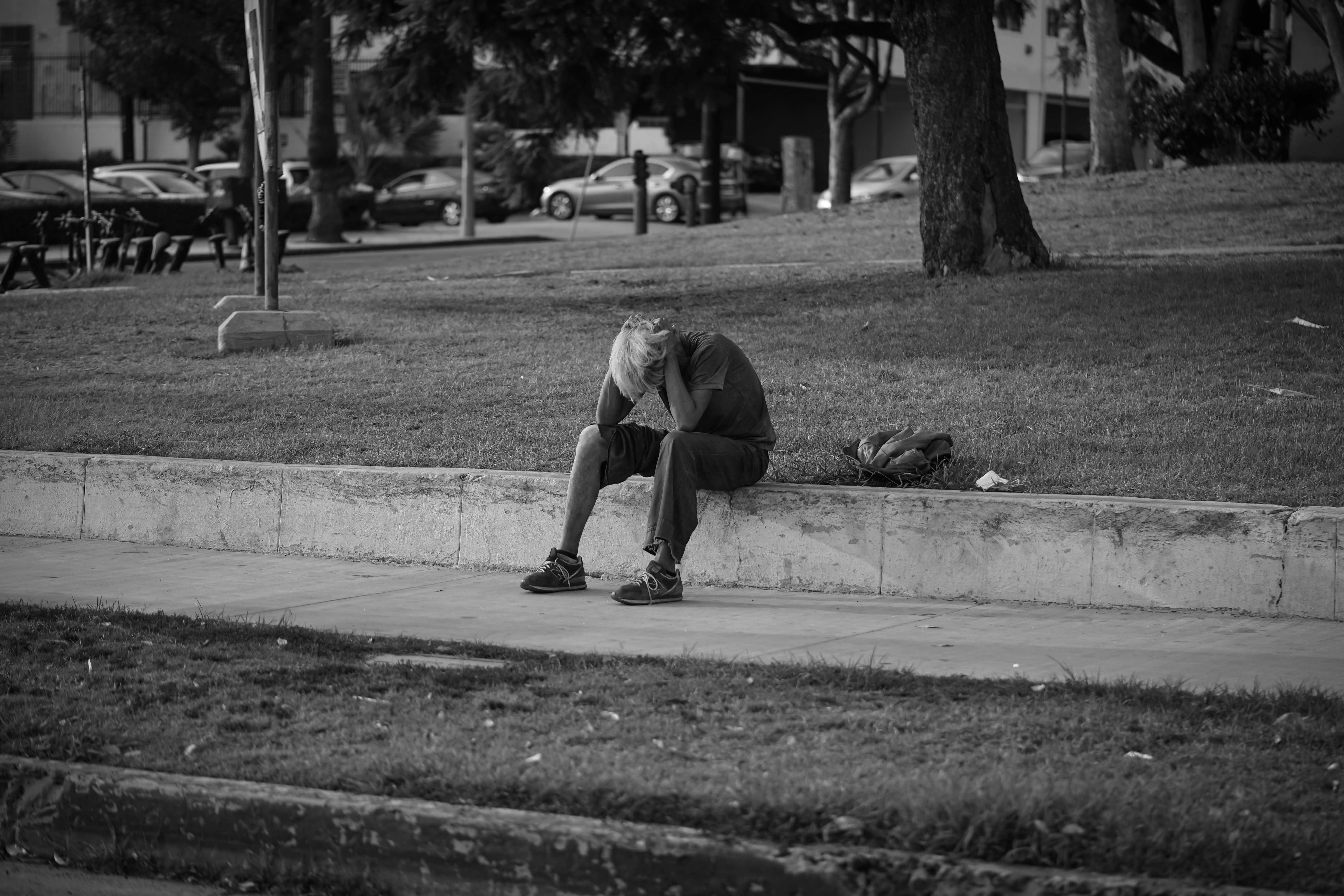
Let’s starting by reading, chapter 5, verse 8. Initially it might seem unrelated to the theme of dissatisfaction, but the Teacher is building his case. Here’s how the NIV puts it: “If you see the poor oppressed in a district, and justice and rights denied, do not be surprised at such things.”  Dorsey’s translation clarifies that the Teacher is saying that it is the “rich people in a particular district defrauding the poor or depriving the powerless of justice and due process.”  Not surprising, the Teacher says.  In our world, injustice and oppression abound against the poor. But how does this relate to dissatisfaction?

Let’s follow the Teacher’s logic, as he continues talking about the wealthy and powerful.  In the NIV, halfway through verse 8, the Teacher goes on: “For one official is eyed by a higher one, and over them both are others higher still.”

Does that phrase in verse 8, “one official is eyed by a higher one,” sound odd to you?  My first thought was that the Teacher must be talking about a boss holding her employees accountable, making sure they are doing a good job.  But that’s not quite what the Teacher means.   Dorsey’s translation is helpful: “Influential men protect one another; and they, in turn, are protected by even more powerful men.” See the difference?  When the Teacher talks about one official eyeing another, what the Teacher is referring to is wealthy and powerful people watching out for each other, making sure that they stay in power and retain their wealth. They don’t want the poor people to get their wealth.  Ah, now we can just barely hear how the Teacher is scratching the surface of the theme of dissatisfaction. Even though the rich and powerful have so much, they are not satisfied, so they oppress the poor, committing injustice to make sure the poor people stay in their place.

It’s similar to the phrase, “the rich get richer and the poor get poorer.”  It’s similar to the talk we hear about the widening gap between the ultra-wealthy and poor.  It is similar to what we hear about the erosion of the middle class. 

Did you hear what happened since the start of Covid in March?

Business Insider reported in August that “When you add up the numbers, billionaires in the United States have increased their total net worth $637 billion during the COVID-19 pandemic so far. At the same time, more than 40 million Americans filed for unemployment. With tens of millions of Americans out of a paycheck and the stock market plummeting by 37% in March, how is it that the rich have continued getting richer?”[1]

Great question.  There are two reasons, Business Insider reports:

  1. The government disproportionately gave more aid to banks and corporations, and
  2. When the stock market bounced back, the unequal bailouts meant that the wealthy still had money on hand to invest and thus profit, while the middle and lower classes did not.    

This is a classic example of how the rich and powerful tend to protect the rich and powerful, and it is contrary to the heart of God.  His heart beats for oppression and injustice to cease.  That’s why Christians should fight against oppression and injustice.  Because God created and loves all of humanity.  So his heart hurts when those he created, people he made in his image and loves, aren’t being treated equally. How are you fighting oppression and injustice?

Check back tomorrow as we continue to follow the Teacher’s thinking and advice about addressing dissatisfaction in our lives.


[1] https://www.businessinsider.com/billionaires-net-worth-increases-coronavirus-pandemic-2020-7

How God really wants us to worship – Ecclesiastes 5:1-7, Part 5

Photo by Joshua Earle on Unsplash

What is awe-inspiring to you? I have never seen the Northern Lights, but I can imagine how the guy in the photo above would find them awe-inspiring. How about you? What causes you to have wonder and amazement? It is very common for us to declare that all manner of things are “awesome.” This week we’ve been studying Ecclesiastes 5:1-7, starting here, in which the Teacher has been talking about worship, focusing on three common elements of worship: rituals, prayer and vows.

Now the Teacher concludes his thoughts on worship in verse 7, asking us to consider what is truly awesome.  If you read this verse in ten different translations, you will probably get ten different renditions of the verse. 

One person says that what the Teacher is trying to say is that “people are prone to carry their illusions with them while they worship and also to talk without thinking. If a vow is made this way, the worshiper is treading on dangerous ground. The remedy is to fear God.” (Eaton, Tyndale OT Commentary)

The phrase “fear God” is found in the Bible a lot, and it is confusing because we don’t use the word “fear” in modern English the way it was used in the older English of the 1600s when the Bible was first translated in English.  So the NIV says, “stand in awe of God.” 

Or as Dorsey puts it, “respect God and submit to his authority.”  That’s a definition of worship in a nutshell: Respect God and submit to his authority. 

When we gather for worship, this is why we sing.  Singing transports us to a different plane of existence.  Something about the combination of the music and the lyrics and voices together singing helps us experience a taste of the transcendence of God.  When we sing, we not only make vows to God, we also stand in awe of God.  Our hearts and minds are filled with wonder, as we consider who he is and what he has done. 

Especially because it is not all that often during our hours and our days that we make time just to stand in awe of God.  We should do this a whole lot more, possibly. Back in verse 2 the Teacher told us to be silent before God, like the Quakers worship, and I said we would come back to that idea. Now we’re back, because it is not just by singing in worship that we can be in awe of God, but we can also express awe to God in silence.  In the silence we contemplate, thinking about who God is, about our relationship with him, and the fact that the Spirit of God is with us.  In the silence we contemplate Scripture and we reorient our lives to the truth.  The silence of contemplating God, being in awe of God, actually does change our hearts and minds.

The travesty of life in America is that there is so little silence. 

How can we be in awe of God?  It means that we need to intentionally add regular times in our lives when we turn off as much of the noise as possible.  For me, in the afternoons I will either walk down to the church library or sit in the sanctuary.  Those places are very quiet, and I will take time to contemplate God, trying to just stand in awe of him, thinking about him with respect and wonder.

There are more ways we can stand in awe of God.  We can observe nature.  Whether you like the starry sky at night, or whether the moon freaks you out like it does me (but you still look at its craters with your binoculars).  Whether you love the woods, or you love the ocean.  Whether you love the rolling farmland hills like we have in Lancaster County, or you love the mountains.  There are so many ways that we can stand in awe of God, by getting out in nature.  It is one of the reasons I love running.  When I run, I get to spend time breathing our country air, passing the cows and sheep, and the manure-drenched fields.  If I have the right attitude, all of it can make me stand in awe of God, even as I run.

How do you stand in awe of God?  On a walk or hike outside?  Looking in the eyes of your child?  Maybe watching your grandkids grow up? It could be by reading a great book about God.  Of course it means studying the Bible.  But studying the Bible should not be an isolated practice that we always or even mostly do alone.  Remember that that Teacher, in Ecclesiastes 5:1-7, is thinking of a person going to the temple, something that was most often done in community, with other people.  In the same way, gathering with your church family is quite important.  There is something formative about being together, to sing praises together, to pray together, to study God’s word together.  It forms us, changes us, helps us to grow.  We stand in awe of God together.

What this requires is practice.  We are called to be people who stand in awe of God.  To accomplish that requires the practice of observation, setting aside regular time in your life for quiet contemplation of God. Maybe you do this best in a quiet room alone. Maybe you prefer being in nature. Maybe there is a group of friends you can practice contemplation of God with together. No matter the method, the intention is to stand in awe of God, to give him credit and glory and praise for who he is and what he has done, to “be still and know that he is God” (Psalm 46:10).

But it can take practice.  Are you out of practice?  What do you need to change in your life to stand in awe of God?  Do you need to make it an actual appointment on your calendar? 

Then keep that appointment with God.  Spend time listening to God through his word, through the voice of his Spirit, and then do what he says.  The greatest worship you can give God is a life lived for him, at home, at work, in school, in your neighborhood. 

Is it really that important to be committed to a local church? – Ecclesiastes 5:1-7, Part 4

Photo by Anna Earl on Unsplash

What commitments do you have to your church family? Do you serve on a committee? Do you help with a ministry? Are you a member of a church? Participating in a small group? How are you doing keeping your commitments? How do you view those responsibilities? Would you say that they are vows you need to keep?

As the Teacher continues in verse 6, he keeps talking about vows, which we started discussing in the previous post.  The NIV translates the next phrase, “Do not protest to the [temple] messenger, ‘My vow was a mistake.’  Why should God be angry at what you say and destroy the work of your hands?” 

It seems that the Teacher is describing a worshiper who has made a vow of some kind during temple worship.  It would be the kind of vow that is noted, recorded and remembered by temple officials. Maybe the worshiper promised to give a donation.  Maybe the worshiper signed up to teach a class, fix a wall, or serve on a committee. There are many potential vows that one could make in the context of a church.  

But the Teacher says that the person doesn’t follow through in keeping the vow.  There are plenty of reasons why we don’t keep our commitments.  Sometimes we just forget.  If I don’t respond to a text message in a matter of hours, that text message will get buried way down the list below the flood of newer messages.  I don’t mean to not follow through, but it can happen.  Or breaking a vow could happen simply by laziness, lack of commitment, procrastination, or maybe we bite off more than we can chew, especially in the busyness of life.  Have you ever heard yourself say, “Why did I say, ‘Yes’ to that?  Why can’t I just say ‘No’ more often?  This people-pleasing is getting me constantly over-committed.  But I just have a hard time saying ‘No’.”  Or maybe your spouse volunteered you for something and you say, “Why did you volunteer me for this?”  And you’re thinking, “How can I get out of this commitment?” 

Then the church staff person calls you, like the messenger in verse 6.  They want to know where you’ve been.  Why you have missed meetings.  Why you haven’t been in worship.  And how do you respond?  Inwardly you probably have a mixture of feelings.  Guilt.  Shame.  Embarrassment.  Frustration.  A desire to do better.  A fear that you probably won’t do better.  Maybe you want to people please, and say, “Sorry, I promise I will be there next time.”  But you know deep down inside what you’re really thinking, “Making that commitment was a mistake.  I never should have said Yes to that.”  And in a moment of courage and clarity and honesty you blurt out to the person calling you, “My vow was a mistake.”  And you want out.  You want to be free of the commitment.  You want them to say, “It’s fine, I’ll let you off the hook.” 

But the Teacher is not so happy about this in verse 6, is he?  He says, “Do not protest” that your vow was a mistake.  Instead keep the vow.  Or don’t make the vow in the first place.  Why? Because our worship is loaded with vows. See, for example, the previous post about how singing songs in worship is a form of making vows. And in today’s post we’ve looked a numerous other ways we make vows in worship. Our vows are ways that we demonstrate our relationship to God.  When we vow to give, vow to serve, or vow to do anything for the Kingdom, and then we fail to keep the vow, that is hurtful to God. 

I’m not totally sure what the Teacher is trying to convey with that last phrase, depicting God as getting angry and destroying the work of your hands.  It sounds like the Teacher is saying that if we don’t keep our vows, God will punish us.  Dorsey’s translation is not so harsh: “Why should God be angered at what you say and take away what you have achieved?”

Either way, it is very important to God that if we make a vow, we keep it, especially in the context of worship and a church family, especially as disciples of Jesus.  And that leads the Teacher to his conclusion about worship in verse 7.  If you read this verse in ten different translations, you will probably get ten different renditions of the verse. Check back tomorrow as we study the Teacher’s conclusion about how to worship.

What’s really going on when you sing worship songs (and why it might be making God sad) – Ecclesiastes 5:1-7, Part 3

Photo by Edward Cisneros on Unsplash

We Christians give a lot of time in our worship services to singing songs, don’t we? How many songs does your church sing each week? At Faith Church we typically sing four songs, which are a mixture of traditional hymns and modern praise songs. What are we doing when we sing those songs?

It might seem like a question with an obvious answer, we’re singing praise to God. Yes, of course we are. But I would like to suggest that when we sing, we’re often doing something else very important, something that we really might not want to be doing, something we might not even realize we’re doing. I would like to suggest that our praises to God just might be making God sad. Why? Keep reading.

This week we have been studying Ecclesiastes 5:1-7, the central passage of the entire book. The Teacher has been talking about the meaning of life, and what he places in the center of his book is unique in that it seems like a departure from his main theme about the meaning of life. What is he talking about at the center of the book? Church worship services.

I would argue that he is saying that our attitude to toward gathered worship is central to how we find meaning in life, and as we continue this working our way through this passage, we’ll observe how he comes to that conclusion. We have see in the first post how he teaches about ritual in worship, and in the second post how he teaches about prayer. Now he shifts to the next worship topic.

Take a look at what the Teacher tells us in verses 4-5. Did you see the topic?  Vows.  Essentially, in verse 4, the Teacher says, “Fulfill your vows,” but then in Verse 5 it’s like he thinks about it a second, and says, “You know what, you’re better off not making vows at all!  So much better to not make a vow, then to open your mouth, make a vow, and not keep it!”

What are vows?  The commentator says, “When taking a vow, worshipers committed themselves to undertake some kind of action, often a sacrifice, if God would answer a specific request…or simply to curry God’s favor.” (Longman)

Have you done that?  “Lord, if you just help me out this time, I swear to you I will come to church more often.”

Vows take many forms.  They could be a pledge of time, talent or treasure.  Could be a commitment to serve in a ministry.  Could be a promise to another person, to your family, to God, like marriage vows, or your church membership vows.  Once you make the vow, that person or people are all counting on you.  This happens a lot in church.  For example, my church has our annual congregational meeting in November, and for our church that’s a place where we make vows.  First of all, we elect leaders, and second, we vote to approve a budget.  You may not have thought of that as a vow, but it is.  It is an agreement of a church family, together in unity, saying that we are going to support the budget throughout the next calendar year.  What we mean by “support the budget” is that we are going to be giving financial gifts to the church throughout that next year so that we can, together, fulfill our vow.  

There are many other vows in a church family.  You make a vow when you agree to serve on a committee or when you agree to serve in a ministry.  Because of all these vows, the Teacher has a strong caution in verse 6. Look at the first phrase. I like how Dorsey translates it, “Do not let your mouth get you into trouble.” 

How many of you have allowed your mouth to get you in trouble?  In this case, the context is making vows in worship. You might think, but Joel we don’t really make vows in worship very much.   I would suggest that we make vows every single week in worship.  How so?  Songs.

When we sing worship songs, consider how similar they are to making a vow.  When you sing to God you are making commitments to him.  What happens, then, when you sing a worship song, which has amazing lyrics, but you don’t actually mean them or follow through with them in your life the rest of the week? Are you breaking a vow?

Think back over the songs you sang in your worship services recently. If you can’t remember, contact the people at your church responsible for selecting the songs. Ask them for the list of songs. They might even have the lyrics. Then as you read the lyrics, look for the lines of the songs that are vows. Here are some phrases that are vows that my church family sang this past Sunday morning:

“All our hope is in you.”  Is your hope completely in God?  It sure sounds good, but do we mean it?

“All the glory to you God.”  Does your life really give all the glory to God?  Or are you giving glory to lesser things as well?

“At the cross, I surrender my life.”  What does that even look like?  How does a person surrender their life to Jesus?  Seriously.  It is crucial that we Christians think about the lyrics of the songs we sing, because they are a vow that we take with our mouth. 

Why is this so important? Because when we sing words, for example, such as, “I want to surrender all,” and then do nothing to change our lives toward the process of actual surrender, we are making a vow and then not keeping that vow. So we should ask ourselves, What does actual surrender look like?  What do we do to make it clear to not only God, but also to the people in our lives that we are surrendering to Jesus? 

Answer that question, and then consistently complete the actions that show you are surrendering your life to Jesus, and you will have made a vow and kept it. 

Are you praying the wrong way (especially during worship services)?- Ecclesiastes 5:1-7, Part 2

Photo by Jon Tyson on Unsplash

Do you know how to pray? Have you ever thought about how God wants you to pray? What we are going to learn from the Teacher today is that there is a right way and a wrong way to pray, especially during worship services.

In this week’s five-part series on Ecclesiastes 5:1-7, the central passage of the entire book, the Teacher is taking us to church. After a caution about empty ritual, the Teacher talks about prayer. 

Look at Verse 2.  Again, Dorsey’s translation is helpful, “Do not be like [fools]; do not be glib in what you say to God, or hasty in what you promise.  Remember, God is in heaven and you are on earth, so let your words be few.” 

One commentator explains that in this phrase, we see “the vast distance between God and human beings, and … the need to be quiet before God.” (Longman) 

The Teacher is talking about God from a perspective very different from the Christian perspective because he is writing hundreds of years before Jesus was born.  I suspect the Teacher would be shocked to learn about the idea that I talked about in the previous post, that Christians’ bodies are the temple of the Holy Spirit.  The Teacher, very much in line with Old Testament Israelite thinking, sees God differently.  God’s presence resided in the Temple, and God was conceived as a being utterly different from humans.  Likewise we Christians view God the Father as separate, distinct from us, and transcendent, but we also have an expanded understanding of God the Son, Jesus who took on human flesh and walked among us, and we have the God the Spirit living in us.  Therefore, we can learn from the Teacher, and we should consider God as he truly is, in his holiness, his perfection, his love, his justice, and have a present awareness of how amazingly other he is.  To consider God that way, we need to be quiet before him.  That quietness before him is one way to talk about prayer. 

So often our prayers are speedy barrages of words, in which we ask God for all kinds of help.  That’s not wrong.  God wants to hear from us.  But the Teacher provides for us a needed corrective.  Our worship should include silent consideration of God.  In this, the Quakers have us beaten, because they include silence in their worship.  I run past the Quaker meetinghouse in Bird-in-Hand and think about this.  At some point I want to visit.  This is why Faith Church has held Silent Sundays from time to time over the years.  This is also why we need to include more silence in our lives, both individually and corporately when we gather on Sunday mornings for worship.  Let’s put a pin in this, as the Teacher will come back to this, and we’ll see what he has to say in a later post in this series.

Instead, as the Teacher continues, what he says next is difficult to interpret. Look at Verse 3: “As a dream comes when there are many cares, so the speech of a fool when there are many words.” While it is clear that the Teacher is giving us some proverbial wisdom, what does he mean? Remember that verses 2-3 are about prayer, and the whole section of Ecclesiastes 5:1-7 is about worship, so the meaning of this phrase should make sense when thinking about prayer in gathered worship. 

Again the commentator, Tremper Longman, is helpful here.  He says, “As one can expect dreams (an uneasy sleep) during the preoccupation that accompanies heavy work, so one can expect to find a fool behind a loquacious speaker. Thus … the point is clearly drawn: only a fool prays a lot.”

Only a fool prays a lot?  What?  Can the Teacher really be saying that?  Aren’t we supposed to pray more, not less?  Jesus taught in Luke 18 that we are to pray and not give up.  Is Jesus disagreeing with the Teacher?  No.  Jesus also taught in Matthew 6:7, “When you pray do not keep on babbling like the pagans, for they think they will be heard because of their many words.”  While we should be persistent in prayer, but especially when it comes to gathered worship, we should be very observant of our motivations.  We should want to avoid making a spectacle of ourselves.  That is foolish, the Teacher says, and Jesus agrees. 

There is something else that can be very foolish in worship, and we’ll learn what that is in the next post.

Should Christians practice rituals in worship? – Ecclesiastes 5:1-7, Part 1

Photo by Priscilla Du Preez on Unsplash

How should we go to church? 

You might answer, “Isn’t it pretty obvious?  You get in a car and you drive to the building, and you walk inside the building, and you sit down on a pew.” 

Maybe if you live nearby, you walk. You might take a bus.

Maybe your church is in a home.

Or in recent months, you might answer, “You get out your computer, and you click on the Zoom link, and you sit on your sofa and watch from home.” 

But is that all there is to it?  Show up?

Today we’re going to church.  As we continue our study of Ecclesiastes, The Teacher takes us to church.  What he does is basically ask the question “How should we go to church?”  In so doing, he is not thinking about the transportation we use to show up to a worship service, or even the use of technology to log in to a broadcast of the church.  He is not talking about watching a YouTube version of the sermon. 

The teacher is talking about our hearts, our minds, and how we think and feel about this thing that goes by many different names: Church, Worship, Mass, Liturgy, Temple.  So far in Ecclesiastes, the Teacher’s theme has been how life is fleeting, and thus we should enjoy the time has given us.  Last week David Hundert began a three-part mini-series on the central section of the book.  Today we are looking at the center of the center. That means the Teacher intended us to see this section as very important.  In other words, as he has been guiding us to think about the meaning of life, he is saying that we should think about gathered worship as incredibly important.  How we think about worship is vital.

Look at verse 1.

The NIV translates the Teacher’s very first words as, “Guard your steps when you go to the house of God.” 

Wait.  Is he saying that our church buildings are God’s houses?  I know some of you want to answer Yes, and I don’t mean to disappoint you, but the answer is No.  The Teacher here is not talking about church buildings.  So what is he talking about?

Dorsey’s translation of this phrase answers for us, “Be careful when you come to God’s temple.”

The Teacher worshiped at the temple in Jerusalem.  God’s presence was actually there, so at that time the temple was properly called the house of God.   

Before we hear what the Teacher says about worship, we need to see that you and I are in a very different situation.  We don’t go to the temple in Jerusalem.  And God’s presence doesn’t live here in our church buildings.  I get it that church buildings are often referred to as God’s house, but that is not biblically correct. Why?  Because the Apostle Paul would write in 1 Corinthians 6:19, that our bodies are the temple of God, as the Holy Spirit lives in us.  We are God’s house.  Not a building!    

Even though the cultural situation of the Teacher is different, though he did worship in the temple which was God’s house and we don’t, we can still learn from him about worship.  What he will do in verses 1-7 is talk about three elements of worship: sacrifice, prayer and vows.  So let’s first see what he has to say about Sacrifice.  Look at the second half of verse 1: 

 “Go near to listen rather than to offer the sacrifice of fools.”  Or as Dorsey translates it, “obedience is better than the sacrifices offered by fools.  Fools are experts in wrongdoing.”

What does the Teacher mean by Sacrifice?  In the Israelite religion there was a ton of sacrifice.  They literally killed animals, giving their body and blood as a worship offering to God.  Since Jesus gave his body and blood as the permanent sacrifice, Christians do not practice ritual sacrifice in worship.  So we could be tempted to think that this phrase in verse 1 has nothing to do with Christian worship.  Let me try to explain how the Teacher’s words can apply to us.  When he mentions sacrifices, he is talking about ritual practices in worship.  We can compare his words to our practice of rituals. 

You might think, “What rituals?  You just said we don’t do sacrifice.”  Well, we Christians actually have a bunch of rituals.  Rituals are any spiritual practices that we observe over and over.  Some churches are more ritualistic.  Some less so. At my church, we have a fairly consistent order of worship, we sit in pews, sing songs, and we have a sermon.  There are even a couple Christian rituals instituted by Jesus himself: communion and baptism.  We also have child dedications, membership vows, marriages, and funerals.  All have an element of ritual to them.

The danger of ritual is that regularly repeated actions can take on an automated quality to them.  My wife was raised in a church that said the Gloria Patri, the Lord’s Prayer and the Apostle’s Creed every week, and after we were married we were members there for a few years.  I found that quoting those three over and over and over, I was able to say the words without thinking about them, without feeling anything. When that happens, one commentator says worshipers “are so foolish that they are not even aware that their sacrifices are evil, an offense to God.” (Tremper Longman)

As a result, some Christians believe all rituals in worship are wrong.  That’s not what the Teacher is saying, though.  Rituals can be very healthy and formative.  I would go so far as to say that we need rituals, if done with the right motivation.  Frankly, it would be very difficult to have any expression of gathered worship that doesn’t have at least a few rituals. 

But the Teacher is saying that there is something else that God desires more than ritual.  The NIV translates it as “listening,” and Dorsey translates it as “obedience.”  While they sound like different concepts, we often use those two words equally.  When a parent says to a child who has disobeyed, “You didn’t listen to me,” they don’t mean that the child didn’t hear the rule; they mean the child broke the rule.  God wants us to listen to him, to obey his word.  In fact he would much rather us obey him than go through empty ritual.  It is a regular refrain in Scripture: “to obey is better than sacrifice.”  In other words, if the rest of your life is lived in a way that doesn’t honor him just showing up for church worship services and going through the ritual isn’t going to get you any brownie points with God.

So how do we come to worship? The teacher is actually saying that our lives outside worship matter to God most.  He wants us to lead lives of faithful obedience to his way of life.

How to have the right mindset during the difficult times of life – Ecclesiastes 3:1-15, Part 5

Photo by Kalea Morgan on Unsplash

There was a period of consecutive months where eight people from Faith Church died, at least one per month.  I listened to and counseled their eight grieving families, officiating each of the funerals.  This weighed heavy on me, as I was thinking about death constantly. I found that I couldn’t stop thinking about death, and that freaked me out.  The last few verses in our study this week, Ecclesiastes 3:12-15, helped me begin to resolve that struggle. Go ahead and read those verses.

Do you hear the joy in what the Teacher says? 

The Teacher says we can be joyful and do good during the time we have, no matter the circumstance or the season.  Rather than be upset that we can’t know it all, we can be satisfied and even happy with what we do know, the life and work and relationships that God has given us.  Dorsey notes that the word the Teacher uses, which the NIV translates “happy,” is not the temporary emotion of happiness, but joy, a deep abiding joy.  We can experience joy, even in the midst of the fleeting life we all live. Even in the midst of difficult times.

That is what really helped me when all I could think about was death, and how much I didn’t want to die.  I could take the Teacher and God at his word, and enjoy the life God has given me.  The Teacher expands on this in verse 13.  We can enjoy the life God has given us, including the basics of eating, drinking and, yes, even finding satisfaction in our work.  In fact, the Teacher says, this is a gift of God.

Imagine a world where even eating and drinking would be horrible.  Where what you need to do to survive is horrible. Surely for some people in our world, this is their reality, and we need to be sensitive to that.  One of pastoral colleagues has a son with pervasive allergies to foods, and they have struggled to keep him healthy.  But for most of us, eating is a distinct pleasure.  Even in places without a variety of foods, I have noticed people appreciate the pleasure of eating and drinking.  I did a missionary internship in Guyana, South America, in the summer between my junior and senior year of college. At one point in the summer, I joined my Guyanese friends on a brief trip to the capital city of Guyana for a church conference.  I was so excited because there was a KFC restaurant in the capital.  American-style fast food was not available in the more remote area where I was serving.  You know what my Guyanese friends said as we were eating our fried chicken?  KFC was nice, but they missed their rice.  They had rice every single meal, breakfast, lunch and dinner, every day!  Bland rice!  And they missed rice!!!  But that is the joy God has given us!  Even the joy of eating rice.

And we would do well to live joyfully that way!  Instead of fixating on the shortness of life, instead of feeling freaked out by death, I learned to change my thinking to enjoy the life that God has given me. 

This is hard, quite frankly, in the USA, because we are taught to be dissatisfied.  I was recently listening to a podcast where the speakers were talking about how consumerism has impacted Christians in the USA.  They said that we used to hear how the USA is pretty much the greatest place to be a Christian with our freedom of religion and our many opportunities.  But in recent years that viewpoint is changing.  The one person on the podcast was talking about how he learned that people were reviewing his church on Google.  And not all the reviews were positive!  People are used to going out to eat, and then posting a review on Google or Yelp, describing what they think of the restaurant.  “My sandwich was too cold.  My bacon wasn’t crispy enough.  The décor was old.”   You can do that for churches too.  “I didn’t get the sermon that I wanted.  Or the projection system wasn’t bright enough.  I’m only giving you 3 stars out of 5.”

Think about the mindset of that.  I’m not saying that churches should have a blank check to do whatever they want. I’m also not saying that we should be free from evaluation.  But what I am saying is that we need to be aware that we can bring a consumerist mindset to our faith, and that can work powerfully within us to make us dissatisfied about many elements of our faith.  The result is a lack of joy. 

What the Teacher is advocating for, then in Ecclesiastes 3:12-15, is a view of life that trusts in God to answer the big picture questions, and for humans to live simply and joyfully.  That brings great meaning to life.  That’s a life that we can enjoy and share and pursue the flourishing of all people.

This had me thinking of a woman in our church who passed away this spring.  As we walked with them this past year of her ovarian cancer diagnosis, treatments, and the ups and downs of this battle of cancer, there were most certainly times of sorrow.  But they always carried their sorrow with a deep joy.  They had an assurance of God’s goodness even in the midst of the pain, the questions, the ups and downs.  We spent time in the ER, with them all at the hospital, and while there were questions and sorrow, there was still deep assurance and peace. During her final week, my wife Michelle and I both spent time at their house.  Yes, they expressed tears and sorrow, and they also shared smiles, and even laughter.  There was deep sadness, but deep comfort and joy in the Lord.  And never a complaint from our friend as she passed away. 

This reminds me of the Apostle Paul’s words in Philippians 4. There he talks about what we should let our mind think on: whatever is true, good, noble, right and pure.  Fixing our minds this way will help us keep the different seasons of life in proper perspective.  So where is your mind during times of good and during times of not so good?  It does not mean we never feel sad.  But what we choose to fix our mind on, in the midst of the ups and downs, in the midst of the normal seasons of life, changes how we handle those season.

You can have joy in the midst of hard times – Ecclesiastes 3:1-15, Part 4

Photo by Svyatoslav Romanov on Unsplash

Do you ever struggle to find joy in life? I’m writing this in September 2020, and it feels difficult to have joy. We’ve been in a global pandemic, Covid-19, and nearing 200,000 deaths since March. Wildfires ravaged the west coast of the USA, while hurricanes flood the south. Partisan politics have made the presidential election a bitter contest, and the country feels deeply divided. Racial injustice is all around us, revealing the original sin of a nation.

Life has its ups and its downs. This year feels like a major downer. In the previous post we talked about how generally life follows a pattern of down times that follower times of joy. This is called the Law of Undulation. But what we do when it seems we cannot break out of a negative view of life? What do we do when we struggle to have joy? In other words, how do we respond to the Law of Undulation?

The Teacher tells us. Let’s take a closer look at Ecclesiastes 3, verses 9-15, and I think you’ll see what I mean.

In verse 9, after his poem, he transitions with a question about the poem: “what does a worker gain?”  Or as Dorsey translates it, “What is the ultimate significance of all these activities?”  He has answered this question numerous times already in Ecclesiastes chapters 1 and 2, so he doesn’t need to answer it again here.  What is ultimate significance of life’s extremes?  The answer is, “not much, if anything at all.”  In the poem (verses 1-8), we can certainly understand that there is an appropriate time and place for all kinds of things.  But we can’t understand their ultimate significance.    

So in verse 10, the Teacher says that this is a heavy burden God has placed on us. Not very joyful yet, is he?  Dorsey’s translation is different, and I think very helpful, because the NIV’s translation is perhaps unnecessarily negative in its view on God.  Here’s how Dorsey translates verse 10, “I thought about all that God gives humans to do to occupy them.”  See the difference in that? It’s not so much that God has placed a heavy burden on us, but that the Teacher is thinking about how God has given us a life that is cyclical and fleeting. The Teacher is reflecting on the poem in verses 1-8.  All those opposites.  The Teacher is thinking about them. But what does he think about them?

He tells us in verse 11, and again Dorsey’s translation is very helpful. Let me try to set it up: When the Teacher, in verse 10 says that he thought about all that God gives humans to do to occupy them, now he goes to say in verse 11 (Dorsey’s translation), “I could see that God has designed each activity so that it has an appropriate time to be done.  But God has also placed in the human heart a sense that there is a greater overall plan for all things.  Nevertheless, he has not given human beings the ability to perceive this greater plan, or to understand God’s agenda from beginning to end.”

In other words, God has placed us in a world of opposites.  We have a desire to know that larger picture, but we ultimately cannot know it because it is only God’s to know.  So what should we do?  Are we just destined to be caught in a fog all our lives? Where is the joy I promised?

Read verses 12-13. Does it sound familiar? What the Teacher has to say in verses 12-13 is very similar to what we heard him teach in 2:24-26 which we studied last week.  2:24-26 was his conclusion to the seven personalities or roles that people utilize in their search for the meaning of life.  There he said in 2:24, “A man can do nothing better than to eat and drink and find satisfaction in his work.” 

Now in verse 3:12-13, he says, “I know that there is nothing better for men than to be happy and do good while they live. That everyone may eat and drink, and find satisfaction in all his toil—this is the gift of God.” 

His teaching in 2:24-26 and 3:12-13 is nearly identical. So the Teacher is clearly connecting these two passages.  He is developing a theme, and here it is: “While life is cyclical and fleeting, and we may never be able to fully understand all of God’s purposes, God has given us a pathway for joy.” 

We are starting to see why my Old Testament professor, Dave Dorsey, said that the book of Ecclesiastes has often gotten a bad rap as the most depressing book of the Bible.  He pointed out that the Teacher actually has more references to joy and happiness than the book of Philippians, which is considered to be the Joy book of the Bible.  Of course Ecclesiastes is a lot longer than Philippians, but the point remains.  Ecclesiastes has an incredibly joyful approach to the meaning of life. 

There is another way to look at life, and verses 12-15, present that other view, one that I am very thankful for.  Check back tomorrow, as I’ll talk about how Ecclesiastes 3:12-15 was such a help to me in the middle of that dark time.

Surfing, the Law of Undulation, and how to handle life’s extremes – Ecclesiastes 3:1-15, Part 3

Photo by Jeremy Bishop on Unsplash

I’ve never been surfing, but it looks really fun. Riding a wave must be thrilling. I imagine, though, that successful attempts only follow many failed ones. Ups and downs, like the waves. I suspect that surfing is a study in extremes, from the bliss of great ride, to the suffering of a rough crash. In our blog series this week on Ecclesiastes 3:1-15, the Teacher is saying we should not be surprised at life’s extremes. 

CS Lewis talks about this tendency in his book The Screwtape Letters, calling it the Law of Undulation. Undulation is a fancy word describing how waves of all kinds go up and they go down.  Whether we are talking about waves at the beach, or electromagnetic waves like microwaves, light waves or radio waves.  They have crests and they have troughs.  Crests are the peaks, the high points, and troughs are the low points.  The Law of Undulation states that a high point will follow a low point and after that another high point will arrive and then another low point, over and over and over, just like the unending waves on the seashore. 

Of course, life isn’t exactly like that.  We use the phrase, “When it rains, it pours,” to talk about how sometimes we get three or four low points in a row.  Or we get a number of high points in a row.  I wonder how history will remember 2020? 

Yet the law of Undulation remains true, because inevitably, the streak of bad will end, and something good will happen.  We can expect it, and know that it works both ways.  After a season of blessing, we might have a tragedy.  This is not a guarantee, by any means, but we can expect it.  In fact, Lewis says, we should expect it, so that we are not rocked by it, so that we are not thrown off kilter as if the tragedy that just happened was impossible. 

That’s one way we can learn from the Teacher’s poem: Do not be surprised at the ups and downs of life.  If you embrace the cyclical, fleeting nature of life, you will be much, much more prepared to handle difficult times when they come. 

Christians can become confounded by this tendency when we have an amazing spiritual experience.  It could be a youth retreat, a camp meeting, a men’s retreat, a particular worship service or a mission trip.  This could also be true in a non-spiritual sense with vacations.  On those special events, we can experience what we call a high, a feeling of deep emotional joy and excitement, and we love it!  We are riding the crest of the wave.  Maybe we experienced great musical worship, maybe we really enjoyed a speaker, maybe we had more time alone with God, or maybe our eyes were opened to a new culture halfway around the world.  Maybe it felt amazing to serve sacrificially.  There are many ways that we experience the wonder of the mountaintop. 

And then we come home.  We’re still very excited at home, and then we go back to work, back to school, back to the chores of dishes and laundry and the car breaking down.  What happens?  We can quickly crash into a serious disappointment, and we can start to call into question the validity of the high.  Maybe that mountaintop experience was false, we wonder.  It sure didn’t seem false at the time, but why, then, is it gone so quickly?  Shouldn’t a genuine spiritual experience last longer than that?  So we hunger for another mountaintop.  We seek another spiritual high.  We want a repeat.  It’s a lot like an addict who wants another hit.  It is very human of us to want nothing but the good stuff, the joys, the highs, the excitement, as if that is where truth is found.  As if the mountaintop experiences are what God wants us to have all the time. 

The Teacher, through the 7 couplets of opposites in Ecclesiastes 3:1-8, reminds of the Law of Undulation.  Highs naturally lead to lows.  Rather than be frustrated by life, we can view the ups and downs as okay.  The opposite or extreme nature of life is to be expected.  When we come home from the powerful retreat, and we are faced with our struggles, and with boredom and with the daily grind of school and jobs and chores, if we start to feel like something is wrong with us, if we start to feel like failures, if we start to feel like spiritual nobodies, we can remember that nothing is wrong. Instead, the Law of Undulation is at work.  The troughs, the low points, will not last forever.  There is a time for joy, and there is a time for pain.  Life is cyclical.

So how do we respond to the Law of Undulation?

The teacher tells us, and we’ll discover what he says in our next post.

How our family pets taught us about the extremes in life – Ecclesiastes 3:1-15, Part 2

Photo by Sandy Millar on Unsplash

When she was about 7 years old, we got our daughter Meagan a floppy-eared rabbit named Bun Bun which we kept in a hutch outside on our side deck.  Every day before school, Meg would go out there to peek on Bun Bun, say Hi, and see how her rabbit was doing.  There really wasn’t much work involved in taking care of Bun Bun, so I thought she was a great pet.  Feed her, fill up her water bottle, and clean out her hutch, which included giving her shredded paper she could burrow in on cold nights. Simple, and most of all, outside.

The only exception to how easy it was to care for Bun Bun was when the temperature dropped below freezing.  Then, just to be safe, we would move the entire hutch into the laundry room, and that was a fussy chore.  The hutch just barely fit through the door, took up almost all the floor space in the laundry room, and depending on how long it had been since we cleaned the hutch, it could stink really bad, especially if the cold weather lasted for a more than a few days.

My family was soon going to learn a personal lesson in what the Teacher in Ecclesiastes 3:1-8 describes as “a season for everything under the sun.” In the previous post, I mentioned that the words of the Teacher’s poem illustrate the extremes in life. In verse 2, the Teacher describes what is perhaps the most foundational of those extremes, “there is a time to be born, and a time to die.”

After doing carting the rabbit hutch inside and outside throughout three winters, that verse became all too real.  One night, we looked at the weather report and it was going to be around freezing, and we thought, Bun Bun will be fine, she made it through other nights that were colder than this, so we didn’t move the hutch inside.

The next morning Meg woke up, went out to check on Bun Bun, and came right back in screaming that Bun Bun was not moving.  I thought, Can’t be…  Well, to use the words of verse 2, this was a time to die.  Bun Bun was frozen stiff.  We felt awful.  Meg was a mess. For Meg, to use the words of verse 4, it was a time to mourn. 

Soon enough the sadness passed, and Meg got a new idea.  She proposed that we get a guinea pig.  We had previously had a hamster, and it ran on its wheel nonstop and smelled, so I wasn’t too keen on a guinea pig.  I didn’t grow up with pets, and am totally fine without them.  For me, I should have followed the words of verse 7, a time to be silent.  But for whatever reason, I decided it was a time to speak.  As Meg was asking for a guinea pig, I opened my mouth and said, “I would rather us get a dog, than a guinea pig.”  All of sudden, for Meg, it was verse 4, a time for laughing and dancing.  I think it was also, verse 5, a time to embrace, as I got some hugs out of that. 

I don’t know what got into me.  Why did I say that?  I think all I was doing was illustrating that I didn’t want another animal inside the house.  But I couldn’t take back my words, as my daughter was elated. That launched Michelle and Meg into verse 6, a time for searching.  They made a list of all the qualities they were looking for in a dog.  Then they visited the humane league and the ASPCA and they looked online and searched and searched for just the right dog that fit the list.  After much looking they finally found Bentley.  Though it is not precisely the words of verse 2, a time to be born, because we adopted Bentley when he was two years old, there was still a sense that he was born anew into our family.  Very quickly it was just like verse 8, a time to love, as my family loves Bentley. 

But not so much for me.  Like I said, I did not grow up in a pet family.  We would have pets, but they never lasted long.  And remember how I didn’t want another animal in the house?  Now we this fairly large animal walking around our house all the time, needing to go out, barking super loud when anyone comes in the driveway, and shedding everywhere!  So for me, back in verse 8, it was more like a time to hate, though that is perhaps a bit strong. 

You know the crazy part? From nearly the first moment I walked in the house on the day Michelle and Meg brought Bentley home, he seems to have decided that I was his person!  He would follow me around everywhere, and often still does.  If I would go to the bathroom, he waited outside the door.  I was not a fan of all this following.  But in a couple weeks I decided to see how he would do if I took him on a run.  I run quite a bit, and that was the beginning of something new.  In the nearly four years that we have had Bentley, we have logged a lot of miles together.  Now four years later, I can honestly say he has grown on me.  Back to verse 8, it is a time to love.  It is interesting how animals and people can grow on you.  From hate to love.

Life is so often a study in opposites, isn’t it?  Put another way, life is often about extremes.  So what the Teacher is describing for us is no surprise.  When we read this poem in Ecclesiastes 3:1-8, we instinctively know it to be true, because it is our daily experience.  In other words, the Teacher is saying, we should not be surprised at life’s extremes. 

Yet we are still often caught off guard by the ups and especially by the downs of life, aren’t we? Is there something we can do to better prepare ourselves? Check by tomorrow!