Why dying to self and rising again are the way to have healthy… – Relationships: In the Church, Part 4

We continue the story of Jesus to see how his birth, life, death and resurrection is instructive for church family relationships.  We celebrate Jesus coming in the flesh at Christmas.  We must also consider Good Friday, as Paul reminds us in Philippians 2 that God, who was willing to take on human flesh, also took on human death.  It is astonishing that God would be born as a human, when you consider that he didn’t have to.  God not only became human, but he also submitted himself to the experience of death.  In Jesus’ death, he shows us mind-boggling love. That is our example for loving one another in the church family.  We die to ourselves, we follow Jesus, we give sacrificially of ourselves to one another. 

Also reflect on the fact that Jesus died for all.  Every single person in the church family has dignity and worth and value, because every single person is equally loved by God, equally made in the image of God, equally worth our time, our effort, our money, our sacrifice.  Thus it makes sense that Paul connects loving self-sacrifice with unity in the church. 

Let’s be clear that unity is not uniformity.  Uniformity is when there is sameness.  Same beliefs, same thoughts, same actions.  Uniformity cannot handle dissent, difference, and disagreement.  But unity can.

Unity in the church embraces, listens to and learns from different ideas and perspectives, but all toward the mission of Jesus.  Unity is humble and teachable, eager to learn, quick to say, “I don’t have this all figured out, but I love Jesus, you love Jesus, and we can learn from each other.”   

Therefore, in unity, we can disagree in a loving way. We can have differences of opinion in a gracious way.  And we should.  The variety of perspectives, the diversity of gender, generation, theology, ethnicity, wealth, political ideology, background, and experience is a beautiful thing.  We welcome diversity.  We strive for more diversity.  We seek a diversity that is grounded in unity that selflessly loves one another.  That means we lovingly sacrifice our power, our position, our control to move in a Jesus direction, because he taught and embodied that kind of self-giving love. As you can imagine, that attitude and action doesn’t always come naturally, and thus we need the Fruit of the Spirit actively growing in our lives.

Paul in his letter of 1st Corinthians writes quite extensively about how the church can practice unity in diversity through the image of a body.  In 1st Corinthians 12:1-11, Paul says the Spirit of God plays a central role to the unity of the church.  The Spirit empowers and enlivens us, blessing us with a variety of gifts to be used in unity for the common good.  The Spirit is essential to the life of the church. 

Think about how that relates to the Fruit of the Spirit.  When we walk in step with the Spirit, we grow the Fruit of the Spirit in our lives: Love, Joy, Peace, Patience, Gentleness, Goodness, Kindness, Faithfulness and Self-control.  When we grow those qualities and allow those qualities to flow freely from our lives into the lives of the people around us in our church family, we will be guided by the kind of self-giving love that Jesus demonstrated.  This is where we remember that Jesus didn’t stay dead.  His resurrection reminds us that he rose to new life.  Likewise God’s Spirit works resurrection power, new life, in our bodies. As Paul writes in 2 Corinthians 5:17, “If anyone is in Christ, he is a new creation; the old has gone, the new has come.”  The presence of growing Fruit of the Spirit in our lives is evidence that God’s Spirit is at work in us.  As members of the Body of Christ, we have gifts of the Spirit and Fruit of the Spirit.

Filled with the Spirit, empowered by the Spirit with a variety of gifts that we all use, Paul continues in 1st Corinthians 12:12-31 to describe how the diversity of people in a church family are like a body.  Look at verses 12 and 13, “The body is a unit, though it is made up of many parts; and though all its parts are many, they form one body. So it is with Christ. For we were all baptized by one Spirit into one body—whether Jews or Greeks, slave or free—and we were all given the one Spirit to drink.”

Every single person in the church family is equally important, just as every part of the body is important.  You each have been gifted by the Spirit to serve an important role in the life and ministry of the church family.   You know the 80/20 rule?  Or a variation of it.  I goes like this: 20% of the people do 80% of the work.  I don’t know if it is accurate.  But is speaks to a reality that some people serve more in the life of the church, and some serve less.  Some people serve a lot, some serve hardly at all. As we read 1 Corinthians 12, though, Paul corrects that thinking.  He says, all serve, all give, all pray, all love.  The Christian faith is very clearly not an individualistic faith.  Instead it is an “all” faith.  Everyone involved. 

When a church family practices an “everyone involved” approach, though it will require personal sacrifice, that sacrifice leads to something beautiful.  I’ve talked a lot about sacrifice so far.  Who likes thinking about sacrifice and selflessness?  But when a church family practices loving, gracious unity, the self-sacrifice leads to the beautiful experience of the healthy body of Christ.

I am not making an argument that the only kind of ministry that counts, or that matters, is church-based.  You can absolutely serve the Kingdom of God, as the body of Christ, outside the four walls of the church.  In fact, I encourage you to do so.  What I hope you receive from this post is that there is clearly something important and life-giving about a church family working together to pursue the mission of God, whether in a building or outside it. 

Photo by Jametlene Reskp on Unsplash

The model for healthy church families – Relationships: In the Church, Part 3

In Acts 2:42-27, we read about the marks of church family relationships.  First, the earliest Christians were devoted to the Apostle’s teaching.  This is the beauty of having the apostles’ teachings preserved in Scripture.  Church family relationships are guided by the teaching of the Bible.  We, too, even though we live 2000 years later, can devote ourselves to the teaching of Scripture.  This is so important, because apostolic teaching points us to a relationship with Jesus.  The church family is only a church family because we are in relationship, together, with Jesus, through his Spirit living in us.  We learn from Scripture, then, how to live like Jesus lived, or put another way, we learn to live like Jesus would live if he were us.  We learn how to have the Fruit of the Spirit flowing to one another. 

Second, we read in Acts 2:42-47 that the church was devoted to the fellowship. This word “fellowship” is defined as “an association involving close mutual relations and involvement.” (Louw & Nida)  A church family is devoted to being close with one another and involved in each other’s live.  One way this has been described is “Doing Life Together.”  (For example, read Bonhoeffer’s classic, Life Together.)

Our Faith Church logo has four squares, and the second square from left is the fellowship square.  The logo tells a story of how we believe God works in his church, shaping people together to move from simply observers to active disciples who carry out his mission.  We believe the biblical teaching is best summarized by four words, one for each square: Worship, Fellowship, Discipleship and Outreach.  We also believe that the natural flow of this growth pattern is from Worship to Fellowship to Discipleship to Outreach. 

What I mean is that most people make their first connection to a church through a worship service.  More often than not, in our contemporary world, that first contact is online.  Then after visiting a church online, people make the step to visiting in-person in a Sunday worship service.  But is attendance at worship services the end goal that God desires for people?  No.  As we see in Acts 2:42-47, clearly there is an important next step, and that is becoming part of the fellowship, becoming part of the family.

Take a look at how the earliest Christians created this new family. In the previous post, we examined how they met together in small groups. But we also read that,  “All the believers were together and had everything in common. Selling their possessions and goods, they gave to anyone as he had need.”  They sacrificed their individualism in favor of the group.  This wasn’t just a one time thing, as Acts chapter 4:32-37 describes how, sometime later (maybe a couple months or years) they were filled with the Spirit, selflessly committed to the mission of God and to each other, especially to those among their family who were in need. 

What we can conclude, therefore, is that the earliest Christians came together to create a new family where one did not previously exist.  It was a family rooted in sacrificial love for one another.  Where did they get that idea?  Who taught them to think and act so selflessly? 

In John 13:34-35, we read Jesus teach the disciples, “A new command I give you: Love one another.  As I have loved you, so you must love one another.  By this all men will know that you are my disciples, if you love one another.”  The mark of Jesus’ disciples is that they love one another. 

Jesus didn’t just teach this, as we know; he modeled it.  Jesus said just a few verses later in John 15:12-13, “My command is this: Love each other as I have loved you.  Greater love has no one than this, that he lay down his life for his friends.”  And that’s exactly what he did.  He once called himself “the Good Shepherd…[who] lays his life down for his sheep.” (John 10:14-15)  That’s the kind of love that Jesus taught and what he did, as we know, through his birth, life, death and resurrection. 

Paul reflects on this in Philippians 2:1-11.  “If you have any encouragement from being united with Christ, if any comfort from his love, if any fellowship with the Spirit, if any tenderness and compassion, then make my joy complete by being like-minded, having the same love, being one in spirit and purpose. Do nothing out of selfish ambition or vain conceit, but in humility consider others better than yourselves. Each of you should look not only to your own interests, but also to the interests of others. Your attitude should be the same as that of Christ Jesus: Who, being in very nature God, did not consider equality with God something to be grasped, but made himself nothing, taking the very nature of a servant, being made in human likeness. And being found in appearance as a man, he humbled himself and became obedient to death— even death on a cross!”

The essence of Christian fellowship and unity is demonstrated for us by Jesus, in his self-giving love, which Paul describes as “making himself nothing, taking the very nature of the servant.”  Paul is not describing “making himself nothing” as some kind of self-loathing, self-harm, or self-hatred.  Another way to translate Paul’s words here is to say that Jesus “emptied himself,” like a container of living water poured out for all who are thirsty. 

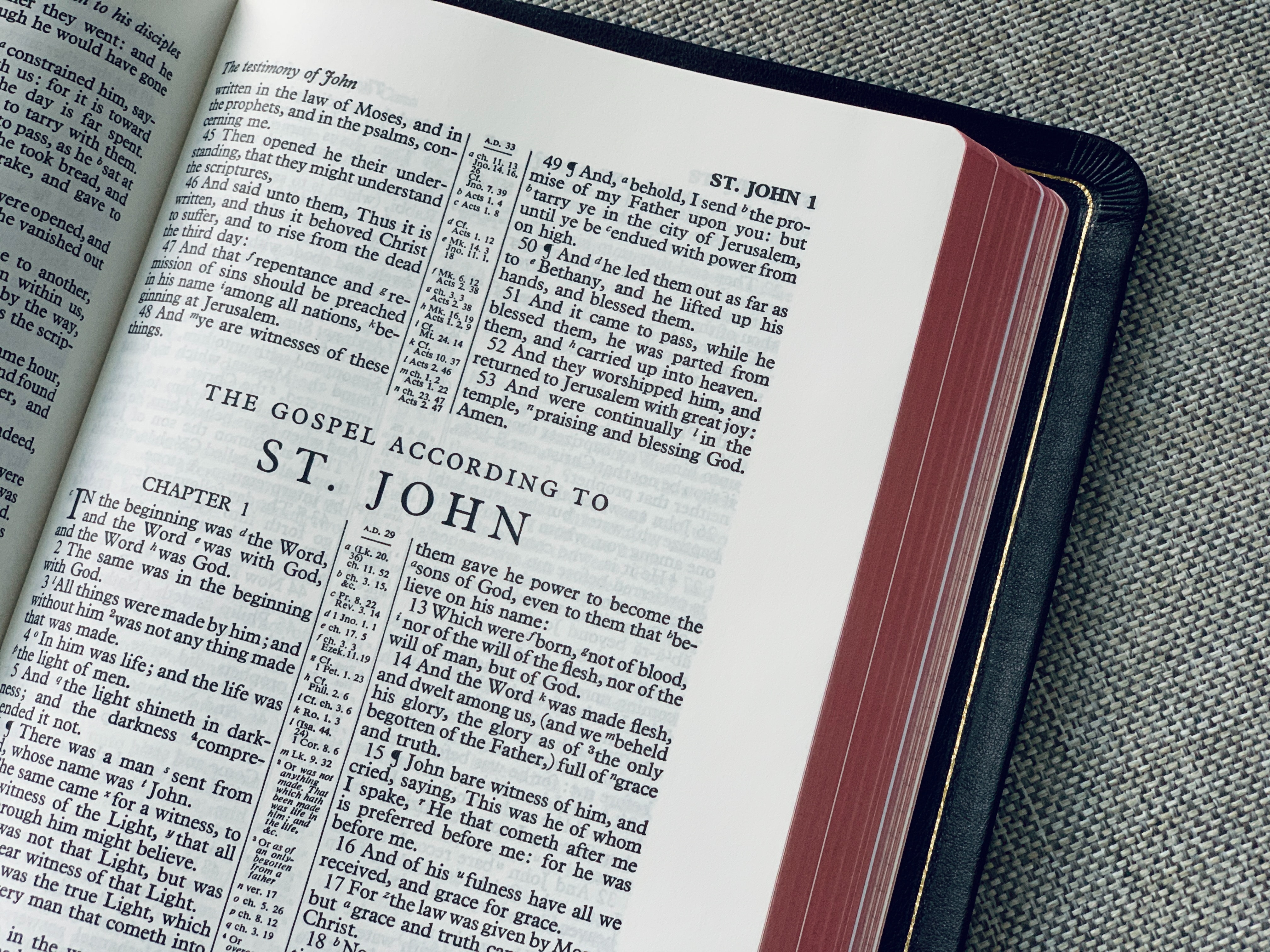
Notice again how Paul describes it: Jesus “did not consider equality with God something to be grasped.”  That is amazing.  Jesus, in other words, the pre-existant person of the Trinity we typically refer to as God the Son, the Christ, the Messiah, the Savior, is equal to God.  But get this: he was willing to take on a massive change.  God, the pre-existant Christ, took on a body.  In a few weeks we will start a new blog series studying the life of Jesus as told by his disciple, John, and John describes this well in chapter 1, “the Word became flesh.”  Christ who was previously a spirit, submitted himself to the confines, the boundaries, the limitations of human flesh. 

Why would he do this?  Because he loves us.  Jesus emptied himself, limiting himself to a body, for us.  Therefore we do what Jesus did.  Paul says in Philippians 2, “Do nothing out of selfish ambition or vain conceit, but in humility consider others better than yourselves. Each of you should look not only to your own interests, but also to the interests of others. Your attitude should be the same as that of Christ Jesus.”

Because God taking on flesh is only the first part of the story. In the next post we continue to see how Jesus’ life and teaching are our example for how to have healthy church families.

Photo by Rosie Sun on Unsplash

Why churches large or little need small groups – Relationships: In the church, Part 2

From time to time, people have communicated to me that there are cliques in Faith Church, as if our church family should be one big close family.  We are about 100 people.  There is just no way that 100 people can be equally and deeply close with one another.  To believe everyone in a group of 100 can be close is an unrealistic expectation.  Instead, it is far more realistic that we 100 people, in order to have close relationships, should be in smaller groupings. 

It is entirely natural that some people will be closer to other people, even in a church our size.  I believe we should not call groups of close friends “cliques.”  There is a healthy, natural tendency for people to connect at a deeper level because they have similar interests, hobbies, ages, etc.  But we can still have a practice of being kind and caring to all.  It is very unhelpful to make accusations that tear down these smaller group relationships.  Instead, our passion in the church family is to build each other up. 

So, if 100 people need to be in smaller groupings for healthy relationships to develop, then of course, 3120 people need the same, right?  Remember in the previous post how the first church grew from 120 people to 3120 people overnight? In fact, if you scan through the book of Acts, what you will see is the numbers of Christians in the church growing and growing far beyond 3120.  You will see the church expanding beyond the borders of the city of Jerusalem, into Judea, Samaria and all over the known world.  It would eventually become geographically impossible to be one church family.

My contention, though, is that it was numerically impossible from the start to be one big close family.  Even when the church was 120 people.  But did the disciples, who were now called the apostles, agree?  They were the leaders of the church.  What did they do to help all these thousands of people experience the relational dynamic of family?

Read Acts 2:42-47.  These are the verses right after Peter preached his first sermon and 3000 believed in Jesus.

What do you notice?  The first Christians, though they numbered 3120, met in small groups! They met in homes.  They also met in the temple courts, which indicates that there was a time for large group gatherings as well.  But we know from the account that follows that those large group meetings at the temple only occurred during the first few years of the church.  Eventually the Jewish religious leaders disallowed that.  After Acts 8, we never again hear of the church meeting in a large group in the temple.  Instead, they met primarily in homes for the next couple hundred years. 

There’s a very good reason for small groups. It is in small groups that people form close relationships.  Even though Faith Church is on the smallish side, with about 100 people that call Faith Church their local church, we also meet in small groups so that people can build deeper relationships. What about your local church? Are you involved in smaller grouping that emphasize caring for one another, doing life together?

Photo by Small Group Network on Unsplash

The surprising beginning of the first church family – Relationships: In a church, Part 1

Calling the people in a local church congregation a “family” is pretty normal in Christian circles.  In fact one of the most common ways that the New Testament writers refer to the people in a church congregation is by using the terms “brothers” and “sisters”.   We are siblings in Christ.

I wonder if that sounds strange to those outside the church.  It reminds me of the Olive Garden slogan, “We’re all family here.”  Does it seem odd to you that a restaurant chain would be so adamant about the concept of family?  Their previous slogan was “When you’re here, you’re family.”  And the idea of family is all over their website.  But Olive Garden is not alone. Businesses of many varieties use the image of family to describe their company, their work environment, because they are hoping to make a deeper connection with their employees and customers.  If you feel like family, it is more likely that you’ll return to their establishment over and over again.

My wife, Michelle, and daughter, Meagan, work at a local coffee shop.  It has been fascinating to see family-like relationships develop between not only the other employees, but also some of the regular patrons.  Last year Michelle and I did pre-marital counseling for one her co-workers and fiancé, and then I officiated their wedding. At the reception we were seated with a couple other co-workers and coffee shop patrons.  The bride felt such a connection to the regulars at the coffee shop, that she invited them to her wedding! 

Certainly the definition of family must also be broad enough to include adoptions, guardianship, and fostering.  It seems to me, though, that the definition of family can be even more inclusive than that.  In fact, I would submit to you that the Bible redefines family for those who are together in a local church.

As we continue our five-week series on relationships, this week on the blog we explore what the Bible has to say about how the people in a church congregation can become a family, and especially how that church family can have healthy relationships as they walk in step with the Spirit of God, growing the fruit of the Spirit in their lives, and then, most of all, allowing the fruit of the Spirit to flow from their lives to the rest of the church family.

We start at the beginning of the church, in Acts chapters 1 and 2, which tells the story of Jesus meeting with his disciples one last time, giving them instructions to wait in Jerusalem for the gift of the baptism of the Holy Spirit.  When the Spirit arrives, Jesus said, the disciples would receive power, and they would be his witnesses in Jerusalem, Judea, Samaria, and to the ends of the world.  Then Jesus ascended to heaven, while the disciples watched him leave.  They head back to Jerusalem, just as he said they should, and they, along with the other followers of Jesus, begin what turns out to be a long prayer meeting.  We read in Acts 1:15 that there were about 120 of them.  But something was about to happen.  Something that would change this group of Jesus followers into a different kind of family. 

We read in Acts 2 that God the Holy Spirit arrived just as Jesus said he would.  The followers of Jesus are baptized with the Spirit, and empowered, fulfilling Jesus’ promise.  They are even given the ability, by the Spirit, to speak in other languages, and the disciple Peter takes the lead, preaching a sermon to the crowds who had traveled to Jerusalem from all over the region to celebrate the Jewish festival of Pentecost.  We read in Acts 2:41 that 3000 people accepted Peter’s message to believe in Jesus, and they were baptized.  Overnight, in other words, the church family grew from about 120 followers to about 3120 followers! 

That’s not what we think of when we think of family, right?  3120 people?  Even when they numbered just 120 people, we would call that a massive family.  At least with 120 people, you can get to know everyone’s name.  But you’re not going to be best friends with all 120, and you don’t have to be.  120 people is just too many people to be close with.  Family doesn’t have mean being best friends with everyone in the family, but it does mean caring for them.

What did the very first church do, though, to maintain a family relationship? We’ll find out in the next post.

Photo by Sam Balye on Unsplash

Can the people in a local church be a family? – Relationships: In the Church, Preview

Just about all our Faith Church emails start with that same line “Hi Family of Faith Church.” Are we really a family?  Next week on the blog, we continue our five week topical series about relationships, next studying what God’s word has to say about the people who make up a local church.  There are plenty of other metaphors that the Scripture uses for those groups of people.  Paul Minear wrote the classic work on this, Images of the Church in the New Testament, and he counts between 80 and 100 ways the New Testament writers describe the people in a church, depending on how you translate the original language.  In his book he covers 96 of those images. Each figurative image for the church has its own unique angle.  Here are a few examples. Notice how different they are.  The church is compared to:

  • Living stones, a Building, a Temple, or a House
  • A Kingdom of Priests
  • The Bride of Christ
  • The Body of Christ
  • Citizens of Heaven

What we will focus on, because our series is about relationships, is the church as the family of God.  As a bit of a preview, consider these passages. 

  • “‘I will be a father to you, and you shall be sons and daughters to me,’ says the Lord Almighty” (2 Cor. 6:18).
  • “Stretching out his hand toward his disciples, Jesus said, ‘Here are my mother and my brothers! For whoever does the will of my Father in heaven is my brother and sister and mother’” (Matt. 12:49-50).
  • “So then you are no longer strangers and aliens, but you are fellow citizens with the saints and members of the household of God” (Eph. 2:19).
  • “As we have opportunity, let us do good to everyone, and especially to those who are of the household of faith” (Gal. 6:10).
  • “Do not rebuke an older man but encourage him as you would a father, younger men as brothers, older women as mothers, younger women as sisters, in all purity” (1 Tim. 5:1).

Thinking about your church as a family, how are you doing as a family member of your church?  How are your relationships in your church family?  What does it take to be a loving church family member?  I look forward to talking about it with you next week.

Photo by Joel Mott on Unsplash

Sometimes healthy relationships need boundaries – Relationships: Family, Part 5

Sometimes family relationships need boundaries.  As a family grows, we simply cannot care for everyone deeply, and frankly some people don’t want to be cared for.  Worse, some people are toxic.  Some are abusive.  When people behave badly, it is okay to impose boundaries on theme.  We place boundaries on relationships to stop the hurt, the bleeding. If, for example, you are being abused in any way, you need to get to safety and place a boundary on the abuser so they cannot hurt you.

In fact the most loving act you can take might be putting boundaries on them.  People will almost certainly not respond well when you place a boundary on them, because to them it doesn’t feel loving.  So even if you are loving, gentle and kind as you impose the boundary, they will likely be offended and feel that you are being harsh, unloving and mean.  But imposing boundaries on people might be the most loving step you can take. 

Placing boundaries might actually be the necessary first step in growing goodness, peace, love and self-control within certain relationships.  The growth of the Fruit of the Spirit almost always takes work on our part, and growing that fruit will look different depending on the relationship.  Though seemingly counterintuitive, growing the Fruit of the Spirit in a broken relationship often starts by creating a boundary on that relationship.

Boundaries don’t need to be forever. But they might need to be. As time goes by, God can help people do the oftentimes hard work to change and be different.  It can be scary and difficult to think about removing a boundary on a person who has hurt you. With the boundary up, you are safe. Maybe you don’t see them privately anymore. Maybe you don’t go to family gatherings anymore. But you hear they have changed. People in your family say they are different. Is it true? Can you trust again? Or will they hurt you? These are important questions. Remember that God can transform even the most difficult situation.  So work toward reconciliation and healing broken relationships.  That means speaking truth.

Where this can be confusing is that the Bible says two important things about love that seem to conflict with each other.  Take a look at these two verses. Do you see how they seem to contradict one another?

In Ephesians 4:15, Paul writes, “speaking the truth in love” and yet Peter writes in 1 Peter 4:18, “Above all, love each other deeply, because love covers over a multitude of sins.”

Is there a way that these two statements don’t conflict?  I think so.  We are not to ignore sin.  Including in a family.  We speak truth about sin, and we do so in love.  Consider how Paul describes this love in the love chapter 1 Corinthians 13:4-8.

“Love is patient, love is kind. It does not envy, it does not boast, it is not proud. It is not rude, it is not self-seeking, it is not easily angered, it keeps no record of wrongs. Love does not delight in evil but rejoices with the truth. It always protects, always trusts, always hopes, always perseveres. Love never fails.”

Covering over sin doesn’t refer to ignoring it as if it has not happened. Instead Paul clearly teaches us that we can be loving about addressing sin. Here the Fruit of the Spirit is essential. When we address sin, when we confront, when we disagree, we do so in self-control, with gentleness, kindness, and patience.  Our posture matters.  Our tone of voice matters.  Our word choice matters.  When we confront, we are not only concerned about the reality of the pain that we have felt, we are also concerned about the other person who has hurt us, and how we can share the love and grace of Jesus with them.   Even when we are hurt, we can be other-focused because of what we talked about last week, our relationship with God.  We are strongly rooted in the God who deeply loves us so we can communicate our hurt, our truth in love. In God we have everything we need, so we find our stability in him. From that firm foundation, we can lovingly confront others.

That doesn’t mean that speaking the truth will always go over well.  We might sometimes need to learn to be okay with a change in level of relationship.  When a relationship moves from a closer level to a more distant level, we can feel the pain of that distance.  This pain is especially acute in family relationships. We are right to believe that family should be close.  However, your family relationships might not always be close.  Michelle and I have extended family members that are not close.  There has been and continues to be brokenness.  Sadly, there might always be.

But God’s heart is for healthy people, and that means healthy families. Therefore God seeks to work the Fruit of the Spirit in our lives to help us pursue healthy families.  So what do you hear God saying to you in regard to your family?  Where do you need more of his Fruit? Do you have any relationships that need healing? Any that need loving boundaries? Any relationships in which you need to take the initiative, confess your poor behavior and ask forgiveness? What step will you take today?

Photo by Simone Dalmeri on Unsplash

Sibling rivalry and the Fruit of the Spirit – Relationships: Family, Part 4

We’re talking about relationships, and this is part 4 in our five-part series on family relationships. We’ve looked at husbands and wives, singles and then parents and children. In this post, we’ll discover what the Bible has to say about siblings.  We parents earnestly desire that our kids will be close friends. Sibling rivalry, however, is real, and it can be very damaging.  I would like to point us to one passage, 1 John 3:16-18. Notice how John, though he is talking about relationships in the church, uses the imagery of sibling rivalry.

“This is the message you heard from the beginning: We should love one another. Do not be like Cain, who belonged to the evil one and murdered his brother. And why did he murder him? Because his own actions were evil and his brother’s were righteous. Do not be surprised, my brothers, if the world hates you. We know that we have passed from death to life, because we love our brothers. Anyone who does not love remains in death. Anyone who hates his brother is a murderer, and you know that no murderer has eternal life in him. This is how we know what love is: Jesus Christ laid down his life for us. And we ought to lay down our lives for our brothers. If anyone has material possessions and sees his brother in need but has no pity on him, how can the love of God be in him? Dear children, let us not love with words or tongue but with actions and in truth.”

I know sibling hurt can be deep and painful.  But John teaches us that love can overcome even the deepest hurt.  Repairing the damage will likely require forgiveness over and over again.  But take that step.  Forgive. Strive for love of your siblings.  Just as parents and children might need to confess their sins toward one another, so might siblings.  I had to confess my ridiculous selfish treatment to my brother in the summer after my freshman year in college.  My poor behavior toward him had lasted for years, and it was pointless, groundless and totally wrong.  Do you need to do the same?  You and your siblings do not need to be best of friends (it is nice when that happens, but being best friends isn’t what John is talking about). Work to grow the Fruit of the Spirit so there is goodness, patience, peace, etc. in your sibling relationships. Which part of the fruit do you need to nurture within any sibling relationship?

Parents disciple your children: In Deuteronomy 6:6-9, God tells Israelite parents to lead their kids to know and love him.  “These commandments that I give you today are to be upon your hearts. Impress them on your children. Talk about them when you sit at home and when you walk along the road, when you lie down and when you get up. Tie them as symbols on your hands and bind them on your foreheads. Write them on the doorframes of your houses and on your gates.”  I highly recommend the book From Tablet to Table by Leonard Sweet.  It is a very accessible read, short and sweet, filled with lots of encouragement for parents to lead their kids to become and grow as disciples of Jesus.  What Sweet suggests is that parent-led conversation around the dinner table is essential for raising our kids in the Lord.

But like I said, parents should know that they are not alone.  Grandparents and extended family can also have a significant role in an extended family helping to raise kids.  One of my favorite roles in life, after being a husband and father is the role of grandfather and uncle.  We grandparents, aunts and uncles can have a wonderful relationship with extended family, especially those who are younger.  Especially during the teen years, when parent-child relationships can be strained, extended families can support the parents by taking kids under their wing. One of the aspects of my Kime extended family vacations that I love is how intentional my parents are about having family devotions each night after dinner.  This past year, 21 of us gathered around the campfire, reciting a verse of Scripture, singing a song, and sharing stories about how we experienced God at work in our lives recently, including many of the teenagers!

If you do not live near what you consider to be your “family,” find a new family community.  Be that new family to others.  There are those in our world who we call “family” who are not by law our family at all.  None of us are alone in this.  If you are feeling alone, pray for that community and reach out to be community to others. 

Furthermore, as we read in 1 Timothy 5:3-5; 16 extended families care for widows. Extended families care for extended families. (see 1 Timothy 5:7-8) Thus the intergenerational nature of extended families is essential.  Grandparents, aunts and uncles, you can have a wonderful godly influence on multiple generations.

The younger ones need the older ones, their wisdom, experience and insight.  Younger ones, be intentional about reaching out to your older family members, spending time with them, talking with them, listening to them.  The older ones also need the younger ones, and for more than helping us learn to use our phones.  We need their youthful idealism, their energy, their questions, their culture and their new ideas.  Though we like to say that “It was better back in my day,” that is not entirely true. The older ones among us can learn from the younger ones about life now.

In the next post, we talk about boundaries, because sometimes they are the most loving action to take in families.

Photo by Wayne Lee-Sing on Unsplash

How the Fruit of the Spirit helps us be healthy parents – Relationships: Family, Part 3

One of the unique ways that married people can serve the Lord is by choosing to grow their family by adding children.  Not all married couples will have children, and we would do well to pay attention to the couples who want to have children but wrestle with infertility.  We reach out to them with the fruit of the Spirit, walking alongside of them, as infertility can be a very frustrating reality. But when parents have children, whether through childbirth, adoption, guardianship or fostering, the Bible has important teaching for those parents.

When you think of parents and children, perhaps the most famous Biblical teaching is “Honor your father and mother” which is found in Exodus 20:12, the fifth of the ten commandments.  This one gets quoted a lot in the New Testament. (Jesus in Matthew 15:4, 19:19, Mark 10:19, Luke 18:20, Paul in Romans 13:9; Ephesians 6:1-2, and James in 2:11.)  What does it mean to honor your parents?  It can take on many forms.  Honor is to prize highly, to care for, to show respect, and finally, honor is to obey.

As Paul writes, in Ephesians 6:1-4 and Colossians 3:20 “Children obey your parents in everything, for this pleases the Lord.”  As we grow older, what it means to “honor our parents” will change.   It looks different for an 8 year old than it does for a 40 year old then it does for a 65 year old who is now caring for their aging parents.  It can get very complicated as elderly parents’ health declines, and then need advanced care.  For example, how do you honor your parents when that parent can no longer safely operate a car, but they refuse to give up the keys?   Sometimes, at certain ages or in difficult situations, boundaries are needed in a parental relationship, even as you still (with the nurturing of the Fruit of the Spirit) choose to not dishonor them, but to show honor and care and respect. 

Though parents are to be the nurturers of their children, the biblical writers have a caution for parents, “Do not embitter your children, or they will be come discouraged.” (Colossians 3:21) Parents, there is no doubt parenting can be extremely joyful and extremely difficult.  In those dark phases of parenting, we can get so frustrated, so worn thin, so tired, that we can feel like failures.  In the moment, in the darkness what can sometimes feel overwhelmed; we can grow a sense of failure and bitterness in our hearts.  What this verse reminds us is that we must guard our hearts and minds that we don’t allow that bitterness to grow in us because we parents can embitter our kids, not only toward us, but toward others and God. 

We parents need the Fruit of the Spirit in our lives so that we can be the parents God wants us to be, that our kids need us to be. Finally, parents you might also need to repent and confess to your kids when you have misbehaved toward them. Take the initiative, the first step and reach out to them. This is all a part of having the Fruit of the Spirit be an active growing part of our lives. Patience. Self-control. Goodness.

We parents also need help.  If you are a person who is beyond the parenting years, we younger parents need you.  I know that parents are always parents, but there comes a time when your child grow up, move up and start their own families. When your children reach that stage, your active parenting years are over, and that means you have an opportunity. Is it an opportunity to revel in the empty nest? In part, yes. My wife and I are excited for the empty nest. Our third son starts his freshman year in college next month, and that means we’ll have only our daughter at home, starting her junior year in high school. The empty nest is oh-so-close, and we are looking forward to it. But our plan is not to turn our gaze inward and self-indulge in our newly found free time. We’ve got a grandson now, and it’s highly likely that more grandkids will be born in the coming years. We also have a church family and an extended family. So do you.

Reach out to the younger parents, the single parents, and support them, help them, give them a break.  Be in prayer for them.  Encourage them when you see good things happening, as well as when you see them struggling.  Grandparents can certainly do this, but so can the older ones in the church family. 

But there are not just parent/child relationships in a family, there are also siblings. And we’ll talk about how the Fruit of the Spirit can bring health to sibling relationships in the next post.

Photo by CDC on Unsplash

Healthy marriage, healthy singleness – Relationships: Family, Part 2

I think this will not surprise you: husbands and wives are to love one another.  In Colossians 3:19 Paul wrote, “Husbands, love your wives and do not be harsh with them.”  Ephesians 5:25, similarly says, “Husbands, love your wives just as Christ loved the church and gave himself up for her.”  A few verses later, we read in Ephesians 5:28, “Husbands ought to love their wives as their own bodies. He who love his wife loves himself.” Love is the first quality in the Fruit of the Spirit, and it certainly applies to marital relationships.

Did you hear who these verses are directed to?  Husbands!  Does that mean husbands are to love their wives, and wives don’t have to love their husbands?  Of course not.  The reason why Paul repeats this to the husbands over and over is because that culture was very different from ours.  In contemporary American culture, as in many places around the world, there is one major reason we get married.  Love!  Our ideal is that we will fall in love with someone and make a commitment to love that person for the rest of our lives. 

That aspect of our culture is a very good thing.  Love should be the foundation of a healthy marriage.  But in the Greco-Roman culture of the first century, this was not assumed like it is for us.  Instead, the culture was extremely patriarchal, to the point where men ruled over and in some cases owned their wives.  The idea that a husband would love his wife, or be married to his wife because he loves her, was not at all an expectation.  Wives, on the other hand, were absolutely to give themselves sacrificially to their husbands, almost like a slave to a master.  They might not feel loving toward their husband, though, but there were certainly to act like it.  Paul, then, in these passages was being very clear about how Christians are to approach marriage in that culture.  Husbands should love their wives, and they should do so sacrificially.  Obviously, then, wives should view their husbands the same way.  What Paul taught was nothing short of radical for his day and age.

Paul also says something that is fascinating when considering the marital relationship.  He says, “Submit to one another” in Ephesians 5:21.  God’s heart is for a marriage relationship where the husband and wife equally submit to one another.  Some might read that and respond, “But doesn’t there need to be one leader in the relationship?”  My answer is that there does not need to be one leader when both spouses work together, communicate together, and decide together, sacrificially, selflessly, graciously, loving one another.  When both apply the Fruit of the Spirit to their marriage, they can be totally equal partners.  I know there are also numerous Scriptures about wives submitting to husbands, and I believe it is best to view those teachings as applicable to the patriarchal culture that Paul lived in.  If he were writing to our culture, which is no longer patriarchal, I believe he would have written even more about equality in marriage than he already did.  This is an area of major disagreement among bible scholars, so if you would like to talk further about that, I’d be glad to.

Husbands and wives should emphasize mutual love for one another.  To have that kind of mutuality, it is vital that we walk in step with the Spirit, so that we can grow his love, joy, peace, patience, gentleness, kindness, faithfulness and self-control in our marriage.  In the difficult conversations, in the stress of life, in the ups and downs of agonizing decisions, often facing conflict, marriage is not easy.  All marriages will face challenges, and it is important that we face those challenges by together, both spouses walking in step with the Spirit, inviting the Spirit to grow his fruit in our lives. We will not be able to walk through challenges in our marriage in a consistently healthy way without the help of God, because we are human.

What about singles?  Single people are equally important to God as married people.  Singleness is no better or worse than being married.  We need to celebrate singleness in the same way we celebrate marriage. We celebrate relationships all the time.  Engagements, bridal showers, weddings, anniversaries.  We even have special parties marking the end of singleness: bachelor and bachelorette parties. But when is the last time you celebrated singleness? We as a church should also celebrate singles that way!  We should communicate that singles are just as vital family members as married couples.  In fact, Paul in 1 Corinthians 7, prizes singleness.  Here again the Fruit of the Spirit is crucial.  Our posture toward single people should be filled with the Fruit of the Spirit. 

And those who are single, likewise, walk with the Spirit, growing the Fruit of the Spirit in their lives, so they are flowing with the Spirit in their family relationships.  My point in bringing up single people is to remind us all that they are family, that their station in life is equally dignified to all other stations in life. 

Photo by Andre Hunter on Unsplash

Is the breakdown of the family the cause of societal collapse? – Relationships: Family, Part 1

Some of our favorite television shows of all time are about families.  Did you watch Father Knows BestLeave it to BeaverThe Brady Bunch?  When Michelle and I were young parents, we loved Parenthood about the Braverman family, led by parents Zeke and Camille and their four adult children and many grandkids, who all lived in Berkeley, CA.  More recently we watched Modern Family about Jay Pritchett, his second wife, Gloria, his two adult children from his first marriage, and their diverse families living in suburban Los Angeles.  There are plenty of other films, shows, and books about families.  Family is the basic unit of human life. 

We often hear that the reason why we have societal problems is the breakdown of the family.  And while there is not one reason for the problems in society, I think most sociologists and anthropologists would agree that the breakdown of the family is a contributor, perhaps even the major contributor.  Think about your own family.  How healthy or unhealthy was your family growing up?  Or still today?  Do you have any broken relationships in your family? 

One phrase we sometimes hear in relationship to families is, “the black sheep of the family”.  Usually that refers to someone who for one reason or another doesn’t seem to fit in the family quite the same as other members of the family.  Does your family have a person like that?  Is it you?  Or are there people who are not on talking terms right now?  Or have you heard, “You’re no longer in the will!”  My father-in-law loves to say that all the time, jokingly of course, and we just say, “Fine by me! We don’t want to be in your will, so we don’t have to sort through all your junk when you pass away.”  But sometimes threats about money and inheritance are thrown around in families, like blackmail. 

I don’t believe it is possible to overstate the impact that families have on us.  So what does the Bible have to say about healthy family relationships?

Last week we started a five-week topical sermon series about relationships.  We’re studying relationships as a natural outflow of our previous sermon series about the Fruit of the Spirit. The Fruit of the Spirit is nine qualities that are best applied to our relationships with others.  Last week we looked at what it means to have a vibrant relationship with God. I mentioned the premarital counseling workbook that Michelle and I sometimes use that asks the question, “How will the presence of Jesus affect your marriage relationship?”  The authors ask that question because they rightly believe that our relationship with God is foundational to everything in our lives.  When we are nurturing and growing a thriving relationship with God, we will have his resources in our lives for growing thriving relationships within our families, churches, communities, and world. 

How so?  Because, as we learned last week, and in the previous sermon series on the Fruit of the Spirit, God the Spirit lives in us.  When we walk in step with the Spirit, he grows his fruit in our lives.  Remember the nine qualities that together are the fruit of the Spirit?  The kids in our children’s ministry made awesome posters with one of those qualities on each poster and we displayed them on the walls of our church sanctuary during that sermon series.  I wonder if, without Googling it or looking it up in the Bible, can you say all nine from memory? 

Love, Joy, Peace, Patience, Kindness, Goodness, Faithfulness, Gentleness and Self-control

What I will attempt to answer this week is: How might the Fruit of the Spirit impact our family relationships to help us have thriving family relationships?  Let’s begin where a family begins.  Earlier this week, my wife, Michelle, and I had the privilege of witnessing a new family begin.  For the previous year, we met with a young man in our congregation, and his fiance, for premarital counseling. Then I officiated the wedding ceremony. As you might expect, in that wedding ceremony, there were “I dos” and vows and rings, and a kiss, and finally a declaration of marriage: “By the authority vested in me, I pronounce you husband and wife.”  At that moment a new family begins! 

How can a husband and wife have a healthy marriage? We’ll talk about that in tomorrow’s post!

Photo by Kelly Sikkema on Unsplash