What Jesus never said about church

Trust & Obey, Week 2: Matthew 16 & 18, Part 3

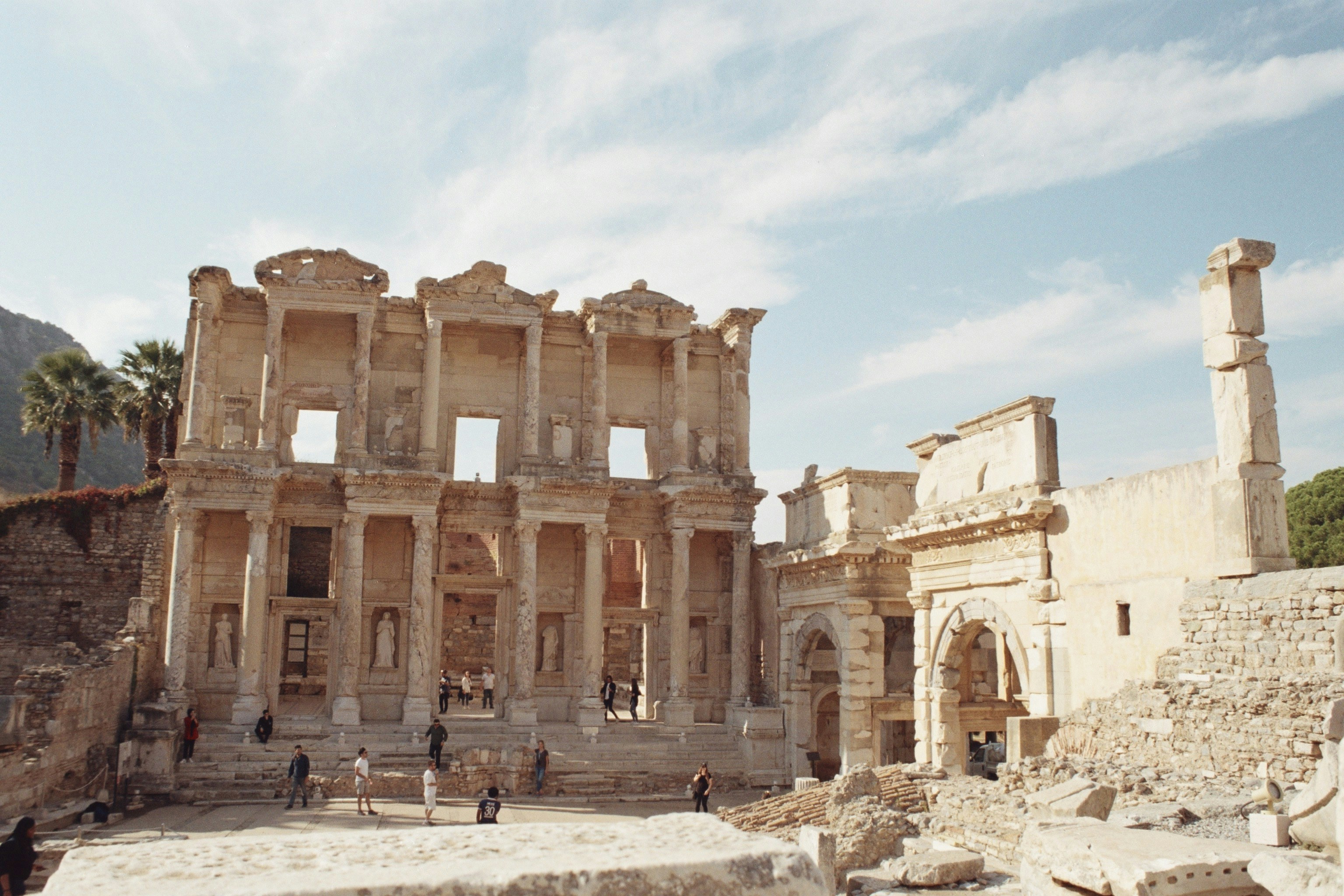
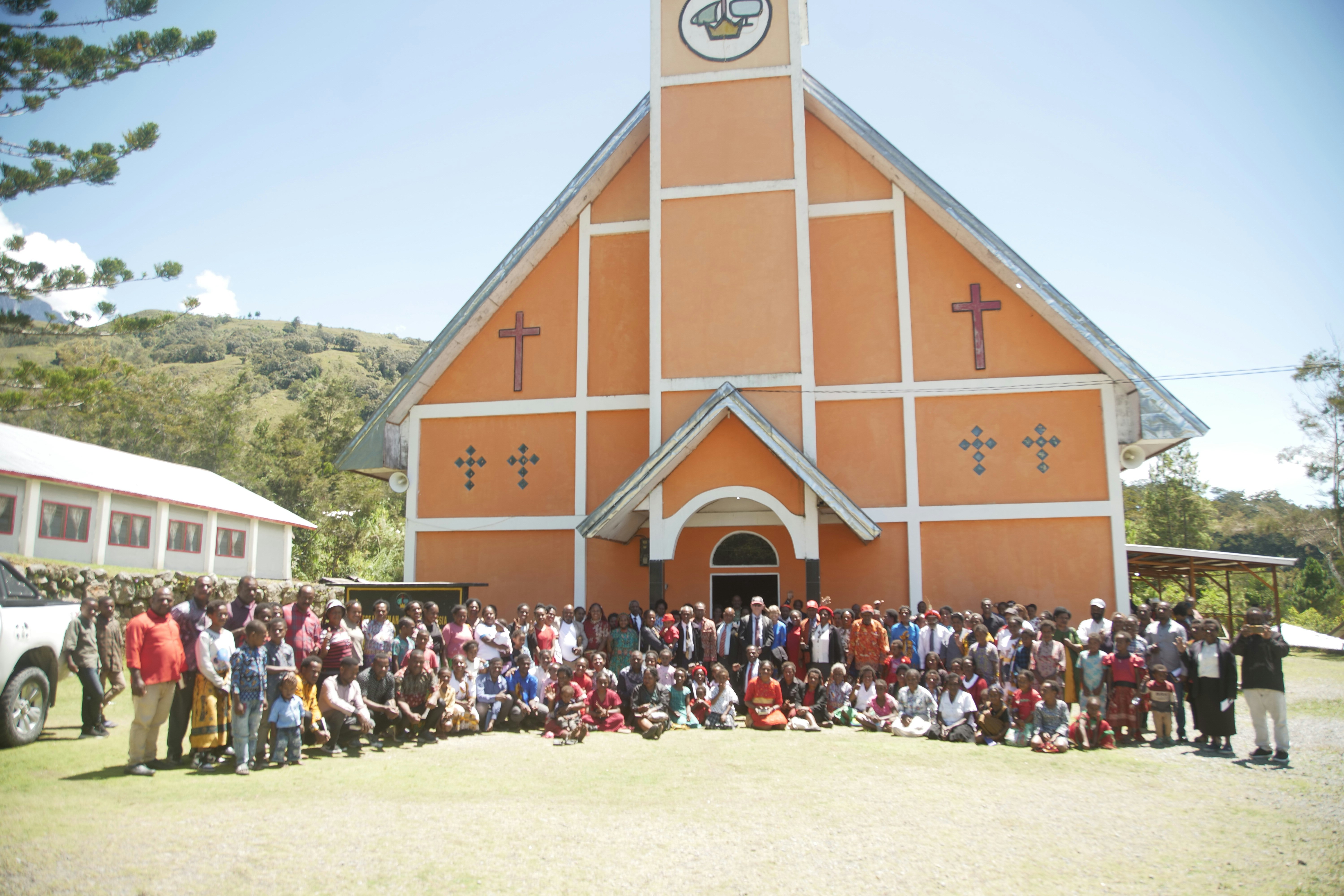
When you hear the word “church,” what comes to mind is likely a contemporary expression of church in your culture.  For me, in Lancaster County, Pennsylvania, USA, I think of church buildings. My county has something like 700 church buildings of all shapes and sizes.  Some have steeples, some are store fronts, and some space inside movie theaters, hotels, or other churches.   

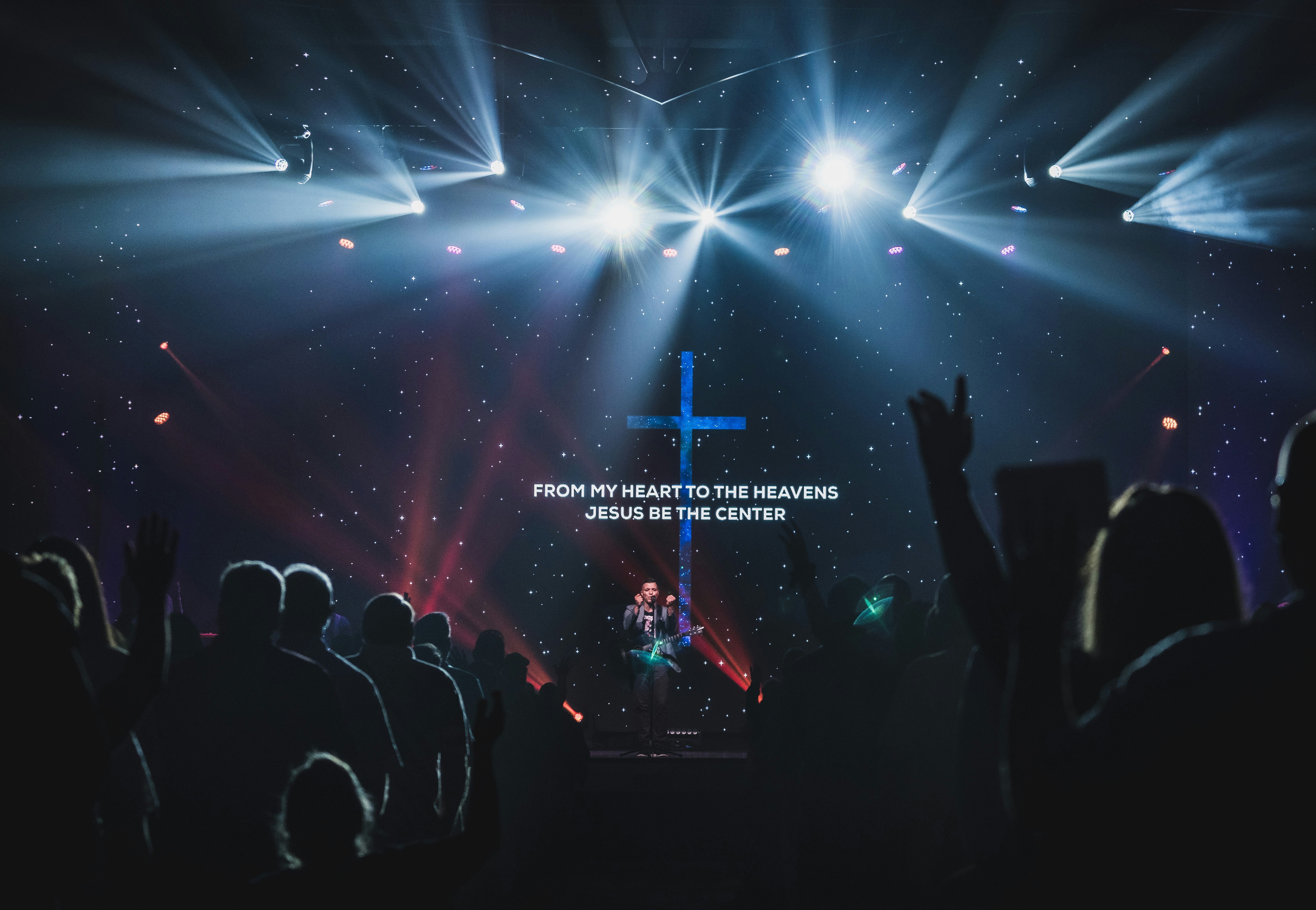
Now think about activities happening in those buildings. Primarily, worship services, right?  Those worship gatherings often take place in a large room with rows of chairs or pews, usually a high ceiling, sometimes stained glass windows, sometimes an organ, sometimes a variety of other musical instruments, sometimes in a well-lit room, sometimes a darkened one.  Though we like to talk about how differently churches worship from one another, whether evangelical, Catholic, Mennonite, megachurch, or many other kinds, Christian worship gatherings are mostly similar. They all include some songs, bible reading, offerings, sermons, and prayer. 

We have a word for those elements of worship services:  Liturgy.  You might say, “But my church is not a liturgical church.”  I suspect, actually, that your church is liturgical. It’s just that your liturgy is different from the liturgy of formal churches.  Here’s what I mean. Liturgy is what we do in worship.  Liturgy technically means “work of the people.”  In ancient Greece it was kind of like civic duty, but in time it became spiritualized to refer to what takes place in worship services. Yet in some (many?) church worship services, liturgy is not the work of the people.  In those churches, worship is the work of a few professionals. 

Put this all together, Christian churches in contemporary American expression are generally two things.

  1. A property management company. Building, grounds, rentals, cleaning, utilities, repairs.
  2. A worship production company.  Live music, lights, camera, video, audio, concert, monologue. 

Yet, neither of those two things are what Jesus meant when he said the word “church.”  The word he used is ekklesia.  A gathering, an assembly, of people.  That’s it. A group of his followers, gathering together. But gathering for what purpose?

Never did Jesus say, “I want you to build buildings in which to hold worship services once/week, led by professionals.”  Instead, he talked about a very specific purpose, and he talked about it a lot.  Not church.

Guess what word Jesus and the Gospel authors use instead of “church”?  Kingdom!

While Jesus uses the word “church” two times, guess how many times the word “kingdom”?

Matthew: about 50 times, featuring “kingdom of heaven”

Mark: about 15 times, featuring “kingdom of God”

Luke: about 38 times, featuring “kingdom of God”

John: 4 times

Total times Jesus and the Gospel authors refer to the Kingdom of God.  About 107 times.  Church two times.  Kingdom 107 times.

Yet, when we think of the visible expression of God in the world, we think of church, I suspect, much more than we think of Kingdom.  But clearly, for Jesus, Kingdom is everything. It could be because the church is very physical (people, buildings, worship services), easy to grasp, while the Kingdom can seem abstract.  The Kingdom is not, however, abstract, as we will see in the next few posts. But I must admit that when compared to the physicality of church, at first glance the Kingdom can seem that abstract.

Let me be clear, when groups of Christians in a community buy property, pay to build buildings, pay professional staff, and hold weekly worship productions, they are not doing anything wrong.  Yet none of those things are required by Jesus.

And that begs the question: What is required by Jesus? Check back to the next post as I attempt to answer that.

Photo by Edward Cisneros on Unsplash

Jesus’ two surprising teachings about church

Trust & Obey, Week 2: Matthew 16 & 18, Part 2

As a pastor of twenty-three years, I’ve had some surprising experiences during worship services. For example, one time a wasp landed right on my Bible as I was preaching! People seated close to the front saw it all. I swatted at it, and it fell to the ground, where I stepped on it. The congregation clapped and cheered!

But perhaps my most surprising worship service experience occurred when I was not a pastor. Instead it happened when I was visiting a church. After the service was over, the pastor asked everyone to stay for a special announcement. The pastor asked one of the church leaders to come up front with him. There the leaders confessed publicly that he had committed adultery in his marriage, and he apologized and asked for forgiveness.  What do you think about that? Does Jesus want churches to have public confession of sin during worship services?

In the previous post, we saw how Jesus taught that everything we do as a church family should be based on the foundation of Jesus.  There are plenty of other foundations that we could try to build on if we wanted to.  The foundation of worldly success, for example.  How do you build on the foundation of worldly success?  Easy, you do whatever it takes to be successful based on what the world defines as success.  Bigger is better.  Bigger budgets, buildings, and bodies in seats.  More, more, more. That is how the world defines a good choice.  Smaller is failure.  Bigger is success. 

But if we build on the foundation of Jesus, we have a very different measure of success.  Jesus points this out when he said crazy stuff like “small is the gate, and narrow is the way” to following him, and get this, he said “few will find it.”  Or how about this winner of a statement: “if you want to be my disciples, take up your cross, die to yourselves, and follow me.”  These are not generally considered to be motivational or exciting statements. 

In fact, there were times, when Jesus seemed to say that kind of crazy stuff to purposefully get fewer people to follow him.  At the height of his popularity when he was doing all sorts of healing miracles and making bread and fish multiply to feed people, he had tens of thousands in the crowds following him.  That is worldly success.  Jesus was leading what amounted to a mega-mega church.

You capitalize on that worldly success, and you try to reach as many as possible, right?  You want a huge following.  What did Jesus do?  He said to them, in John 6, “unless you eat my flesh and drink my blood, you have no life in you.”  I’m dead serious. He said that.  It’s gross and disgusting, and it seems the people in the crowd that day also thought it was disgusting, because they were good humans who did not eat human flesh. 

We know they were grossed out and repulsed because of what we read in John 6:60-66, right after he said the “eat my flesh and drink my blood” thing.  Some disciples, not the Twelve, grumbled, saying, “This is a hard teaching…and from this time many of his disciples turned back and no longer followed him.”  If I heard some bible scholar or professor or preacher say what Jesus said, I would say, “Nope. I’m out. That guy is out of his mind.” 

But Jesus did say that, and it is no surprise that the huge crowds started thinning out.  Getting large numbers was not his main goal.  He was willing to speak hard, difficult, but truthful things, even if meant people would turn away. Because of what he said, the crowds just kept getting smaller and smaller.

After Jesus dies, rises again, and ascends back to heaven, we know exactly how many disciples and followers were left.  Not thousands.  Acts 1 tells us there were 120 of them.  That’s it.  But when you build the church on the foundation of Jesus, size doesn’t matter.  Success is not about numbers and buildings and bodies.  Success is following the way of Jesus, individually and together as a group. 

And that brings us to the second time Jesus mentions church is in Matt 18:17.  This one we can mention very quickly.  In this Matthew 18, Jesus is talking about what to do when someone sins against you.  But remember he is teaching this before there is any such thing as a church.  Maybe he is preparing them for future situations after they start the church.

Side note: Didn’t Jesus go to synagogue and temple? Yes. Isn’t that similar to going to church worship services? Yes. So couldn’t we say that there was a church. Yes, and no. Jesus was a good Jew, so he would have gone regular gone to religious gatherings at synagogue and temple. But what would become the church has differences from synagogue and temple gatherings, and that would only become apparent in the months, years, and decades after his Ascension. Furthermore, when Jesus is referring to church, as we will see in a post later this week, he does not envision the kinds of institutions we think of when we think of churches in our era. Instead, Jesus is using a word that refers to an assembly of people. It was not a specifically religious word. In other words, in Matthew 16 Jesus could be understood as saying, “on this rock, I will build the movement of people who are my followers,” and that brings us to Matthew 18.

Here is what he says.  “If a person sins against you, go to them one on one, and try to make it right. If that doesn’t work, take one or two people with you to try to work it out.  If they still refuse to listen, tell it to the church; and if they refuse to listen even to the church, treat them as you would a pagan or a tax collector.”

Jesus could be interpreted as envisioning a time when the church has local groups of Christians, local churches, which is exactly what did happen in the months and years after his ascension.  They were all house churches.  No buildings for hundreds of years.  Jesus could also be envisioning the assembly of Jewish elders who would handle relational disputes in each local town.

In Matthew 18, what we read is Jesus giving instructions for how to work at bringing reconciliation when there is a broken relationship. If a person refuses to reconcile with you, after you’ve reached out one on one, and even after trying with the help of one or two others, Jesus says, get the church/assembly/elders involved.

He doesn’t say precisely how to get the church involved in bringing reconciliation. Some churches have interpreted this as Jesus saying that local church families need to air out their dirty laundry in front of the whole church family, such as when I was surprised at the church I visited.  At Faith Church we don’t use that very public method.  Instead we have handled those kinds of situations inside the anonymity of the leadership Team. Thankfully, they have been very rare.  But they have happened.

And there you have it.  Jesus make two references to church/assemblies.  One about him as foundation of the church (see previous post).  One about dealing with broken relationships. 

Think about what doesn’t mention. More on that in the next post.    

Photo by Daniel Morton on Unsplash

The proper foundation on which to build a church

Trust & Obey, Week 2: Matthew 16 & 18, Part 1

Guess how many total times the word “church” appears in all four Gospels combined?  Don’t google it.  I’m going to give you the answer in a moment.  Just off the top of your head, how many times do you think the word “church” appears in all four Gospels, Matthew, Mark, Luke, and John, combined? 

Two.  That’s it. 

And both times it is Jesus who speaks the word “church.”  Both are in the Gospel of Matthew. 

As we continue this blog series I’m calling Trust and Obey, about the teachings of Jesus we misinterpret or neglect, this week I’m writing about church.  The premise of the sermon series, Trust and Obey, is that the actions of our lives reveal what we believe.  As Jesus himself taught, we show we love and trust him by obeying his teachings.  So what did he teach about church?

Turn to Matthew 16, verse 13.  This story likely occurs during the latter part of Jesus’ three ministry years.  Jesus and his disciples are near Caesarea Philippi, which is 25 miles north of the Sea of Galilee.  There, in what seems to be a private conversation with his disciples, Jesus asks them what rumors they have been hearing people say about him. His disciples respond that they have heard people speculate if Jesus is John the Baptist, or one of the prophets of old, like Elijah or Jeremiah. 

Then Jesus asks what his disciples think, and Peter makes a bold declaration, “You are the Messiah, the Son of the Living God.”  That’s a very good answer.  And yet, while that answer is correct on the surface, I’m doubting Peter fully understood it.

How could Peter say it, if he didn’t understand it?  Here’s how.  We sometimes say truthful things we don’t fully understand.  Let me see if I can illustrate.  What is the equation for Einstein’s theory of relativity?

E=mc2

But what does it means? Can you explain the theory of relativity?

How different it is to know the formula versus knowing what it means!  Same for Peter. He could say the formula correctly: “You are the Messiah, the Son of the Living God.”  But I think it is entirely possible that Peter and the rest of the disciples had at least some misconceptions about what it meant that Jesus was Messiah, Son of God.  Certainly, a more developed understanding would come in time. 

For now, what Peter said is true, and Jesus is excited.  Jesus is not John the Baptist or Elijah or Jeremiah reincarnated.  Jesus is the Messiah, the son of God.  And Jesus is so excited that Peter has declared this truth that Jesus erupts with joy saying, “Blessed are you, Simon son of Jonah, for this was not revealed to you by flesh and blood, but by my Father in heaven,” and then comes the first of two instances in which Jesus says the word “church.”

“And I tell you that you are Peter, and on this rock I will build my church, and the gates of Hades will not overcome it.” 

As I mentioned in the previous post, there has been a lot of debate about what Jesus meant by this statement of building his church on the rock.  While some have taken a literal view, that Jesus was talking about Peter himself being the leader, others, especially Protestants, have a different view on the rock upon which Jesus will build his church.  They say that the rock is the testimony of Peter, the content of what Peter had just said, that Jesus is the Messiah, the Son of God.  It is on that truthful, powerful, statement that the church of Jesus will be built.  In other words, Jesus is declaring that the church, whatever it will be, he will be its foundation. 

So the first thing we learn about church from Jesus is that the church has a foundation, and Jesus himself is the foundation. That might sound obvious.  Jesus is the foundation of the church.  But it is of utmost importance. In the next post we learn how churches can be built on other foundations. 

Photo by Scott Blake on Unsplash

Nicknames & the foundation of the church

Trust & Obey, Week 2: Matthew 16 & 18, Preview

Do you have a nickname?  Nicknames are fun.  They can build a warm, relational bond.  Did you know that Jesus seems to like using nicknames?

To his disciples James and John, he gave the nickname “Sons of Thunder.”  To another disciple, Simon, he gave the nickname “Cephas” (Aramaic) or “Peter” (Greek), which both mean “the Rock.” (Side note: Peter’s father was named John, so Peter was son of John, and in their ancient culture, your surname was often just “son of ____”, which has carried down through the centuries to some of our contemporary surnames that have “son” at the end. “Son of John” becomes “Johnson”. Peter, then, could be called “Simon ‘The Rock’ Johnson.” I wonder if he could do the People’s Eyebrow?”).

That nickname “Peter” is from the Greek word “petros”.  You can hear the connection to our English word “petroleum.” (Side note: petroleum is a combo word.  It takes the Greek, “petros,” combines it with the Latin, “oleo,” which put together refers to oil that comes from rock.)

This week, as we continue our Trust and Obey blog series, we will look at one time Jesus used Peter’s nickname to talk about the church. In Matthew 16:18, Jesus says that he will build his church on the foundation of a rock.  Always good to build on a strong foundation.  When builders are erecting skyscrapers, they really want to build on immovable bedrock, because those skyscrapers are so tall, so heavy.  They don’t want a Leaning Tower of Pisa situation. That has always been true, including in ancient Palestine.

Using that common building metaphor, then, Jesus says that he is going to build his church on the strong foundation of rock.  That part of the verse is easy to understand.  What is not as easy to understand is which rock Jesus is talking about.

Most literally, it seems that Jesus is referring to Peter himself.  Is there something special about Peter?  Because his nickname is “The Rock”, maybe Jesus is saying, “Peter you are that one special leader that is going to lead and build my church.”  Historically, that prediction becomes reality. After the hugely disappointing episode where Peter denies Jesus three times is all cleared up, and Peter is restored in John 21, Peter takes a leading role in the church. He leads the charge to fill the 12th disciple spot vacated by Judas Iscariot (Acts 1). Peter preaches the first sermon on the day of Pentecost (Acts 2). In Acts chapters 1-6, and then Acts 10-12, Peter is arguably the central leader of the church.  After that, though, we know that James the brother of Jesus becomes the leader of the mother church in Jerusalem, and Peter travels as a missionary. But as far as missionaries go, it is Paul who seems to be depicted as leader. So how could the church be built upon Peter?

Tradition has it that Peter goes to Rome and becomes the leader or bishop of the Christians in Rome. Peter also writes 1st and 2nd Peter. Eventually Peter is killed, crucified upside-down, something he asks for when he is about to be killed, because he did not feel worthy to be crucified right side up like Jesus. Years later when the idea of naming popes becomes a thing, the catholic church declares, based on Matthew 16, that Peter must be that special foundational leader, ordained by Jesus, and therefore all succeeding popes are “built” on the foundation of Peter.  To this day, one of the Pope’s titles is “successor the prince of the apostles,” which is referring to Peter. Further the Pope presides over the church called St. Peter’s Basilica, which is adjacent to St. Peter’s Square in the Vatican.

But Protestants have a different idea about the foundation of the church.  Protestants believe Jesus was not saying that Peter was the rock upon which the church would be built.  Instead, Jesus is just using wordplay to make a point about a different foundation, the real foundation of the church.  

This coming week on the blog, we talk about the foundation of church. 

Photo by yash banerjee on Unsplash

The surprising place Jesus said he wants to have a home (hint…it’s not in heaven)

Trust & Obey, Week 1: John 3 & John 14, Part 5

Jesus has been attempting to prepare his disciples for a major change, that he will be leaving them. But he says he will send the Spirit to be with them. Clearly, the disciples are unsettled and confused. So Jesus needs to explain further.  Here’s what we read in John 14, verses 18-20, “I will not leave you as orphans; I will come to you. Before long, the world will not see me anymore, but you will see me. Because I live, you also will live. On that day you will realize that I am in my Father, and you are in me, and I am in you.

So now we have the complete Trinitarian picture.  Jesus and the Father are one.  Jesus sends the Spirit who will live in us, and thus Jesus, who is in the Father, will also be in us.  As we are in him. 

Notice the union.  Here in John 14, Jesus describes what has been called the doctrine of union with Christ.  We are in Christ, together with Christ.  This is so much more than belief in our minds, more than just intellectual assent about an idea.  It is a union with Jesus. 

Look at how he describes it further in verse 21, “ Whoever has my commands and keeps them is the one who loves me. The one who loves me will be loved by my Father, and I too will love them and show myself to them.”

We show our union with him, our love for him, when we not only have his commands, but we keep them.  Jesus doesn’t want us to be able to win a trivia contest about his commands.  He wants us to actually do his commands.  Why?  Because they are for our best, and for the best of the community around us. 

Be sacrificially generous to those in need?  Yes.  Good for us, so we trust in him rather than trust in ourselves or our money.  And good for those in need. 

Help those who are hungry, need clothing, housing, healing, and those who are incarcerated, strangers, foreigners?  Yes.  Good for us, so we focus outwardly rather than get stuck on ourselves, while we live in a culture that constantly tells us we should live in such a way as to please ourselves.  And when we are sacrificially helping those in need, it obviously good for them. 

Those are just a few examples.  When we live the sacrificially generous life, we help people meet Jesus. 

In verse 22, Judas (not Judas Iscariot) asks him a question, “But, Lord, why do you intend to show yourself to us and not to the world?”

Judas seems a bit confused about what Jesus meant, so Jesus essentially repeats himself.  “Anyone who loves me will obey my teaching. My Father will love them, and we will come to them and make our home with them. Anyone who does not love me will not obey my teaching. These words you hear are not my own; they belong to the Father who sent me.”

God wants to make his home with us!  He is so relational.  Think about that. God wants you to be his home.  Wild, right?  You, body, soul, spirit, however you think about who you are, God sees you as his house.  God wants to live with you.  That’s deep union. 

Now, notice the situation that is in place for God to make his home with us.  Notice the word “belief” is long gone in this passage.  Instead, Jesus has now been reiterating multiple times precisely what he means: loving him means obeying his teaching.

Christians are people who do what Jesus taught, and what Jesus did.  First and foremost, that means we show we love him by obeying his commands.  And what did he command? 

Jump back to chapter 13, verses 33 and 34.  Earlier that same night, Jesus gave his disciples a clear teaching, “A new command I give you: Love one another. As I have loved you, so you must love one another. By this everyone will know that you are my disciples, if you love one another.”

Love of others can be inconvenient, sometimes messy, is often sacrificial, costing time, money, emotion. 

I was talking with a man in my church this week, and he told me how a number of people in our church cared for him before and after a major surgery he had while I was on sabbatical recently.  Through tears of joy for the meals, the car rides, the check-ins, and more, he said, “You should be proud of the church.”  

That is love in action.  That is obeying Jesus’ commands. What a joy for me to hear this testimony of care and loving like Jesus. 

Photo by Dominik Lange on Unsplash

Jesus says that we show we believe in him by how we live our lives

Trust & Obey, Week 1: John 3 & John 14, Part 4

It’s now just hours before Jesus will be forcibly taken from his disciples, and less than a day before he will be killed. In John 14, Jesus is having a final conversation with his disciples, trying to prepare them for what will rock their world. Of course, they cannot imagine what is coming and how it will make them feel. But still, Jesus is trying to prepare them. But as we learned in the previous post, Jesus is being somewhat mysterious, evidence by the questions that his disciples ask him. They are not getting it. Jesus needs to clear things up, and he uses the word “believe”.  Look at his response to Philip in verses 9–11.

“Don’t you know me, Philip, even after I have been among you such a long time? Anyone who has seen me has seen the Father. How can you say, ‘Show us the Father’? Don’t you believe that I am in the Father, and that the Father is in me? The words I say to you I do not speak on my own authority. Rather, it is the Father, living in me, who is doing his work. Believe me when I say that I am in the Father and the Father is in me; or at least believe on the evidence of the works themselves.”

Believe, believe, believe.  Jesus is saying, “You saw the works I did, the miracles.  How else could I be a miracle worker, except from the Father in me doing the work.”  Because of the clear evidence of those miracles, Jesus is saying that the proper response to the evidence is to fully believe in him. 

Then he comes to a key point about belief, and the nature of belief, to show that it is not just intellectual assent.  In verse 12 he makes this clear when he says, “Very truly I tell you, whoever believes in me will do the works I have been doing,”

Belief in him, total reliance on him, will show itself because that person will do what Jesus did. 

To put it another way, look at what he says in verse 15, “If you love me, keep my commands.”

Jesus is being abundantly clear here.  We show what we believe by how we live our lives.  We show our reliance on Jesus by doing the things he did. 

We live a particular kind of way.  The way of Jesus.  The way we live shows what we believe.  We do not need to believe perfectly or live perfectly to enter his kingdom.  Instead, we live by trusting in Jesus, and we show that trust by striving to live like he lived.  His ways will very often be counter-cultural, sacrificial, not always the easiest road.  But as we live his ways, the result will be trust and reliance on him. 

And as we follow his kingdom way of life, we are not alone.  It is not as if we are striving to live like Jesus all by ourselves.  Jesus continues, “And I will ask the Father, and he will give you another advocate to help you and be with you forever—the Spirit of truth. The world cannot accept him, because it neither sees him nor knows him. But you know him, for he lives with you and will be in you.”

And that is exactly what happened.  The Holy Spirit came, which we read about in Acts 2, and the Spirit helps us become more like and live like Jesus.  Notice in John 14:17, Jesus tells us that the Spirit lives in us.  God in us.  It is amazing to think about. 

What the idea that God’s Spirit lives in us can also be mysterious. If you are a Christian, do you feel God living in you? Maybe sometimes yes. Maybe sometimes no. Jesus’ disciples had likely never felt that, because the Holy Spirit had not yet arrived. So once again, Jesus needs to do some more explaining. We’ll hear his further explanation in the next post.

Photo by Wylly Suhendra on Unsplash

Jesus’ somewhat confusing instructions for entering the Kingdom of God

Trust & Obey, Week 1: John 3 & John 14, Part 3

In John 14, verse 1, Jesus is talking about belief, as we saw him do in the previous posts on John 3.  But between John chapter 3 and John 14, time has passed, and now Jesus is hours away from his death.  He is meeting with his disciples, having a meal together, trying to prepare them for the difficult days ahead. 

He says, “Do not let your hearts be troubled.  You believe in God; believe also in me.”  Again, as we learned in the previous posts, that belief is not just ideas in their minds. Instead, Jesus is saying, “Rely on me totally.”  Then in verses 2–4 he talks about going to his father’s house, preparing rooms for them, and taking them there. Notice how he is using Kingdom of God imagery. He concludes in verse 4 by saying, “You know the way there.”

In verse 5, one of his disciples Thomas, ever skeptical, says, “Wait.  What?  We don’t know what you are talking about.”  I love the honesty of that question.  It is a great reminder that questions are not wrong not.  God welcomes our questions. 

Jesus has been speaking a new and deeper Kingdom reality, and Thomas said what was probably on most of the disciples’ minds, that even though Jesus says “you know the way there,” they do know what way he is talking about.

In response, Jesus gives another famous verse, “I am the way, and the truth, and the life.  No one comes to the father except through me.”  Jesus himself is the way.  And he says that since they know him, they know the Father.  There is a one-to-one equality that is mysterious.  Jesus and the Father are one, yet also different. 

His disciple, Philip, now responds in verse 8, “Lord, show us the Father and that will be enough for us.”  That question is hilarious in the eye roll kind of way, because Jesus has just said that if you know him then you know the Father.  In a strange way, Jesus could say, “You’re looking at him.  I am him.  He is me.”

Frankly, I get it that the disciples were confused. Their entire religious framework was built on Deuteronomy 6:4, “Hear, O Israel: The Lord our God, the Lord is one.”  Now Jesus is saying that he is the Father and the Father is him. 

The disciples are confused by all this. So Jesus needs to clear things up, and we’ll see how he does so in the next post.

Photo by Brendan Church on Unsplash

What Jesus means by the concept of belief

Trust & Obey, Week 1: John 3 & John 14, Part 2

“How can an adult be born a second time?” So asked Nicodemus to Jesus, who had just said to Nicodemus, “You must be born again.” Good question, if you’re thinking very literally. My daughter-in-law just recently gave birth to my 8lb, 4oz, grandson, a that was difficult, as so many mothers well know.

Again, thinking literally here, as Nicodemus was, can you imagine a mother somehow giving birth to a full-grown adult, even a very small one? It’s a ridiculous scenario, and it makes me wonder how Nicodemus could have been stuck in the literal. Jesus was obviously using metaphor. As Jesus himself said, the second birth is being born of the Spirit. But even that is mysterious. How is one born of the Spirit of God?

That brings us to John 3, verses 10-15, in which, answering Nicodemus’ question about how to be born again, Jesus features the word, “believe.”  Look at verse 12, “I have spoken to you of earthly things and you do not believe; how then will you believe if I speak of heavenly things?”

Clearly for Jesus, believing him is important.

Then in verse 13 we read this interesting, and also confusing, sentence, “No one has ever gone into heaven except the one who came from heaven—the Son of Man.” 

What does that mean?

It seems Jesus means that you don’t just up and go to heaven because you want to.  You can’t make it on your own.  Only Jesus can do that.  And with that important context, Jesus is now ready to explain how people can be born of the Spirit and thus access the eternal life of the Kingdom of God. 

To explain how to be born of the Spirit, Jesus refers to a story in the Old Testament, in the book of Numbers, chapter 21.  God had freed Israel from slavery in Egypt, after which the wander in the wilderness on their way to the Promised Land of Canaan.  But they act out, rebel, and God allowed a plague among them.  Moses pleads with God to stop the plague. God responds, saying that if Moses displays a snake up high on a pole, the people can look to the snake and be healed. This is why a snake on a pole is the universal symbol of medical personnel like doctors and nurses.

Jesus says, just like the people who believed by looking at the snake were healed, those who believe in Jesus (and here he notes that he too will be lifted up, which seems to be a reference to the way he would die) will have eternal life.  But they will not have eternal life in and of themselves.  Notice the final two words in verse 15, eternal life is in him.  Eternal life is made possible by Jesus.  We do not make it happen.  We believe in him and what he did.

That gives John the motivation to do some further explaining, which brings us to John 3:16.  Notice that in John 3:16 this whole amazing “born of the Spirit to enter the Kingdom” thing is rooted in God’s love for the world.  God gives of himself sacrificially for us.  That is love.  Love sacrifices.  We believe in that love. 

And there’s that all-important word in John 3:16, “believe.”  What does “believe” mean?  At the risk of overstating the obvious, here’s a definition: “to believe to the extent of complete trust and reliance—‘to believe in, to have confidence in, to have faith in, to trust, faith, trust.’” (Louw & Nida)

I like that definition’s combo of trust and reliance.  It could be very easy to think that belief is just thinking ideas are true.  That kind of belief is called intellectual assent.  “In my mind I agree with an idea.  I believe it,” we say. 

But notice that the definition says that the kind of belief Jesus is talking about is not intellectual assent.  The definition says, “to believe to the extent of complete trust and reliance.”  This is an active belief.  It’s like the famous saying, “Your actions speak louder than your words.”

See how that definition starts to bring the two words of the blog series together?  Trust and Obey.  Belief is active, complete trust and reliance.

If a person says they believe in Jesus, but don’t rely on him, their belief has been revealed as simply intellectual assent.  And intellectual assent is not what Jesus wants. 

What kind of belief is the belief that Jesus wants?  Or to put it another way, what kind of belief will actually empower someone to access and participate in God’s Kingdom? 

To answer that question, we are really getting at the second word of the blog series title, “Obey.”  What did Jesus say about that second word, about obeying him? 

We find out in the next post.

Photo by Marcos Paulo Prado on Unsplash

Are Christians relying too heavily on John 3:16?

Trust & Obey, Week 1: John 3 & John 14, Part 1

I’m back from sabbatical, and for the next few weeks, the blog series will be “Trust and Obey,” which is the name of a song I learned when I was a kid in Sunday school.  During sabbatical I thought about how those two words help us understand what it means to be followers of Jesus together as a church in our contemporary American culture, and in particularly right here in our community.  

My goal in this week’s posts is to lay a foundation for the next two weeks.  For that foundation let’s start with what is arguably the most famous verse in the New Testament, maybe the most famous verse in the whole Bible?  What do you think it is? 

John 3:16.  Perhaps you don’t need to turn there because you can quote it.  Anybody want to put themselves out there and try to quote it in front of us???

“For God so loved the world that he gave his one and only Son, that whoever believes in him shall not perish but have eternal life.”

Did you hear the word “believe” in the verse?  That is very much related to the first word in the title of the sermon series, “Trust.”  And the other word in the title of the sermon series is missing, “Obey”.  If the words “trust” and “obey” are both vital for followers of Jesus and the church, but John 3:16 only has the word “believe”, then maybe John 3:16 is not the only verse Christians and churches should be relying on.  Yet many have relied almost exclusively on that one verse.  Is it possible that many Christians and churches have so emphasized John 3:16, so emphasized the concept of believing, they are missing the other equally important “obey”?  

I think we need to study John 3:16 a bit closer.

Let’s take a look at John 3:16 in the context of its whole chapter.

Open your Bible, and if you scan up to the beginning of the chapter, we learn that this chapter features Jesus’ conversation with a man named Nicodemus. Nicodemus was a Pharisee.  Pharisees were religious leaders.  At the time of Jesus, there were about 6000 of them.  They were not located at HQ, aka the Temple, in Jerusalem.  Instead, the Pharisees were kind of like a religious FBI stationed throughout the towns in Judea and Galilee. They were keeping an eye on things, with the express purpose of making sure the people kept the law.  Not the Roman law, as that was the Roman soldiers’ job, because at the time, Palestine was occupied territory.  The Pharisees made sure the people kept the Old Testament Law. 

We tend to think of the Pharisees as awful, hypocritical people who were power hungry, lovers of money, and hated Jesus. They were that, sometimes, but they were also motivated by their understanding of faithfulness to God.  Yes, many of them would become greedy and controlling, and ultimately they were the ones pushing hard for Jesus to be killed. 

But Pharisees were also passionate about Israel being a people who keeps God law.  Their national history told a very sad tale about what happened when Israel stopped following God’s law (see 1 & 2 Kings).  Israel was so rebellious, idolatrous, and unjust, that they eventually lost their land and were exiled.  During exile, they desperately wanted to return to Palestine and Jerusalem, Judea and Galilee, and their exile motivated many of them to change their ways and get serious about following the Law.  And eventually God brought them back to the land.

It was in the era after the exile that the Pharisees began, with the purpose of helping the people of Israel to faithfully follow the Law of Moses, and thus to be in the best possible position to receive blessing from God.  So the Pharisees were started for a good purpose. 

In Jesus’ day, not all Pharisees were consumed with greed and hypocrisy.  Nicodemus was one of the good Pharisees.  John 3 tells the story of how Nicodemus met with Jesus under cover of night, because he didn’t want to risk being seen.  He was genuinely curious about Jesus.  The two of them start talking about the Kingdom of God.

Notice that Jesus brings up the Kingdom of God in verse 3, with his famous “you must be born again” line.  To enter the Kingdom Jesus repeats in verse 5, you must be born of water and Spirit.  Water birth is natural human birth. A baby is ready to be born when its mother’s water breaks.  But a person also needs to be born of the Spirit if they want to enter the Kingdom of God.  Jesus is being intentionally mysterious here, and Nicodemus is confused.  Look at verse 9.  “Born again? By the Spirit? How???” 

We find out in the next post.

Photo by Patricia Prudente on Unsplash

The red letters that maybe Jesus didn’t say

Trust & Obey, Week 1: John 3 & John 14, Preview

Does your Bible print the words of Jesus in red? 

Some Bibles print Jesus’ words in red, some don’t.  Why?  When the Gospels were originally written, even though original copies no longer exists, scholars are fairly confident that the Gospel writers did not use red ink when writing Jesus’ words.  Why are they confident? 

Because the first person to publish a New Testament with the words of Jesus printed in red was a man named Louis Klopsch in 1899.  He came up with the idea when reading Luke 22:20, where, seated around the tables of the last supper, Jesus tells his disciples, “This cup is the new covenant in my blood, which is poured out for you.” Klopsch thought red ink would not only make the words of Jesus jump off the page, it would also symbolize the blood of Jesus.  (Did Klopsch want us to think that Jesus’ words are written in blood?)

This is more than just a hopefully interesting piece of bible printing trivia.  Let me explain by asking a question, What do you think is the most famous verse in the New Testament, maybe the most famous verse in the whole Bible?

Arguably, John 3:16. Perhaps you can quote it.

“For God so loved the world that he gave his one and only Son, that whoever believes in him shall not perish but have eternal life.”

Grab a Bible, or open it on your device, and check if that version of the Bible prints John 3:16 in red.

If you are reading the New International Version 2011 edition, and your Bible includes the words of Jesus in red, you’ll notice that John 3:16 is not printed in red.  Shouldn’t John 3:16 be in red?  Isn’t that the most famous thing Jesus said?  Some of the most popular English Bibles print John 3:16, and in fact all of John 3, verses 10 through 21, in red. The King James does, the New King James does, the English Standard Version does, as does the New American Standard Bible, the New Revised Standard Version, and the New Living Translation.

Why, then, does the NIV 2011 not print John 3:16–21 in red?  

Here’s where it gets weird: The NIV 1984 edition does print John 3:10-21 in red.  Why the change?  The team involved in translating and printing the NIV 2011 edition disagreed with the team involved in translating and printing the earlier edition.

Here’s why.  There is a scholarly debate about how much of these verses Jesus said, and how much John said. My opinion is that verses 16-21 sound an awful lot like John sounds in his epistles, 1st, 2nd, and 3rd John.  It seems like verses 16-21 are John commenting, editorializing on what Jesus just taught in verses 10-15.  It’s not just the style of writing. Notice the pronoun change.  In verses 10-15, the pronouns are “I” and “you.”  These pronouns indicate that the speaker is in a personal conversation.  But in 16-21, the pronouns change to “he” and “him,” which is not the kind of speech you’d use in a personal conversation.  Conclusion: it is possible that Jesus didn’t say John 3:16, but John did.

All this is not trivial, because it helps us focus on what Jesus said.  I’m not suggesting that John 3:16 is somehow degraded if Jesus didn’t say it.  What I’m getting at is that we would do well to pay attention to what Jesus said, as of utmost importance.  Yet, in the past couple centuries, some evangelical Christians have over-emphasized some of Jesus’ teachings, while de-emphasizing others.  Even if all of John 3:10–21 should be printed in red, meaning that Jesus actually said it all, we would do well to hear and follow all of his other “red letter teachings.”  

Between now and Advent, we’re going to look at some of those red letters, seeking to hold in tension the more well-known ones with the lesser known (read: difficult) ones. 

Photo by James Coleman on Unsplash