Advent 2025, Week 1: Psalm 112, Part 3

Two of the primary hopes parents long for is (1) that their children do well, and (2) that they have enough money to provide for their kids. Parents can expend mountains of emotional energy on these two important concerns throughout the parenting years, and even long after their kids have left the home. Is there a way we can make sure we have well-adjusted kids and secure finances?
Psalm 112 is a wisdom poem, and it talks about those two issues. We know Psalm 112 is a wisdom psalm because the psalm begins with the classic biblical wisdom formula, “the fear of the Lord is the beginning of wisdom.” Just like the book of Proverbs begins. When we read all those short little wisdom statements in Proverbs, we need to remember that the wisdom genre is not teaching guaranteed promises. Proverbs are not promises. Proverbs’ wisdom sayings are truths that will happen often, maybe even almost always, but not every single time because in life there are sometimes exceptions to the rule, exceptions that prove the rule. The same dynamic is present in Psalm 112, this wisdom poem.
When we read verses 2 through 9, we are reading what to expect will normally happen when we fear the Lord and delight in his laws. But that doesn’t mean God is guaranteeing that all those wonderful results in verses 2 through 9 will absolutely positively happen every time. These are not promises, they are wise principles.
We hear the first one in verse 2. “Your children will be mighty in the land.” You can fear God, delight in his laws, and still have children who are not mighty in the land. But fearing God, delighting in his laws, is the best possible situation for raising kids. Kids are still humans who sometimes choose to disagree with you and follow a different pathway. Maybe just temporarily. Maybe for a long time. But it is still wise, right, and good to teach them to fear the Lord and follow his commands.
Next, verse 3. “Wealth and riches are in their houses.” You can fear God, delight in his laws, and never have wealth, riches, or a house. Fearing God and delighting in his laws is not a magic formula for worldly success. But when we fear God and delight in his laws, we are putting ourselves in a great position to have our needs cared for. Why? Because following God’s laws means working hard, living simply, and giving generously, which usually results in having our needs cared for.
Then comes the Advent theme verse for the week, verse 4. “Even in darkness light dawns for the upright, for those who are gracious and compassionate and righteous.” I appreciate this because the psalmist is giving us a very realistic scenario.
Again, remember the genre of Psalm 112. Wisdom poetry. Poetry uses symbolic language very often. In this verse 4, the psalmist mentions darkness. He is not talking about nighttime. He is talking about dark situations in life, such as difficulty, pain, hurt, brokenness, disappointment, depression, despair. Think for a moment about how you are experiencing darkness in your own life lately.
Dark situations are the norm for humans. I have learned many lessons over the years in pastoral ministry, not the least of which is the fact that just about every family has their own darkness. I see their smiling faces when we gather on Sunday, and it is right and good to be joyful during worship, but there is also darkness in their lives. My family has difficulty in our lives too. I’ve written here previously about my struggle with anxiety and panic. In 2024 our granddaughter needed multiple heart surgeries. Michelle and I have had and still have aspects of darkness in our lives. Life can be hard for everyone.
The darkness in our lives is why on the blog I have talked about lament from time to time. Typically worship services are positive, joyful, light-filled, and that is good, because we are so grateful to God. But the psalms are also filled with laments, where the psalmists bring up the junk of life, the darkness, and they give us permission to cry out in deep pain to God. When the psalmist mentions the darkness here in verse 4, he is touching, very briefly, on lament. He is admitting that darkness is real. We follow the psalmists’ very healthy approach when we say out loud to God and others, “There is darkness in my life.”
Notice what the psalmist is saying about the darkness. In the middle of the darkness, light dawns. This past week I was working out early one morning with two friends. We get to the gym at 6am, which is before sunrise this time of year. Slowly the sky lit up. Gradually the bright red sunlight washed across the clouds. It was beautiful. Here’s a photo of that morning, which doesn’t do it justice, but you get the idea:
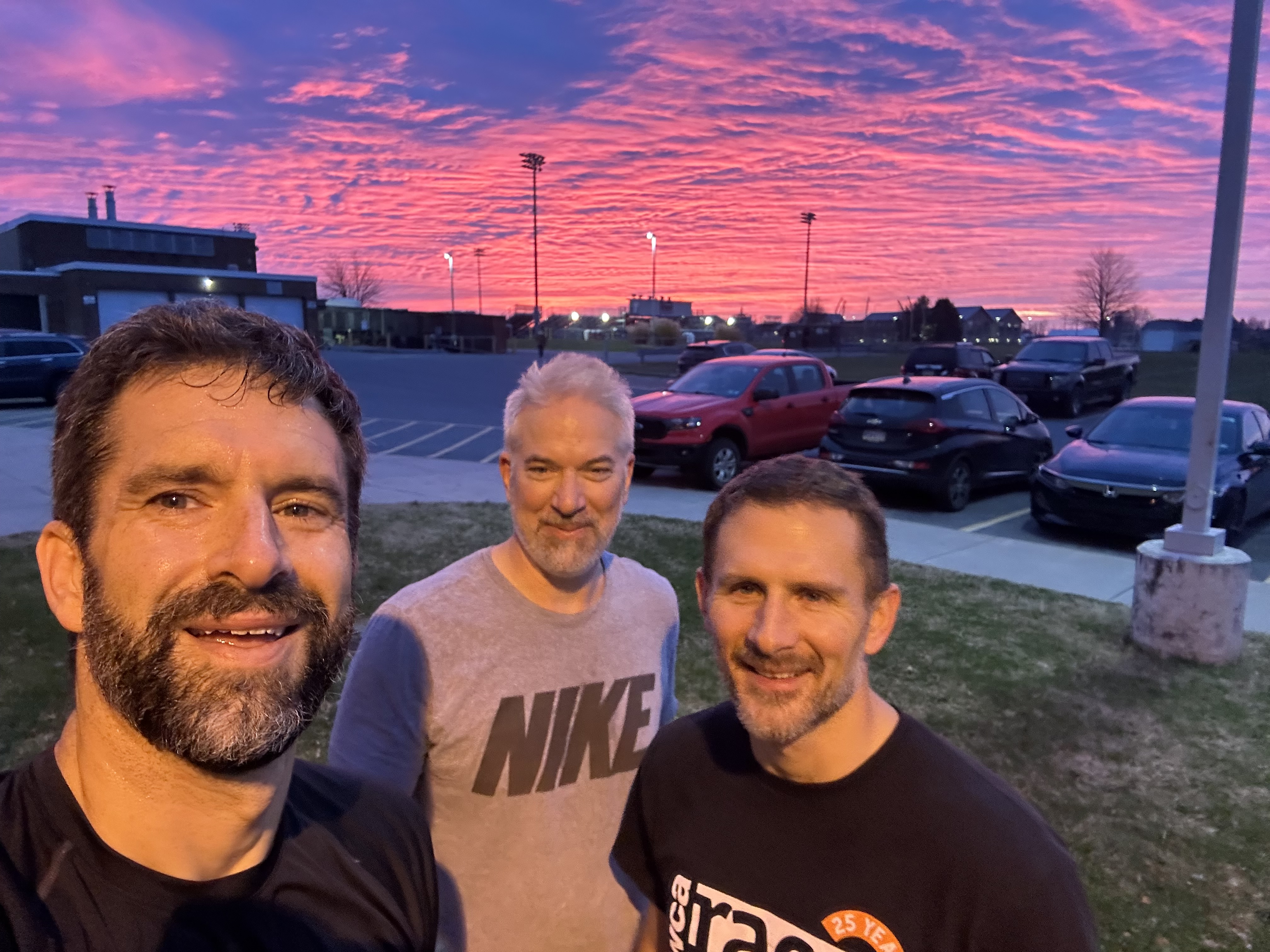
In Psalm 112:4, “light dawns” is not referring to sunrise, though. It is figurative language. Metaphor. It describes what is so often true about the difficult situations in our lives. They are rarely over and done with immediately. Like the slowly rising sun, change comes gradually to our difficulties. A medical problem slowly heals. A broken heart also slowly heals. Through hard work, living simply, paying off debt, little by little, our finances are restored. With lots of practice, and therapy, and prayer, we can forgive those who hurt us. We can rebuild a broken relationship.
Again, the light breaking into the darkness is not a guaranteed promise of perfection. Instead, the psalmist is using wisdom, proverbially, about what so often happens when people live the way God wants us to live.
In the next post, the psalmist tells us more about what happens when we live the way God wants us to live.
Photo by Alexandre Lecocq on Unsplash
 Engaging Scripture
One thought on “Mighty children and fabulous wealth”