In 2 Samuel 7, David wants to build God a temple, but God says, “No.” Why not? For three reasons.
This first we read about in the previous post, where God says to David, “I never asked for a temple. I was fine living in a simple tent.”
But the story of God’s tent has a twist, which we studied a couple months ago near the beginning of this Life of David series. Starting from when the people of Israel first made the Tabernacle, we fast-forward 40 years and the people of Israel finally make it to the Promised Land, under the leadership of Moses. Then under the next leader, Joshua, they conquer the Promised, mostly. Next a series of Judges leads, the final one being Samuel. When Samuel was a young man, he served under the priest Eli at God’s Tabernacle. Through the wandering, conquest and judges, God’s Ark and presence resided in the two-car garage tent.
That is, until Eli’s wicked sons get the big idea to use the Ark as a secret weapon against the Philistines. As if they could control God’s power and make him smite the Philistines. They were sorely wrong. Eli’s sons died in battle, the Philistines destroyed the army of Israel, and they captured the Ark. For months the Ark was in Philistine possession, but God’s power afflicted the Philistines. They got so sick of the affliction, they sent the Ark back to Israel.
People in an Israelite town on the Philistine-Israelite border one day see a horse-drawn cart with no human guide pulling the Ark into town. They rejoice, and they put the Ark in a local man’s home for safe keeping. There it stayed for at least twenty years. So I guess God was renting a room in some guy’s Airbnb for a long time. Why the priests never came and brought the Ark back to the Tabernacle, we don’t know. But there it stayed for 20 years in a house.
During those 20 years, David became king of all Israel, and conquered Jerusalem. Remember that story from a few weeks ago? David led the people in bringing the Ark into Jerusalem, dancing with all his might. Where did David bring the Ark? Did he set up the Tabernacle in Jerusalem? Did he bring the Ark, the throne of God, back to God’s tent? Nope.
David made a new tent, just for the Ark. The Tabernacle remained in a separate location where the priests would offer the sacrifices prescribed by God. Again, why they didn’t just set up the tabernacle in Jerusalem? We don’t know. What that means, though, is that God’s throne is now in another tent. We have no idea of the specifications of this second tent. There God’s throne remained for decades.
That’s the first reason David is not going to build God a temple. God is humble, and he was totally content to be in a simple tent.
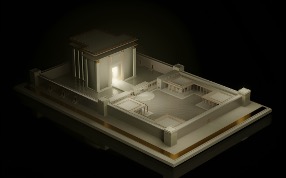
But there is second reason David is not going to build God a temple. In 2 Samuel verses 8–17, the second reason, God says, is that David’s son will build the temple. If that was all God said, “Nope, you’re not going to build my temple, David. Your son will though,” that might be difficult for David to take. “Why, Lord? Why not me? I have been faithful, right? I don’t get this.”
There is actually a third reason it seems God didn’t want David to build the temple. For some clarity on that, we have to jump ahead to a conversation David has with his son Solomon, when David was about to die.
In 1 Chronicles 22:7–8, “David said to Solomon: “My son, I had it in my heart to build a house for the Name of the Lord my God. But this word of the Lord came to me: ‘You have shed much blood and have fought many wars. You are not to build a house for my Name, because you have shed much blood on the earth in my sight.”
It does not seem that in saying this God is punishing David. It just seems to be a reality. God wants a king who is not a warrior king to build his temple. As we continue reading in 1 Chronicles 22, verses 9–10, David tells Solomon that God also said,
“But you, David, will have a son who will be a man of peace and rest, and I will give him rest from all his enemies on every side. His name will be Solomon, and I will grant Israel peace and quiet during his reign. He is the one who will build a house for my Name.”
Back in 2 Samuel 7, though, God said quite a bit more than that, didn’t he? In the next post, we’ll continue examining the important words God shared with David via the prophet Nathan.
Photo by Objective Calvary on Unsplash
 Engaging Scripture