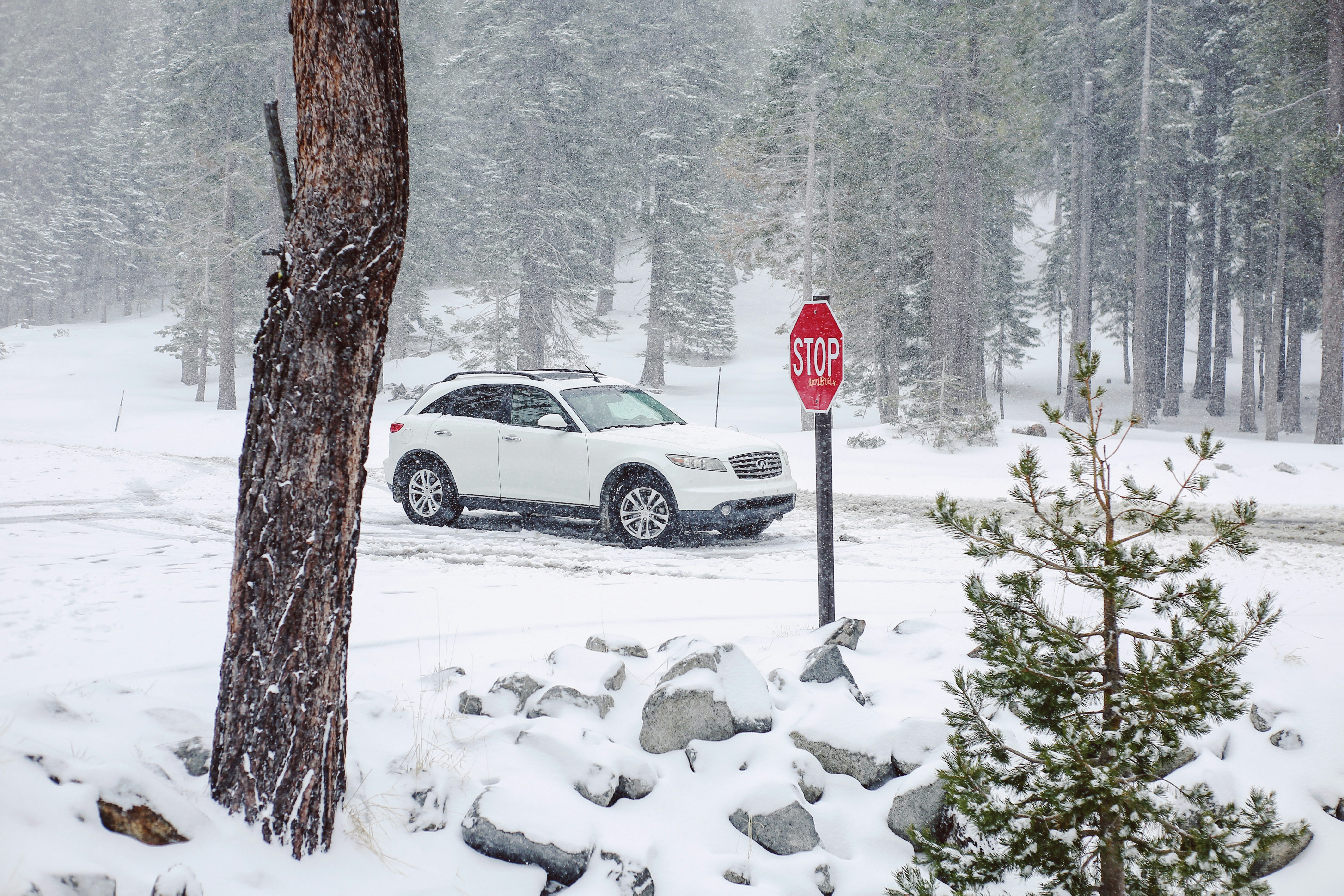
Years ago someone told me how they got into a car accident while driving on a snowy road. They hit a slick patch, lost control, the vehicle spun around and they came to a rest against a snow bank on the side of the road. No injury. No damage. No collision. Nothing. They said they were protected because they had an angel figurine on their dashboard.
Did the presence of an angel figurine on their dash force God to protect them?
This question of God’s connection to religious artifacts relates to the story in the life of Samuel that we’re discussion this week on the blog. In the previous post, we read 1st Samuel chapter 4, verse 1a through verse 3. We learned that the people of Israel suffer a military defeat at the hands of the Philistines. The Israel elders regroup, deciding to bring the Ark of the Covenant out on the battlefield, and in their words, “God will save them from their enemies.” In yesterday’s post, I suggested that the Israelite elders are telling God what he did (“the Lord brought defeat upon us”), and now they’re telling him what he is going to do (“save us from the hand of our enemies”). They have not, however, consulted God. They assume that they control him when they bring out the Ark. Or are they making that assumption?
Could it be said that are trying to involve God in a proper way? Could it be said that they are being faithful to God? Let me explain. Look at what they do. They have the idea to go to the tabernacle and get the Ark of the Covenant. Maybe they think that by getting this special religious artifact, they will actually be bringing God to the battle with them. They even say that by doing this, God will “go with us and save us from the hand of our enemies.”
God will? How can they be so sure? Is this a guaranteed victory? Do they really know what they are talking about? To answers those questions, we need to hear a bit more about the Ark of the Covenant. What is the Ark of the Covenant? Is it like Noah’s Ark? A huge boat?
In Exodus 25, God gave the first instructions for building the Ark. The Ark is a small chest made of wood, overlaid with gold. Inside the chest God asked the Israelites to store three items of significance to their nation: (1) the stone tablets on which he wrote the Ten Commandments, (2) some manna which was the food he sustained them with in their wilderness travels, and (3) Aaron’s staff which budded with almond flowers. So is the Ark just a special items chest? No treasure in there? No powerful talismans? What about Aaron’s staff? Do they pull it out and use it to shoot powerful energy blasts at the Philistines? No. Nothing like that. Never.
But there’s more. In Exodus 25 we learn about the cover of the Ark,
“Make an atonement cover of pure gold—two and a half cubits long and a cubit and a half wide. And make two cherubim out of hammered gold at the ends of the cover. Make one cherub on one end and the second cherub on the other; make the cherubim of one piece with the cover, at the two ends. The cherubim are to have their wings spread upward, overshadowing the cover with them. The cherubim are to face each other, looking toward the cover. Place the cover on top of the ark and put in the ark the tablets of the covenant law that I will give you. There, above the cover between the two cherubim that are over the ark of the covenant law, I will meet with you and give you all my commands for the Israelites.”
So the elders have a vaguely correct idea. God had told his people that he would meet them at the Ark. There is a very real sense in which the cover of the Ark is God’s throne. Furthermore, there were events in the nation’s history when the Ark of the Covenant displays the power of God. In Numbers 10:33-35, the Ark seems to move by the power of God, leading the people. In Joshua 3, the priests transport the Ark to the Jordan River, and God causes the water to part. In Joshua 6, similarly the priests transport the Ark around the city of Jericho and the walls eventually fall.
But when we return to 1 Samuel 4, it seems the elders make a false assumption that all they need to do is bring out the Ark and they will be guaranteed victory. As if God has no choice in the matter. As if God is forced to do their bidding. The false assumption of the elders is folk theology. Not good theology. What is Folk theology? Let me explain.
I started this post mentioning a person who believed a plastic angel figurine protected them from any harm when they had a car accident. The person did not actually know if God was involved in the situation. They were speculating, taking bits and pieces of biblical teaching and crafting it into something new that is not supported by biblical teaching. That’s folk theology. Essentially folk theology is made-up beliefs, crafted from biblical teaching, mixed with personal ideas, or ideas in culture.
That’s what the elders of Israel were doing. They had an improper belief that all they needed to do was get the priests to bring the Ark to the battle field, and God was duty-bound to bring them victory. In summary, the Israelites just lost a battle, and their response is not to ask God for help, but instead, they trust in their own ability to analyze the situation. But their solution is folk theology.
Initially, this act of folk theology has a profound effect on the Philistines. We’ll find out about that in the next post.
Photo by Giorgio Trovato on Unsplash
 Engaging Scripture