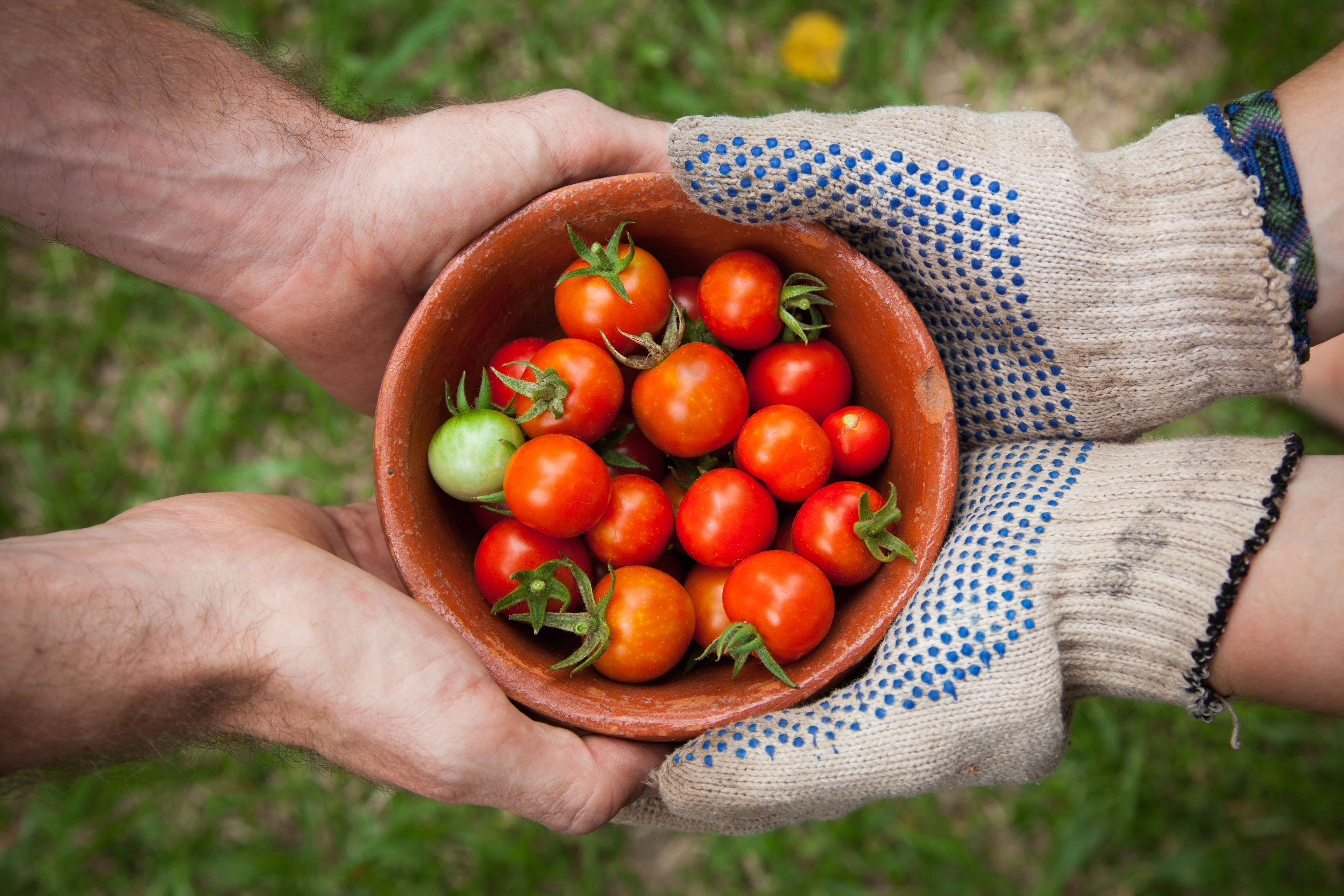
Four roadblocks to faithfulness – Fruit of the Spirit: Faithfulness, Part 4

What causes people to not be faithful? See if any of these potential roadblocks resonate with you.

Roadblock #1: Fear – If we have an opportunity to step out of our comfort zone, to step out in faith, we can be afraid that we can’t handle it.  We hold back rather than trust God to carry us through.  Sometimes we never make the commitment to serve or give because we’re afraid we won’t keep it.  The fear can be overwhelming. 

Think about Jesus’ teaching like “lay down your life” or “give it all up for me.”  Jesus taught that his disciples will die to themselves and follow him. If we follow Jesus like that, will God provide?  Will he care for us?  We are sometimes not faithful, because we are afraid that God will not be faithful to us.  So we don’t risk it.

Roadblock #2: Imposter Syndrome – This is when we don’t think well enough of ourselves to step out and serve.  We think we can’t do it.  We don’t think we are smart enough, qualified enough.  When I was working on my dissertation, I battled a major case of imposter syndrome.  I love reading books, but I really doubted that I had much I could contribute with my writing.  There are plenty of other people way smarter than me, way more insightful.  They should be writing, not me.  I battled that every step along the way. In fact, a couple weeks ago, my track mentor asked me to come to a dinner for some current doctoral students and share my doctoral studies experience as well as some of what I had written on culture.  I was super nervous.  I told the group that I was struggling with imposter syndrome standing before them.  One guy spoke out and said, “Oh man…you mean it doesn’t go away?”  When you struggle emotionally, the result can be that you can become unfaithful.

Roadblock #3: Bitterness – If someone hurts you, you can grow bitter or even hateful toward them.  Those dark attitudes can often lead to a lack of faithfulness on our part, both to the Lord and to the people that have hurt you.  So there will be times when we need to address ourselves first.  You might read that last sentence and think, “Wait, Joel…are you saying I need to be faithful to people who have hurt me?” Almost certainly, yes. In marriage we will often hurt our spouse, and they will hurt us. In parenting, we will often mistreat our children, and they will often mistreat us. In a work setting, employers and employees hurt one another. Our hurt toward one another does not negate the need to be faithful to one another. Marriage vows state this very clearly.

Of course, there will be, sadly, some hurts that require us to build healthy boundaries between ourselves and the person perpetrating the hurt. Those boundaries are faithful expressions of love for self and others, with the purpose of keeping us safe from needlessly experiencing more hurt from that person. The person we set up boundaries against will almost certainly accuse us of being unfaithful, but their accusation should not deter us from erecting those healthy boundaries.

When you are struggling with hatred and bitterness, when you have been hurt by someone, before you can be faithful, you’ll probably have to spend time with God, dealing with your own thoughts and emotions.  You might need professional counseling. 

We can spend so much time thinking about and discussing how we have been hurt, how difficult it is for us.  “I have rights,” we declare.  It is so easy to get vindictive and fight for our rights.  But faithfulness is about surrendering your hurt to him.  Give up your rights to him.  You’ll probably not have the comfort of having the person come and ask forgiveness.  Turn to Philippians 2:1-5, page 951.  Self-sacrifice is essential for growing faithfulness.

Roadblock #4: Busyness.  Another roadblock to faithfulness is that we have so jammed packed our lives full of things, that we have very little room to grow in our faithfulness.  Whether it is habits, hobbies, entertainment, or otherwise, we need to evaluate our lives. Is your life overly scheduled?

In years past we’ve planted a garden in our back yard, but this year we decided to just have a berry patch.  Even though we didn’t plant vegetables, our berry patch was covered with weeds, which, of course, happens every year.  So first we had to get rid of a bunch of weeds.  Then we had to care for the overgrown berry plants, many of which have thorns.  We trimmed them. Some were growing too thick, too close to each other, so we had to thin them. 

With weeds gone, berry plants trimmed and thinned, they had freedom, space to grow.  And grow they did!  Not just berries, but more weeds too.  So we have to constantly weed.  Life is like that.  We’ll have a period where we clear out some space to grow closer to the Lord, and then things get busy.  Before you know it, you feel like there’s no time for the Lord.  Clear out the weeds.  Trim your life.  Thin out your life. 

I experienced this recently with writing my dissertation.  When I would be adjunct teaching a local Bible college class, I did not have time to work on my dissertation.  Or barely any time. 

The first year of dissertation-writing went by and some of the guys in my track graduated.  They finished their dissertation!  They were done, and I watched their progress with admiration and a bit of jealousy.  I so badly wanted to be done, but life was too busy when I was teaching a class.   When I didn’t have a class, I had freedom to write.  But when I had a class, my dissertation ground to a halt.  So this past winter and spring, I said, “No” to teaching opportunities, and I was able to focus on my dissertation. 

What about you?  Is it time to pull some weeds?

Photo by Erik Mclean on Unsplash

The surprising definition of faithfulness – Fruit of the Spirit: Faithfulness, Part 3

In the previous post we learned that for faith to be true faith, it must lead to a life that is faithful.  And that brings us to the surprising definition of the word Paul used in the Fruit of the Spirit passage.

The word Paul used in Galatians 5:22, “faithfulness,” is defined as “the state of being someone in whom complete confidence can be placed.” Two synonyms are: “trustworthiness, dependability.”  Isn’t that interesting?  We talk quite a bit about how we need to trust in God.  But there is a sense in which the better question is God asking, “Can I trust in my people?”   Of course, God does NOT need salvation!

That’s not what God is asking when he questions us, “Can I trust in you?”  Instead think about the mission of his Kingdom. Faithfulness looks more like God asking the question: “Can I trust my people to pursue my mission?  Are they faithful to my cause?  Are they faithful to me?”

Are we being faithful? Can God trust in us to do the work that he has called us to do?  Are we being people in whom God can place complete confidence? 

You might think, “Geez, no one is that faithful!  No one is perfect.”   That’s true.  No one is perfect.  If we’re honest, there is no one in whom God could have COMPLETE confidence.  And if you are thinking that faithfulness cannot possibly mean perfection, I agree with you.  I’m not making an argument for perfection.  But I am making an argument that God wants us to grow more and more faithful.  He does not want us to be satisfied with mediocrity!   

Faithfulness is consistent. 

Faithfulness is not passive, it is active. 

Faithfulness looks like a parent, stepparent, grandparent who supports the children in their family. A husband who cares for his wife with Alzheimer’s. A father who cares for his paraplegic son.

We can focus on dramatic examples.  But what does faithfulness look like in middle class America, when we are swamped with bills, with work, with a million events, and we are just trying to keep it together?  We are much more focused on whether God is going to be faithful to us. 

For some of us, to think that we need to grow more faithful to God can feel overwhelming.  So, we have to ask why?  Why does the idea of growing faithfulness in our lives feel overwhelming?  When we know that God’s way is the best way, the way of abundant life, why do we inwardly rebel?  Shouldn’t we be excited and eager to pursue growing faithfulness to God?  The truth is that we might not feel that way.  Why?

Check back in to the next post, as we’ll try to answer that question, examining four potential roadblocks to unfaithfulness.

The important difference between faith and faithfulness – Fruit of the Spirit: Faithfulness, Part 2

In the previous post we studied a couple passages of Scripture that declare God’s faithfulness. You might read those verses and think, “Okay, I see the words of Scripture, but based on what is happening in my life, it doesn’t always seem that God is faithful.”  If we’re honest, we can feel like lamenters in the psalms who cry out to God saying, “Lord, I need you!  Why are you taking so long to answer my prayers?  Wake up!  Are you asleep?”  Some of you are wondering why it seems your prayers are unanswered.  Does God see my pain?  Does it feel that God has left you hanging?

In those moments we do what the lamenter does in Lamentations 3:22-23, we remind ourselves of the truth that God is faithful.  The way forward might seem foggy or difficult, but God is faithful.  We might to be reminded of this many times.  We might need to repeat it many times.  We might need to post a visual reminder on our mirror, on our refrigerator, on our screen saver, our lock screen, our dashboard. 

Because he is faithful, we can be faithful.  We can grow his faithfulness in our lives.  That’s what walking in step with the Spirit is all about.  We learn to do what he does.  Our steps, our pattern of live, our choices begin to look more and more like his.  We learn to grow in faithfulness just as he is faithful.

So, what does it mean to for us to be faithful?

Proverbs 3:3 says “Let love and faithfulness never leave you,” and we would do well to find out what that means!

First an important question: What is the difference between faith and faithfulness?

In the Old Testament if you search for the word “faith” you will hardly find it.  But if you add “ful” on the end to make the words “faithful, faithfully, or faithfulness,” then you find many more instances of this word.  In the New Testament, however, we see the word “faith” a lot, but only a few of the “ful” version.  Why the difference?

Is there a difference?  The OT Hebrew conception of “faith” was not just intellectual.  In other words, for the Hebrews, the definition of faith carried action with it.  You showed what you believed by your actions, your faithfulness. 

The NT was written in Greek, and the Greeks had an intellectual concept of faith.  The word that Paul uses in the Fruit of the Spirit is sometimes translated, in other New Testament passages, as “faith” and sometimes it is translated “faithfulness.” 

So what was Paul referring to?  Just an idea of belief in our minds?  Or a concept that involved action?  Sometimes it seems like the New Testament writers disagree. 

Paul wrote in Ephesians 2:8-9 that we saved by grace, through faith, not by works, it is the gift of God.

James says, in James 2 that faith without works is dead. 

What saves us?  Faith or faithfulness?  We need both.  We show our faith by our faithfulness!

These two concepts have often been used to create confusion in Christian doctrine.  Can we earn our way to heaven by being good?  Or do we have to have faith in God?  What gives?

The two concepts are not two concepts, but two parts of one and the same concept. 

We cannot save ourselves.  We cannot work our way to heaven by doing good deeds.  Paul said that clearly.  Jesus had to die on the cross for our sins. He was the only one worthy of being that sacrifice. He representatively took all our sin on him, but he didn’t stay dead. His miraculous rising from the dead, shows his power over sin, death and the devil.  Therefore, we place our faith in him, we are saved. But what does it mean to place our faith in him?

Paul describes it this way in Romans 10:9, 10, “If you confess with your mouth, ‘Jesus is Lord’ and believe in your heart that God raised him from the dead, you will be saved.”

There is a story to be believed.  There is content that is true.  We believe that Jesus is God and that he rose from the dead. We claim that story as historical fact to be believed.

But the belief, the faith, is not just intellectual. 

James makes that very clear.  Even Satan believes in God, but Satan’s action is opposed to God. Faith without deeds is dead.  Our faith should be faithful.  We should have a faith that is evidence by faithfulness. 

Abraham is an amazing example of this.  You can read his story in Genesis, but a summary is that God asked Abraham to move his family from their hometown to a place God would show him. And Abraham followed God! To place his faith in God, Abraham had to act. Our faithfulness shows that our faith is not just cerebral, it shows that it is real.

Hebrews 11 is the famous Faith Chapter in the Bible.  In verse 6, the writer of Hebrews says that “Without faith, it is impossible to please God.” We need faith to please God, but that faith shows itself to be true faith when we are faithful. Do you have a faith that is faithful? 

Faithful: its who God is – Fruit of the Spirit: Faithfulness, Part 1

I follow the Washington Commanders.  In our church we have many Eagles fans and some Steelers fans.  I follow the Commanders because my dad went to seminary in Washington DC, and there he caught the bug and passed it on to me and my brother.  In the 80s and 90s, it was easy to be a Washington fan.  They regularly made the playoffs and won three Super Bowls.  

It’s been very difficult for the past 30 years, however, to be a faithful Washington Commanders fan.  You might ask, “Who are the Commanders?”  Is that some arena football team?  A USFL team?  No.  It’s the new name of the former Washington Redskins.  I support the name change, but I will admit a name change makes it hard to feel connected to the team.  Actually they’ve had two name changes in the last few years.  The team first abandoned the old name, and team leadership decided to go with a temporary name, “The Washington Football Team,” while they took some time to think about it.  Along with the name changes, the team has performed terribly for years. On top of that, the front office is a mess, filled with scandals and mismanagement.  It’s hard to be a faithful fan when things aren’t going well. 

We see that tendency in many areas of life.  The difficulty of faithfulness, especially in the face of struggle.  Can we be faithful when life is hard? Can we be faithful when we don’t want to be faithful? 

Over the last month we have been studying what is called The Fruit of the Spirit.  This week we focus on Faithfulness.  One of Jesus’ first followers was a guy named Paul.  He started a lot of churches, and he wrote them letters.  To the churches in the region of Galatia, which is in modern-day Turkey, Paul wrote about The Fruit of the Spirit. 

In Galatians 5:22-23, Paul wrote that Christians are people who walk in step with the Spirit of God.  We are thus to be led by the Spirit so we can grow the fruit of the Spirit in our lives. What is the Fruit of the Spirit? In Galatians 5:22-23, Paul lists nine qualities that are the fruit of the Spirit.

In the previous weeks we’ve studied love, joy, peace, patience, kindness, goodness, gentleness, and now this week we study faithfulness.  We’ll get to the definition of faithfulness in a future post, but usually what we think of when we think about faithfulness is a person who is committed, who is true, who has given their allegiance to something, and they follow through.

When my wife and I were missionaries, we were so thankful for faithful supporters.  People who kept their promised commitment. 

Or consider a faithful worker.  She shows up on time, works hard, rarely takes sick days, supports the boss, and promotes the company…year after year after year.

How do we become faithful like that? To answer that question, we first need to ask and answer another one, “What is the root of faithfulness?”

In Romans 3:3-4 Paul asks a very thought-provoking question, “What if some lack faith?  Will their lack of faith nullify God’s faithfulness?”  It is a question that perhaps all of us have wondered from time to time.  There are moments, perhaps long periods during which we feel like our faith is weak.  We don’t feel we are worthy of God.  We might be struggling personally.  Maybe we have given in to a sinful habit or attitude, maybe we feel very far from God.  Evaluate your relationship with God.  Are you close?  Are you lacking faith?  Does it feel a bit scary or unsettling to consider those questions?

In those dark times, we can wonder, with Paul, “Is God justified in turning his back on me?”  Maybe when we are so faithless, God doesn’t have to be faithful to us?  Is that true?

Here’s Paul’s response: “Not at all.”

Hear this very clearly: Even when you lack faith, your lack of faith does not affect God’s feeling toward you.  How do I know this?  Because scripture very clearly tells us how God feels about us when we feel like we are lacking faith. 

First we’ll look at a passage from the Old Testament, Lamentations 3:22-23.

Before we read those verses, let’s try to set them in the context of the book of Lamentations.  The author of the book of Lamentations, the lamenter, is wrestling with God about a situation happening in the ancient nation of Israel. That situation is identical to what we learned in our study of Ezekiel a few months ago.  Remember how the city of Jerusalem had been invaded by the King of Babylon, and some of Jews in Jerusalem had been taken away in exile?  Remember how their precious city and temple had been destroyed?  The Lamenter, probably the prophet Jeremiah, was living in that time, and he is so deeply frustrated with God.  We’ve talked about lament as the expression of our frustration with God.  A couple months ago Clint Watkins guest blogged about lament, using the example of Psalm 77, which is a song of lament.  The psalms are filled with laments, which are people crying out in God to anguish.  The book Lamentations is a big, long awful, painful lament.

Maybe you have felt that way sometimes.  You are going through a long period of waiting, and hurting, and confusion, and you’re praying and you’re not receiving a response from God.  It doesn’t seem fair.  It seems wrong.  You’re wondering if God is going to keep his promises.  You might be having a crisis of faith.  Do what the lamenter does.  He gets around to the truth that God is faithful.

Dwell on God; think about who he is, and though the pain you’ve been going through is great, remember God’s love and compassion.  Then burst forth in praise.  That’s exactly what the lamenter does in Lamentations 3:22-23, “Because of the Lord’s great love we are not consumed, for his compassions never fail. They are new every morning; great is your faithfulness.”

Though the world seems like it is falling apart around us, God is faithful.  There is nothing that can affect his faithfulness. 

Likewise, let’s hear a verse from the New Testament.  In 2 Timothy 2:13 Paul writes, “Even when we are faithless, God is faithful, because he cannot deny himself.”  Faithfulness is rooted in God.  He is the truly faithful one.  Even when we ourselves are falling apart, when we think we are losing our faith or feel apathetic about God, or perhaps we being rebellious, God is still faithful.  God’s faithfulness means that he is consistently loving and caring for us.  I once heard the phrase about God: “There is nothing you can do that will make God love you less.”  He is faithful.  You can always depend on him.

Photo by Jordan Wozniak on Unsplash

We need faith that is more than faith – Fruit of the Spirit: Faithfulness, Preview

What do you think of the name of my church: “Faith Church”?  I checked the historical records we have on file, and they begin in 1968 after the name of the church was already decided.  Wouldn’t it be cool to have a transcript of the discussion that led to our name “Faith”? Why did whoever picked the name “Faith” go with that name?  There are other churches in our denomination with the name “Faith.”  In fact, sometimes the postal service delivers mail to my Faith Church, but addressed to the pastors of those other Faith Churches.  There’s one in Harrisburg and another in Temple, PA.  Each of those are older than my Faith Church, so maybe the group of people who started Faith Church just picked what was a common name for churches in that era. Nowadays churches can be quite intentionally creative with their names.  Some might say that “Faith” is a boring name for a church, when compared to names like “Burning Hearts” or “Journey.”  There’s nothing wrong with those names, but I would like to propose that “Faith” is an excellent name for a church. 

The problem is that the concept of “faith” is not as straightforward as it might seem.  What is faith?  “Faith” is often understood as “religion.”  The Christian faith.  The Catholic faith.  The Muslim faith.  Used that way, “faith” refers to a set of beliefs.  So when attached to our church, is that what we mean by “Faith Church”?  Are we referring to a set of beliefs?  Yes…and no.  We certainly hold to beliefs. In fact, the official name of our church refers to those beliefs.  

Our full name is “Faith Evangelical Congregational Church.”  Evangelical Congregational (EC) is the name of our denomination, the group that planted Faith Church in 1968 as a daughter church of Grace EC which was located nearby in the City of Lancaster.  Faith Church and the EC Church do not use “evangelical” in our name because we agree with the politicized contemporary meaning of “evangelical.”  Instead we hold to the biblical, historical meaning of “evangelical.”  “Evangelical” is a Greek word that means “to proclaim good news,” a word which the earliest Christians used to refer to preaching the story of Jesus’ life, death and resurrection, our central belief. 2000 years later, we agree! 

Next “congregational” refers not to the congregationalism of New England, but to the idea that each local congregation owns its own property and decides on its governance structure.  In other words, the denomination does not own our property, and EC leaders have no authority over the governance of our church.  We do, however, voluntarily connect to the denomination because we believe it is important to be part of an accountable relationship, and we do agree with the doctrinal beliefs of the denomination.  We hold to the EC Church’s articulation of biblical teaching as summarized in the EC Church’s 25 Articles of Faith and book of order called The Discipline

But “faith” is so much more than beliefs and doctrines.  I would go so far as to suggest that if we understand the concept of faith as simply beliefs, then we have misunderstood and misappropriated our faith.  If our faith is just our opinions about biblical teaching, then I don’t believe we have faith.  Because the writer of Hebrews says, “without faith, it is impossible to please God,” it is important that we answer the question: what is faith?  As we will learn this coming Sunday, faith, as it is commonly held, is insufficient to please God.  We need faith that is more than faith.  How can faith be more than faith?  

In our continuing series on the Fruit of the Spirit, we are learning to walk in step with the Spirit, which means growing the Fruit of the Spirit in our lives.  We’ve learned about growing love, joy, peace, patience, kindness, goodness, gentleness and this coming week we’ll study what it means to grow…faithfulness

Photo by Pablo Heimplatz on Unsplash

What I learned about gentleness when I got bit in the hand – Fruit of the Spirit: Gentleness, Preview

A couple weeks ago I was at my son and daughter-in-law’s house playing tug-of-war with their huge German Shepherd, Kash.  He grips one end of his toy stuffed-animal, while I hold the other end, usually tugging side to side.  Kash is way better at the game than me.  If he wants to hold tight, there is very little chance of me pulling it away from him.  In fact, it is much more likely that the toy will break.  We have played this game since he was a little puppy, so much so that soon after I first walk in the door, he will scoop up a toy and bring it over to me, pushing it up against my leg.  He is saying, “Tug of war, please!”  The problem is that some of his toys are not very large.  That means I don’t often have much toy to hold onto, and my hand is almost up against his mouth.  Do you see where this is going?

As we are tugging back and forth, if Kash feels the toy slowly sliding from his locked jaw, he will readjust to get a better grip.  His is usually a very sudden, very fast adjustment, in which he opens his mouth, and locks down on the toy.  It probably wouldn’t surprise you to learn that when he makes that quick adjusting chomp, he has a few times nipped my hand with his teeth.  He’s not trying to bite me, of course, he’s just playing. But he has drawn blood a couple times, usually just small nicks.  No big deal.  Until two weeks ago.

At one point, after we had been pulling his toy back and forth, he chomped, and his very sharp tooth went deep into the base of my forefinger.  I knew it was bad when I couldn’t get my hand out right away because my hand was stuck on his tooth.  It didn’t take long to get free, and my hand started bleeding profusely.  Thankfully, it was a clean bite and easy to treat.  But before you think negatively of Kash, there is another side to this story. 

From nearly the first day they got Kash, when he was just a puppy, our daughter-in-law has taught him a certain word.  Actually, they have trained Kash to know many words like “sit,” “stay,” “crate,” and “drop.”  But this other word struck me as unique.  The word is “gentle.”  For example, our daughter-in-law will hold a potato chip in her hand, and she will say to Kash, “Gentle…gentle…gentle.”  He has learned to very slowly move his mouth toward the chip and ever so slightly grasp it with his teeth and receive it from her.  It is impressive to watch a big, powerful creature demonstrate such controlled gentleness, especially when you know he badly wants to eat that chip, and he could take a very aggressive bite if he wanted.

How about you? Are you gentle? What does it mean to be gentle?  Should we be gentle in every situation? Isn’t it possible that we can be too gentle, and thus weak, allowing ourselves to be trampled on? In our continuing series on the Fruit of the Spirit, we are learning to walk in step with the Spirit, which means growing the Fruit of the Spirit in our lives.  We’ve learned about growing love, joy, peace, patience, kindness, goodness and now this coming week we’ll study what it means to grow gentleness. 

This coming week, we learn about gentleness, continuing our sermon series on the Fruit of the Spirit.

Photo by Sofia Guaico on Unsplash

Some practical steps to increase your goodness – Fruit of the Spirit: Goodness, Part 5

As we have learned with the other qualities in the Fruit of the Spirit, we can grow goodness by walking in step with the Spirit, by spending time with him, by asking him repeatedly, “Spirit, infuse me with your goodness.”  This is what Jesus was teaching when he talked about abiding in him, remaining in him.  We actively spend time with him. 

When Jesus taught us to pray in the Lord’s prayer, “Lead us not into temptation and deliver us from evil,” he was teaching us about abiding or depending on him, on the Spirit.  When we pray “Lead us not into temptation,” it is another way of saying, “Lord, I want your goodness to flow from my life, and I know that I need you to help me with that.  Fill me with your goodness.” 

We can observe other Christians who are good, who have a generous spirit to benefit others, which leads them to generous actions of goodness toward others.  We can and should learn from them to be good. Who do you know that is living a life of active goodness? Invite them to mentor you.

What about people who aren’t Christians, but who are good and do good things?  Notice that I am not saying that it is impossible for those who do not believe in or follow Jesus to do good.  Plenty of people all over the world who believe differently do good things on a regular basis.  So what is the difference between we who believe in and follow Jesus and those who do not believe in and follow Jesus when it comes to goodness?  I believe there is a significant difference.  Christians are people who are filled with the goodness of God, and empowered by God to be good, and do good.  

What is so striking, then, is when people who call themselves Christians do things that are not good.  For example, consider the abuse scandal in the Southern Baptist Church.  There have been so many similar awful situations in churches of all kinds.  In their book A Church Called Tov, Scot McKnight, a bible and theology scholar, and his daughter Laura Barringer, write about their families’ experience living through an abuse of power at a megachurch.  What they suggest is that we who say that we are lovers of Jesus are called to create cultures of goodness in our church communities.  Tov is the Old Testament Hebrew word for goodness. 

The point is that we first strive for goodness in our own church family, and then allow God’s goodness to flow outward to our wider community.  Goodness leads us to treat one another the way God treats us, with his goodness, his generosity of love.  Goodness invites us to reflect on our behavior toward the people in our lives.  Are we good to them?  If not, we initiate confession and repentance to God and to the people whom we have hurt.  We change.  We move from bad behavior to good behavior. 

Christians, we should be known for our goodness, for our lives of generous action of care and love to benefit others.

Photo by Bonnie Kittle on Unsplash

The complexity of defining goodness – Fruit of the Spirit: Goodness, Part 4

This week we are studying the quality of goodness, which is listed in the Fruit of the Spirit. What we’re going to find is that defining goodness is not as simple as it might seem.

We learned in the previous post that numerous Psalms declare that God is good. In today’s post we jump over to the New Testament, where Jesus’ disciple Peter, who later became the leader of the Christians, writes in 1 Peter 2:1-3, “Therefore, rid yourselves of all malice and all deceit, hypocrisy, envy, and slander of every kind. Like newborn babies, crave pure spiritual milk, so that by it you may grow up in your salvation, now that you have tasted that the Lord is good.”

When studying the word “goodness” what we find is that our English bible translations use our English word “goodness” for multiple original language words.  For example, that in 1 Peter 2:1-3, the New International Version translates Peter as writing, “the Lord is good,” but the word Peter uses is actually the word we studied last week, “kindness.”  

So what is the precise goodness Paul is talking about in Galatians 5:22-23?  As we have seen in the Psalms, goodness is found in God.  God is good.  As we have learned from Jesus, God wants his goodness to be so rooted in our lives, that his goodness flows out of us just as naturally as goodness flowed out of Jesus. So what is this goodness?

The people who study language tell us that the word Paul used when he wrote this list of qualities called the Fruit of the Spirit, the word which in many English Bibles is translated “goodness” is defined as “the ACT of generous giving, with the implication of its relationship to goodness—‘to be generous, generosity’.”[1]

Generosity?  Or really, as the definition indicates, “generosity that is related to goodness.”  In other words, we are talking about a life that is generous in the way that a person uses their time, their money, their abilities.  They are a giving person.  For the good of the world and others around them.

In fact, some of your Bibles translate the word here as “generous.” Consider the expression “she is so good to us.”  When someone says that, what do they mean?  They mean that the person is generous.  Generous with their time, their money, their gifts and abilities.  They use their lives sacrificially to benefit others.  They have a heart for the good of others.  Every quality in the list of the Fruit of the Spirit is best understood as applicable in relationship to others.  So when it comes to goodness, we practice generous giving to benefit others.

Why, then, do many English Bibles translate this word as “goodness”?  Is Paul saying we should grow generosity in our lives or is he saying we should show goodness?  Which one is it, Paul? To answer that, remember that many words have multiple meanings, often meanings that are related. The scholars who study language tell us that the word Paul uses in Galatians 5:22-23 can also mean “positive moral qualities of the most general nature.”

That’s what we normally think of when we think of goodness: positive moral qualities. Goodness, or positive moral qualities, is who God is, and what God wants to grow in our lives, so that his goodness flows out of us. Goodness is not just an idea.  It is action, and we show our active goodness in how we treat others.  When goodness flows from our lives, we are actively good to other people, we are generous to them. 

Goodness encompasses much of what we already learned about in the fruit of the Spirit, and the qualities we will talk about in the rest of the list.  Goodness includes love, patience, kindness, gentleness.  We must have self-control to demonstrate goodness.  How are you doing showing goodness to the people in your life?


[1] Ibid, 569.

Photo by Elaine Casap on Unsplash

The first and most important step to growing goodness in our lives – Fruit of the Spirit: Goodness, Part 3

During my first few years as senior pastor, I remember a thought I had nearly every Sunday when I was studying for and writing the sermon each week.  I thought, “the people don’t need to hear this…they already know it…look at them…look how good they are.  What could this sermon possibly say that they need to hear?”  Twelve years later I don’t think that anymore.  Why?  Because I now know how bad my congregation is?  No.  First of all, I know I need to hear the sermon each week.  I’m not perfect.  And second of all, none of us are perfect.  I have learned that our lives are more complicated than what we often convey. Just about everyone in my congregation has a family struggle or a personal struggle. Just about everyone has a broken relationship, a difficulty at work, a crisis. We never outgrow needing to hear the Word of God.

When it comes to growing the Fruit of the Spirit of goodness in our lives, we not only prune or cut away the bad actions (as we learned in the previous posts here and here), but we also strive to increase good actions.  What are good acts?  Or maybe that is the wrong question.  People can look good on the outside, even doing good things, but it is possible that they are not good? Yes, it is possible to put on a good face, a good front, but for that outer goodness not to be flowing from a much more important inner goodness.  Have you ever known anyone like that?  A person who appears good, but it turns out there is another side to their life?  Are you like that?

All of us probably have at least a touch of this reality in our lives, such that we are not inwardly as good as we want to be.  We believe we could do better.  We suspect God wants us to do better.  That’s normal.  We are not perfect. Our heart motives and actions rarely, if ever, fully align with God’s heart. But some people are highly deceptive, claiming to be good, doing some good things, but inwardly not so good.

Jesus once taught about this.  Matthew 12:33-35,

“Make a tree good and its fruit will be good, or make a tree bad and its fruit will be bad, for a tree is recognized by its fruit. You brood of vipers, how can you who are evil say anything good? For out of the overflow of the heart the mouth speaks. The good man brings good things out of the good stored up in him, and the evil man brings evil things out of the evil stored up in him.”

How do we become good?  Jesus says to become truly good, we must change from within.  What is truly inside us will come out.  We can fake it, but not forever.  The real us will come out.  Therefore, Jesus says, we want inner goodness to be the real us.  So how do we get that goodness inside us?

Jesus’ powerful analogy of the Vine and Branches in John 15:1-10 helps us understand how we grow the life of God, including goodness, deep within our lives:

“I am the true vine, and my Father is the gardener. He cuts off every branch in me that bears no fruit, while every branch that does bear fruit he prunes so that it will be even more fruitful. You are already clean because of the word I have spoken to you. Remain in me, and I will remain in you. No branch can bear fruit by itself; it must remain in the vine. Neither can you bear fruit unless you remain in me. I am the vine; you are the branches. If a man remains in me and I in him, he will bear much fruit; apart from me you can do nothing. … This is to my Father’s glory, that you bear much fruit, showing yourselves to be my disciples. As the Father has loved me, so have I loved you. Now remain in my love. If you obey my commands, you will remain in my love, just as I have obeyed my Father’s commands and remain in his love.”

We cannot become good on our own.  We need to abide in Jesus, depending on the the empowerment of the Holy Spirit who lives in us.  The Spirit can transform our inner being so that God’s goodness flows out of us.

“God is good.  All the time.  All the time, God is good.”  It’s a call and response phrase some Christians use.  What I tend to hear more often is Christians saying, “God is good,” when they are going through a difficult time.  God is truly good, no matter how difficult our situation may be.  The situations of this life cannot change God. He is and always will be good.  Goodness is his character.  It is who he is.

Scripture declares unequivocally that God is good. For example, consider these psalms:

Psalm 31:19, “How great is your goodness, which you have stored up for those who fear you, which you bestow in the sight of men on those who take refuge in you.”

Psalm 34:8, “Taste and see that the Lord is good; blessed is the man who takes refuge in him.”

Psalm 86:5, “You are forgiving and good, O Lord, abounding in love to all who call to you.”

Psalm 100:5, “For the Lord is good and his love endures forever; his faithfulness continues through all generations.”

God is so good! Spend some time now rereading these verses from the Psalms, basking in the truth of God’s goodness. Abide in his goodness.

But how does a person abide in the goodness of God? How do we do what Jesus teaches us to do in the Vine and the Branches. In the final two posts this week I’ll give some practical actions you can apply to your life, helping you abide in Jesus, and thus grow his fruit in your life.

Photo by Brienne Hong on Unsplash

What to do when Christians disagree about what is good and what is bad – Fruit of the Spirit: Goodness, Part 2

What is good…and what is bad?

In Christian circles there are plenty of disagreements about what are good actions and bad actions.  Many times on the blog I’ve talked about many of these disagreements.  What clothing styles can people wear to worship services?  What beverages can people drink?  What films, music, TV, books, magazines, can people experience?  What political party and its ideas should we support?  

The most recent examples of Christian disagreement in American culture are abortion and guns.  During the Covid-19 pandemic many people expressed sharp disagreement about mitigation procedures, such as wearing masks, in church. There are so many disagreements in our age, and Christians can boldly declare that, “My view and choice is good and any other way is bad,” as if their perspective is not an opinion, but a fact.  In any local church family like mine or yours there are differences of opinion.

Would it surprise you to learn that Christians have had differences of opinion about what is good and what is bad, including all the way back to Paul’s day 2000 years ago?  Paul wrote about it, and I’ve written about it previous (such as here and here). For now, let me summarize.  In places like 1 Corinthians 8 & 10 and in Romans 14 & 15, Paul provides what I believe is his clearest teaching about what to do when the people in a church disagree about what is good and what is bad.  Why did Paul bring up disagreements in the church? Because there seems to have been a thorny issue in his culture, and Christians could not agree about how to handle this issue.

In the culture of the Greco-Roman Empire of the first century, excess meat from sacrifices in pagan worship services was sold in markets in many cities and towns. Some Christians said it was sinful to purchase and eat it because it had been involved in idol worship.  Some said it was okay, that it was just meat.  In the same church family, Paul reveals, there were people who disagreed about eating meat sacrificed to idols. How did Paul help the people solve their disagreement?

Simply put, he said, “Love one another.”  When Christians disagree, let your love for one another guide you.  If you feel free to eat the meat, be willing to express your love by abstaining from eating if your eating will harm your brother and sister.  If you do not feel free to eat, be willing to express your love by not being judgmental of your brothers and sister who do eat the meat.  In other words, being good means being loving when you disagree.

We can apply this principle to many situations in the church.  Goodness means loving first.  It means loving God first.  There is a famous quote from an ancient Christian theologian who said, “Love God and do what you want.”  If you are filled with love of God, you will live in such a way that you are pleasing to him.  As his life more and more becomes your life, your life will be good because you are living out your love for him.  The outflow of your heart will be seen in your actions and your decisions, particularly as you love those with whom you disagree.

Photo by Kevin Butz on Unsplash