I played soccer in college. Admittedly, it was not high quality college soccer. In fact, with the exception of my very good freshman year college team, I have a feeling my high school team could have beaten my college team every other year. Still, just about all of the players on that college team, all four years, had played soccer for a long time. I had been playing since 6th grade. I knew the basic skills of soccer, like trapping, passing, and even some ball control tricks. Some of the members of my college team were more advanced than me.
Yet, our coach started every practice with 15-30 minutes of fundamental ball control drills. Back and forth we would cross the field with a partner, heading the ball, trapping, passing, using our chest, thighs, and of course feet. Over and over and over we practiced. For players that had pretty much all been playing for years and had mastered those basic soccer skills, it would seem our coach was wasting time.
I think his approach was excellent. Even professionals do well to keep working on the basics. On the field flourishing requires lots of off the field practice. Same goes for our practice of faith. What is the work, the practice, that will help us experience the flourishing God desires for us?
There are the classic answers are “go to church and pray.” But what I have found is that we need to learn how to go to church, and we need to learn how to pray. There is a vast difference between attendance and participation. There is a vast difference between praying a brief to-do list for God and actually having a vibrant conversation with God.
Church attendance only, often results in a shallow faith. Praying only to-do lists for God often results in a shallow faith.
Church attendance is not much different from going to the movies or a show. Praying to-do lists is not much different than viewing God as your own ChatGPT.
Make a step toward something new. Break out of the mold. In my church, I encourage people to participate on the prison worship team, or help teach ESL with SEEDS. Show the love of Jesus to real live people.
But there are more ways we can practice toward transformation, knowing the God is at work, desiring us to experience flourishing.
Get counseling, therapy, see a spiritual director, meet with a spiritual mentor, an accountability partner. Confess your life to them. I don’t want to limit it to “confess your sins,” because our lives are so much more than sins. We need to confess everything to one another.
Remember how Paul wrote (see post here) that God wants to transform us complete, body, soul, and spirit. Who in your world knows you body, soul, and spirit? Your spouse? Maybe. Maybe not. And frankly, for some people, confessing that deeply to their spouse might not be the right next step. It might be. But it might not be. There is nothing wrong with confessing life to someone other than your spouse.
There is a practice called Rule of Life that you might consider. A workbook like this Crafting a Rule of Life, can help you not only understand what a rule of life is, but also how to make one. A rule of life is like a set of practices that can help you pursue holiness, knowing that God is at work in your throughout. I encourage you and your Bible study or small group to consider using this book as a guide.
In my first post this week, I mentioned that I received a used grill, but it was dirty and some parts were broken. It needed rehab, and rehab takes work. I wish I could snap my fingers and the grill would be magically repaired. But instead, I had to do the work. And that brings us to the end of 1st Thessalonians. Paul concludes the letter in verse 28, writing, “The grace of our Lord Jesus Christ be with you all.”
God is not only a God of peace (which I talked about in the first post this week), not only interactive (second post this week), not only faithful (third post this week), God is gracious. We need his grace, all the time. He is a God who is lavish with his grace in our lives.
If wonder why change seems so difficult, that you aren’t making progress, you might think God is upset with you. Remember God is a God of grace. There will never be a time when God is not gracious to you. There is nothing you can do to void yourself from God being gracious to you. He is gracious in the reality that he is always willing and ready and actively pouring grace into our lives.
As I set to work rehabbing the grill, I found numerous parallels to God’s grace and his work changing us.
First, fixing the grill’s sawn-off side tray ended up being easy. I was able to fit it back into place with the remaining grill frame screws. Sometimes personal sanctification is not as difficult as we make it out to be. When I went on sabbatical in 2018, I didn’t want to spend my sabbatical scrolling on social media. I thought it would be very difficult, however, to break the habit. I had spent so much time in the previous ten years on social media. When I hit the “deactivate account” button on the eve of sabbatical day one, though, it was the simplest matter, and I did go back until fall 2024 when I wanted to publicize my book. If only all matters of sanctification were that easy…
Next, the grill’s cover handle was more difficult. When it snapped off, the small spot welds broke. Those spot welds secured the handle’s end caps in place. You need those end caps to screw the handle to the cover. And I needed help. Sometimes when you are going through personal change, you can’t go it alone. I asked a friend from church if he could weld the end caps to the handle. Sure enough he could and he did. In my own journey of becoming more like Jesus, twice I’ve needed to go to therapy, and since 2020, I’ve had a near monthly one-hour session with a spiritual director. Not to mention the vast input from my wife and other friends and family, for decades.
Third, rust had severely damage the grill’s cooking grates, so they will need to be replaced. I don’t know if there is a parallel here to God’s work of sanctification in our lives. But I do know that he can redeem even what seems totally broken and irreparable in our hearts, minds, and relationships. His grace is easily powerful enough.
Finally, the grill needed cleaning, as all grills do from time to time. Black carbon deposits covered numerous stainless steel surfaces. So I got Easy Off oven cleaner. Easy Off is powerful stuff. You really should wear gloves when you use it, and preferably use it in well-ventilated spot, or outside. Spray it on the affected area, then wait. At least 30 minutes. Maybe more. Then scrub, and watch the carbon come off. For more persistent or thicker coatings, spray, wait, and repeat until the grill is clean.
What I’m getting at is that the work of change can require sweat. Patience. More work. Change is not always easy. Often change only comes after a very difficult experience. Or after a long periods of basic fundamental practice. Yes, I believe God can change us rapidly, but he often doesn’t. In fact, his work is often so slow, it is imperceptible. Which we usually do not like. Especially in our fast food culture.
Frequently change is the result of practice, work, repeat. Like Easy Off on my grill: spray, wait, scrub, repeat.
Easy Off works on the grill, but what is the work of spiritual formation? What is the practice? I’ll talk about that in the next post.
In our study this week through 1 Thessalonians 5:23–28, Paul writes that God desires to thoroughly our whole being: spirit, soul, and body. God wants all of it to be blameless.
There have long been debates among Christian theologians about what the writers of Scripture meant by spirit and soul. Body we get. We engage our bodies through the five senses. But spirit and soul are that invisible inner part of our lives. Paul two distinct words to refer to spirit and soul.
Spirit is pneuma, which is where we get our English words like “pneumatic drill” or “pneumatic piston” which refer to the fact that air is involved in the functioning of the device. In the Greek concenption, pneuma referred to literally to “wind, breath, air” and figuratively to spirit.
Soul is psyche, which is where we get our English words like “psychosis” and “psychology,” referring to the functioning of the brain.
Both pneuma and psyche were used by ancient people to refer to the inner life of humans.
What is uncertain is if they refer to two different inner aspects of that human inner life. Theologians, philosophers, and scientists have rightly made much of this, because the issue of human inner life is extremely important, yet mysterious. For our purposes in studying Paul’s teaching, we don’t need to engage those deep debates. Instead, what Paul is saying is that God created humanity to have an inward spiritual part joined together with an outward physical part. They are not separate.
God wants both our inner parts and our outward parts to be changed, to be blameless. God desires that our entire being experiences his shalom, his flourishing, in the here and now. As Jesus taught in Matthew 22:34–40, the most important teaching in the Mosaic Law is “love the Lord your God with all your heart, soul, mind, and strength.” (Which is a quote from Deuteronomy 6.)
Paul says that God desires that complete transformation in our lives until the coming of our Lord Jesus Christ. The early Christians in Paul’s day believed that Jesus would return in their lifetime. Thus Paul is simply saying that Jesus is at work in you, wanting you to experience flourishing, and he will keep that going until he returns.
Of course, Jesus did not return in Paul’s lifetime. That was 2000 years ago. Yet Paul’s point stands for us. God is at work in our lives, and he will keep working until Jesus returns.
We know this, Paul says in verse 24, because God is the one who has called us, and he is faithful, he will do it. That statement in verse 24 is now the third description of God that Paul has written in these two verses: First, God is the God of peace/shalom/flourishing; second, God is very involved in helping us experience his shalom; and third, God is faithful.
That brings me back to the frustrating questions I asked in the previous post. What if we don’t feel God working in our lives? What if we are struggling? What if it seems we are not experiencing peace, but distress? What if God doesn’t seem faithful?
Again, those are good questions. Important questions. Let’s keep them on the table.
First I want to finish up the passage, and see if Paul says anything else that might help us. Debbie Marks covered verse 25 weeks ago when she looked at a number of Paul’s teachings about prayer (starting here). We covered verse 26 “Greet one another with a holy kiss” when we talked about relationships in the church (read post here).
So let’s look at verse 27. Paul is basically saying, “Swear to me that you will read this letter to everyone in the church.” Not a threatening “swear to me!” Paul wants them to take this seriously. Likely they had numerous house churches in the city of Thessalonica, and Paul wanted all the house churches and all the Christians to hear his letter. Paul’s writings are circular letters. They would even get passed on to Christians in other cities. It is fascinating to see Paul utilize this ancient technology of handwriting letters to help people learn about flourishing.
After those final instructions about praying, kissing, and reading, Paul concludes the letter in verse 28, “The grace of our Lord Jesus Christ be with you all.” Just as when Paul referred to God as the God of peace in verse 23 (see post here), Paul’s mention of grace is not just cursory. Grace is vital. We learn how in the next post.
A few months ago at a community event, a person waved to me smiling, and I waved back with one of those looks on my face that likely said what I was thinking, “I don’t know who you are, but you sure seem to know me, so…Hi!” I hoped they didn’t see my lost look. Maybe you know the feeling. You don’t want the other person to be offended that you don’t recognize them when they clearly know you.
Maybe six months had passed since I had seen this person, and in that relatively short amount of time they lost so much weight, they looked like a new person. My wife showed me their picture on social media. They literally appeared to be a different person. GLP-1 medications have been revolutionary in helping people lose weight.
How does God change a person? How does God make us new? It sure would be nice if there was a medication to make us better people, more like Jesus. Especially when we can struggle for years with poor attitudes, bad behaviors, unwise choices, and broken relationships. Is there hope for us?
In 1 Thessalonians 5:23, Paul writes that the God of peace will sanctify us all. Sanctify. What does sanctify mean though?
One scholar defines it this way: “to cause someone to have the quality of holiness—‘to make holy.” (Louw & Nida)
God is at work to make us holy.
Are you thinking, “Come on. For real? Holy? I’m far from holy. It doesn’t seem like God is doing a good job with me.”
Does Paul’s teaching there in verse 23 mean that we are currently holy? Does it mean we will be completely holy? Some bible teachers believe that we should just understand this idea spiritually-speaking. They say that what Paul is referring to is the holiness of Jesus. When we trust in him, we are covered by his holiness, like putting on clothes, so that God sees Jesus clothes on us, Jesus’ righteousness, and thus God deems us completely holy. God doesn’t look at our behavior. All that matters to God is that we have trusted in Jesus.
There are biblical passages that talk about putting on Christ. Clothing imagery. But those are images, figurative speech. Yes, Jesus in his death and resurrection did something that we could never do, but the idea of putting on Jesus’ clothes can be so spiritual, so theoretical, and so individualistic, that we can focus far too much on eternal life, and we can miss out on the extremely important process of sanctification in the here and now.
Paul is not primarily talking about spiritualistic, eternal life blamelessness in 1 Thessalonians 5:23. Paul is primarily talking about very down to earth, real-life, day to day behavior. God wants to our behavior now to be different. God wants our choices now to be different. God wants us to think differently, to desire differently in the regular ups and downs of our daily lives.
In the here and now, sanctification carries the idea of being set apart. Santification/holiness doesn’t mean that we are somehow transformed into little gods walking around holier than thou. No, holiness and sanctification refer to the idea that the God of peace/shalom is at work helping us become different people, set apart for the mission of his kingdom, experiencing shalom, flourishing here and now, in community with others who are part of the shalom community.
God is at work helping us experience inward transformation so that his life, his thinking, his desire is inside us, and thus flows out of us. This is why at my church we emphasize a Fruit of the Spirit of the month. This month, goodness. God wants us to be growing in goodness, more and more like he is good. When we experience his goodness in our lives, it will surely flow out of us, and we and the others around us will experience flourishing.
But how is God at work? What if it doesn’t seem like God is at work in our lives? Is God not keeping his promise? Or is Paul exaggerating here? Those are important questions. Let’s continuing looking at what Paul has more to say that might help us answer those questions.
Continuing in verse 23, Paul says that God’s work of sanctification, his work of transforming our lives, is not just a little bit. Paul uses the word “completely.” In the New International Version, the translators turned this one word into the phrase “through and through.” God wants us to become new people. Completely.
God wants to transform us completely. In my community, Potter’s House is a ministry doing wonderful, sometimes grueling work to help people change. At Potter’s House, people live in community, immersed in Bible study, prayer, discipleship, and therapy. Gradually, as they grow, they can get jobs, have more privileges, as many of the people are transitioning away from incarceration or addiction. God can transform people struggling with addiction. God can heal broken relationships. God can help us remove hurtful ways of thinking and talking from our lives. Anger? God can help us forgive and be gentle. Narcissism? God can help us be humble.
Notice how Paul describes the thoroughness of the change in the rest of verse 23. Our whole being is in view. Spirit, Soul, and Body. God wants all of it to be blameless. There have long been debates among Christian theologians about what the writers of Scripture mean by spirit and soul. In the next post, we’ll try not to get sidetracked by that detour…
My brother received a new grill as a gift, and he posted on social media that he was giving away his old one. His old grill is better than mine, so when I saw my brother’s offer, I texted him, and I was thankful that I was the first person to respond. He delivered the grill to me a few weeks later at a family function.
But there were some problems. First, to fit the grill in their van, my brother and nephews needed to disassemble it bit. But they got stuck removing a side tray. The grill would not fit into the van with the side tray on. They had to get it off. So they took a sawzall and cut it off.
The grill minus the side tray could fit into the van. But when one of my nephews closed the van’s back hatch, it snapped off the grill cover handle. The grill, a bit worse for the wear, was now in the van, and ready for delivery.
So I had a new grill with a few issues. Not only was the side tray sawn off, and the grill handle broken, but the cooking grate was rusted and one of the flame covers no longer fit. The grill also had carbon deposits here and there, as all grills do. My old grill is far dirtier than the new grill. All in all, my new grill was an improvement over my old grill, but it needed some rehab.
I share this story about the grill as a metaphor for us humans. We need rehab too. We are broken, with our own carbon deposits on us from the flames of various situations in life. Some of those situations are of our own making. Some are dumped on us by others.
We might need cleaning. And that topic is what Paul writes about at the conclusion of his letter, 1 Thessalonians chapter 5
First, in verse 23, Paul describes God as the God of peace. When you think of God, do you think of God as a God of peace? Perhaps sometimes you do. At Christmas we hear Jesus described as the Prince of Peace. It seems to me, however, that Christians are likely more often to think of God as holy or loving. So it is interesting that Paul chooses to describe God by the word “peace” here.
God is the God of peace. Paul was a good Jew, and it is difficult to overstate how important the concept of peace is for the Jews. Peace in Hebrew is the word “shalom.” Shalom is an expansive concept that refers to wholeness, when things are at right between God and people, between people and other people, between people and themselves. When you think of shalom, it is a greeting, but it is so much more. It is when things are at peace, right, whole. To put it another way, shalom is when things are flourishing.
As the God of peace, God wants us to experience flourishing. Of course that flourishing has in view eternal life, but God also wants humans to experience the flourishing of shalom now. Because we live in the here and now, I am quite excited that God is a God of peace who wants us to flourish now. Can you imagine how awful it would be if God said, “I only want you to experience flourishing after you die. Before that day, I really don’t care what you go through.”
No, God is a God who deeply cares about us now. This title, “God of peace” signifies something wonderful about God, about his desire. But it is not just God’s desire. In the next post, we learn how God’s heart for peace is active.
Is there anything about yourself that you wish you could change? For as long as time, humans have tried to lose weight, get in shape, alter their bodies, learn new skills, and drop bad habits. We try to change jobs, change homes, and change relationships.
Some of us are very dissatisfied with aspects of our lives. Pastors included. When I was in India for the month of March 2023, I lost ten pounds. Now it’s back. I know what I need to do shed that weight, and I want to shed that weight, but putting in the work and self-discipline to get there…I don’t know that I want to do that.
Others of us are largely satisfied. As Christians we are called to be content. Paul writes in Philippians 4:11–13, “I have learned to be content whatever the circumstances. I know what it is to be in need, and I know what it is to have plenty. I have learned the secret of being content in any and every situation, whether well fed or hungry, whether living in plenty or in want.”
Contentment is a very good thing. Perhaps contentment is a rare thing in a world that plays on our innate sense of discontent.
Our inner discontent is sometimes referred to as “the empty self,” the “God-shaped” hole,” that deep longing for fulfillment. When we try to fill that hole with anything other than God, we find that the hole is a bottomless pit. Only the infinite God can fill what is bottomless.
So we struggle with discontent. God told the Israelites who were on their Exodus journey to the Promised Land of Canaan that when he brought them to that land, they would find a land flowing with milk and honey. It was an abundant land. God also warned the Israelites of the danger of believing that their abilities and the bounty of the Promised Land were the source of contentment. See Deuteronomy 8:10–18, and especially verses 17–18, “You may say to yourself, ‘My power and the strength of my hands have produced this wealth for me.’ But remember the Lord your God, for it is he who gives you the ability to produce wealth.” Or as the prophet Hosea once said, “When I fed them, they were satisfied; when they were satisfied, they became proud; then they forgot me.” (Hosea 13:6)
In other words, be content, but don’t be. Be satisfied, but don’t be. We can and should be content, as Paul wrote in Philippians 4, but we should always want to change to become more like Jesus.
How does a person change? Sometimes it feels very difficult, doesn’t it? If you’ve been battling a bad habit, struggling with a broken relationship, and doing so for years, it can feel impossible to change.
You’re not alone. What you are experiencing in that struggle is part and parcel of the human condition. That’s why I’m looking forward to our final study in the 1stThessalonians series. It’s all about how God is at work helping us change. Take a look for yourself by reading 1 Thessalonians 5:23–28, and then I look forward to talking about it further next week.
Editors Note: I had planned to write one of my regular five-part series, based on my sermon about Jesus’ Ascension, but my week did not allow the time. So here is the whole sermon.
Does your church celebrate Ascension? I’ve been pastor at Faith Church 23 years, and I don’t think we’ve ever celebrated Ascension Day. What does Jesus’ ascension matter?
It’s so easy to just skip right by it. Something else is coming. In fact, next week is Pentecost Sunday.
And as Pentecost is the beginning of the church, when the Holy Spirit comes, we can look at that as if that’s the main event in the life of the church that we’re looking forward to. The empowerment of the Holy Spirit. And yet, Ascension is something that I’ve come to believe is incredibly important.
There are a number, specific number of days between Jesus’s resurrection and the Ascension.
In Acts 1-3, it says there were forty days, and all these 2000 years later, we continue to count out forty days from Easter to mark Ascension Day. What was happening during those forty days?
Jesus was spending time with his disciples. He was instructing them. He was telling them all sorts about the kingdom. And yet, did they get it? In just a moment, I’m going to suggest that even though Jesus was crucified and risen, even though he spent forty days, after he was risen, instructing them about the kingdom, they still didn’t quite get what he was talking about. Before we come down too hard on those disciples, as if they were particularly dull, let’s remember that they were regular humans like us, and we can be slow to understanding too.
We learn about the forty days before the Ascension, and the Ascension itself in two places in the Bible. The first one is in Luke 24, right at the end of the chapter, and it is brief.
Luke mentions the location, Bethany, which is not far outside of the city of Jerusalem. You can get there easily in less than a day’s walk.
Next Luke tells us that Jesus blessed his disciples. He wants to confer his mantle of mission upon them.
Then Luke describes Jesus’ Ascenion, and he concludes with a detail I find surprising. After Jesus ascends to heaven, the disciples leave worshiping with joy and praise. And I find that reference very curious because if I were one of Jesus’ disciples, and Jesus has just left me, I would not be happy.
Why are the disciples worshiping? Why are they praising God for this?
If I’m one of the disciples at that moment, I think I would be very sad. I wouldn’t want him to leave. It seems like it would be so much better for him to stay.
Think about it: wouldn’t it be better for Jesus to just stay, set up his kingdom on earth, and have the disciples be his emissaries to establish the kingdom? Apparently Jesus had a very different plan, to leave. Why, then, are his disciples happy? All we learn is that that they stayed continually at the temple, waiting.
I find Luke’s account to be quite mysterious. This is the very end of Luke’s gospel, and it finishes on a cliffhanger. Luke clearly planned this ending. He leaves us wanting more, desiring the rest of the story!
Thankfully, Luke’s gospel has a sequel, the Acts of the Apostles.
Acts 1 starts just a bit before the end of Luke. Acts also covers the Ascension, but it is a bit more extended discussion of the events. When you picture the Ascension, or when people preach or teach the Ascension, they most likely use this version in Acts chapter one, verses six through 11.
As I mention, the account starts before the Ascension. Jesus mentions that the disciples should wait in Jerusalem, where they will receive power from the Holy Spirit, and then they will be his witnesses. And as he’s discussing this with his disciples, the disciples say something to him. They ask him a question that leads me to believe that all of Jesus’ teaching and disciping them for three years, his crucifixion, his resurrection, and his final forty days of teaching between the resurrection and ascension, did not fully land in their hearts and minds.
Here’s their question: “Lord, are you at this time going to restore the kingdom to Israel?”
There’s a significant context beneath that question. Imagine the rollercoaster of emotions that the disciples would have experienced in the past three years. They’ve seen his miracles, heard his incredible preaching, the way that he confronts the religious leaders, and the fact that the religious elites cannot hold a candle to Jesus. The disciples were watching Jesus always able to best the religious leaders, defeating any challenge that they bring to him.
The disciples see people healed dramatically, raised from the dead even, all as Jesus proclaims the message of the kingdom. Over the course of his ministry the crowds are growing. It seems as though Jesus is the promised leader that God had said from the Old Testament was going to come, the Messiah.
In that regard, the disciples are correct. Jesus was the Messiah. The problem is that they had a faulty understanding of what the Messiah was to be about. Remember, the Jewish people at that time were under occupation.
They were not a free people. The Romans controlled their land and had been controlling it for many years. No surprise, people don’t like to be occupied.
People don’t like it when they’re not free. Imagine how we would feel if we didn’t have freedom. Freedom is the hallmark of our nation’s history.
We would not like it if another country was controlling us. That’s what the Jews were going through in Jesus’ day. Roman soldiers all over the land. The Roman governor was the ultimate authority.
Of course the Jews longed for the days they read about in their Scriptures when their famous kings like David and Solomon and many, many others were in charge and they were free. That national freedom was what they believed the Messiah was all about.
In Acts chapter one, as Jesus is telling the disciples they’re going to be empowered to be his witnesses, they have visions of glory in their heads. Not of God’s glory, but of national glory. They have visions that God will restore the kingdom to the days and the power and the prosperity just like it was in King David’s time. Just like it was in King Solomon’s time.
They believed that they were properly interpreting their Old Testament Scriptures. It seemed like everything was pointing to this. That he was the one that was going to restore the kingdom, and some of their reasoning had to do with where they were standing.
Where were they standing when the ascension took place? Well, if you scan ahead to Acts chapter one, verse 12, we learn they are on the Mount of Olives. From that vantage point, they would have seen the temple in all its glory. The disciples were looking at the massive temple mount when they asked this question, “Are you going to restore the kingdom to Israel?” What’s more, there is a scripture though that is in their minds as they’re standing on the Mount of Olives.
They’re looking at that central, most important, most holy building in the capital city.
In Zechariah 14, verses one through nine, the Lord prophesies returning to Jerusalem where he will stand on the Mount of Olives and restore the kingdom.
The disciples know this prophecy. From hundreds of years before, they know that the prophet said that the Messiah would come, and he would stand on the Mount of Olives and he would restore the kingdom.
It’s a glorious vision of God fulfilling his promise to the nation of Israel. And there they are standing on the Mount of Olives that day with Jesus who by all appearances, especially after he died and rose again, seemed to be the Messiah. They think the prophecy is being fulfilled.
This is it. Jesus is about to restore the kingdom. Jesus is about to launch a military movement to remove the Romans from our land so they can be free.
Imagine the disciples thinking, “We get to be right here with him!” They think that they are experiencing the fulfillment of this glorious promise right before their very eyes. In many ways, they were doing a great job of interpreting scripture.
But Jesus has a sobering answering. To their question, “Lord, are you going to restore the kingdom?” He simply says “It’s not for you to know.”
In other words, Jesus is saying to his disciples, “We’re not talking about that. You’re missing the point.”
Can you imagine being told that? I wonder if they were super confused. I wonder if they were despairing.
I would be thinking, “What do you mean? I thought we were figuring this out right. I thought you were the Messiah. You’ve kind of even told us you’re the Messiah. We’ve just spent 40 days with you, Jesus, where you’ve been walking us through these Old Testament prophecies and showing how you’re the fulfillment. What do you mean you’re not going to restore the kingdom to Israel right now?”
The disciples still didn’t fully get the mission of the kingdom. The kingdom of God was no geographical or national or ethnic. Jesus’ mission is about righteousness and justice, not about political victory, not about political power, not about geographical authority. It’s about righteousness and justice.
In Jesus’ answer to his disciples, he is revealing the difference between information and power. So often we want the information. We want to know when Jesus is returning. But Jesus says, “I’ve got something completely different and better for you. I want to give you power. I want you to wait, disciples, in the city until the Holy Spirit comes upon you and gives you power for the mission of the kingdom.”
Then Jesus says, “That empowered mission is that you’ll be my witnesses.”
In the original language, that word witnesses is the word martyr. In contemporary English, a martyr is someone who dies for their faith. That’s not what the word originally meant. The word martyr originally described someone who tells the story of what they’ve seen and heard and experienced. A witness.
The reason why we equate martyr with someone who dies for their faith is because so many of the early Christians dies for their faith. It was only much, much later that the concept of dying for your faith got connected to that word.
The mission of Jesus is not to necessarily give our lives for our faith. We might have to. But what Jesus is saying here is that the mission of Jesus is to be witnesses, to tell the story of how God has been at work in our lives, to tell the story of what we have seen and heard.
All of us have been the beneficiaries of God’s great work in our lives.
How has God worked in your life? How has he kept his promises? What answers to prayer have you seen? How has God shown himself to be faithful?
Recently I taught a class here using the book Presence-Based Witness, and the book emphasized our role as witnesses. We have seen something. We have observed how God has been at work, and so then we tell that story. It’s a delightful way to think about our identity in Christ. We get to share the stories of God’s good work.
Jesus says to his disciples, “You’ll be my witnesses,” and then Jesus leaves them.
He returns to the domain of his Father. He’s sitting at the right hand of the Father currently and has been for ever since that day. What do we do with this? What does it matter?
Jesus had told his disciples, “It is for your good that I am going away, because unless I go away, the counselor will not come to you.” (John 16:7) I have trouble with that verse a little bit.
If I was one of the disciples, I get it that they’re worshiping. I get it that they’re praising God. He has given them the mission of the kingdom, and that is amazing. But there is part of me that would be thinking, “I don’t want you to go away, Jesus.” Think about the difference between seeing Jesus in person, being able to actually go to a person, as opposed to the invisible Holy Spirit?
The beautiful difference between the two is that we don’t have to go to the city of Jerusalem, where Jesus has set up a palace and a throne to go visit him. Because if he never left, that’s what it would have meant. Instead, because Jesus ascended to heaven, we have the incredible gift of being the receptors of the Holy Spirit.
Paul writes in 1 Corinthians chapters three and six, that we are the temple of the Holy Spirit. We don’t have to travel to a faraway place to go and meet God, because God lives with us. That is one of the beautiful promises of the ascension.
In Ephesians four, verses seven through 13, Paul writes, “He who ascended gave some to be apostles, prophets, evangelists, shepherds, or pastors, and teachers, to prepare God’s people for works of service, so the body of Christ may be built up.” This relates to the mission that Jesus conferred upon his disciples, and through every generation it has continued, because we are the beneficiaries of that mission. All of us have received gifts from God to be able to serve him.
Some apostles, some prophets, evangelists, shepherds, teachers, each of those five roles are vital for the work of the kingdom. What this verse reminds us is that when Jesus ascended to heaven, he said to his disciples and to us, “I am giving you the mission of the kingdom. The mission of the kingdom is your mission. You are the ones who have the responsibility and the privilege to continue that mission.”
Sometimes I think that’s a little scary. Sometimes I think, “I don’t want that mission, Jesus. I don’t want your mission.”
I’d much rather sit back and watch TV or spend my time doing any number of other activities.
Maybe you’ve thought something like that before, or maybe that’s just what you do. Not saying that watching TV is wrong, or reading books, or however you want to spend your time.
But how often do we think to ourselves about the reality that when Jesus ascended, he gave the mission of the kingdom to each one of us?
Another scripture, Hebrews 4:14, says, “Therefore, since we have a great high priest who has gone through the heavens, Jesus, the son of God, let us hold firmly to the faith we profess.” This is using some Old Testament imagery of the high priest, but saying that Jesus is the great high priest.
Because he is the example who has gone before, let’s hold firmly to that faith. Let’s be people who are passionate about the mission of his kingdom. It does not matter if you’re the youngest one in the church, or the oldest, or the in-between. The mission of the kingdom is for all of us. Let’s hold firmly to that. Let’s stay true to that. Let’s ask ourselves those questions of how am I following the mission of the king?
In 1 Peter 3:21–22, “Jesus Christ has gone into heaven and is at God’s right hand with angels, authorities, and powers in submission to him.” It’s so amazing to think that the king has granted his authority to us to pursue the mission of his kingdom.
The ascension of Jesus speaks to all of that. I hope a theme is coming through: the ascension motivates us to mission.
The ascension of Jesus says that we will be filled with power so that we can be his witnesses. He has given us the authority to serve the mission of his kingdom.
But know this, Jesus has not left us alone. His spirit, the Holy Spirit, is with us. And we praise God for that, that we have the empowerment of the spirit to serve him.
So what’s the significance of the ascension? The ascension reminds us of triumph, that Jesus won the victory. In 1 Corinthians 15:54–57, Paul writes that “death has been swallowed up in victory, thanks be to God. He gives us victory through our Lord Jesus Christ.”
Just as he has victory, so we too can experience his victory.
In the ascension, we also see his exaltation to the throne. In Philippians 2:10–11, “God exalted him to the highest place, and every tongue will confess that Jesus is Lord.” The ascension also reminds us, Jesus not only won the victory, but he is exalted as king.
Finally we learn about his lordship in Colossians 3:1, “You have been raised with Christ. Set your hearts on things above, where Christ is seated at the right hand of God.”
Because he ascended, we look to him as Lord. He is the one who has won the victory. He is the one who is exalted, and he is our Lord.
We see all of this in the ascension. So set your hearts on his mission. The ascension launches us on mission for Jesus.
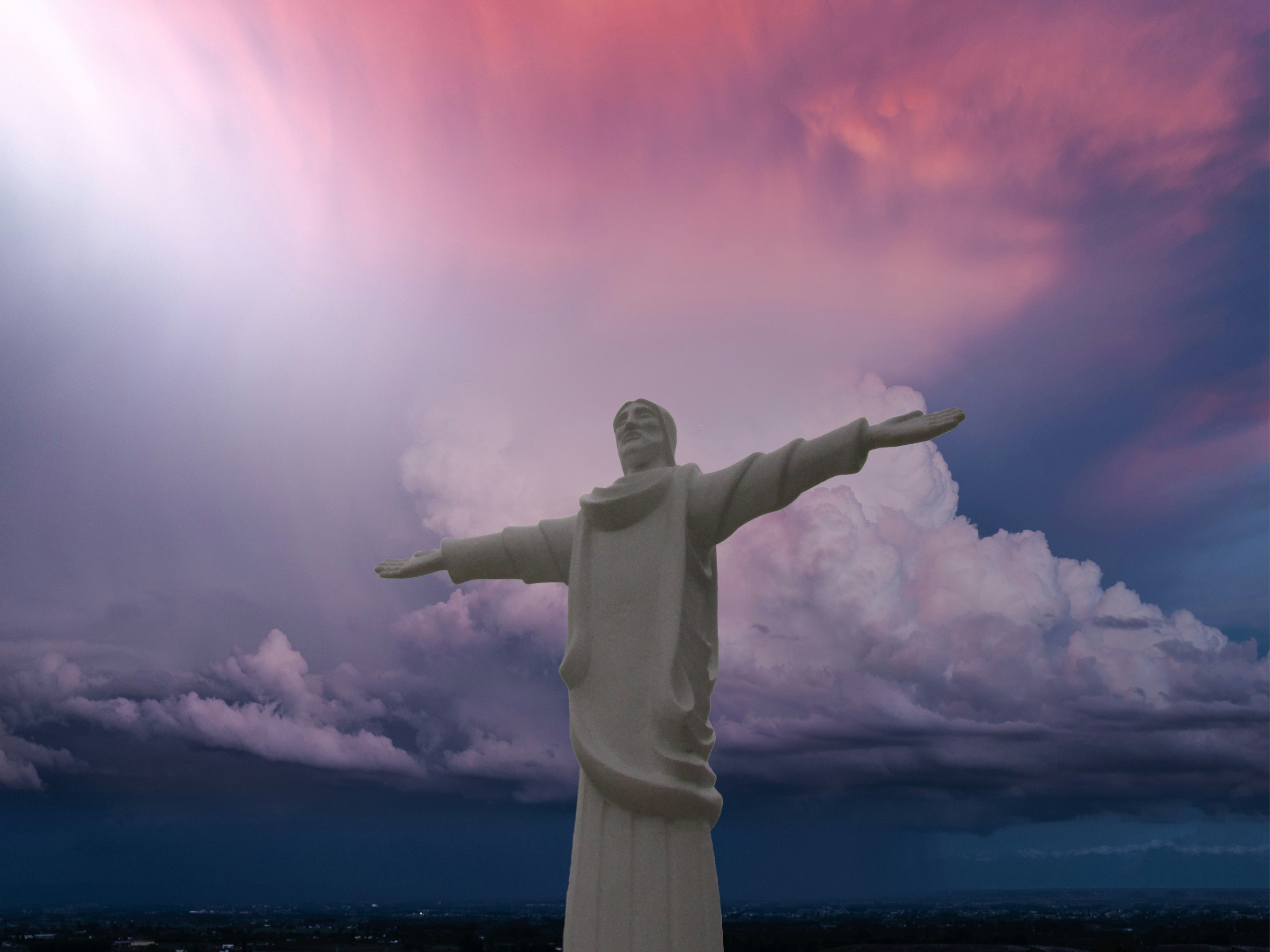
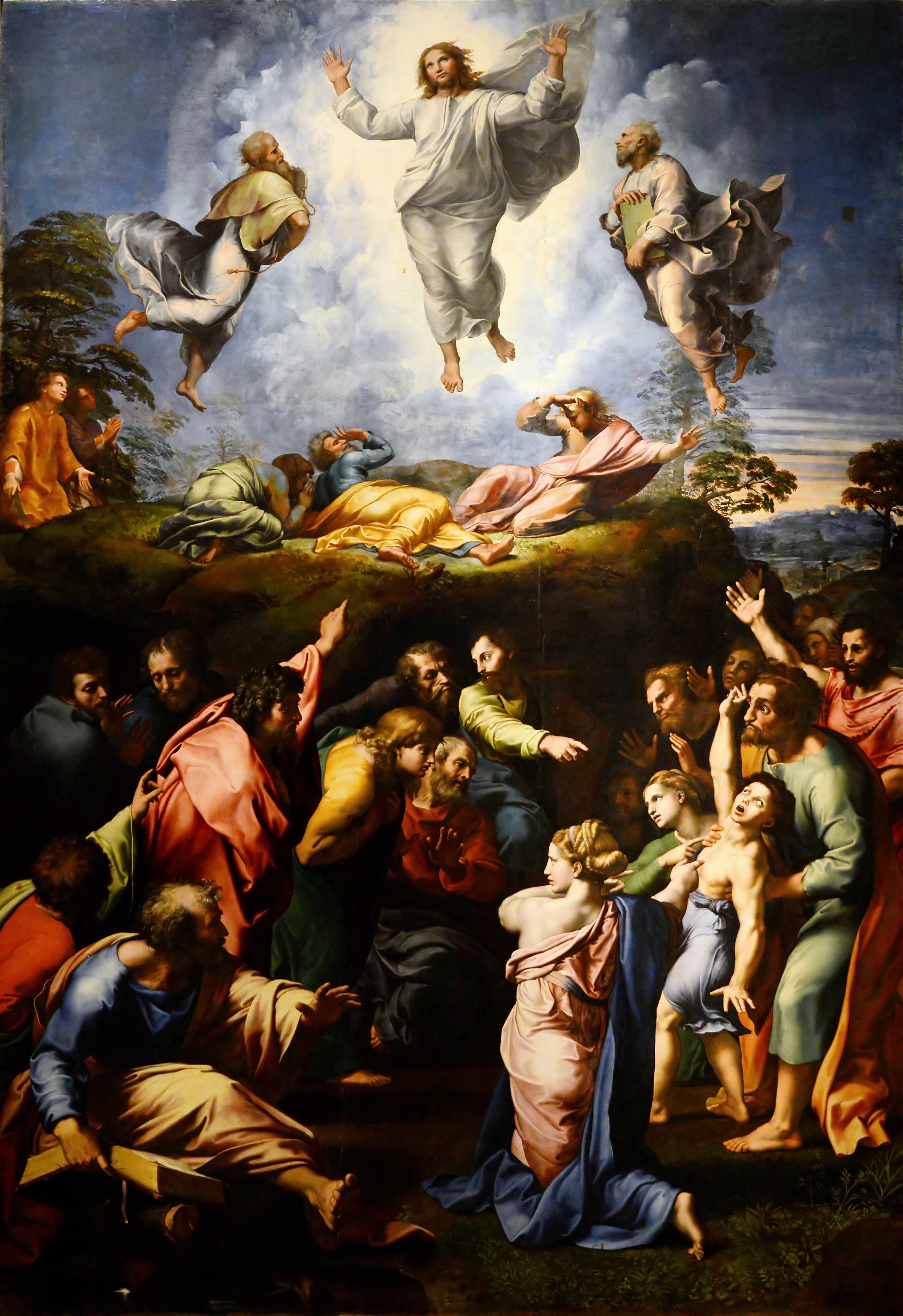
When I think about the events of Jesus’ life, there are two events that I sometimes find a bit odd. His transfiguration and his ascension. Interestingly, if you look at paintings of the two events, they appear very similar. In those paintings, Jesus is levitating in the air, while his disciples look up in shock. Below are a couple famous paintings of the events. Can you tell which is the Ascension, and which is the Transfiguration? Bonus points if you can identify the artists! Answers at the conclusion of the post.
In my opinion, Jesus’ transfiguration and ascension have an element of mystery about them. Did Jesus have to be transfigured? Did he have to ascend? What do these two events mean?
This past week Ascension Day was May 29. I’ve never preached an Ascension Day sermon before, but when I teach the life of Jesus in my adjunct courses, each time we talk about the Ascension, I come away thinking that the Ascension is important. Not just a little bit important. While the Ascension is not on par with Jesus’ crucifixion or resurrection, the Ascension is still quite significant. But why?
This week I’m taking a break from the 1st Thessalonians series to focus on Jesus’ Ascension. I think we have neglected his Ascension to our detriment. We pastors might give it a nod, and then skip right to Pentecost, which can seem far more consequential because Pentecost marks the arrival of the Holy Spirit in the life of the church.
So this week on the blog, we’re going to study Jesus’ Ascension. Did you know there are two versions of the Ascension in the New Testament documents? What would you say the Ascension means? Does the Ascension have any application to our lives? (Hint: it does!).
Join me back here on Monday as I attempt to answer these questions and talk further about Jesus’ Ascension.
Answer to Paintings: First is the Transfiguration by Raphael (1520); Second is the Ascension by Rembrandt (1636)
It is not just pastors and teachers that need to be humble, self-aware, and teachable, as I wrote in the previous post. When Paul writes in 1 Thessalonians 5:20, “Do not treat prophecies with contempt,” he is pointing out a very common human tendency.
Prophecies in the Bible are only rarely predictions of the future. Instead, prophecies are most often about the future consequences of what is happening now. Cause and effect. If/then statements.
“If you keep on behaving like that, you will have trouble, so you need to repent, turn away from your awful behavior, and return to following God’s ways.” That is the message of nearly every prophet in the Bible. “Be reconciled to God, by changing how you live. Live with righteousness and justice. God’s heart beats for the oppressed, and so therefore to be reconciled with God means that we are people who also seek to eradicate injustice and oppression in the world.”
What I’m getting at is this: Prophets speak truth to people.
You know what that makes prophets?
Hated. Disliked. Marginalized.
When you get that phone call from a prophet, you see their name on your phone and you think “Shoot, what did I do now?” When you get that email or text message from a prophet, you think, “I just want to delete this without reading it.”
Because prophets speak the truth to us, truth that we usually don’t want to hear because it is about how we are behaving poorly or thinking wrongly, we can treat prophets and their prophecies with contempt.
Prophets are not popular. Jeremiah, for example, regularly had his life threatened.
It is difficult, very difficult, to place yourself humbly before the word of a prophet and say, “Thank you, I needed that. I am sorry for my behavior.” Like Zacchaeus who divested himself of his wealth, giving it to those he had cheated and overtaxed.
It is much, much easier to treat a prophet’s rebuke and accountability with contempt, saying, “That prophet doesn’t know what they are talking about. What they are saying does not describe me. They clearly got it wrong. They are not hearing from God.”
But true prophets usually don’t have it wrong. Instead, we probably don’t like what the prophet is saying because what they are saying is true, and we just don’t want to admit it because it means we need to change.
Therefore, we need prophets in our lives. Prophets are people who have the gift of being able to speak the truth in love. That last word, “love,” is key. Prophets, you must speak the truth in love, and with all the fruit of the Spirit, especially gentleness and kindness, because you know that it is very difficult for people to receive the news that they might need to change their ways.
A spoonful of sugar, Mary Poppins wisely sang, helps the medicine go down.
The word of prophets really is medicine. We need it. Don’t hold it in contempt, don’t despise it, but welcome the word of prophets, honestly and truly engage it. Because prophets help us find reconciliation with God and others. Who is the prophet in your life?
I observed a recent social media interaction that I think you’ll find interesting. On social media, Pastor #1 posted a video clip of Pastor #2’s sermon. On the video Pastor #2 said this, “If you call yourself a Christian and then behave in an unchristlike manner, you are misusing God’s name.” Agreed.
In response to the video, however, Pastor #3 commented one single word, “Ironic.”
That jumped out at me. What did Pastor #3 mean when he said, “Ironic” about Pastor #2? Pastor #3 was accusing Pastor #2 of not practicing what they were preaching.
To accuse a pastor of not practicing what they preach is not a small accusation.
Like Pastor #3 was doing to Pastor #2, it is appropriate to test your pastor. Just as it is appropriate to evaluate the YouTube preacher, the blogger, or anyone doing Scriptural or theological teaching. But how do we evaluate them? In this post, we’re going to learn three ways to test or evaluate any preacher or teacher.
Jesus’s disciple John wrote about the first two tests in his letter, 1 John chapter 4, verse 1, “Dear friends, do not believe every spirit, but test the spirits to see whether they are from God, because many false prophets have gone out into the world.”
Sounds very similar to what Paul writes in 1 Thessalonians 5:20–22, right? When John writes, “test the spirits,” he is using figurative language to describe teachers. Test the teachers. The prophets he calls them in verse 1.
What are we to do? Be like the Bereans in Acts 17. Test the preacher. Evaluate them. Just like Paul said we should in 1 Thessalonians 5:20–22.
Why do we test them? John tells us why in the second half of verse 1, “to see whether they are from God, because there are many false prophets.”
We want to see if the teachers, preachers, authors, and anyone else who is teaching the Bible and theology is from God. “From God” does not mean that they are some kind of heavenly angel that God sent from heaven. “From God” means that the teacher is in line with God. “From God” means that the teacher is faithfully representing God.
We test the teacher’s teaching to see if they are faithfully representing God.
John proposes two tests.
First, in verses 2–3, John tells us about the first test we are to use: “This is how you can recognize the Spirit of God: Every spirit that acknowledges that Jesus Christ has come in the flesh is from God, but every spirit that does not acknowledge Jesus is not from God.”
This is the Christological Test or the Incarnation Test. In other words, does the teacher affirm that Jesus is the Christ, the Messiah, God who took on flesh? Another way of putting it, does the teacher believe that Jesus is 100% God and 100% human?
There have been and there are now people who believe that Jesus is human, but not God. And there have been and there are now people who believe that Jesus is God, but not human. Neither of those views are in line with Scripture.
That is the first test, the Christology Test.
The second test is the Apostolic Test, which John writes about in verse 6, “We are from God, and whoever knows God listens to us; but whoever is not from God does not listen to us. This is how we recognize the Spirit of truth and the spirit of falsehood.”
See that phrase, “Whoever knows God listens to us.” Who is the “us” that John is talking about? At the very least, John is referring to a group of which he is a part. It could be the church, all Christians, or the apostles. The apostles were the caretakers of the teaching of Jesus. The apostles were responsible for making sure that the Christian church was grounded in teaching that was in line with what Jesus taught. They had walked with Jesus. They were taught directly by Jesus himself.
The apostles had that special role in the early church. Some of them wrote about the teaching of Jesus: Matthew, John, and Peter. Luke was not a disciple of Jesus, but he interviewed the apostles. James was the brother of Jesus. Paul was not a disciple of Jesus, but he learned from the apostles. Put it all together, what we are saying is this: Does the preacher, teacher, writer, agree with apostolic teaching? Is the preacher’s preaching, is the teacher’s teaching, is the writer’s writing in line with the doctrine of the New Testament? That’s the second test, the Apostolic Test.
John has given us two tests: The Christology test and the Apostolic test. We use those tests to evaluate the teaching we encounter.
As Paul says back in 1st Thessalonians 5:20–22, we keep the good, and we reject the evil.
We are not gullible. Even if the person we are listening to or reading has what appears to be a large ministry, even if they speak with authority, even if they are utterly confident, we do not automatically accept their teaching. We test their teaching.
That brings me to the third test: the Lifestyle Test. When Paul talks about good and evil in 1 Thessalonians 5:20–22, he is bringing up morality. Teaching can be good and evil. As can life choices.
Paul, in his letter to the Christians in Rome, chapter two writes, “You, then, who teach others, do you not teach yourself? You who preach against stealing, do you steal? You who say that people should not commit adultery, do you commit adultery? You who abhor idols, do you rob temples? You who boast in the law, do you dishonor God by breaking the law?”
In other words, does the preacher practice what they preach? If you test a preacher’s preaching, and you find that the preaching content is in line with God, but that preacher’s life choices are not in line with God, then there is a problem. Actions truly do speak louder than words.
I started this post be mentioning a social media interaction I observed. Pastor #3 commented the word “Ironic” about Pastor #3’s correct teaching that Christians should practice what they preach.
I know the pastor who commented that single word, “Ironic.” I wrote him and asked why he felt there was an irony, why he felt that the pastor in the video was not practicing what he preached. Pastor #3 said that he knows of ways in which Pastor #2 has not represented Jesus well. Pastor #3 was examining Pastor #2. Pastor #3 believed that Pastor #2’s sermon did not match his personal life. That kind of examination is important.
I am not saying that we have to be perfect in order to serve in ministry or write books or teach. But I am saying that we need to be people who are quick to admit our faults, be humble, self-aware, and teachable.
That goes for all Christians, not just those in ministry. And if you are listening to, watching, or reading Christian teaching, be it scriptural or theological, test it. Use the three tests: Christological, Apostolic, and Lifestyle. If you find that a teacher or preacher doesn’t pass muster, speak the truth in love to them.









 Engaging Scripture