Ephesians intro, Part 2
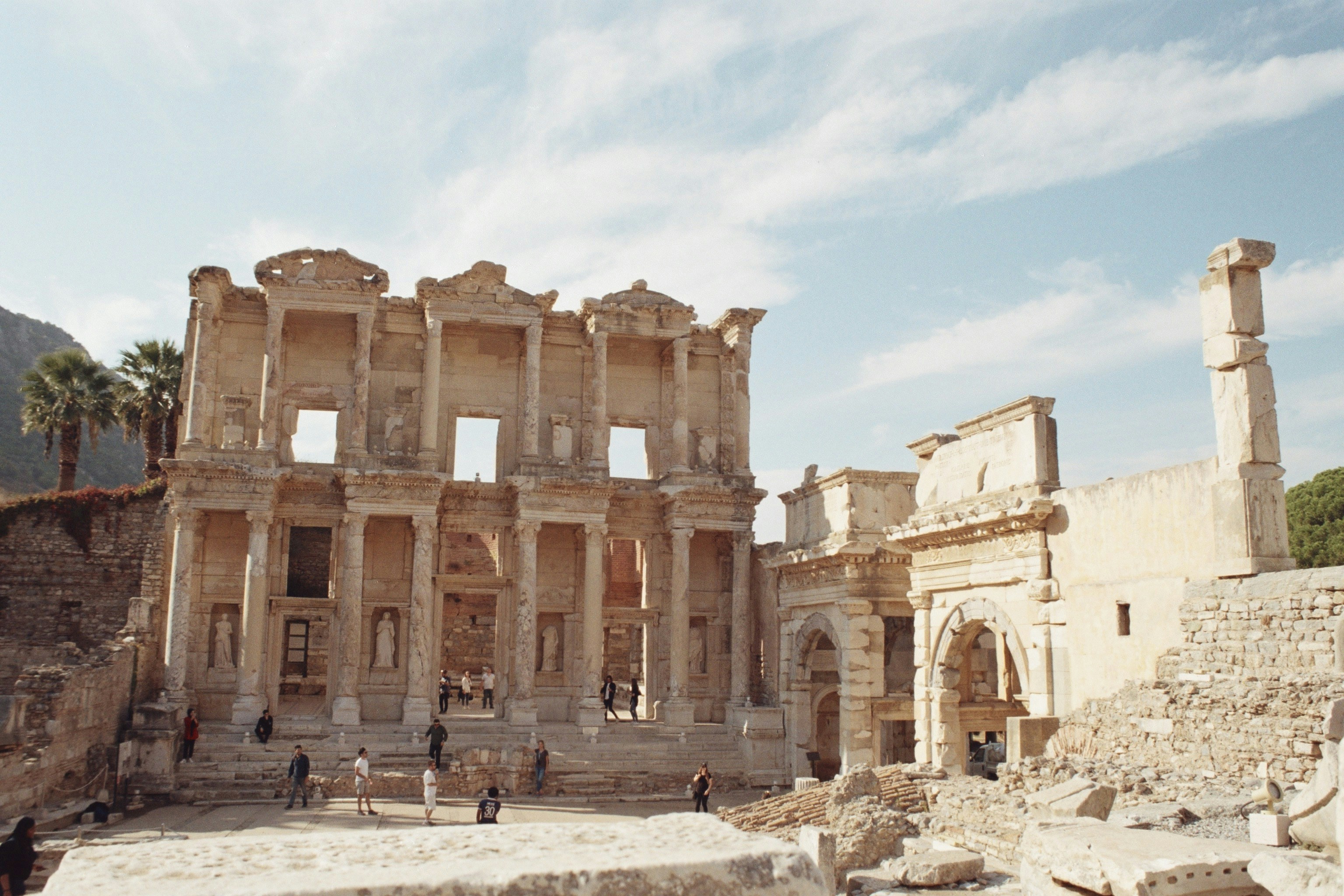
Paul says he is writing to Christians “in Ephesus.” Ephesus was the second largest city in the Roman Empire, behind Rome. Ephesus was in a part of the Roman Empire known as Asia Minor, modern day Turkey. Want to take a tour of the city of Ephesus? You can do so from the comfort of your home thanks to YouTube. This 30-min video shows you the astoundingly well-preserved Roman ruins of the once bustling city where numerous famous members of the early church lived:
Ephesus is located on the southeastern Aegean Sea. It was a city of approximately 250,000 in the first century, of which estimates suggest 60,000 were slaves. It’s temple to Diana/Artemis was one of the seven wonders of the ancient world.
Tradition holds that Mary the mother of Jesus lived there till she died. Timothy would eventually become pastor in Ephesus, and John the Apostle lived there till his death. Ephesus was a very important city for early Christianity. If you want to learn about Paul’s time in Ephesus, you can do so in Acts 19. I’m not going to talk about that story, because there is something else very interesting we need to know about this letter called “Ephesians.”
Look in your Bible at Ephesians 1, verse 1. Do you notice a footnote right after the word “Ephesus”. In the New International Version (2011 edition), there is little letter f? That f indicates that there is a note about that word. Look just below at the bottom of the page, find the f, and it says, “Some early manuscripts do not have in Ephesus.”
What that means is that it is possible that the words “in Ephesus” were added later, and that Paul didn’t write those words. If that is true, this letter was a circular letter intended for all Christians.
If so, Paul was writing, perhaps not just to the Ephesians, but intentionally for all Christians, meaning that this letter is probably not so much addressing specific issues in a specific church, with specific people in mind, which is definitely the case for many of Paul’s letters. Instead, Paul is writing with a much wider view, a view for the whole church. That is not to say that we cannot or should not read and learn from his much more situational letters. We can and we should. What I am saying is that in Ephesians Paul seems to be giving Christians a sense of what God wants for all churches.
This is why Bible scholar N. T. Wright calls his book about Ephesians, The Vision of Ephesians. In Ephesians we get God’s vision for the church. Here’s a brief video of Wright talking about the book:
And that vision, Wright says, is for the church to be “a small working model of the new creation.” Hold that thought. We’ll talk more about the church as small working model of the new creation in the next few posts, and we’ll talk about three ways the church actually works.
Photo by Deniz Demirci on Unsplash
 Engaging Scripture