Ephesians intro, Part 1
In my previous post, I talked about the joy of Legos. The imagination, the seeking, the finding, the designing, the building. Using persistent creativity to make models.
I’m starting a blog series through the New Testament epistle titled “Ephesians,” which scholar N. T. Wright says is about the church as a small working model of new creation. The church as a small working model of new creation? What does that mean? We’re going to find out.
Here’s how the letter begins, chapter 1, verse 1.
“Paul, an apostle of Christ Jesus by the will of God, To God’s holy people in Ephesus, the faithful in Christ Jesus”.
The author Paul begins by introducing himself. This might seem odd to us, as we contemporaries begin our communication by addressing the recipient. But what Paul does is typical for ancient letter writing. Who was Paul?
He started his ministry career as a Pharisee who was adamantly opposed to the Christians. Then in Acts 9, we read that Jesus appeared to him and totally changed Paul’s life. A massive 180-degree change. In an instant Paul went from being the person Christians feared most to the person helping more people than any other become Christians.
Paul would become the most impactful missionary of the early church. We read about some of his missionary travels in the book of Acts. He traveled all over the Roman Empire, talking about how Jesus rose from the dead, inviting people to follow Jesus, and then starting churches in numerous cities.
That missionary bio is why Paul describes himself in verse 1 as “an apostle of Christ Jesus by the will of God”. An apostle is an entrepreneurial missionary, one who starts new ministries and churches. Additionally, when Paul writes that his apostleship was “by the will of God,” he hints at how Jesus surprisingly broke into his life bringing dramatic transformation.
Paul was not just a traveling church planter. He was also a bible teacher and scholar who did a lot of writing about the bible and theology. Throughout the past centuries, Paul is probably most famous for his letters in the New Testament.
Notice the next phrase in verse 1, where he mentions who he is now writing to: “the holy people in Ephesus.” Some translations describe them as “faithful people.” Who are the holy/faithful people in Ephesus?
Paul is referring to the Christians living in the city of Ephesus.
He doesn’t mean that those Christians were holy in the same way that God is holy. They are not perfect. They are holy in their standing as followers of Jesus, just as any Christian is said to be holy. Again, we Christians are not holy because of something in us or something we did, but because we are faithful followers of Jesus who is holy.
Another way to put it, and Paul himself will refer to this in verse 5 which we will study next week, is that we are adopted members of God’s covenant family. When a person is adopted into a family, they are a real part of that family. Legally and fully a family member. Same for Christians in God’s family. We are real part of God’s family. Though we are not holy like he is, God looks upon us that way, that we really are part of his family. It’s astounding and beautiful.
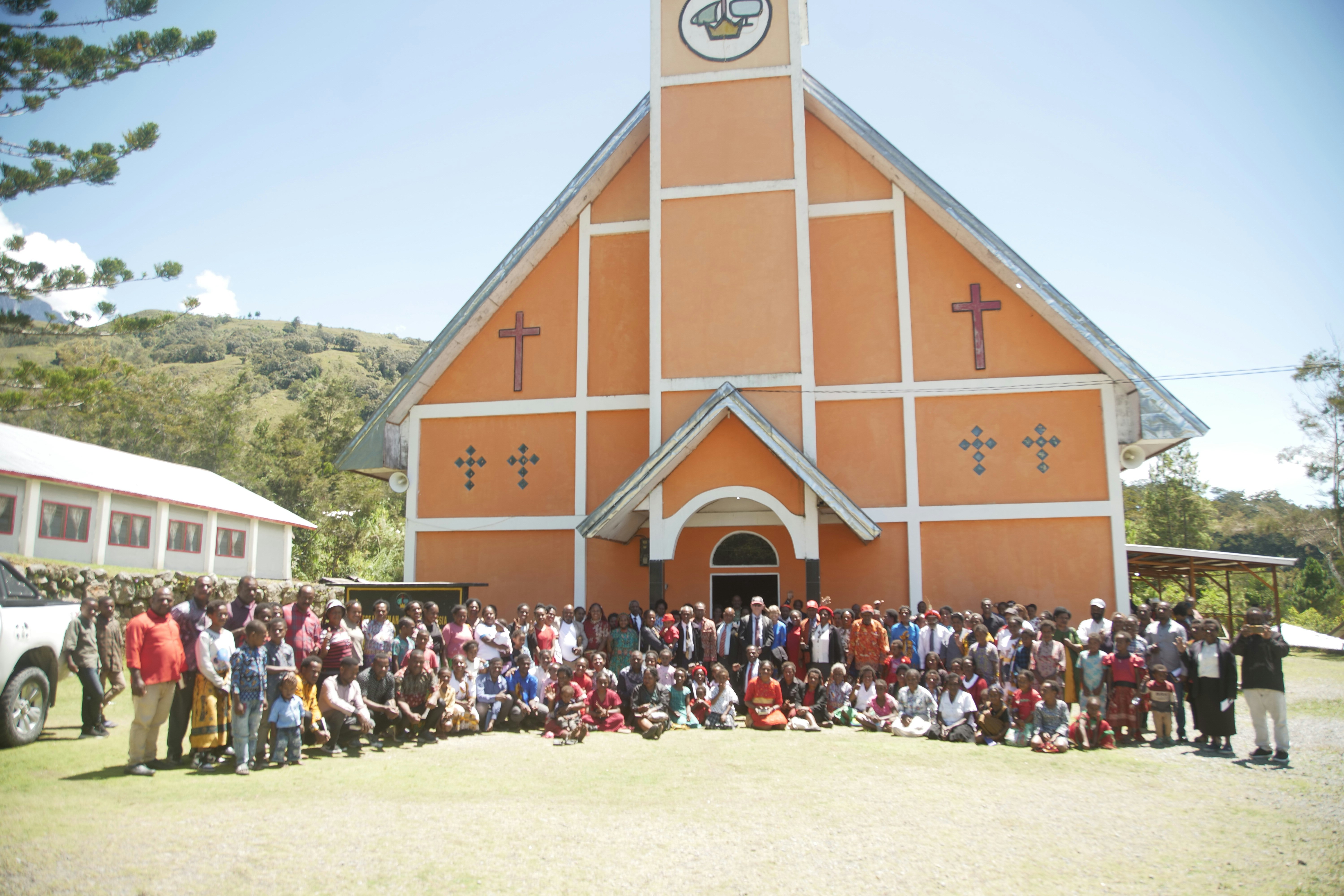
Just like adoption, a church family is a small working model of the new creation which is God’s family.
Photo by Asso Myron on Unsplash
 Engaging Scripture
One thought on “The church is a model”