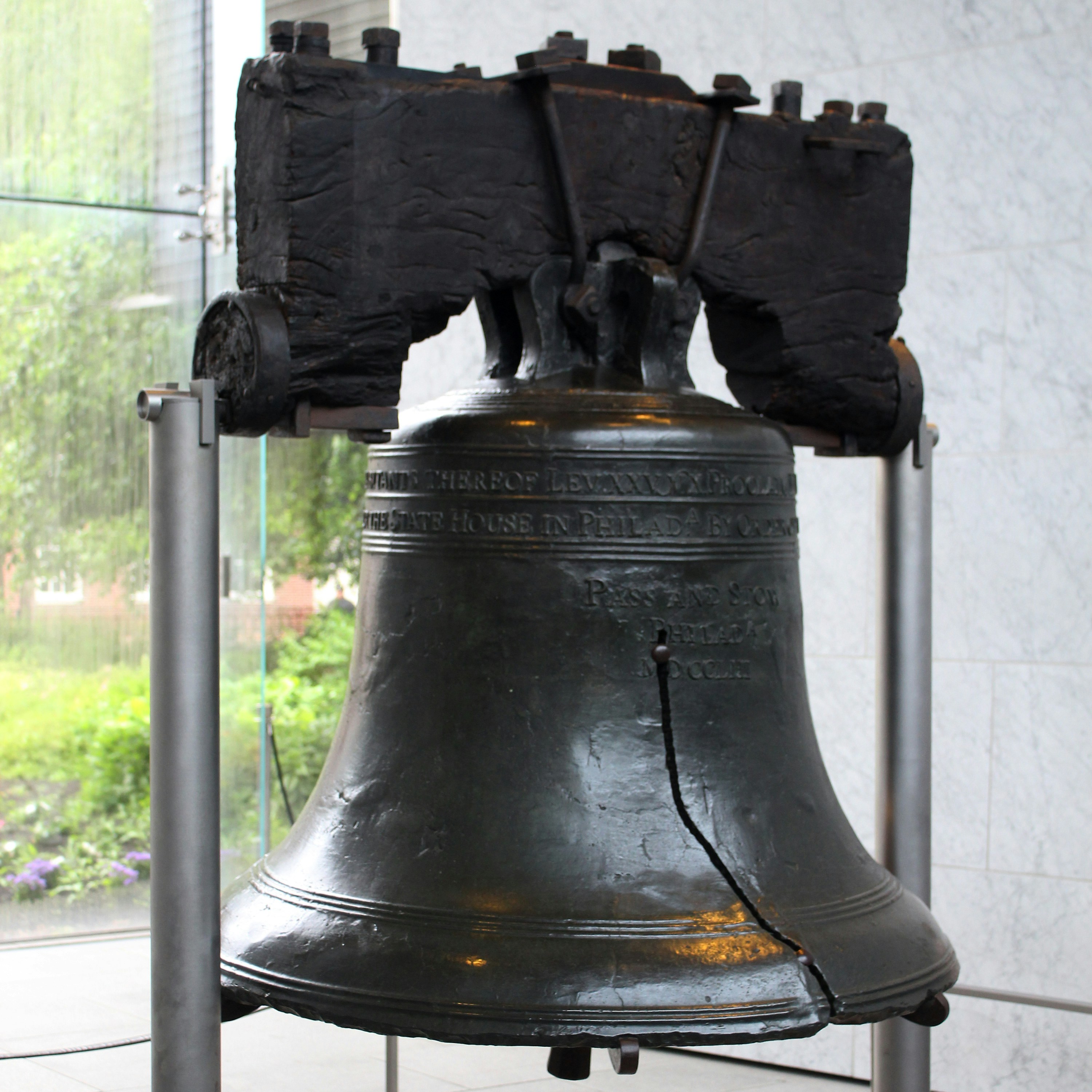
Have you ever visited the Liberty Bell?
I have visited the Liberty Bell at least a couple times, but I could not have told you until this week that the bell has an inscription. The thing that I remember the most about the bell is that it was cast by bell makers named Pass and Stow, and you know why I know that? The film National Treasure, which my family loves and has watched many times. In the film, the names of the makers of the bell is a clue in a treasure hunt. Their names are also on the bell.
Let’s talk about that inscription, which is from the Bible. Leviticus 25:10, in fact.
I think it is quite amazing that one of the most iconic symbols of our nation has a verse from the book of Leviticus, of all books. Why do I find that amazing? Because Leviticus can often talk about strange and confusing ancient rituals.
We’re going to talk about Leviticus this week. In fact we’re going to talk about that very verse on the Liberty Bell. And it is not strange. At least in the confusing sense. It might feel strange, though, because what we will learn from that verse will reveal to us the radical heart of God. Frankly, you might not like it.
In 1753, most all English speakers used the King James Version of the Bible, which translates Leviticus 25:10 as, “Proclaim liberty throughout all the land unto all the inhabitants thereof.” Fitting verse for the Liberty Bell, wouldn’t you say? So why would I say, “you might not like it”? I’ll get to that in future posts this week.
We’re in week two of a three-week blog series about sabbath. Last week I mentioned that the Sabbath for Jews is the seventh day of the week, Friday sundown to Saturday sundown. Sabbath is a day of rest from work, so that people can participate in worship and spend time with family and friends.
Did you now, however, that in the Old Covenant Mosaic Law there were other sabbaths? In Leviticus chapter 25, verses 1 through 7, the Lord tells his people Israel to keep a second sabbath called the Sabbath Year. We’re going to skip over that and come back to it next week, because it relates very closely to sabbatical, which I begin in August.
But we at least need to know that every seventh year was designated by God as a sabbath year. Just as there are seven days in a week, and the seventh day is the Sabbath day of rest, God also instructed his people to do the same with years. The seventh year was a year of rest for the land. We’ll talk about how that worked next week, and how it relates to sabbatical. This week, I want to start at Leviticus 25, verse 8, which tells us about the third kind of sabbath.
Join me back here tomorrow, and we’ll start to learn about the third sabbath.
Photo by Joe Richmond on Unsplash
 Engaging Scripture
One thought on “A fitting inscription on the Liberty Bell, but from a “strange” book of the Bible – Jubilee, Part 1”