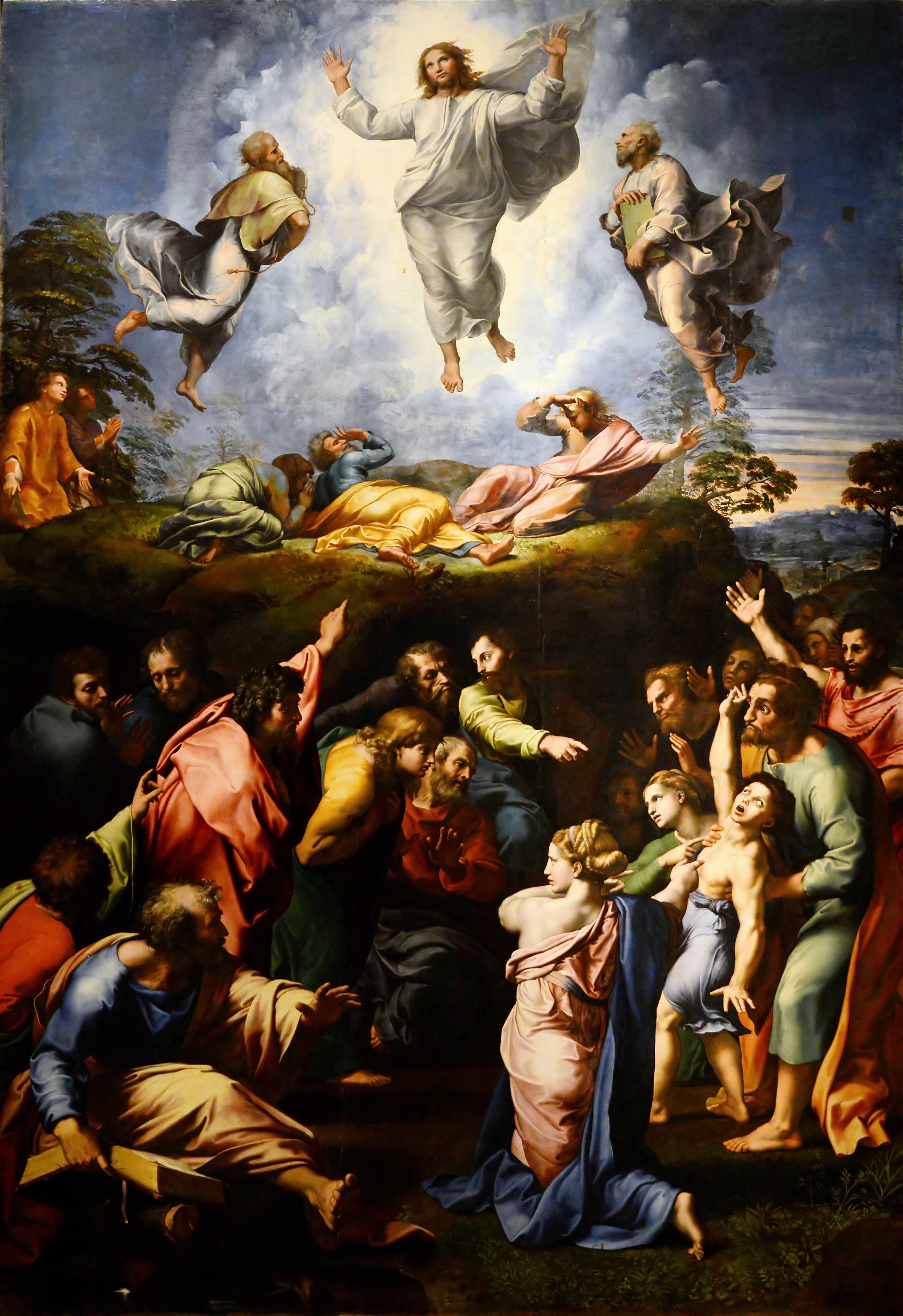
When I think about the events of Jesus’ life, there are two events that I sometimes find a bit odd. His transfiguration and his ascension. Interestingly, if you look at paintings of the two events, they appear very similar. In those paintings, Jesus is levitating in the air, while his disciples look up in shock. Below are a couple famous paintings of the events. Can you tell which is the Ascension, and which is the Transfiguration? Bonus points if you can identify the artists! Answers at the conclusion of the post.

In my opinion, Jesus’ transfiguration and ascension have an element of mystery about them. Did Jesus have to be transfigured? Did he have to ascend? What do these two events mean?
This past week Ascension Day was May 29. I’ve never preached an Ascension Day sermon before, but when I teach the life of Jesus in my adjunct courses, each time we talk about the Ascension, I come away thinking that the Ascension is important. Not just a little bit important. While the Ascension is not on par with Jesus’ crucifixion or resurrection, the Ascension is still quite significant. But why?
This week I’m taking a break from the 1st Thessalonians series to focus on Jesus’ Ascension. I think we have neglected his Ascension to our detriment. We pastors might give it a nod, and then skip right to Pentecost, which can seem far more consequential because Pentecost marks the arrival of the Holy Spirit in the life of the church.
So this week on the blog, we’re going to study Jesus’ Ascension. Did you know there are two versions of the Ascension in the New Testament documents? What would you say the Ascension means? Does the Ascension have any application to our lives? (Hint: it does!).
Join me back here on Monday as I attempt to answer these questions and talk further about Jesus’ Ascension.
Answer to Paintings: First is the Transfiguration by Raphael (1520); Second is the Ascension by Rembrandt (1636)
 Engaging Scripture