Editor’s Note: This week we welcome guest blogger, Emily Marks. Emily is an adult & community educator. She and her husband Sean live in Lancaster, PA, with their dog Corvus. Emily grew up as a pastor’s kid, and therefore she brings a wealth of experience and a unique perspective to this week’s passage.
I had a fantastic experience growing up as a pastor’s kid.
Part of that is my personality: I’m friendly, I’m outgoing, I was really cute when I was little and had sun hats that matched my church dresses, and my mom would curl my hair. I have that crippling oldest daughter syndrome where I try to people please and care-take adults’ feelings, all which lends itself to being an outstanding pastor’s kid.
Part of it was consistency. My dad had the privilege of serving the same church for 20 years, so I was able to grow up with the same group of people. Even when I did do something wrong or something that wasn’t wrong but maybe wasn’t popular, these people knew me and they had known me for years. We lived in community and relationship with these people, which made a difference in a really positive way.
I was a pastor’s kid through my most formative childhood years, through the death of my brother, through college, through getting tattoos (which spurred some discussion), through early adulthood (grad school, my first jobs). I mean, I really experienced the gamut of life as a pastor’s kid.
And I just must tell you one of my favorite stories of being a pastor’s kid as a young adult. I don’t really have reason to tell these kinds of stories anymore, but I also think it could provide some good insight into the situations that pastor’s kids can be put into. And it’s also hilarious:
Everyone in the story will remain anonymous except my father of course, but also the woman who this exchange happened with has since gone to heaven, so I think we’re all ethically covered here.
After worship, we, the pastoral family of the church, would stand in line at the door to the sanctuary shaking hands with all the people as they filed out. One Sunday when I was in my early 20s, a woman, as she shook my dad’s hand, told the story about her nephew who was struggling with drug addiction, asking my dad to pray for her. Then she turned to me, and because I was single at the time, she suggested that maybe I could start dating her nephew. My dad turned to face the wall, so neither the woman or I couldn’t see him cracking up with laughter.
While I am truly blessed in my experience as a pastor’s child, it wasn’t always great. Hearing negative things about my father. People have opinions about everything.
At the last church my father served for a few years before retiring, I had a run in with a church leader because of some racially insensitive things that were said about Native Americans in the presence of my sister – who is a Native American – and let’s just say that when I was told that I was being too sensitive, the conversation took a bit of a turn.
At the end of it all, the way my father’s pastoral career ended was not ideal. It was deeply hurtful to me and my family, and at the risk of sounding dramatic, it was traumatizing.
So why am I telling you all of this? I am uniquely qualified to be both the best and the worst person to be teaching on this passage of Scripture. Having lived in this world and having seen the way that leaders can be treated – both for the best and the worst – I have an intense bias here.
The fact of the matter is that pastoral ministry is a relational job. Yes, there’s a calling and gifting that is attached to pastoral ministry, but it is a job. This is how pastors feed, clothe, and house their families. It’s not a calling that they do out of charity or in their spare time.
I think sometimes we as church goers forget that. So when you start to play around with things like healthcare offerings, salary, or even if the pastor should continue to lead this church, you’re also talking about possibly upending a family. And then we try to slap “God’s will” onto it to either pacify ourselves or to try and convince the family we are harming that it’s okay. See how messy and personal this can all get?
So the thing about me, having had large parts of the first thirty years of my life dictated by the church because of my father’s profession, I will always fiercely defend my church’s pastor and leaders. I’m going to defend their use of time, I’ll always advocate that they should be paid more, I’ll relentlessly defend their family and the personal choices that they make. Unless something happens that is unethical or sinful, I will always defend the pastor, even if it’s something I don’t like or even disagree with. If it’s a personal preference, I’m on the pastor’s side. That’s it.
The reason it’s important for me to mention my bias is that when I saw the passage of Scripture that I was to teach on, I immediately knew what I was going to say. I was like, “Duh, Paul! I get it. I can handle this one without notes,” and the fact of the matter is I didn’t initially read the passage because I “know” the way we should treat our leaders. I didn’t critically sit and read and think.
If we as Christians aren’t careful, we can all fall into the same boat that I did. I have had to make a conscious effort to put my family’s joys and traumas on the backburner in order to appropriately and faithfully engage with this text. I’ll do my best to point out places where I had to practice this as we continue.
So let’s get back into that text!
After Paul makes it known in 1 Thessalonians 5:12 that he’s talking about the leaders of the church, he continues on by saying, “esteem them very highly in love for their work’s sake”
Notice Paul’s word choice here, and I think it’s intentional: for their work’s sake.
Titles generally come with a level of respect. Sometimes we “respect the office or title” even if we don’t necessarily respect the person in that office or with that title. But that’s not what Paul is saying here; Paul is not saying that this title earns them this intense love he’s calling for.
Paul specifically said to esteem them in love because of the work that they do.
Irish theologian Adam Clarke said, “Christian ministers, who preach the whole truth, and labour in the word and doctrine, are entitled to more than respect; the apostle commands them to be esteemed, abundantly, and superabundantly; and this is to be done in love.”
More than respect. Superabundant love. The word in the original Greek doesn’t comfortably translate into English. The word suggests a hyperbolic view of love and esteem. It is MORE THAN.
A theme we’ve heard repeated in Paul’s letter to the Thessalonian Christians is “you’re already doing this, but do it more,” and that theme seems to continue in this word choice: love and esteem your pastors and leaders even more than you think is possible because of the vital work that they do for you and the community and your collective faith and discipleship.
We’re not just talking about the respect you were raised to have for people like teachers and pastors. Paul is suggesting something even further. When is the last time you took time to think about how important the work of your pastors and church leaders has been in your life, and have you considered that you should love them for it more than you think is possible?
Notice that Paul is writing this not to the leaders inherently but the Christians in Thessalonica. So when a pastor isn’t doing anything wrong or un-Christlike, but we don’t feel this intense esteem or agape love, it is OUR responsibility to get to OUR knees and ask Christ to mold OUR hearts. It is not the leader’s responsibility to turn into someone you want them to be.
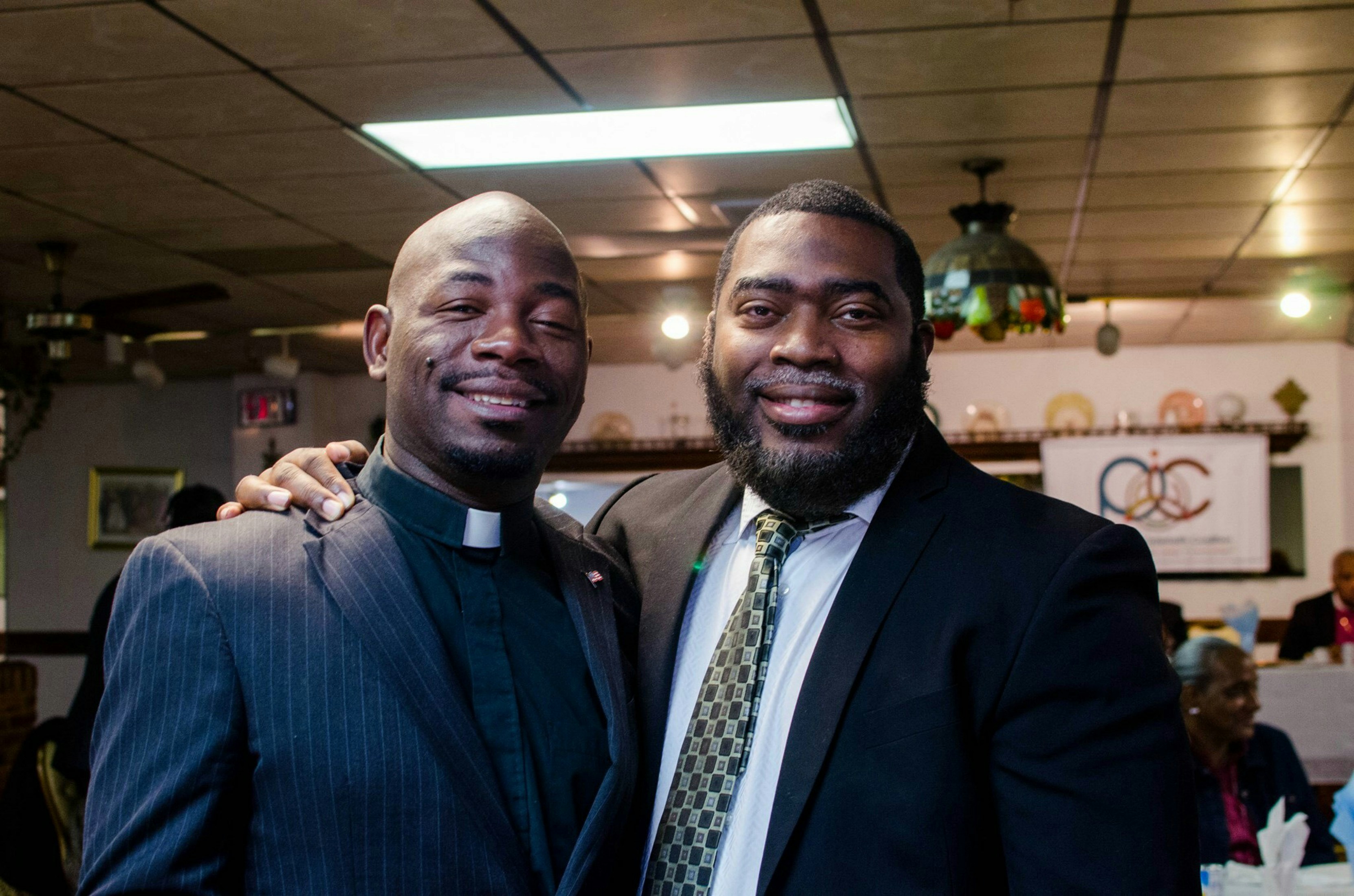
Photo by Eber Devine on Unsplash
 Engaging Scripture