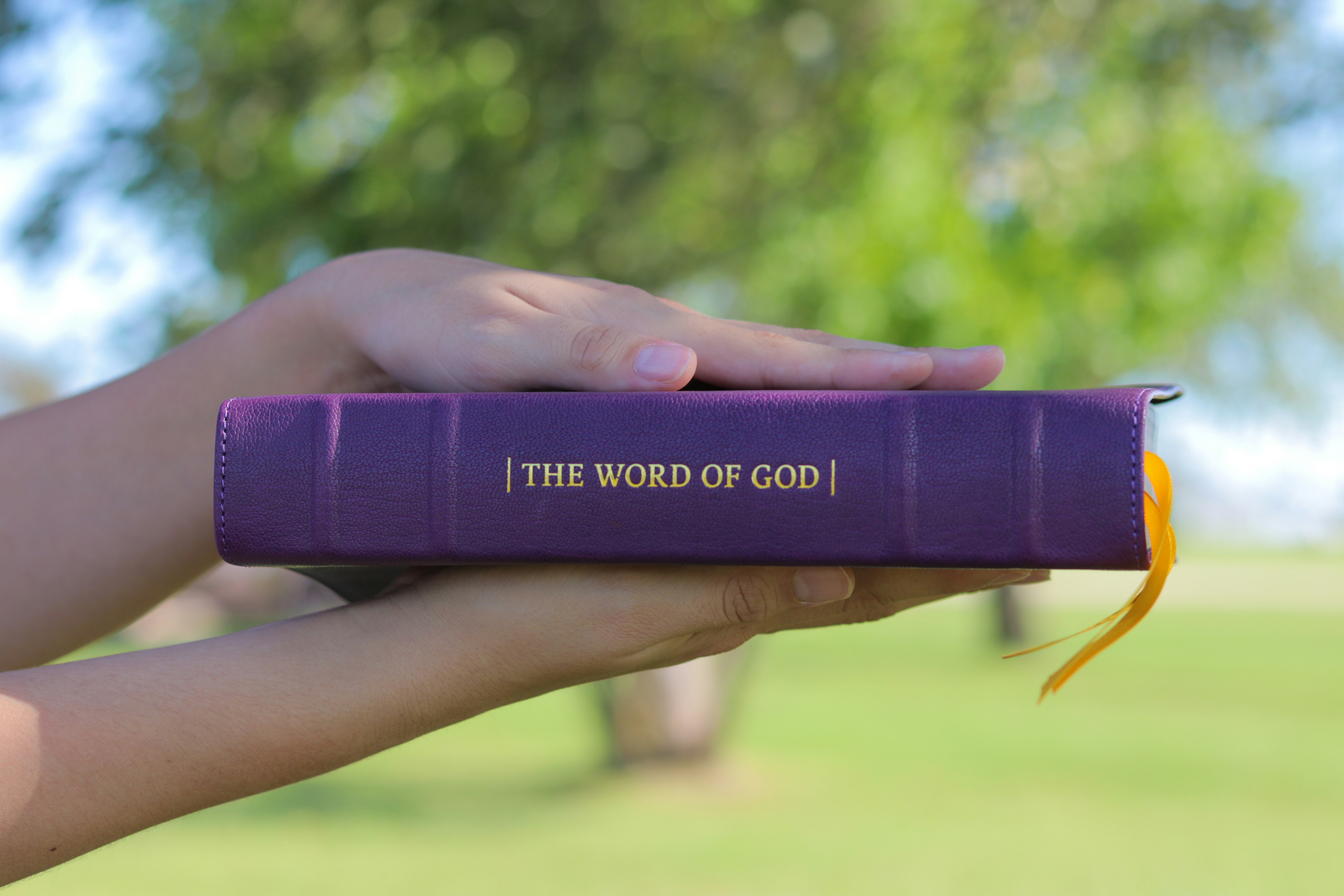
This week I once again welcome guest blogger, Kirk Marks. Kirk is a retired pastor of 35 years who now works in international fair trade.
What is the Word of God? The Bible is the Word of God, right? That was drilled into my head as a young person growing up in the church. My Sunday School teachers and pastors also said, “There are going to be people out there that tell you the Bible isn’t the Word of God. They’ll tell you it’s just another book. They’ll tell you it’s old and out of date. They’ll tell you it’s inaccurate and not correct.”
“All of that is wrong,” they told me, “and you’ve got to steer clear of that. The Bible is the Word of God and you have to believe it as that.”
So every time I heard the phrase “the Word of God,” I thought that phrase is referring to the Bible. When Paul writes in 1st Thessalonians 2:13, “When I came to you, I shared with you the Word of God,” you know what I’m picturing? He did a Bible distribution. He got showed up in Thessalonica with a box full of Gideon New Testaments. He opened the box, started passing out the Bible and saying, “Here you go. Here’s the Bible. This is important. You need to read it. It’s the Word of God.”
So it was very shocking to me to learn that image of Paul passing out Bible can’t be true because at the time Paul went to Thessalonica there was no such thing as the Bible. Yes the books of the Hebrew Bible (what we Christians call the Old Testament) were written, but it was exceedingly rare for people to have a copy of even one of those books. They certainly did not have First Thessalonians because it hadn’t been written yet. None of the New Testament had been written yet.
The Bible as the accepted scripture of the church would not become a thing for another 300 years after Paul was at Thessalonica. Actually, the Bible, the 66 books that we love so much, did not come together as a bound collection until 1500 years after Paul was at Thessalonica.
Paul was not passing out Bibles at Thessalonica. When he says, “I shared the Word of God with you,” he’s not talking about the Bible. In fact, anytime the Bible uses the description, “the Word” or “the Word of God,” it’s not talking about the Bible.
It’s talking about something else. When Paul says “the Word of God,” we need to think of that word, as the message of God.
We use the word, “word,” that way all the time in the English language. For example, in my company, we’re always saying to each other, “Did you get the word about this order? Did you get the word about our shipment from Pakistan? Did you get the word about what’s going to be happening next week?”
What “word” are we referring to? The message. “Did you get the message about what’s taking place?” That’s the same way Paul’s using the word, “word,” here. It’s the message that God has to send.
There is a very important theological foundation to this concept of the Word of God. From the very beginning, the God of all the universe, the God who made everything, has been working to be in relationship with his creation, the people that he created. To establish and grow that relationship, God has a message for us. He speaks to us. He talks to us.
We can hear God. He has a word, a message for us. In Hebrews 1:1 the writer says, “In various ways, in various times down through history, God has spoken to us through his prophets and other ways. But in these latter days, God has spoken to us through his son, Jesus Christ, who is the perfect representation of his glory and the exact representation of him here on the earth.” God’s message, God’s word, has come to us many ways, but most powerfully through his son, Jesus Christ.
The Apostle John describes this in John 1:1, “In the beginning was the word, and the word was with God, and the word was God.”
Who is the Word? The Bible? Is John saying the Bible was there with God at the very beginning. No. John is not talking about the Bible, because later he writes, “The word became flesh and dwelt among us.” John is talking about Jesus.
Jesus is the word of God. Jesus is God’s message who has come in the flesh. God has a message for people, and Paul brought that same message to the people at Thessalonica. This is the message of the gospel, the good news that God has sent his son, Jesus Christ, to be our savior, the messiah, as promised in the Old Testament scriptures.
Now, it’s still true that the Bible is the word of God. We’re used to describing the Bible as the word of God. That’s absolutely true. The Bible is the word of God. It is the message that God is saying to us.
The Bible tells us about the Lord Jesus Christ. It tells us about those prophets through whom God brought his word long ago. The Bible is the word of God, the authoritative word of God for our lives.
But “the word of God” means more than just the Bible itself. It’s the message that God is bringing to us. When Paul says, “I came to you at Thessalonica, and I brought you guys the word of God,” he’s saying, “I brought you the message about what Jesus has done, what God is doing, that God is moving, great things are happening, and you accepted it. You believed it.”
Photo by Humble Lamb on Unsplash
 Engaging Scripture
One thought on “The Word of God is so much more than the Bible – 1 Thessalonians 2:13–3:13, Part 3”