
If you are a Christian reading this, what are you known for? Imagine that people evaluate your life to answer the question, “What are two of the most important Christian principles for living?” What principles would they land on?
What principles should define Christians? There are many good possibilities. In this post I share two that should be at or near the top of every list.
Paul had only spent about three weeks with them, when he launched the new Christian house church network in the ancient Greco-Roman city of Thessalonica. Six months has gone by since he left them. His ministry associate, Timothy, visited the Christians and discovered they were doing quite well. Now Paul, elated about their faithfulness, and yet missing them deeply, writes them a letter. What will he say to them to encourage them?
Here’s his opening line, 1 Thessalonians chapter 1, verse 1,
“Paul, Silas and Timothy, to the church of the Thessalonians in God the Father and the Lord Jesus Christ: grace and peace to you.
Does his greeting seem odd to you? Why does he write his name and his associates’ names first? Why doesn’t he say, “Dear church family in Thessalonica” or something like that?
Paul is using the common letter-writing format for his culture. Archaeologist have discovered numerous ancient Greco-Roman letters from the same era, and those letter start by naming the letter writer.
In the modern era, we are accustomed to beginning our letters and emails by greeting the recipient of the letter. We then place our name at the conclusion of our letter. It’s simply a different custom.
Also standard for Paul is his initial greeting of “grace and peace.” He says “grace and peace” in just about all of his letters. Was “grace and peace” a throw-away greeting Paul doesn’t really mean? Is he saying something similar as to when we say, “Good morning”?
No. It seems Paul chooses grace and peace on purpose because they are two massive theological concepts. He really wants the Christians in Thessalonica to deeply live in both grace and peace. Let’s look at each of those words more closely.
Grace is one of the most important ideas for Christians, and it is a word that Paul will teach about extensively in his later writings. God is gracious to us, most clearly so through Jesus Christ. How? We encounter God’s grace in Christ, as we think about how Jesus became God in human skin, and defeated sin, death and the devil for us. We encounter God’s grace in Christ as we think about how Jesus is the way, the truth and the life. Our relationship with God, in which desires to adopt us into his family, is saturated with his grace toward us. It’s why the hymn “Amazing Grace” is so powerfully emotional to us.
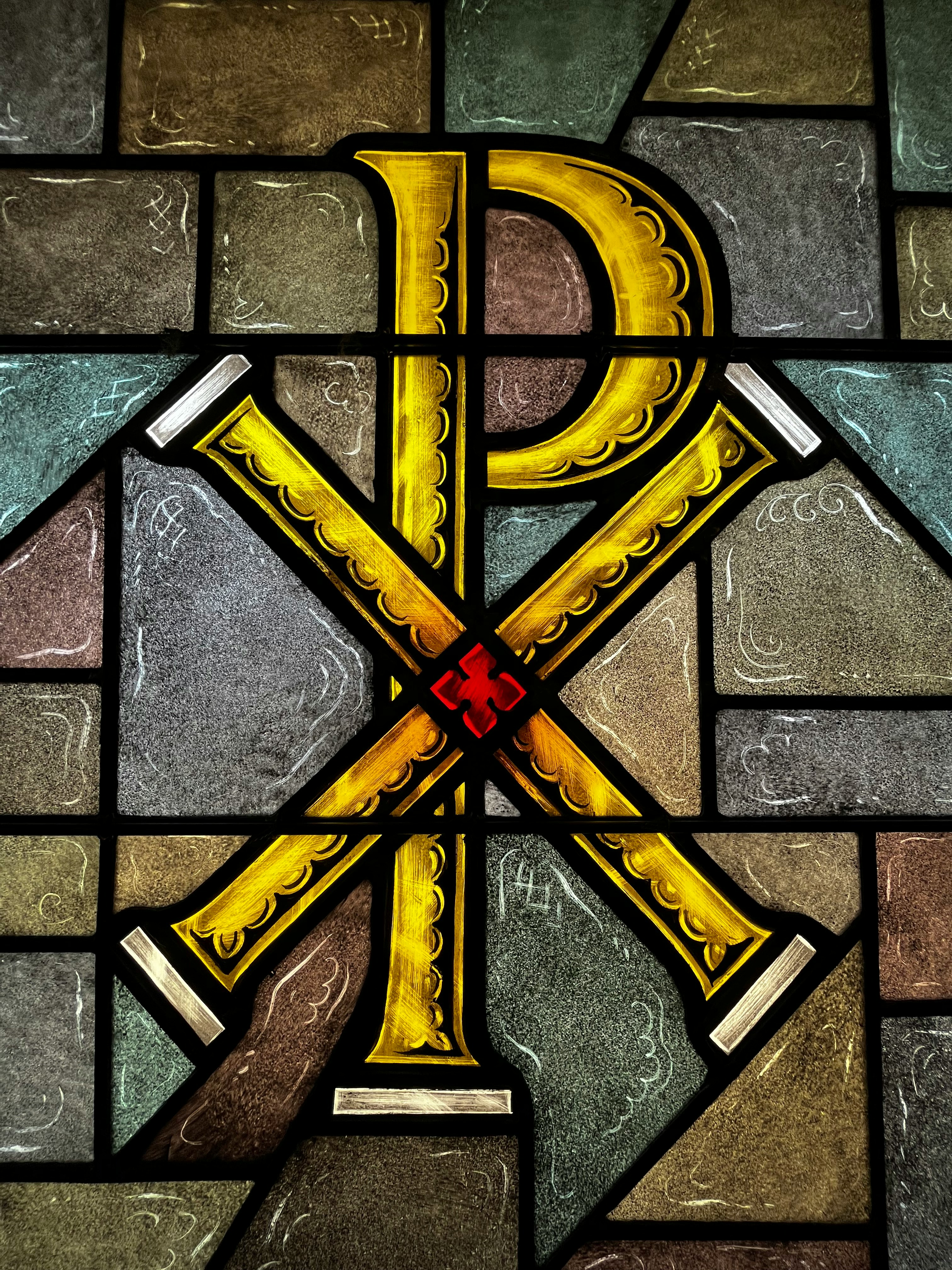
Then there is peace. If grace is one of the most important words for Christians, peace is one of the most important words for Jews. In the Hebrew Bible, what we Christians call the Old Testament, the word peace is the Hebrew word shalom. Shalom is an expansive holistic idea of peace. Peace between ourselves and God, between ourselves and others, between ourselves and the world around us. Shalom peace is when things are rightly ordered, when there is flourishing. Furthermore, a person can experience the flourishing of shalom, even though the world around them might be in shambles. God is not only the bringer of grace, he is also the bringer of shalom through Christ. One of most ancient Christian symbols is the Chi-Rho, which stands for “peace in Christ.”
So in those two words, Paul has communicated a rich greeting to the people. He wants them to experience grace and peace. Before he says anything else in the letter, he wants to remind them of these foundational truths. In Paul, you and I have a powerful example to follow. Christians are people who by their words, by their actions, their tone of voice, their body language, share grace and peace with the people around us.
By sharing grace and peace, we offer people a taste of the Kingdom of God, a Kingdom which is flowing like a gusher with grace and peace. We ought to be known for being people who communicate grace and peace in word and deed. We ought to be known as people of gracious reconciliation.
When people think of my church family, for example, I hope they think, “That group of people is so gracious, so peace-making.” When people think of us, I hope they think, “Faith Church is a group of people who are bring reconciliation where there is division. Faith Church is a group of people who are bringing justice where there is injustice. Faith Church is responsible for flourishing in our community, and here are the ways.” Then I hope that person would be able to list the specific ways we bring grace and truth.
Christians are people, therefore, who not only believe in grace and peace, but actively live lives of grace and peace.
After setting the tone of grace and peace, Paul continues with his greeting in verses 2–3, and we’ll discover what he says in the next post.
Cover Photo by Photo by Priscilla Du Preez 🇨🇦 on Unsplash
Chi-Rho Photo by David Bumgardner on Unsplash
 Engaging Scripture
One thought on “Christian, what are the top two principles that define your life? – 1 Thessalonians 1:1–3, Part 4”