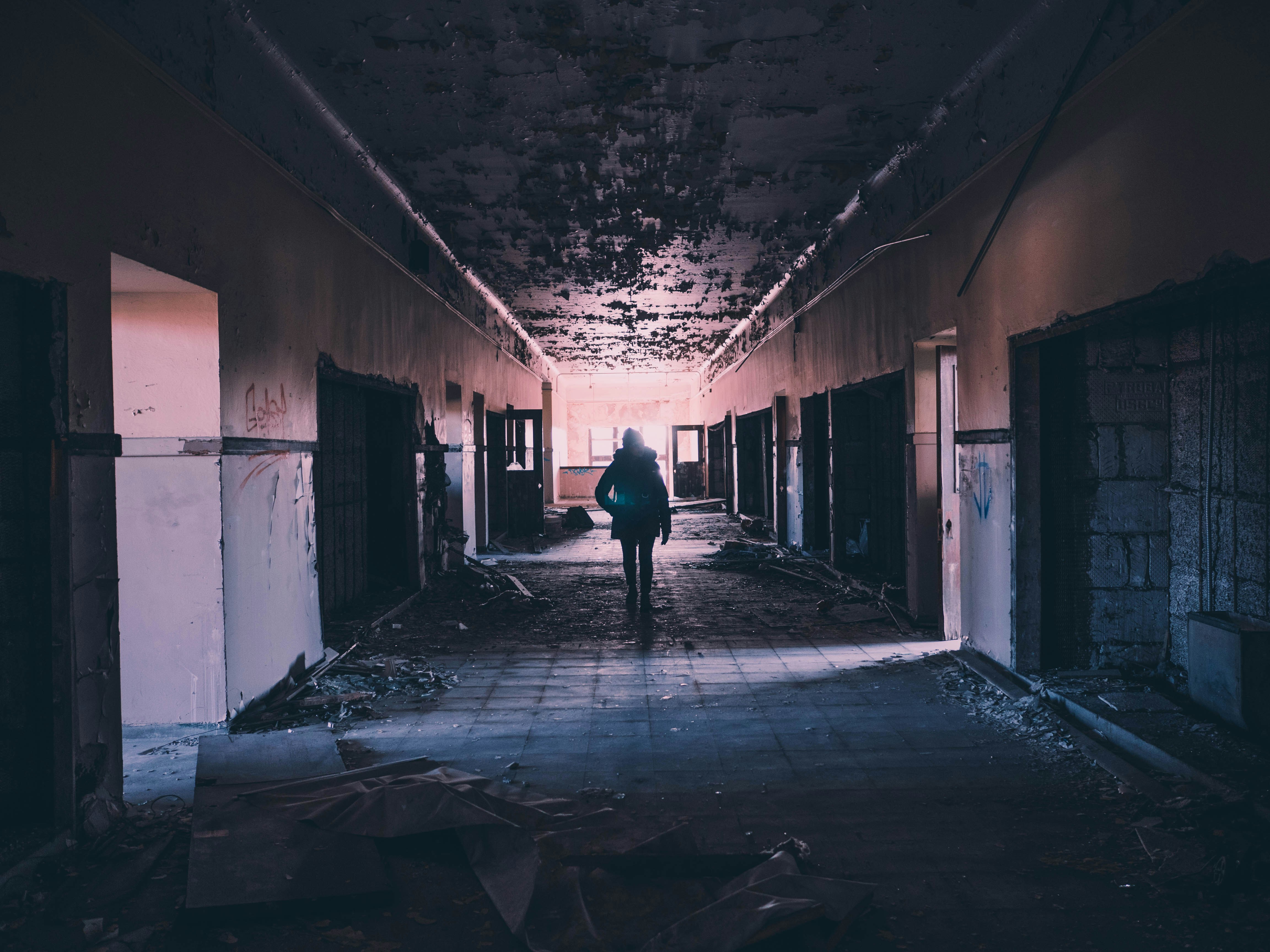
When you go on vacation, you lock up your house, and you expect to return after a week or two to a house that is just as you left it. But what would happen if you were gone for a lot longer than that? At what point does property get condemned and given or sold to another?
A law firm near me reports that: “The primary legislation regarding abandoned properties in Pennsylvania is the Abandoned and Blighted Property Conservatorship Act (Act 135 of 2008).”
They go on to describe that you must establish the following when filing for conservatorship of an abandoned or blighted property:
- The owner has legally abandoned the building for at least 12 months.
- The owner has failed to provide evidence that they have actively marketed the building during the last 60 days and have not made efforts in good faith to sell the building at a price reflecting the market condition and circumstances.
- No individual or nongovernmental entity has a pending foreclosure action on the property.
- The current owner has failed to present sufficient evidence that they acquired the property within the last six months, subject to specified exceptions.
Bottom line: if a property is vacant for 365 days, there is a process whereby another party can legally take over the property.
The people of Israel were away from the Promised Land way longer than 365 days. They were in Egypt for over 400 years. Think about how much can change in 400 years!
Do you know what life was like in North America in 1624? First of all, I have to call it North America, because in 1624, there was no USA. The United States of America would not come on the scene for another 152 years, and it would take a conquest of our own called the Revolutionary War. 400 years is a long time for change to occur, and in Canaan, a lot happened in 400 years. Not only did the family of Abraham, Isaac and Jacob grow into a nation in Egypt, so did the many other nations that now lived in Canaan.
That meant when God brought Israel to the Promised Land, they were returning to occupied land. For that occupied land to become their land, they would have to fight for it. In the Hebrew Bible, that fight is called “The Conquest of Canaan.”
This week we are looking at three chapters in 2nd Samuel, all of which relate to the Conquest. 2 Samuel chapters 8, 10, and 21. I think you’ll see how they all relate to the Conquest.
When God freed his people Israel from slavery in Egypt, he told them he was taking them back to the land of their forefathers, the Promised Land of Canaan. But when they returned to Canaan, it was not as if the land was empty and they could just move in.
After God freed them from Egypt, they wandered in the wilderness for 40 years, and they finally made it to the banks of the Jordan River. So when Israel camped on the eastern shore of the Jordan River, they were about to begin a military conquest. Moses passed away and Joshua became the leader of the people. He led the people for the next several decades, as they fought numerous battles and established themselves in the land. They defeated most of the Canaanites in the land, but they never completed the conquest.
During the period of the Judges and throughout the reign of their first King Saul, the conquest pretty much stalled out. They had plenty of conflict, especially with the Philistines, who tended to be aggressive. Still Israel never fully occupied the Promised Land.
Until David. A few weeks ago we learned that David restarted the conquest, and one of his first moves was to conquer the Jebusites who had control of Jerusalem. There David made his palace and brought the Ark of the Covenant into the city. As we learned last week, David also wanted to build a temple for God there, but God said No. One reason God said David wasn’t the one to build the temple was because David was a warrior king who had lots of blood on his hands. We’re going to see that blood very clearly this week on the blog, as we look at these three chapters that describe how David completes the Conquest.
Photo by Andrew Amistad on Unsplash
 Engaging Scripture
2 thoughts on “How abandoned buildings help us understand the Conquest of Canaan – 2 Samuel 8, 10, 21, Part 1”