Sometimes I find David difficult to figure out. One moment he has what appears to be a big emotional reaction, going so far as to commanding the capital punishment of the Amalekite, as we learned in the previous post. The next moment, David writes a glowing eulogy for King Saul and Jonathan. Look at 2 Samuel chapter 1, verses 17-27,
“David took up this lament concerning Saul and his son Jonathan, and he ordered that the people of Judah be taught this lament of the bow (it is written in the Book of Jashar):
“A gazelle lies slain on your heights, Israel. How the mighty have fallen! Tell it not in Gath, proclaim it not in the streets of Ashkelon, lest the daughters of the Philistines be glad, lest the daughters of the uncircumcised rejoice.
“Mountains of Gilboa, may you have neither dew nor rain, may no showers fall on your terraced fields. For there the shield of the mighty was despised, the shield of Saul—no longer rubbed with oil.
“From the blood of the slain, from the flesh of the mighty, the bow of Jonathan did not turn back, the sword of Saul did not return unsatisfied. Saul and Jonathan—in life they were loved and admired, and in death they were not parted. They were swifter than eagles, they were stronger than lions.
“Daughters of Israel, weep for Saul, who clothed you in scarlet and finery, who adorned your garments with ornaments of gold.
“How the mighty have fallen in battle! Jonathan lies slain on your heights. I grieve for you, Jonathan my brother; you were very dear to me. Your love for me was wonderful, more wonderful than that of women.
“How the mighty have fallen! The weapons of war have perished!”
This is a lament. Lament is holy complaint. A crying out, with anguish or mourning, often to God, telling God your emotional feelings and thoughts about the struggles you are going through. David’s lament expresses his feelings about the deaths of Saul and Jonathan.
We learn in verse 18 that it is a “lament of the bow,” and scholars are uncertain as to what that means. One scholar I read suggested that it was a song David wanted his archers to sing while they were practicing, almost as a prayer that the awful military defeat that killed Saul and Jonathan wouldn’t happen again. This passage also mentions the Book of Jashar. The word jashar in Hebrew means “upright”, so that title, “The Book of Jashar” is probably better understood as “The Book of the Upright.” Scholars believe it was a book of epic poems about righteous Israelite heroes.
The lament itself is curious because David makes both Saul and Jonathan out to be really amazing people. For Jonathan, David’s words are true. Jonathan loved God, was courageous, brave and David’s loyal friend. Saul, though? Saul was a coward, selfish, ungodly, and erratic.
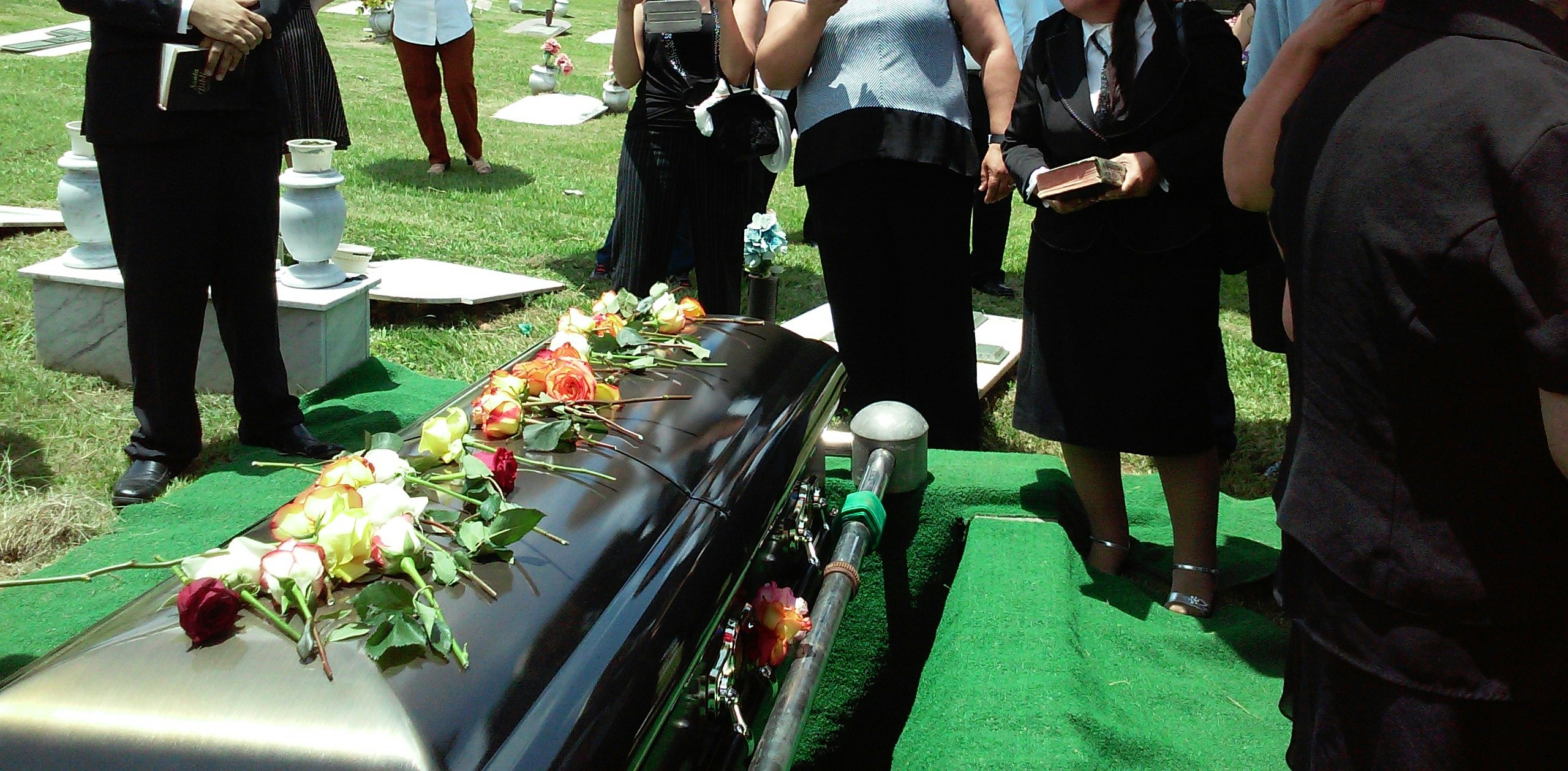
Why would David write this poem that makes Saul sound amazing, and lead us to believe that David is extremely upset about Saul’s passing? We can’t ask David, so of course we don’t know for sure. But it could be that David is doing something like what people often do at funerals. Even if the deceased was an extremely difficult person, we can call the funeral a “Celebration of Life.”
Long ago I attended a funeral in which the person who passed had behaved very very poorly toward numerous people. When news of his behavior became public, it rocked the family. Before he died, people confronted him, and he was wishy-washy at best in admitting his sin, and did not work toward reconciliation. So when it came time for his funeral, what do you say?
At funerals, there is an emotional desire on the part of family and friends to emphasize how great the person was, and to celebrate their life. It is the rare funeral where speakers bring up the sins of the deceased. So I don’t blame David too much for saying Saul was great.
As Kirk mentioned last week, this was an honor and shame culture. We do not live in an honor and shame culture in America. In honor and shame cultures, you avoid confrontation and truth in order to preserve honor and dignity, even when a person is wrong or confused or sinful.
When my wife Michelle was working in Cambodia, communication could sometimes be difficult because Michelle and the Cambodians had different primary languages. She would explain a product design to the Cambodian seamstresses, and they would nod their heads in understanding, as if they really got it. Often they didn’t understand her fully. Why would they nod their head? Were they lying? No. It is an honor/shame culture. They did not want to give the impression to Michelle that Michelle hadn’t explained something, or that they were people who didn’t understand her. They wanted no part of shame. They only wanted to preserve honor.
It could be that David is doing something of the sort. Saul was the Lord’s anointed, and thus, he should be honored, period. Personally, I don’t like it. I think David should have said that Jonathan was great, because Jonathan really was great. And I think David should have truthfully said that Saul was difficult, selfish, erratic and unwise. I think it would also be fair if David said that from time to time Saul made some good choices too, and Saul won some great battles. As with most people, Saul was not 100% bad.
Maybe David would read this and say, “But I meant all that I said about Saul. I wanted to point out good things about him. I want him to be remembered well.” Maybe. I just find it curious that David says nothing, not a peep, about Saul’s many faults. Saul was a murderer. Remember that story when he commanded the slaughter of the priests? That is psycho killer, unhinged, behavior. Yet David doesn’t mention it. Do we revise the past to make for a more peaceful future?
Some people critique those in our culture who bring up the sins of our American past. Genocide of indigenous peoples (Native Americans). Racialized chattel slavery of millions of Africans. Barring women from owning property, voting, and paying them less money than men for the same jobs. Do we just turn a blind eye to the past? No. I would suggest we need to face the truth of the past, so we can learn from it. I think David is wrong for making Saul out to be a wonderful leader. Far better to tell the truth.
This episode in David’s life reminds me of the sci-fi series by Orson Scott Card called the Ender series, in which Ender is the main character. In the book, Speaker for the Dead, Ender has taken on a priest-like role, called Speaker for the Dead, and he performs a Speaking for a family that has lost a loved one. A Speaking is like a funeral, but so much more. Ender is one of many Speakers for the Dead who go to the deceased’s family and live with them, sometimes for months, to learn the good, the bad, and the ugly. Then they hold the Speaking, and they tell the true story of the person. The whole truth. In the book, fictional though it is, a great emotional and relational healing takes place through the speaking of truth. Family wounds were uncovered, broken relationships mended. I wish David would have told the truth in his eulogy and sought that kind of healing. As we will see in the upcoming weeks, the dysfunction in Saul’s family will lead to significant pain. But eventually there will be a healing and David will be central to the healing.
Photo by Rhodi Lopez on Unsplash
 Engaging Scripture
2 thoughts on “Why David’s glowing eulogy of King Saul is wrong, and how we can do better at funerals – 1 Samuel 31—2 Samuel 2:7”