This week I welcome guest blogger, David Hundert. David and his wife Terri are members of Faith Church. David is currently studying for his Master of Divinity at Evangelical Seminary of Kairos University.
The Second Antiphon (Chant) 125-129
In this next section, the next antiphon or chant of the Psalms of Ascent, our journey continues and we see the hills of Jerusalem peaking up on the horizon.
We read starting in Psalm 125, that upon arrival to the city, a whole new set of trials arose, for the travelers found the city in shambles and occupied by a hostile host. A sinking feeling overcame them, as their inner strength dissolved. Even as all self-confidence faded, the group reminded each other not of their ever present opposition, but of a powerful and extraordinary truth about the God of Israel.
To put it in the words often repeated in Orthodox prayer: “The Lord is merciful and the lover of mankind.” The singers somehow mustered the faith of Abraham who believed that a peculiar God had reached out to him with unmerited favor and asked only one amazing thing of him in response: trust God. the first verse of Psalm 125 is the centerpiece and pivotal point of the whole series. The key word is trust. We read in Psalm 125 and 126,
Those who trust in the Lord are like Mount Zion, which cannot be shaken but endures forever. As the mountains surround Jerusalem, so the Lord surrounds his people both now and forevermore. The scepter of the wicked will not remain over the land allotted to the righteous, for then the righteous might use their hands to do evil. Lord, do good to those who are good, to those who are upright in heart. But those who turn to crooked ways the Lord will banish with the evildoers. Peace be on Israel.
When the Lord restored the fortunes of Zion, we were like those who dreamed. Our mouths were filled with laughter, our tongues with songs of joy. Then it was said among the nations, “The Lord has done great things for them.” The Lord has done great things for us, and we are filled with joy. Restore our fortunes, Lord, like streams in the Negev. Those who sow with tears will reap with songs of joy. Those who go out weeping, carrying seed to sow, will return with songs of joy, carrying sheaves with them.
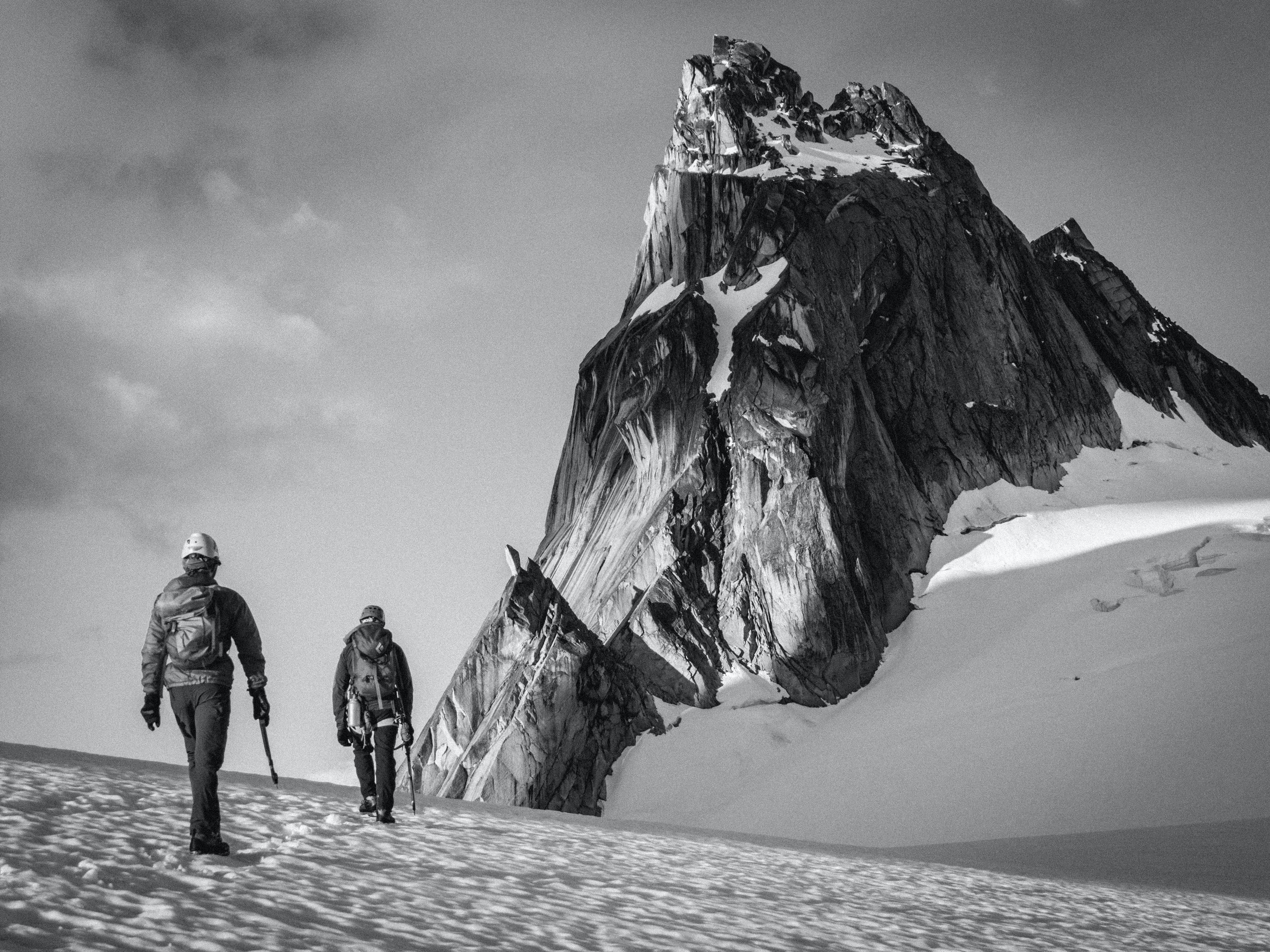
There is a sense at this point, that the expedition is cresting its long sought after objective. The climbers have breached through a daunting hurdle and have made a final push to the summit. They have arrived at the threshold of the temple itself. When they reached the top, they find themselves gasping for air. Imagine then, their bewilderment when they realize that the tip of ground they’re standing on is not the top.
It was a false summit.
As we go along on this journey, we come to the sober realization that we must once more gather our wits and adjust our goals. All is not in vain, however. We have come too far to turn back, and now we see what the false summit had blocked from our view. Psalm 126 ends with the pilgrims that have struggled with the disappointment of thinking that they have made it, and realized that they weren’t quite there yet.
However, it ends with a prophetic hope. Psalm 125, shows them that trust in the Lord is their strength. Psalm 126 shows them that joy is their breath. Now, in Psalm 127, we have a little surprise in store for them. This psalm indicates that they’re about to have a guest speaker from their past. The title of Psalm 127, indicates that it’s a Song of Ascents of Solomon and calls their attention back to the building of the first temple. In the context of the Songs of Ascent, it’s as if we arrived back in Jerusalem, to find that the work on the temple building is rather lackluster, the city is in shambles, however we remember the call to trust in the Lord! We read in Psalm 127 and 128,
Unless the Lord builds the house, the builders labor in vain. Unless the Lord watches over the city, the guards stand watch in vain. In vain you rise early and stay up late, toiling for food to eat— for he grants sleep to those he loves. Children are a heritage from the Lord, offspring a reward from him. Like arrows in the hands of a warrior are children born in one’s youth. Blessed is the man whose quiver is full of them. They will not be put to shame when they contend with their opponents in court.
Blessed are all who fear the Lord, who walk in obedience to him. You will eat the fruit of your labor; blessings and prosperity will be yours. Your wife will be like a fruitful vine within your house; your children will be like olive shoots around your table. Yes, this will be the blessing for the man who fears the Lord. May the Lord bless you from Zion; may you see the prosperity of Jerusalem all the days of your life. May you live to see your children’s children— peace be on Israel.
We read that unless the Lord is the center of all of our efforts, then we labor in vain. Everything that we do, needs to be with the Lord at the center of it. We read in Colossians 3:17,
And whatever you do, whether in word or deed, do it all in the name of the Lord Jesus, giving thanks to God the Father through him.
Going back to our climbing and hiking metaphor, have you ever noticed that when climbers or hikers prepare for a trip, they only take what gear would be absolutely essential and shed what they don’t need? On this little expedition, the travelers need to leave their fears and frustrations on the side of the trail, and keep only their hope, trust, and joy. The only fear that they need to be giving way to is fear of the Lord, which is simply another way of saying that we need to give deference to the Lord’s desires above our own. Fearing the Lord is not the same thing of being scared, but rather standing in awe.
The last psalm of this chant, or antiphon, is important. From the very start of our expedition in Psalm 120 until the blessing of Psalm 128, we have been climbing to the very edge of the temple. More properly speaking, the second antiphon is more about almost reaching the destination.
We have heard the sermons as if Ezra, Nehemiah, and even Solomon delivered them, exhorting us to rejoice and acknowledge God’s great work of returning that which was lost. They have admonished us not to lose heart, to walk as God walks, to live in His ways, and to trust in a kingdom building project where God Himself is the builder, guardian, and investor. We have been injected with a firm affirmation that God wants us to be happy, blessed, joyous, and rewarded.
Suddenly, however, the tone turns back to the torment of the journey. Abruptly, “they” are back on our minds, those “plowmen” who scourge the back like plowing a field. Also, the tone of the Psalm has changed to “Israel” as if they are calling out in one voice; past and present Israel, calling for courage and inner strength. We read in Psalm 129,
“They have greatly oppressed me from my youth,” let Israel say; “they have greatly oppressed me from my youth, but they have not gained the victory over me. Plowmen have plowed my back and made their furrows long. But the Lord is righteous; he has cut me free from the cords of the wicked.” May all who hate Zion be turned back in shame. May they be like grass on the roof, which withers before it can grow; a reaper cannot fill his hands with it, nor one who gathers fill his arms. May those who pass by not say to them, “The blessing of the Lord be on you; we bless you in the name of the Lord.”
This second antiphon ends with a benediction of sorts. Unlike the previous psalm where the writer ends calls out the blessing, here it’s as if the travelers are exchanging blessings to one another.
What we have seen in this second leg of the journey in Psalms 125–29, the upward pace quickens. This section quickly marches us first to the hills of Jerusalem in Psalm 125, then through the hostile city in Psalm 125, verses 4 and 5, and then on to the Temple precinct where a great sigh of exuberant relief bursts forth in Psalm 126, verses 1–3.
Yet even in the midst of celebratory hugs, feelings of doubt make their way into the celebration. This is not the final summit. Even so, the excursion now pauses and takes inventory. They listen to speeches by master climbers encouraging the faint-hearted to keep going. There is promise of great rewards and images of the good life through Psalm 128. They have made it this far. They have overcome their enemies and defeated their doubts. They have conquered each new challenge and tamed every obstacle. In Psalm 129 we see, they must press on!
Photo by Jonathan Bell on Unsplash
 Engaging Scripture