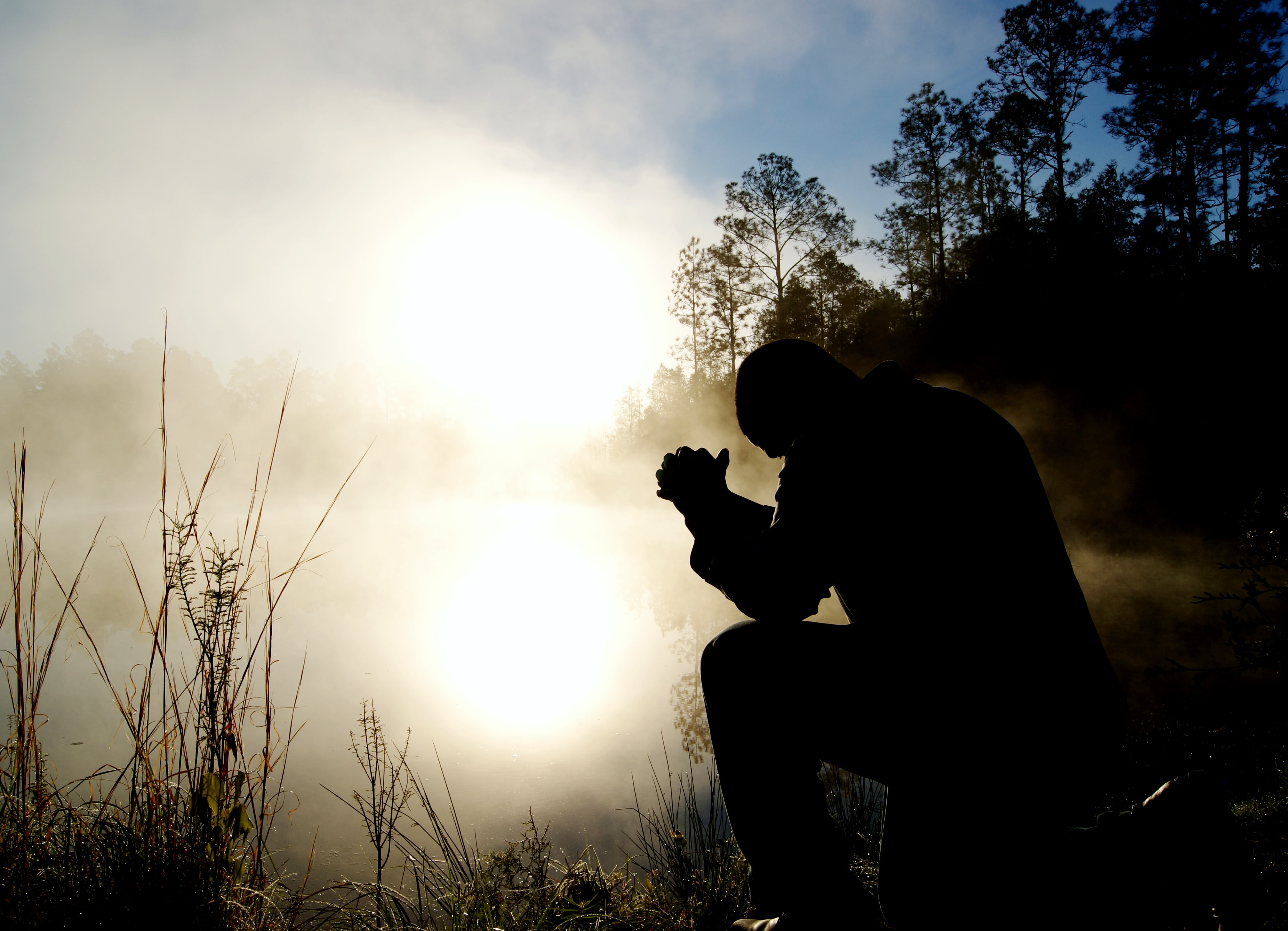
In my sophomore year of Bible college I took a class on Prayer, and we had to pray for 30 minutes every day. 30 minutes! That sounded impossibly long. My history with prayer as a child and teenager, for the most part was those 5 minute or shorter prayer sessions, where I did all the talking, just like the spouse I mentioned in the previous post.
But those daily 30-minute prayer sessions were now an assignment for class. We had to pray, then record how long we prayed, and we would turn it in for a grade. Seriously. Of course, we could lie about how long we prayed, or if we prayed at all, but that would take serious guts, to lie about prayer.
So the first day I found a secluded spot on campus to pray. I brought my Bible, a notebook, and my watch. I started praying. I prayed for all my family and friends. I prayed some verses from the Bible. I wrote in the journal. It was going great. That 30 minutes all of a sudden seemed doable. I though to myself, “What was I worried about? I can pray for 30 minutes.”
I prayed for some more people I had forgotten. And then I prayed more.
Soon I started having that familiar desire to look at my watch and see how much time was left. But I felt a tension about that. Part of me didn’t want to look down at my watch.
You know how you feel when you’re having a conversation with someone, and they look at their watch? It’s a context clue that they are ready to be done with this conversation, and that can be awkward, especially when you’re not ready to be done. You thought the conversation was going really well, and now you doubt yourself, wondering if they don’t think you are worth their time, or if you said something offensive, or maybe they don’t like you as much as you like them. Likewise, you don’t want to be the one caught looking at your watch because you don’t want to offend the person you’re talking to.
Now imagine you’re talking to God, and you look at your watch. Of course God is going to see you looking at your watch. And you will have just sent an obvious message “I want to be done with this conversation, God.” Yet if we’re honest, we sometimes want to be done with a prayer time. Have you ever been listening to someone pray, whether in church or before a meal, and you felt that tension of wanting the person praying to hurry it up so the prayer time could be done? Some people pray super long prayers, and you want to track with them and pray in agreement with them as they are praying, but you are also struggling, wanting it to be done. It is a tension.
There I was praying by myself, and I eventually got to the point that I felt was a long enough time that I was in the clear to check my watch without being offensive to God. I glanced at my watch, and I was flabbergasted by what I saw. Do you think 30 minutes went by? No. 40 minutes? No. Only five minutes went by! How could that be? It seemed I had been praying far longer than that.
What I learned is that just as improving at human communication takes time and practice, so learning to pray in the Spirit takes time and practice. But know this: praying long prayers does not guarantee that you will have prayed in the Spirit. Praying in the Spirit is about heart posture, about acknowledging God with you and in you. It might take time to practice praying in the Spirit like that.
Little by little as the days and weeks went by in that Prayer class, I learned I could pray longer and longer. In other words, I learned I could increase communication with God, but it took practice. Very much like just about anything that we want to learn and improve. You want to do 50 pushups in a row? Starting January 1, do pushups every day and add one per week. By the end of the year, you’ll be able to do 50 pushups. Prayer is no different. We can practice praying longer.
One suggestion to increasing how long you pray is using prayer lists. Paul says in Ephesians 6:18-20 that he wants the people to pray for him so that he might declare the good news of the Gospel. Pray for people. Pray for all the people in your life. Pray for missionaries. Make a list and pray for people.
But more than praying through lists, we were built to commune with God, and we’ll talk about praying in the Spirit that is communing with God.
Photo by Aaron Burden on Unsplash
 Engaging Scripture