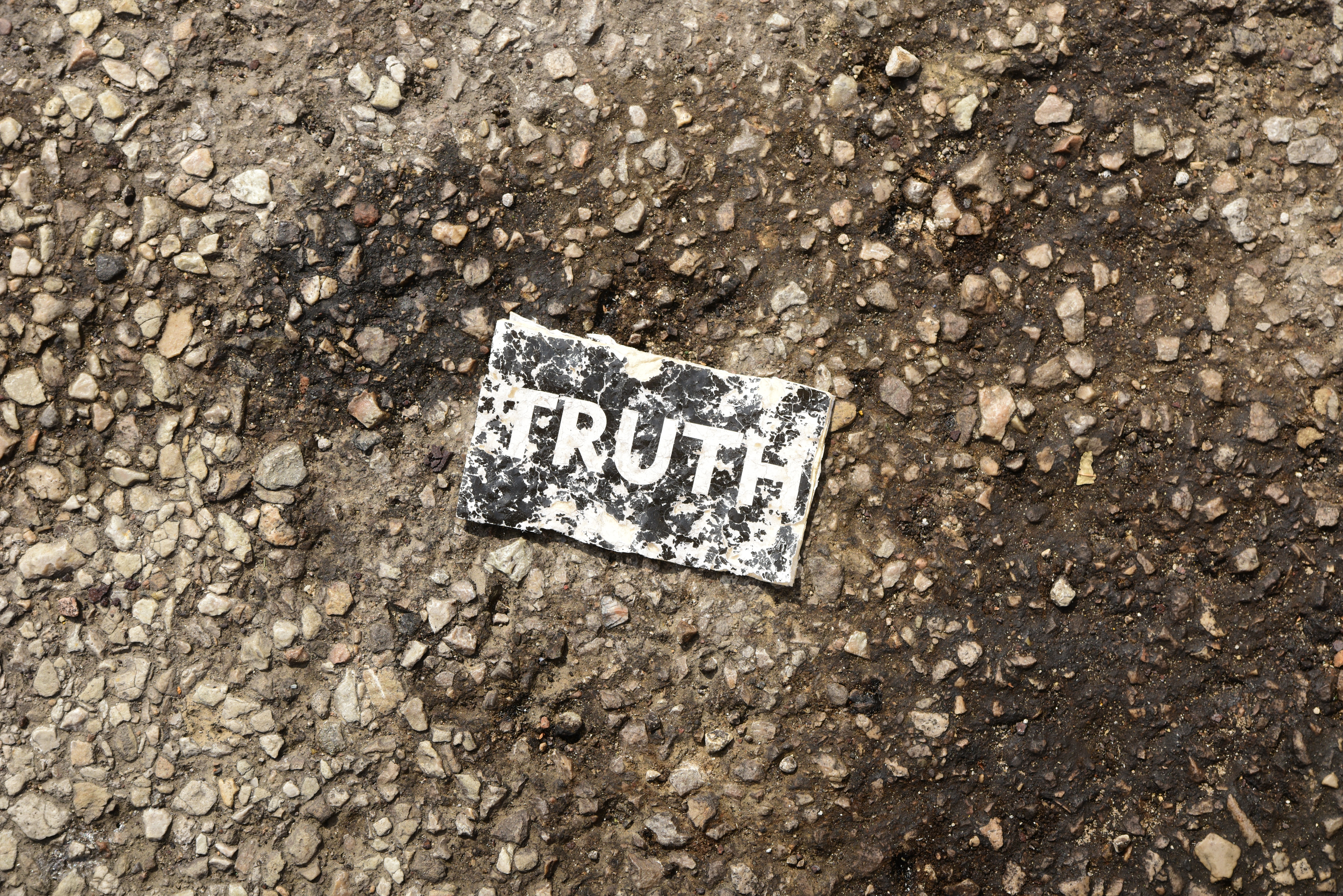
We live in a society and culture that has increasingly struggled with truth.
We ourselves can sometimes struggle with the truth. Do you remember the last time you lied? Hid a truth? What about the last time you were lied to or felt deceived?
I remember one of the first times I told a lie. I was elementary-age and very much into baseball cards. Right around 1981, the Phillies, Mike Schmidt and Steve Carlton. I wanted their cards so bad. On Sundays my parents gave me 50 cents to put in the offering. One Sunday, I didn’t put the money in the offering, and back home, I lied, saying I found it outside on the sidewalk. I then had enough to buy a pack of Topps baseball cards, the kind with a stick of chalky gum inside.
We expect kids to lie, but as adults we know better, right? Maybe not.
Think about the reputation of advertising. Can you believe that what the advertisers say about their product is true? Advertising is meant to convince us that a product will make our lives better if we just plunk down the money to get the product. Is all advertising true?
Then there is the reputation of phone calls and texts from numbers you don’t know, from emailers you don’t know. So many scams.
I’ve gotten emails from the bishop of my denomination, except the emails were actually NOT from the bishop of my denomination. Someone created a fake email account using the name of the bishop, and they wrote emails to pastors asking for financial help. It’s very easy to do. Very easy to lie.
It happened here in Faith Church too. Someone impersonated me, creating a fake email address. They wrote emails to our staff saying that I needed them to get gift cards immediately.
Lying is very easy to do. We can lie on our income tax forms. We can lie on resumes. We can lie to our loved ones. Cheat on tests. We lie because someone told us to at work, or asked us to help them, or to help ourselves get out of trouble.
In recent years, we can lie on social media, curating a social media account to make our lives seem more glorious than they truly are.
It is quite interesting, then, in my opinion, that the first piece of the armor of God is about truth.
In Ephesians 6, verse 14a, Paul writes, “Stand firm then, with the belt of truth buckled around your waist.”
There’s the first piece of the armor of God. The Belt of Truth. Except that in the original language, there’s no belt mentioned. This verse uses an idiom that is literally “gird up your loins with truth.”
While there is no belt mentioned in what Paul wrote, there is a good reason why some English translations refer to a belt. The wider context of the passage is about putting on the armor of God. We read that last week in verses 10-13 (read the six-post series starting here). As we’re going to see throughout the next two months, Paul uses the various pieces of armor figuratively to talk about actions and habits, like truth.
So in this case, the action of girding up your loins does in fact relate to a piece of armor, or actually to all the pieces of armor, and to truth. How so?
We’ll learn more in the next post.
Photo by Michael Carruth on Unsplash
 Engaging Scripture
One thought on “Our culture’s messy relationship with the truth – The Belt of Truth, Part 1”