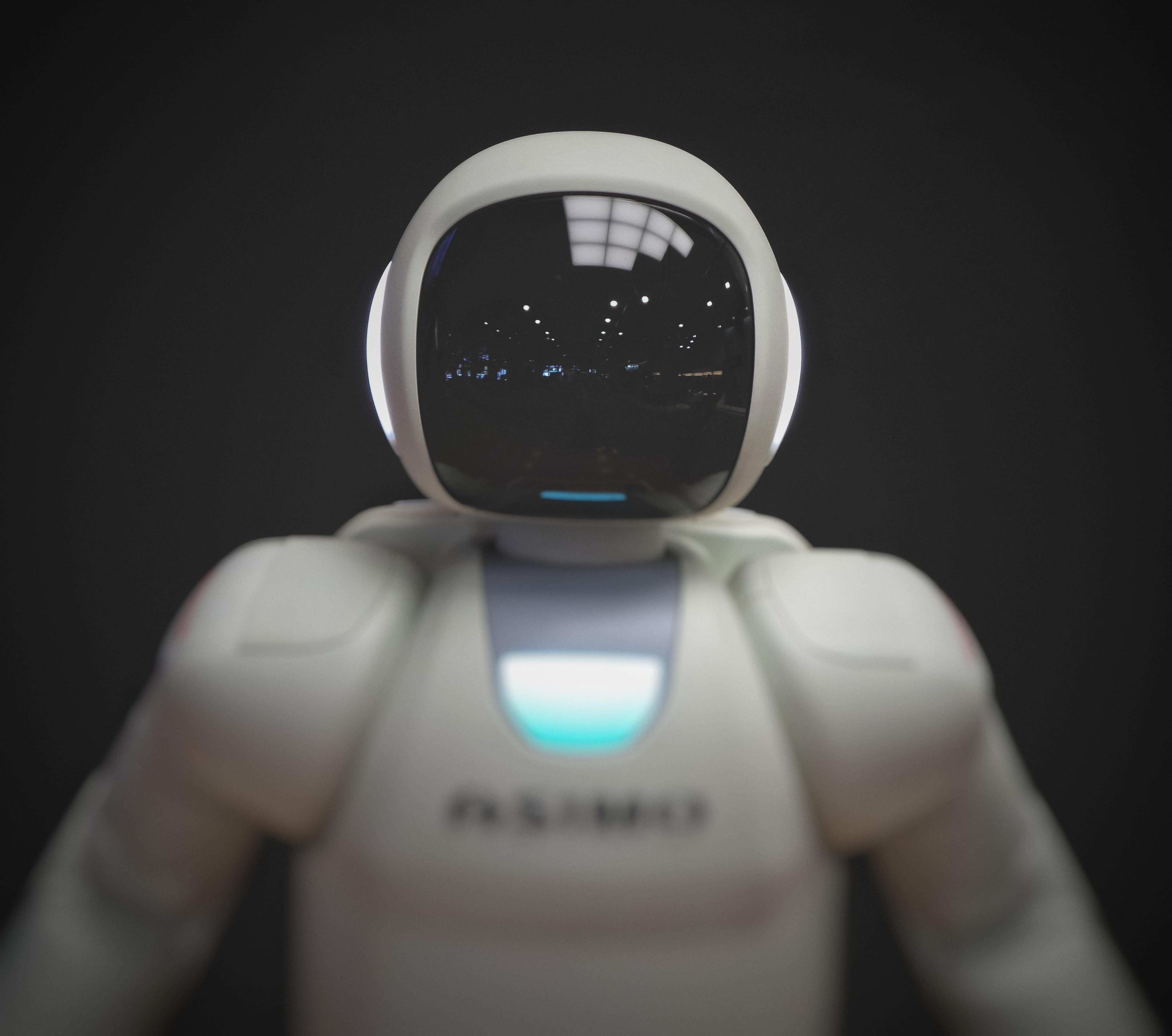
There are many tools we create that are not inherently beautiful or evil. A hammer is not really a work of art (could be though), but it can be used for good or bad. Hammers build and hammers destroy. Same with computers and computer programming. The internet is unbelievably useful for communication, education, coordination, but it also a place where evil can be done, making things like bullying, pornography, or instructions for building bombs easily accessible.
So what do we do with this new tool that humanity has created, the tool of artificial intelligence? It has the potential to aid human flourishing, and as with any tool, it has the potential for serious harm. First of all, we should not take a posture of fear when it comes to AI. Even if AI becomes something like the atomic bomb, capable of massive destruction, our hope is in God. Our hope will always be in God.
But that hope, that avoidance of fear, does not mean we can be reckless about AI. That’s why, second, it is right to have a proper sense of caution. Recently, for example, reps of 7 tech companies that work with AI met with the White House, where they voluntarily agreed to the administration’s suggestions for being cautious about AI. Likewise, we Christians should take the lead in evaluating it on a regular basis, to make sure that it is not being used for the perpetration of injustice.
And that’s a third point: Watch the money. As is so often the case with technology, the rich are getting richer on the backs of the already-marginalized. Are wealthy businesses needless utilizing AI to eradicate jobs that were once the bread and butter of working class people? Is AI’s ability to do tasks faster and with less error really better for humanity? Or is it just enriching people?
I read an article this week describing the massive cheap labor force needed to help AI learn. There are companies who hire people around the world in developing countries to help AI learn. The people are shown pictures, for example, “Is that a shirt?” and they answer, helping the AI. Or they are paid to ask the AI questions, read two versions of the AI’s answer, and select which one is best. These human workers are often not paid a living wage. But you know the tech company CEO’s are doing okay.
Fourth, we also don’t want to assume the worst and have kneejerk reactions. Technological advances have long been the so-called bane of our existence. Every time something new comes along, naysayers prophesy that it will ruin everything. When the telephone first came out, guess what industry was really scared? The messenger industry, people taking handwritten notes from place to place. While there are still some messenger services, it used to be a big deal. So, yeah, the telephone killed the messenger industry, but the telephone industry more than compensated for the lost jobs in the messenger industry.
New technology rarely leads to massive disaster. Instead, we humans, because we are so creative, adapt, and we learn different ways of existence, sometimes decades later admitting, “Oh…that wasn’t so bad as the prophets of doom thought…in fact it actually made things better.”
There are just so many complexities to evaluate. Some of us think that the entire modern world of technology from cars to TVs to air conditioning to electricity to cell phones is all a mess and we dream of getting off the grid completely, living life as “it was meant to be,” or at least as some think it is meant to be. It very well could be that reducing the amount of technology in our lives could help us in many ways. I love that my family’s main heat source in the winter is our wood stove. But let’s not just throw technology in the trash, including AI. Let’s not fear. Instead, let’s cautiously evaluate how it might be a tool for human flourishing.
And that is where we conclude this theology of artificial intelligence. Let’s remember that our hope is in God. We are humans. We are created in the image of God. God has created us to create. We are gifted. We have the ability to use our inherent creativity to express worship God through art, work, and even technology, when we use our creative gifts for good. That use of our gifts to glorify God is Kingdom work. Let’s look for ways to do that!
Photo by Possessed Photography on Unsplash
 Engaging Scripture