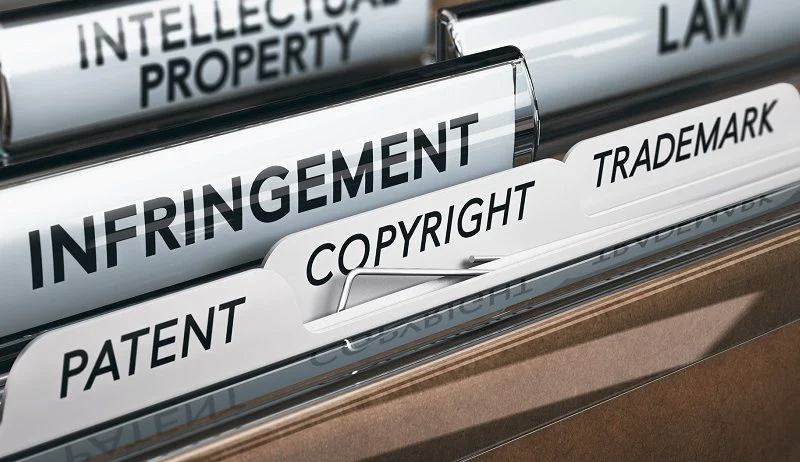
What might bring Artificial Intelligence down is not a group of rebel humans armed with powerful weapons in their fight against robots, but what might actually bring AI down, or at least reign it in, is copyright law. Yeah. Copyright. Here’s how.
One form of Artificial intelligence is a computer program that scours the internet for data, information. It’s called scraping. The programs scrape as much information as they can and store it in their memory. That is how artificial intelligence learns. It reads whatever it can find on the internet. It also looks at photos, videos, and audio. But know this: human programmers have programmed it to do this.
Take ChatGPT, for example. It scrapes the internet for data, then users of ChatGPT can ask it questions, and have a chat with it. As the programmers of ChatGPT have made it more and more capable, it can do some astounding things, such as writing essays, songs, poetry, about seemingly any topic, and lightning fast.
Because ChatGPT can write stories, that brings us to copyright. Let me explain. My wife, Michelle’s cousin, Don Bentley is a writer of military thrillers. He has written some of the books in the Tom Clancy Jack Ryan Jr. series, and soon he will be writing in the Vince Flynn series featuring hero Mitch Rapp. If you’ve a reader, you might know those names. Don also has his own series and protagonist, Matt Drake. Drake is a fictional character who travels all over the world practicing spy craft, using military equipment, with all manner of explosions and fighting. Every Matt Drake book is an edge of your seat thrill ride, and I happen to think they are very good.
So this week I asked ChatGPT to write a paragraph about the fairy Tinkerbell of Disney’s Peter Pan fame, but to write that paragraph in the style of Don Bentley’s Matt Drake. Think about that request for a moment. In order to write a paragraph like that, consider what Chat GPT would need to know. First and foremost, the English language. And not just robotically. Second, it would need to know about Tinkerbell, and not just her name, but a lot about her character traits. Third it would need to know about Matt Drake and his tendencies. Remember that both of them are completely fictional characters. Finally, ChatGPT would need to know Don Bentley’s style of writing. Was ChatGPT up to the task?
Oh yeah. Here’s the paragraph, and it is awesome.
“Tinkerbell, the diminutive force of nature, flitted through the shadows with an audacious grace that belied her size. Matt Drake had seen his fair share of formidable opponents, but this enigmatic pixie possessed a unique blend of charm and lethal efficiency. With her cascading golden locks and mischievous green eyes, Tinkerbell navigated the treacherous world of espionage with a cunning intellect and a relentless determination. Her mastery of clandestine operations and her uncanny ability to uncover hidden truths made her an invaluable ally to Drake and his team. Beneath that ethereal façade, however, lurked a firecracker of a woman, capable of wreaking havoc on her enemies with a single flutter of her delicate wings. Tinkerbell was a testament to the old adage that dynamite often comes in the smallest of packages, and Matt Drake knew better than to underestimate her formidable presence in their high-stakes missions.”
I love it. When I first read those last two lines, I laughed out loud. So of course, I had to tell Don about this. We have a group chat, me, Michelle, Don and his wife, as they are some of our closest friends in this life. I couldn’t wait to hear Don’s response.
His wife responded first. She said, “Wow! That really sounds like something Don would write.”
Don quickly chimed in: “That does not sound like something I would write! I write cleaner than that. That sounds like a writer who’s in love with his own voice. … Besides, everyone knows Tinkerbell carries a switch blade.”
You need to know, I didn’t do this just for laughs. I had another motive. After I sent Don the ChatGPT paragraph about Tinkerbell, I also texted, “Then ChatGPT cryptically wrote, ‘Watch out Bentley, I’m coming for you.’”
It was a joke. ChatGPT didn’t write that. I made it up to kid Don.
Why? Because of copyright law. Don’s livelihood is writing books. He owns the copyright to those books. They are his intellectual property. Because so much copyrighted material gets onto the internet illegally, not observing the copyright law, Don’s books are out there for anyone to read, if they look hard enough. That means ChatGPT can find them, and scrape them up as data. (I am indebted to the New York Times‘ podcast, The Daily, and their episode here, which takes a deep-dive into this issue of AI and copyright.)
That is clearly what happened, and that seems to indicate to me that ChatGPT is traveling into illegal territory. So publishing houses, and others who own intellectual property that is copyrighted are suing the tech companies like Meta that owns Facebook, like Open AI that owns ChatGPT, and others. The plaintiffs are claiming that AI companies are illegally using their property. They have a point. And they just might win lawsuits that could hamper the ability of AI to progress.
Well, that took a turn, didn’t it? All of a sudden we see a clear connection to theology, in particular ethical theology. Essentially, what the lawsuits are saying is that AI is stealing. The lawsuits suggest that artificial intelligence is only able to become intelligent because it steals others’ material. When it spits out a paragraph like the Tinkerbell paragraph, AI is not making something new. It is only repeating what it already read about Tinkerbell and Matt Drake. Shouldn’t Disney and Don Bentley, the owners of Tinkerbell and Matt Drake, be compensated somehow for the use of their copyrighted intellectual property?
It will be up to the courts to decide, but from a biblical theological perspective, we would say, “Yes, if Disney and Don Bentley did not give permission for their copyrighted property to be freely used in the public domain, then it is very possible that what ChatGPT is doing is at least partially illegal, if the company that owns ChatGPT doesn’t begin compensation or licensing of some form.”
We Christians in other words do not support stealing. Stealing clearly goes against God’s heart. Instead we believe God has gifted people to create, and to share their creations with others. That means people can choose to copyright their creations, owning the rights to sell their creations to make a living. This is good and profitable work.
But some AI can do more than what I demonstrated here. A lot more. We’ll talk about that in the next post, and what that has to do, if anything, with theology.
 Engaging Scripture